
Understanding Tow Capacity: A Key to Operational Success
In the world of business, particularly for those in logistics, construction, or transportation, understanding your vehicle’s tow capacity is not just a technical detail – it’s a fundamental aspect of your operational strategy. Knowing how much your truck can tow ensures that you can transport goods safely and efficiently without risking damage to your vehicles, cargo, or even the people involved in the operation. Improper towing can lead to severe consequences: financial losses from damaged equipment, legal repercussions from unsafe practices, and potential harm to employees. Therefore, ensuring that you have accurate knowledge of your truck’s tow capacity is crucial for maintaining efficient operations and safeguarding your bottom line. For more on reliable towing services, learn more about our offerings that can support your business’s transport needs.
Factors Affecting Tow Capacity of Trucks
Understanding the various factors that influence the towing capacity of a truck is essential for ensuring safe and efficient towing operations. Here are key considerations:
-
Engine Size: The power of the truck’s engine, indicated by horsepower and torque, directly affects its towing capabilities. Trucks with larger, more powerful engines generally can tow heavier loads more safely.
-
Vehicle Weight: Heavier trucks usually have a higher towing capacity. This is due to their structural integrity, which allows them to handle larger weights without compromising safety.
-
Hitch Type: The type of hitch used significantly influences the towing capacity. Different hitches are rated to handle varying amounts of weight, and using the correct hitch is crucial for safe towing.
-
Transmission and Axle Ratio: The type of transmission affects power distribution to the wheels, while the axle ratio determines how torque is translated, influencing towing power and efficiency. Lower ratios can enhance fuel economy but may limit towing performance, while higher ratios improve towing at the cost of economy.
-
Payload: Besides the trailer weight, the combined weight of the truck’s cargo (payload) must be considered. The total weight of the trailer and payload should not exceed the truck’s towing capacity to maintain safety and performance.
-
Load Distribution: How weight is distributed in the trailer affects towing stability. Proper distribution helps maintain balance and control during towing.
For more detailed insights on towing services and related capabilities, you can check out Mike’s Towing and Towing Service in Houston.
Legal Considerations Around Tow Capacity
For business owners involved in towing or regularly using trucks for hauling purposes, understanding legal regulations around tow capacity is crucial. Tow capacity refers to the maximum weight a truck can safely tow, and exceeding this limit is not only dangerous but also subject to legal consequences.
Regulatory Overview
Various federal and state regulations govern towing practices, focusing primarily on vehicle safety, road safety, and weight limits. These regulations stipulate that the tow capacity defined by the manufacturer must not be exceeded. This capacity is determined based on the truck’s engine power, chassis strength, braking capability, and suspension.
Municipalities and states often have additional rules regarding trailer size, braking requirements for trailers, and special permits required for heavy loads. For commercial towing operations, compliance with these laws ensures the safety of drivers, cargo, and other road users.
Consequences of Exceeding Tow Capacity
Exceeding the designated tow capacity can result in several negative consequences:
- Safety Risks: Overloading can lead to brake failure, tire blowouts, poor handling, and increased stopping distances, raising the likelihood of accidents.
- Legal Penalties: Law enforcement may issue fines or citations if vehicles are found towing over the legal limits. Penalties vary by jurisdiction but can include substantial fines or vehicle impoundment.
- Liability Issues: In the event of an accident caused by exceeding tow capacity, businesses may face lawsuits, increased insurance premiums, and potential loss of operating licenses.
- Vehicle Damage: Overloading causes premature wear and damage to the truck’s engine, transmission, and frame, leading to costly repairs and downtime.
Compliance Tips for Business Owners
- Always consult the truck’s owner manual or manufacturer specifications for accurate tow capacity details.
- Ensure proper hitching and weight distribution when loading trailers.
- Keep up to date with federal and state towing regulations specific to your operational area.
- Consider professional towing services for loads near or above your vehicle’s towing limits.
By adhering to tow capacity limits and legal requirements, businesses can maintain safety, reduce risks, and operate within the law. For trusted towing assistance that complies with all regulations, consider professional options like Mike’s Towing services to ensure safety and legal compliance in your operations.
This knowledge empowers business owners to responsibly manage towing tasks while protecting their assets and public safety.
Understanding Towing Capacities for Trucks in 2023
Towing capacity is a crucial consideration for any business that requires hauling goods, vehicles, or equipment. It’s essential for business owners to understand the industry standards for tow capacities to ensure they choose the right truck for their needs. In 2023, trucks come with varying towing capacities depending on their model and configuration.
Key Findings on Towing Capacities
- The 2023 Ram 3500 Heavy Duty has the highest maximum towing capacity, capable of handling 37,090 lbs. This impressive figure makes it ideal for heavy-duty applications such as construction or extensive towing jobs.
- The 2023 Ford F-150, known for its versatility, offers a maximum towing capacity of 14,000 lbs. This makes it a popular choice for small to medium-sized businesses needing reliability and strength.
- The 2023 GMC Sierra 1500 can tow up to 12,000 lbs, providing an excellent balance of power and practicality for everyday use.
- The 2023 Chevrolet Silverado 1500 rounds out the offerings with a towing capacity of 11,000 lbs, making it suitable for lighter loads and personal use.
Comparison of Towing Capacities
Here’s a quick comparison of the maximum towing capacities of popular truck models:
| Model | Maximum Towing Capacity (lbs) |
|---|---|
| 2023 Ram 3500 Heavy Duty | 37,090 |
| 2023 Ford F-150 | 14,000 |
| 2023 GMC Sierra 1500 | 12,000 |
| 2023 Chevrolet Silverado 1500 | 11,000 |
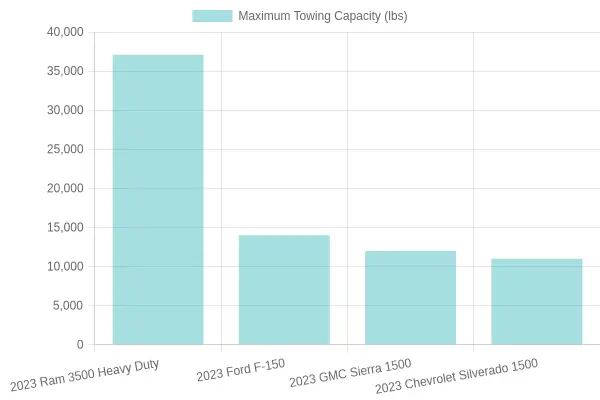
Max towing capacities of popular truck models in 2023. (Source: Various automotive websites)
Importance for Business Owners
Understanding these capacities is critical for business owners. Selecting a model that aligns with the operational needs directly impacts efficiency and safety. Ensure to consider not just the towing capacity but also other factors like payload ratings, vehicle weight, and trailer specifications when making your decision.
Additional Resources
For more details on towing services, you can learn more about our towing options in Houston or check out how we can assist you with roadside service.
By staying informed on the towing capacities and guidelines, business owners can make better choices that enhance their operational capabilities.
Comparing Truck Models by Tow Capacity
When it comes to choosing a truck, tow capacity is a critical factor, especially for business owners. Here’s a comparison of some popular truck models and their towing capabilities to help you make an informed decision:
| Truck Model | Tow Capacity (lbs) | Engine Configuration |
|---|---|---|
| 2023 Ford F-150 | Up to 14,000 | 3.5L EcoBoost V6 |
| 2023 Chevrolet Silverado | Up to 13,300 | 6.2L V8 |
| 2023 Ram 1500 | Up to 12,750 | 5.7L HEMI V8 |
| 2023 Toyota Tundra | Up to 12,000 | Twin-turbo V6 |
| 2023 GMC Sierra | Generally above 11,000 | Varies by configuration |
Summary
The tow capacity of trucks varies significantly based on the model and the engine choice. The Ford F-150 stands out with its higher capacity, making it suitable for heavy towing needs. Each model has its strengths and can be selected based on your specific towing requirements.
For further assistance, you can learn more about our towing services or find a tow truck in Houston to help with your needs.
How to Calculate the Tow Capacity of a Truck
Calculating the tow capacity of your truck is essential for safe and efficient hauling operations, especially for business owners who frequently use their vehicles for transporting goods or equipment. Here’s a step-by-step guide on how to calculate the tow capacity:
Step 1: Understand Vehicle Specifications
Begin by consulting your truck’s manual or the manufacturer’s specifications for two key ratings: the Gross Vehicle Weight Rating (GVWR) and the Gross Combination Weight Rating (GCWR). These rating metrics indicate how much weight your truck can safely carry (GVWR) and the maximum allowed weight when towing (GCWR).
Step 2: Determine Curb Weight
The curb weight of your truck is the weight of the vehicle without any cargo or passengers. This information can usually be found in the vehicle’s manual or on the manufacturer’s website.
Step 3: Calculate Payload
Next, determine the payload weight. This includes any passengers and cargo in the truck. Be sure to weigh everything inside the truck to get an accurate figure. If your truck has additional equipment, account for its weight as well.
Step 4: Apply the Towing Capacity Formula
With these numbers in hand, you can calculate the towing capacity using this formula:
[
\text{Towing Capacity} = \text{GCWR} – (\text{Curb Weight} + \text{Payload})
]
For example, let’s say:
- GCWR = 15,000 lbs
- Curb Weight = 6,000 lbs
- Payload (people and cargo) = 1,000 lbs
Plugging these values into the formula:
[
\text{Towing Capacity} = 15,000 – (6,000 + 1,000) = 8,000 \text{ lbs}
]
This means your truck can safely tow an additional 8,000 lbs.
Step 5: Evaluate Towing Equipment
Ensure your truck is equipped with the correct tow hitch and any accessories needed for safe towing. The rating of your towing equipment should match or exceed the calculated tow capacity.
Step 6: Comply with Local Regulations
Finally, make sure to check local regulations regarding towing, as laws can vary significantly by region. Compliance with these regulations is crucial to avoid fines and ensure safety on the road.
Calculating the tow capacity of your truck not only ensures compliance but also helps in efficiently planning for loads, thereby optimizing your business’s performance. For more information on towing services, check out our towing solutions.
Understanding Truck Weight and Towing Capacity
As a business owner, knowing how truck weight impacts towing capacity is crucial for making informed decisions when selecting the right vehicle for towing needs. Below is a chart that illustrates how the weight class of trucks correlates with their respective towing capacities:
Towing Capacities for Different Truck Weights
| Truck Class | Weight (lbs) | Towing Capacity (lbs) |
|---|---|---|
| Light-Duty Trucks | Up to 8,500 | 3,500 – 12,000 |
| Medium-Duty Trucks | 8,501 – 26,000 | 12,000 – 20,000 |
| Heavy-Duty Trucks | Over 26,000 | 30,000 – 50,000 |
Understanding these categories aids in evaluating which truck will best suit your business requirements. For further assistance or to explore our towing services, visit Mikes Towing.
Conclusion
In today’s competitive business landscape, understanding tow capacities of your vehicles is essential for maximizing efficiency and ensuring compliance with safety regulations. Companies that accurately assess their towing capabilities can optimize their logistics, minimize costs, and enhance operational performance. With proper knowledge, businesses can make better decisions regarding the right equipment and vehicles needed for transporting loads safely and effectively.
It’s crucial not just for safety, but also for the longevity of your equipment and to avoid costly disruptions. If you need assistance in determining the right tow capacity for your business needs, we encourage you to contact Zoomlion today. Discuss your requirements with our experienced team or request a quote to find the most suitable solutions for your towing needs. Don’t leave your business’s efficiency to chance; let us help you navigate the complexities of towing!
Take action now and ensure your operations run smoothly!
Operating within the specified towing capacity of a vehicle is crucial for safety and performance. Exceeding these limits can lead to catastrophic failures, including brake failure, increased stopping distances, and potentially serious accidents.
A towing safety expert typically emphasizes:
“Ignoring the tow capacity limits endangers not only the vehicle but also the lives of everyone on the road. Properly adhering to these limits ensures safety, performance, and legal compliance.”
Business owners must educate their drivers and staff about these limits and incorporate safety checks into their operations.
For more on towing safety practices and guidelines, you can learn more about Mike’s Towing and the services offered.