
Understanding Towing Capacity: A Crucial Knowledge for Truck Owners
For truck owners, understanding towing capacity is not just a statistic-it’s a vital aspect of safe and responsible vehicle operation. Did you know that exceeding your truck’s towing limits can lead to catastrophic consequences, including accidents and extensive vehicle damage? Ignorance of these limits puts both the driver and others on the road at risk, emphasizing the need for every truck owner to prioritize this knowledge.
Knowing your towing capacity allows you to make informed decisions on tasks ranging from hauling equipment to transporting goods, particularly for business owners who depend on their vehicles for daily operations. This understanding enhances operational efficiency, ensures compliance with safety regulations, and ultimately protects your investment. Moreover, it underlines the importance of proper load distribution and vehicle maintenance, which are crucial for maximizing performance and minimizing breakdowns.
As business owners, your vehicle often becomes an extension of your operational capabilities; any downtime can translate to lost revenue. Therefore, learning how to determine your truck’s towing capacity is essential. Learn more about how to find your truck’s towing capacity. In the following sections, we will explore practical steps for assessing towing figures and understanding their significance in your business’s logistics and efficiency.
Understanding Truck Towing Capacity Standards
Towing capacity refers to the maximum weight that a vehicle can legally tow, an essential factor in ensuring safety during operations, especially for businesses utilizing trucks for transporting goods or equipment. Understanding the towing capacity not only promotes safe towing practices but also helps in compliance with legal standards set at various levels. Here, we summarize the regulations affecting truck towing capacity in the United States, particularly pertinent for commercial vehicles.
Key Standards and Regulations
-
Federal Standards: The Federal Motor Carrier Safety Administration (FMCSA) outlines basic guidelines that govern towing capacities, which must align with the Gross Vehicle Weight Rating (GVWR) of the towing vehicle. Compliance with these regulations can help avoid penalties and ensure safe operational practices.
-
State Variability: In addition to federal regulations, each state has unique laws and requirements that can affect towing limits. Businesses must be aware of these specific regulations to operate within legal parameters.
-
Manufacturer Specifications: The towing capacities defined by vehicle manufacturers are crucial. These specifications are based on the vehicle’s design, engine power, and construction, and it is vital for operators to reference their vehicle’s manual for precise figures.
-
Business Implications: Companies must comply with towing capacity standards to avoid penalties. Businesses should ensure that all drivers are aware of these limits and that vehicles are maintained adequately for safety during towing operations.
Towing Capacity Categories
The following table summarizes the maximum towing capacities based on vehicle classifications:
| Vehicle Class | Max Towing Capacity (lbs) | Specifications |
|---|---|---|
| Class 1 | 0-6,000 | For passenger vehicles, minivans, SUVs |
| Class 2 | 6,001-10,000 | Motor homes, vans, small trucks |
| Class 3 | 10,001-14,000 | Larger trucks, commercial vehicles |
| Class 4 | 14,001-16,000 | Larger commercial vehicles, buses |
| Class 5 | 16,001-19,500 | Heavy-duty trucks |
| Class 6 | 19,501-26,000 | Larger heavy-duty trucks, box trucks |
| Class 7 | 26,001-33,000 | Larger commercial vehicles |
| Class 8 | Over 33,000 | Semi-trucks, tractor-trailers |
Penalties for Over-Towing
Failure to adhere to towing capacity limitations can result in significant fines, depending on the state. For instance:
| State | Penalty for Over-Towing |
|---|---|
| California | $5,000 fine and towing costs. |
| Texas | $1,200 minimum fine for exceeding weight limits. |
| Florida | Fines may reach up to $1,000 for significant over-towing. |
| New York | $2,000 fine for over-towing; additional fees may apply based on excess weight. |
| Illinois | Penalties from $500 to $5,000 depending on over-tow extent. |
| Pennsylvania | Fines up to $1,500 for violations of towing limits. |
| Georgia | Fines of $1,000 for over-towing; additional fees for excess weight. |
| Ohio | $1,000 fine for non-compliance with towing regulations. |
| North Carolina | Penalties are generally between $200 and $1,000 for weight overages. |
| Virginia | Fines from $500 to $1,500, increasing with the weight overage. |
Conclusion
In summary, understanding the towing capacity standards for trucks, especially for commercial use, is integral to ensuring compliance and safety. Businesses must educate their employees on these standards and remain vigilant about maintaining their vehicles in line with manufacturer specifications to avoid penalties. For more information on towing services, learn more about our towing company in Houston.
Understanding the towing capacity of a truck is crucial for business owners who rely on hauling goods or equipment. Several factors influence a truck’s ability to tow, and being aware of these can significantly impact operational efficiency. Here’s a comprehensive list of critical factors that affect towing capacity:
-
Engine Size and Power
A larger, more powerful engine increases towing capacity. For example, trucks with V8 engines typically tow more than those with four-cylinder engines. -
Transmission System
The type of transmission (automatic or manual) and gear ratios play a pivotal role. Trucks with low-range gearing can produce more torque, which is advantageous when towing heavy loads. -
Frame and Suspension
The design of the truck’s frame and the strength of its suspension system are directly tied to its towing capacity. Trucks designed for heavy-duty use often have reinforced structures and springs that can handle greater weights. -
Braking System
Towing large loads demands a robust braking system. Trucks equipped with advanced braking features like trailer brakes or enhanced anti-lock braking systems can more safely manage the additional weight. -
Hitch Type and Class
The hitch type (e.g., receiver hitch) and its rating are crucial. Using the appropriate hitch ensures that the truck can effectively manage the load without risk of failure. -
Cargo Weight and Distribution
The total weight of the cargo and how it’s distributed also affect towing capacity. Uneven weight distribution can lead to handling issues and might lower the effective capacity. -
Towing Equipment
Additional towing equipment, like weight-distributing hitches or tow bars, enhances a truck’s towing capabilities and ensures safer towing. -
Manufacturer Specifications
Always refer to the truck’s manufacturer towing specifications. Overloading beyond the recommended limits can lead to damage and operational hazards.
For business owners, understanding these factors is essential not only for safety but also for optimizing logistics and operations. A truck that can tow efficiently reduces time and fuel costs while preventing wear and tear. If you’re looking for professional assistance with towing services, check out Mike’s Towing in Houston.
In conclusion, evaluating these factors can help ensure your business operations run smoothly and that you comply with safety regulations.
How to Calculate Towing Capacity
Calculating the towing capacity of a truck is essential for business owners who frequently transport heavy loads. Proper calculation ensures safety and efficiency during towing operations. Here’s a step-by-step guide to help you determine the towing capacity of your vehicle.
Step 1: Check the Owner’s Manual
The first step in determining a truck’s towing capacity is to consult the owner’s manual. This manual provides specific details related to your vehicle, including the maximum towing capacity. If the manual is misplaced, you can often find this information online through the manufacturer’s website.
Step 2: Determine the Weight of the Vehicle
Identify the truck’s curb weight, which is the truck’s weight without any load. This information can typically be found in the owner’s manual or on a sticker located in the driver’s side door jamb. The curb weight includes all fluids, including fuel, oil, and coolant.
Step 3: Find the Gross Vehicle Weight Rating (GVWR)
The GVWR is the maximum weight that your vehicle is rated to safely carry, which includes the truck’s weight plus cargo and passengers. This rating will also be found in the vehicle’s owner manual or on a sticker inside the driver’s side door. Knowing this rating is crucial for proper calculations.
Step 4: Calculate the Towing Capacity
Now that you have the necessary weights, you can calculate the towing capacity using one of two formulas:
- Using GVWR:
[ \text{Towing Capacity} = \text{GVWR} – \text{Curb Weight} – \text{Cargo Weight} ] - Using GCWR: If your truck also has a Gross Combined Weight Rating (GCWR), you can use the following formula:
[ \text{Towing Capacity} = \text{GCWR} – \text{Curb Weight} ]
Both GVWR and GCWR ratings can be found in the same manual or door sticker.
Step 5: Account for Extra Equipment and Gear
While calculating the towing capacity, consider any additional equipment or gear that may add to the weight. This could include tools, supplies, or additional features added to the truck. It is important to remember that your truck’s actual towing capacity might be slightly less than the calculated maximum due to these factors.
Step 6: Consult with Experts if Needed
Finally, if you’re unsure about the calculations or need assistance, consult with a professional. Experts can provide clarity and guidance, ensuring that your vehicle is safely configured for towing. Utilize nearby resources like Mike’s Towing Service for any towing inquiries.
Calculating towing capacity is essential for ensuring safe operations while transporting heavy loads. By following these steps, business owners can make informed decisions about their vehicles, enhancing their operational efficiency without compromising safety.
Comparison Table of Popular Truck Models and Their Towing Capacities
When it comes to choosing the right truck for your business needs, understanding towing capacities is vital. Below is a comparison of several popular truck models based on their towing capacities and key specifications. This table will help business owners easily identify suitable options for their needs.
| Truck Model | Towing Capacity | Engine Option | Notes |
|---|---|---|---|
| Ford F-150 | 14,000 lbs | 3.5L EcoBoost V6 | Top choice for high towing capabilities. Learn more |
| Chevrolet Silverado 1500 | 13,300 lbs | 6.2L V8 | Robust performance for heavy loads. Learn more |
| Ram 1500 | 12,750 lbs | 5.7L HEMI V8 | Durable truck ideal for towing. Learn more |
| Toyota Tundra | 12,000 lbs | 3.5L V6 | Reliable for various towing scenarios. Learn more |
Choose the truck that best fits your towing needs. For more information on towing services and options available, check out our towing services in Houston.
“Understanding your vehicle’s towing capacity is crucial for safe and effective towing. Exceeding this limit can lead to loss of control, increased braking distances, and potential vehicle damage.”
Understanding the Consequences of Exceeding Towing Limits
Exceeding the towing limits of your vehicle is a serious matter, especially for business owners who depend on their trucks for hauling goods. Whether you’re towing a trailer, equipment, or another vehicle, it’s crucial to stay within specified limits to avoid a range of serious consequences that can impact both safety and finances.
Legal Ramifications
Exceeding towing limits can yield significant legal repercussions. Most jurisdictions have strict regulations regarding towing capacities mandated by vehicle manufacturers. Fines for these violations can vary dramatically:
- Fines: Depending on the severity of the violation, you could face fines that range from a few hundred dollars to over a thousand dollars. Some states might also impose additional penalties.
- Liability: If you are involved in an accident while towing an overloaded vehicle, you may be held liable for damages to property or people, even if the other party is at fault.
For more details on legal implications when towing, check out Mike’s Roadside Service.
Safety Issues
Safety is arguably the most significant concern when it comes to exceeding towing limits. The risks include:
- Increased Accident Rates: Vehicles that are overloaded are harder to control, which can lead to increased chances of accidents. The National Highway Traffic Safety Administration (NHTSA) links heavy towing to a rise in truck-related accidents.
- Handling Problems: Overloading can lead to friction and wear on critical components like brakes and tires. This not only makes your vehicle prone to breakdowns but can create dangerous situations on the road.
Vehicle Damage
Exceeding towing limits can cause severe damage to your vehicle, leading to costly repairs, including:
- Repair Costs: The cost of repairs due to over-towing often exceeds the standard repair costs that would have occurred under normal conditions. It’s not uncommon for repairs related to structural or mechanical failures to escalate into the thousands of dollars.
- Long-Term Impact: Continuous towing beyond limits can reduce the lifespan of the vehicle, leading to a need for sooner replacements or significant mechanical repairs.
The following chart summarizes the key concerns regarding towing limits:
| Category | Details |
|---|---|
| Legal Ramifications | Varies by jurisdiction. Penalties for exceeding towing limits can include fines which vary based on the severity of the violation. |
| Safety Issues | Accident rates increase when towing limits are exceeded, with higher risks of vehicle handling problems. |
| Vehicle Damage Costs | Repair costs can escalate significantly if damage occurs due to over-towing, often exceeding standard repair costs for compliance. |
In summary, adhering to towing limits is not just a best practice; it’s an essential part of responsible vehicle management. Businesses that rely on trucks for their operations should prioritize understanding their vehicle’s specifications and staying within legal and safe limits.
For professional towing needs and services in Houston, learn more about our towing company.
Towing Capacity of Different Truck Types
Understanding the towing capabilities of various truck types is vital for business owners looking to transport goods safely and efficiently. Below, you will find a bar chart that visually demonstrates the average towing capacities for different types of trucks:
| Truck Type | Towing Capacity (lbs) |
|---|---|
| Pickup Trucks | 5000 – 12000 |
| SUVs | 3500 – 8500 |
| Light Duty Trucks | 6000 – 12000 |
| Heavy Duty Trucks | 12000 – 30000 |
Average Towing Capacities
- Pickup Trucks: 5000 – 12000 lbs
- SUVs: 3500 – 8500 lbs
- Light Duty Trucks: 6000 – 12000 lbs
- Heavy Duty Trucks: 12000 – 30000 lbs
Visual Representation
Here is a chart demonstrating the average towing capacities:
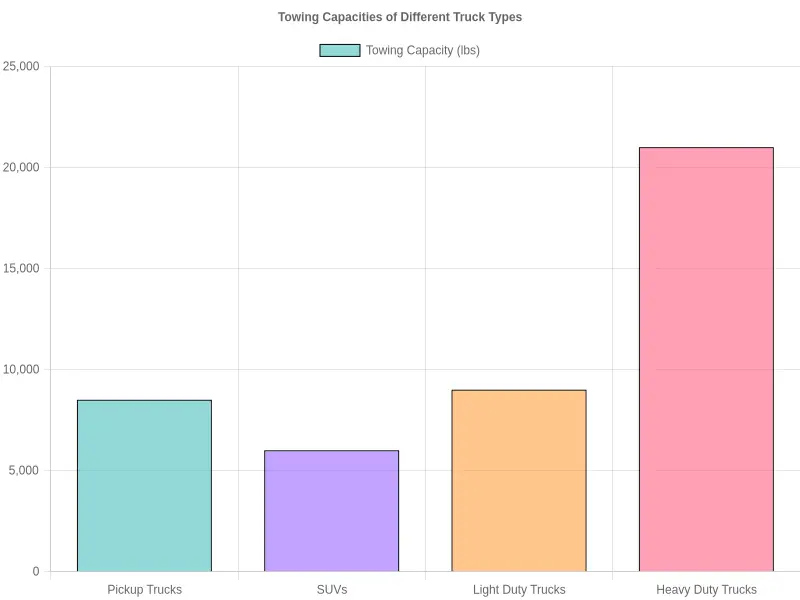
The chart shows how towing capacity varies by vehicle type, helping you make an informed decision when choosing a truck for your business needs. It is crucial to ensure you select the right type for your hauling requirements. For further assistance on towing needs, consider checking out our roadside service or towing services in Houston.
Conclusion and Call to Action
Understanding the towing capacity of your truck is essential for business owners who rely on heavy hauling for their operations. The towing capacity defines how much weight your vehicle can safely pull, which directly impacts the efficiency and safety of your business logistics. As we’ve discussed, several key methods can help determine this crucial specification:
- Owner’s Manual: Always start with your truck’s owner manual, as it provides the most accurate towing capacity specifics straight from the manufacturer.
- Manufacturer’s Website: Check the manufacturer’s website for detailed specs and recommendations about your truck model.
- Vehicle Identification Number (VIN): Use the VIN to access tailored information that can reveal the towing limits for your specific vehicle.
- Online Calculators: Various online tools can assist by calculating capacities based on input data regarding make and model.
- Expert Consultation: Don’t hesitate to reach out to truck dealerships or automotive experts for advice tailored to your needs.
Ensuring that you know your truck’s towing limits empowers you to make informed decisions, optimizing productivity and safety.
At Zoomlion, we understand the complexities surrounding towing and the critical role it plays in your business operations. If you need assistance with towing services or have questions about your truck’s capabilities, don’t hesitate to reach out to us today. Our experts are here to help you navigate your towing needs effectively, ensuring you can focus on your business while we handle the heavy lifting! Don’t leave towing to chance; with our support, you’ll always be prepared for what lies ahead.
Whether you’re looking to understand towing capacity or require immediate towing assistance, your satisfaction and safety are our top priorities. Trust Zoomlion for expertise you can rely on!