
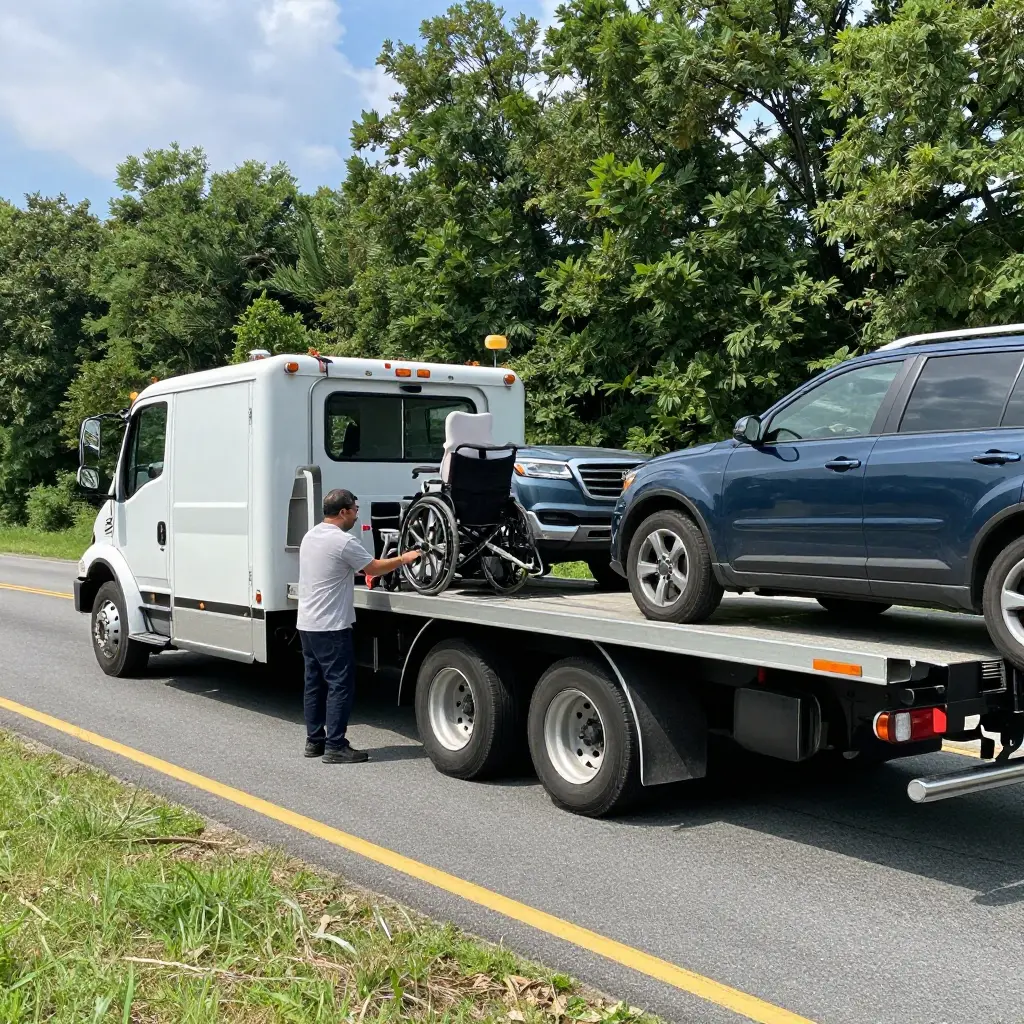
Why an I-287 Shoulder Breakdown Changes When the Vehicle Is AWD
A breakdown on the I-287 shoulder in Bridgewater, NJ, puts a driver within feet of commuter and truck traffic. The car has to come off the road, the driver has to reach somewhere safe, and the vehicle has to be moved without new damage. Most tow trucks that answer that call carry a wheel lift.
The trouble starts when the disabled vehicle is all-wheel drive. A wheel lift raises two wheels off the ground and lets the other two roll. On a two-wheel-drive car that works. On an AWD drivetrain it does not. The front and rear axles are mechanically linked, so when one pair of wheels turns while the other pair stays still, that motion travels back through the drivetrain. Transfer cases, center differentials, transmissions, and clutch packs can all take damage, and the damage is often invisible at the scene and expensive to fix later.
This article explains why a wheel lift often cannot move an AWD drivetrain safely, and what a driver stranded on I-287 should ask for instead. Drivers who want a recovery team that knows the difference can call a local Bridgewater NJ towing service and confirm the right equipment before dispatch.
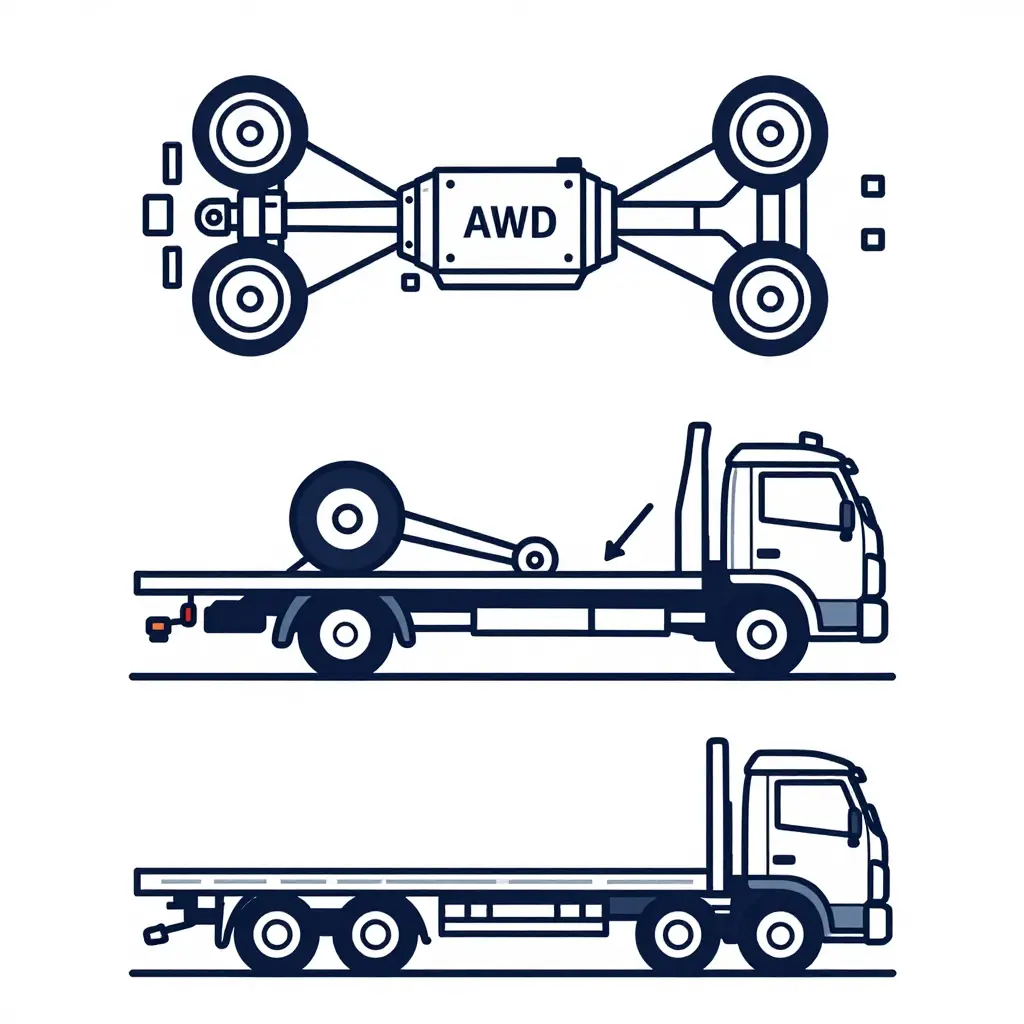
Why a Wheel Lift Cannot Safely Handle an AWD Drivetrain
A tow truck pulls onto the I-287 shoulder in Bridgewater, NJ, with a wheel lift ready to pick up two wheels and roll. On a rear-wheel-drive car that is usually fine. On an AWD drivetrain it can destroy thousands of dollars in parts before the truck leaves the shoulder.
The axle coupling problem
An all-wheel drive system keeps the front and rear axles tied together. A transfer case, center differential, or viscous coupling links them and sends torque to all four wheels. Most AWD systems stay engaged all the time, and unlike part-time 4WD they offer no neutral position that disconnects one axle.
Why lifting one axle causes binding
When a wheel lift raises one axle, the two wheels still on the pavement keep turning as the truck moves, and that rotation runs back up the driveshaft into the coupling. The lifted axle is no longer turning at the same speed, so the driveline ends up fighting itself.
Torque builds inside the driveline with nowhere to release. Seals weep, bearings take uneven loads, gears wear early, and the vehicle can lurch or shudder during the tow.
Damage to the transfer case and couplings
In a viscous coupling, the speed mismatch between a turning shaft and a stationary one builds heat until the fluid breaks down or the unit seizes. A center differential can be forced to lock or grind, and an aluminum transfer case can crack, snap its chain, or chew up its gears. None of that is cheap to repair.
The safe alternative: flatbed towing
Flatbed towing, or a full set of dollies, lifts all four wheels off the ground at once. Every shaft then turns at matching speeds, and the binding stress never starts.
If your vehicle is all-wheel drive and you break down on I-287, say so when you call. Getting the right truck the first time is what protects the drivetrain and gets you moving with hassle-free towing in Bridgewater, NJ.
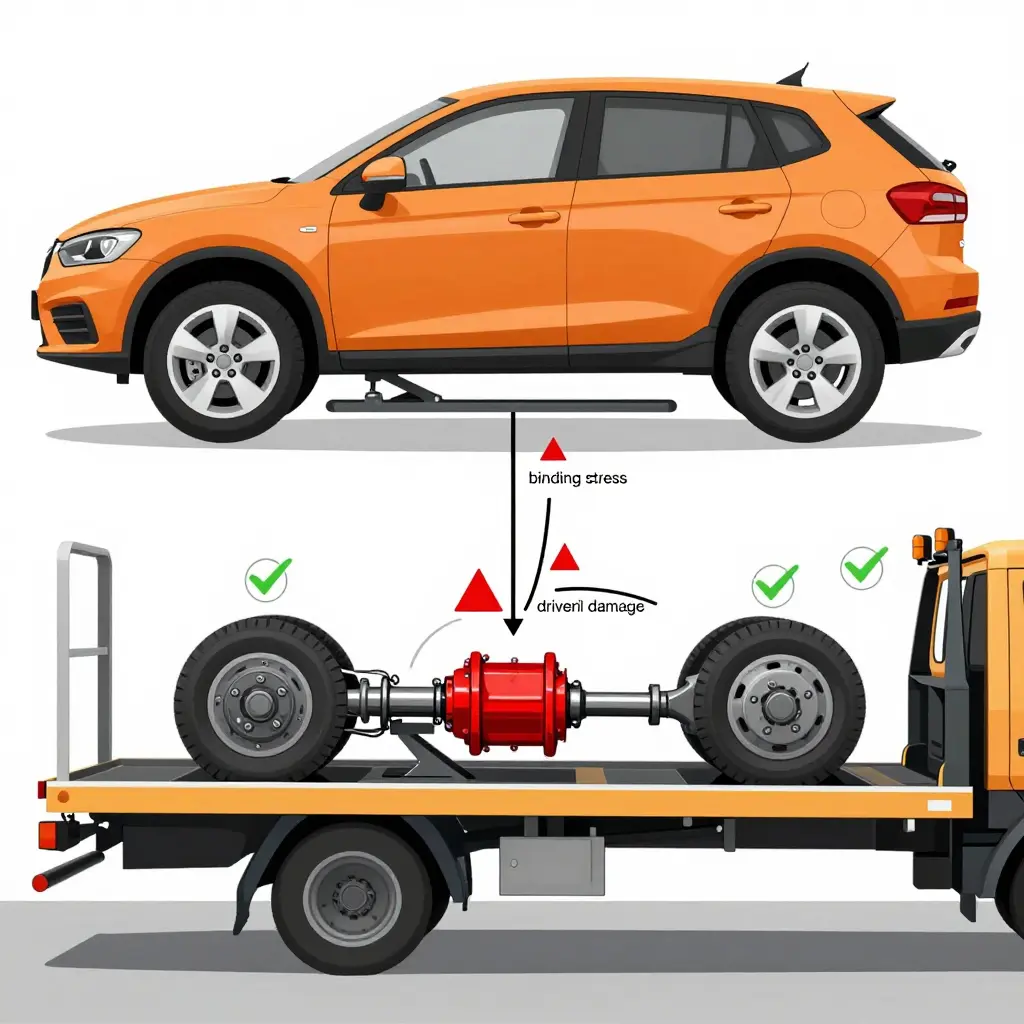
Wheel Lift vs. Flatbed: Which Recovery Method Fits an AWD Breakdown?
The method you choose decides whether the call ends in a routine tow or a drivetrain repair. Here is how the two options compare.
| Recovery Factor | Wheel Lift | Flatbed |
|---|---|---|
| Drivetrain safety | Risky – one axle rolls on the road, so AWD can bind the transfer case or spin the free axle | Safe – all four wheels are off the ground, so no axle turns |
| Contact points | Lifts two tires; the other two stay on pavement | Winch and straps cradle the whole vehicle onto the deck |
| Typical damage risk | Higher – transfer case, differential, and driveline wear if towed incorrectly | Minimal – the drivetrain stays still |
| Shoulder suitability on I-287 | Poor – narrow shoulders make lifting and dragging a real traffic hazard | Better – a stable, controlled load keeps the scene safer |
| Best-use case | Short moves of front- or rear-wheel-drive vehicles | AWD vehicles, low-clearance cars, and long-distance tows |
For an AWD drivetrain, the flatbed is the safe default. When you need a recovery crew that gets it right the first time, our Bridgewater NJ towing team is ready to roll.
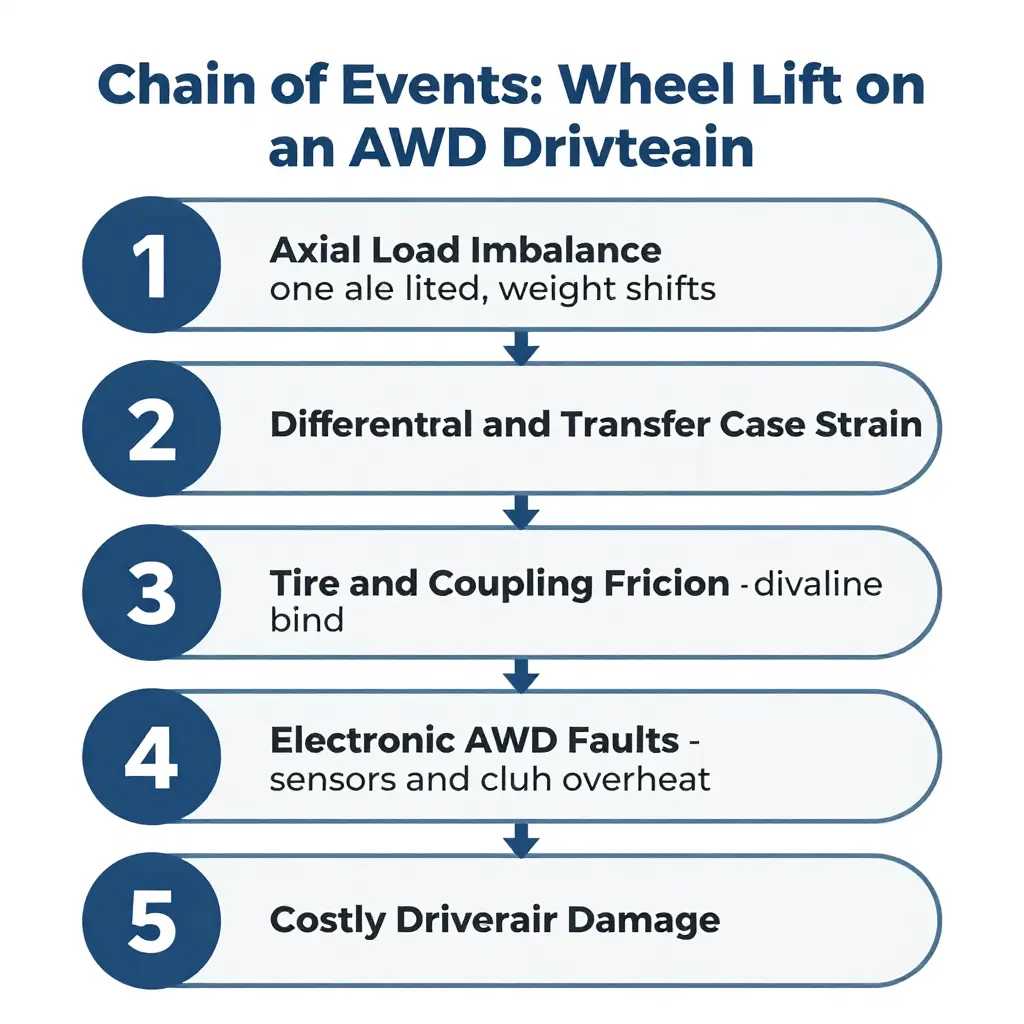
The Risks and Damage of Using a Wheel Lift on an AWD Drivetrain
A wheel lift is fast, compact, and the right tool for plenty of calls. On an AWD drivetrain it can turn a breakdown into a mechanical failure. With only two wheels off the pavement, the other two stay planted and the vehicle rolls and drags in ways the driveline was never built for. The damage starts as soon as the lift arms come up.
Axial Load Imbalance
Raising one axle puts the vehicle’s weight on the axle still touching the ground. Bearings, suspension mounts, and the driveshaft end up loaded at angles they were never engineered to hold.
Differential and Transfer Case Strain
In an AWD drivetrain a transfer case ties the front and rear axles together. When one axle is airborne and spinning freely while the other stays on the road, the differentials and transfer case have to absorb motion that should not exist. The heat and torque spikes that follow can permanently damage the assembly.
Tire and Coupling Friction
The tires still on the ground scrub and drag instead of rolling, which flat-spots the rubber and puts uneven stress on couplings, CV joints, and viscous or clutch packs. You will not hear it, but it does costly work with every inch the vehicle moves.
Electronic AWD System Faults
Modern AWD systems use wheel-speed sensors to compare front and rear rotation. A wheel lift feeds the computer mismatched data. Traction control and stability systems may register false slip, trigger warning lights, and overheat clutch packs trying to correct a problem that does not exist on the road.
Why This Matters on a Narrow I-287 Shoulder
A narrow shoulder leaves no room to improvise. Every extra minute eats into the small buffer between your car and passing traffic. A flatbed or wheel-lift dollies keep all four wheels off the ground and preserve the drivetrain, which is the right move when you need dependable towing service in Bridgewater, NJ.
The Practical Takeaway
If your AWD vehicle is disabled, tell the dispatcher it is all-wheel drive and ask for equipment rated for it. A flatbed or dolly setup avoids the load imbalance, transfer case strain, and sensor confusion before any of them start.
Recovery Method Suitability by Drivetrain Type
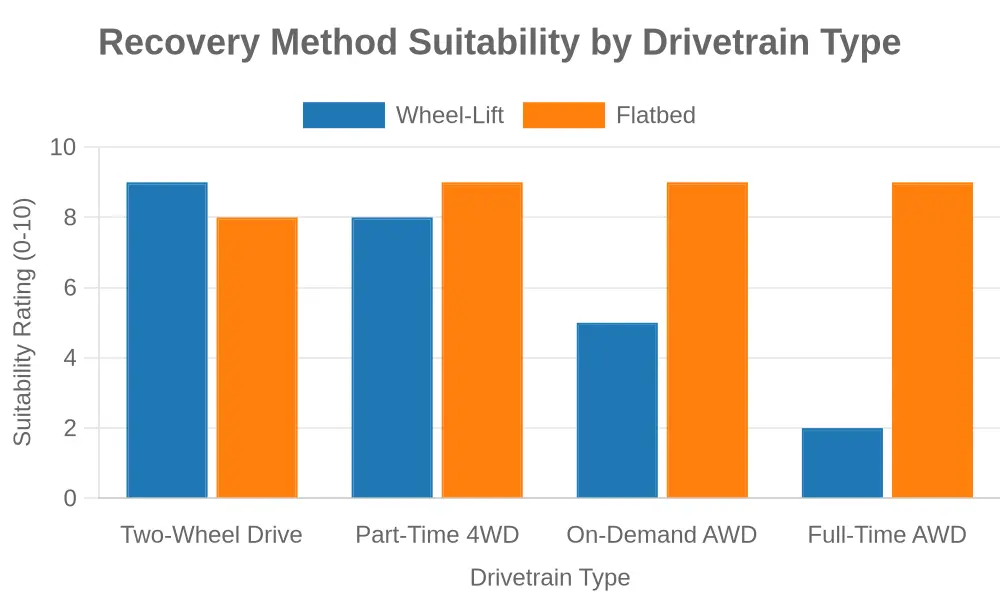
The chart compares wheel-lift and flatbed suitability across four drivetrain types. Flatbed ratings stay high across the board, while wheel-lift ratings drop sharply at full-time AWD.
What the Data Tells Us
- Two-Wheel Drive: A wheel lift can raise and roll a 2WD vehicle with little risk. Suitability is essentially tied with the flatbed.
- Part-Time 4WD: Wheel lifts still work here, but only with the transfer case in 2WD. Leave it engaged in 4WD and you create the same driveline stress you see in AWD systems.
- On-Demand AWD: The gray zone. A system that engages a second axle only when slip is detected can sometimes be lifted if the manufacturer allows it, but the margin for error narrows fast.
- Full-Time AWD: Wheel-lift suitability collapses to 2 out of 10. With all four wheels permanently driven through a center coupling or differential, lifting two wheels spins the stationary pair and grinds the internals. The flatbed stays at 9, making it the only safe choice.
The Takeaway for Stranded Drivers
If you drive a full-time AWD vehicle and break down on the shoulder of I-287 in Bridgewater, insist on a flatbed. A wheel lift may get you moving, but the damage it causes can quietly total a transmission, transfer case, or center differential. Ask for a flatbed truck when you call, and if the operator knows the difference, the wait is worth it. Our Bridgewater NJ towing and roadside team handles AWD recovery routinely.
Safety Steps After an I-287 Shoulder Breakdown in Bridgewater, NJ
On the I-287 shoulder you can be inches from fast-moving traffic, so the minutes before your AWD-appropriate tow arrives matter as much as the tow itself. Work through these steps while you wait for roadside assistance in Bridgewater, NJ.
-
Pull as far right as you safely can. If the vehicle still rolls, ease it onto the outer edge of the shoulder, away from the travel lanes. Once stopped, turn the wheels toward the grass or guardrail, not back into traffic, and set the parking brake firmly.
-
Turn on your hazard lights immediately. Four-way flashers make a stopped car visible from a long distance. In poor visibility, raise the hood or tie a bright cloth to the antenna so approaching drivers spot you sooner.
-
Get out on the non-traffic side. Open only the door facing away from the interstate, and bring passengers, especially children, out the same side. Move everyone behind the guardrail or well up the embankment, and never stand between your vehicle and the oncoming lanes.
-
Call for roadside assistance. Dial your provider or a local tow dispatcher and give your exact location: exit number, mile marker, and direction of travel. If you cannot reach a spot safely off the shoulder, stay buckled inside instead of standing beside the car.
-
Describe your AWD drivetrain clearly. Tell the dispatcher your make, model, and that the vehicle is all-wheel drive, so the correct equipment is sent. A standard wheel-lift truck can damage an AWD drivetrain, so request a flatbed or a truck equipped with dollies.
-
Stay visible and wait for your truck. Keep your phone charged, watch for the approaching tow vehicle, and confirm the operator’s company name before stepping out. Let the driver position the truck while you remain behind the barrier.
When a Wheel Lift Can Still Be Used With an AWD Vehicle
A wheel lift is not automatically off-limits for an AWD drivetrain. In a few narrow situations it still works, but only when every wheel stays supported and no drivetrain component is allowed to spin unexpectedly.
The Dollies Exception
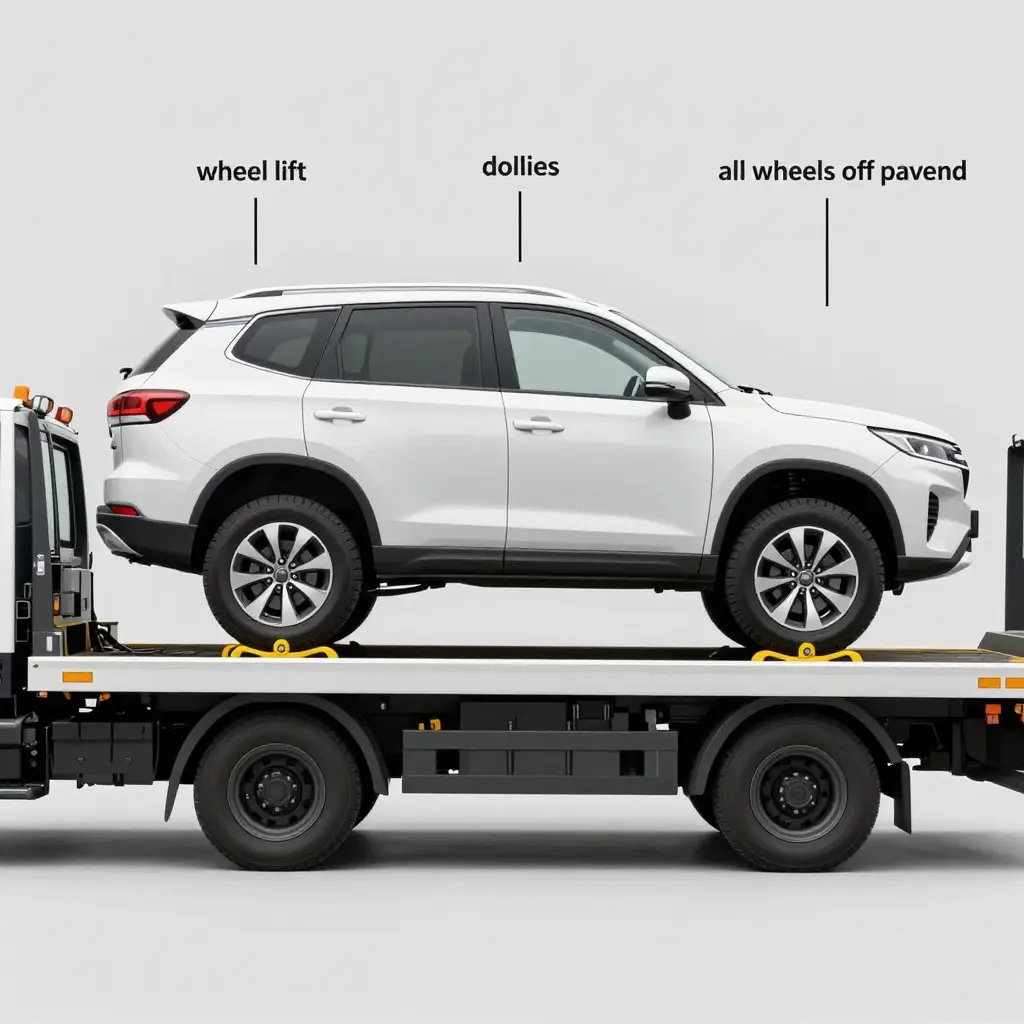
The clearest case is a wheel lift paired with dollies. The truck lifts two wheels and puts the remaining wheels on dollies, so all four tires roll freely off the pavement. The AWD drivetrain stays still, and the binding and internal damage that come from turning one axle while the other stays planted never happen.
Even then the setup has to be done correctly. The dollies need to be secured, the vehicle must sit level, and the operator should understand how that specific AWD system routes power before anything moves.
Short, Low-Speed Positioning
A second, very limited exception is short, low-speed positioning. Moving a vehicle a few feet to clear a lane or reach a better loading angle may be tolerable when the distance is trivial and the speed stays near zero. That is positioning, not towing, and it should never quietly become a trip down the shoulder.
Why the Exceptions Are So Narrow
An AWD drivetrain ties the front and rear axles together. Lift one end and let the other roll, and you risk overheating the transfer case, damaging the differential, or voiding a warranty. That is why flatbed towing remains the standard answer for most all-wheel-drive vehicles.
Ask Before You Assume
Rules vary by make, model, and tow operator. The safest move is to ask the provider directly whether your specific AWD vehicle can be wheel-lifted, and exactly how they plan to keep all wheels off the ground. One phone call to a Bridgewater-area towing team can save you a costly repair later.
Local Towing and Roadside Resources on I-287
A breakdown on the I-287 shoulder near Bridgewater gets more complicated when the vehicle is all-wheel drive. Not every truck can lift all four wheels safely, so knowing who to call saves time and prevents costly drivetrain damage.
If you only need a jump start, lockout help, or a splash of fuel, roadside assistance keeps you moving without a full hook-up. Mike’s crew handles these quick fixes on the shoulder so you can be on your way instead of waiting for a tow. Learn more about Mike’s roadside assistance.
When your car genuinely cannot be driven, a proper flatbed or dolly setup is the right call for AWD. For local help in the area, Mike’s Towing of Bridgewater NJ provides the equipment and know-how this corridor demands.
Want to know the broader range of methods and trucks they run? Mike’s Towing explains the difference between wheel lifts, flatbeds, and heavy recovery, so you can ask the right questions before a truck arrives.
Finally, do not guess who is closest. Searching for a towing service near me helps you reach a dispatcher fast when you are parked in a dangerous spot.
In short: match the tool to the drivetrain, stay safe on the shoulder, and keep a trusted towing service Bridgewater NJ number saved before you ever need it.