
Understanding Towing Capacities: Key for Your Business
In the fast-paced world of business, particularly for those in the transportation and logistics sectors, understanding towing capacities is not just beneficial; it’s essential. One-ton trucks serve as the workhorses of many operations, offering the power and versatility needed to haul heavy loads efficiently. However, having a clear grasp of how much your one-ton truck can tow can significantly impact your operational efficiency, cost-effectiveness, and overall productivity. Knowing your truck’s limits helps you make informed decisions when planning transport logistics, ensuring you don’t overextend your capabilities and risking equipment damage or safety issues. Additionally, proper understanding of towing capacities aids in compliance with regulations and safety standards, keeping your business running smoothly. This knowledge empowers business owners with the insight to optimize their fleet’s performance and reliability, ultimately leading to improved service delivery and customer satisfaction. For an in-depth look at how to maximize your towing potential, explore Mike’s towing services today!
Common Uses of One-Ton Trucks in Businesses
One-ton trucks have become essential assets for many businesses due to their robust performance and utility. These vehicles have impressive towing capacities, typically ranging from 10,000 to over 37,000 pounds, making them ideal for a wide array of commercial applications. Here are some key sectors that commonly rely on one-ton trucks:
1. Construction Industry
- Common Loads: Construction equipment, materials, and tools.
- Real-Life Example: A one-ton truck, such as the Ford F-350, can easily tow construction trailers, heavy machinery, and bulk materials like concrete or gravel. This capacity supports building projects and infrastructure maintenance.
2. Landscaping Services
- Common Loads: Landscaping equipment, mulch, soil, and debris.
- Real-Life Example: Companies like landscaping firms utilize trucks like the Chevrolet Silverado to transport mowers, trailers, and heavy supplies to various sites, enhancing their operational efficiency.
3. Moving Services
- Common Loads: Furniture, boxes, and household items.
- Real-Life Example: Small moving companies often depend on one-ton trucks to perform local and long-distance moves, providing customers with the ability to transport large amounts of items efficiently.
4. Farming
- Common Loads: Farm equipment, livestock, and produce.
- Real-Life Example: Farmers may use trucks such as the RAM 3500 to tow livestock trailers or utility trailers loaded with equipment, making it easier to manage farm operations.
5. Heavy-Duty Trucking
- Common Loads: Large trailers, cargo boxes, and commercial goods.
- Real-Life Example: Companies specializing in heavy-duty logistics can rely on one-ton trucks like the GMC Sierra 3500 for transporting goods across long distances, ensuring they meet client demands reliably.
Towing Capacity Chart
To better understand the capabilities of one-ton trucks, see below a chart that outlines various popular models and their respective towing capacities:
| Truck Model | Towing Capacity (lbs) | Common Uses | Year |
|---|---|---|---|
| Ford F-350 | 21,000 | Construction, Farming | 2023 |
| Chevrolet Silverado | 13,300 | Landscaping, Hauling | 2023 |
| RAM 3500 | 37,090 | Towing Trailers, RVs | 2023 |
| GMC Sierra 3500 | 23,200 | Heavy-Duty Trucking | 2023 |
| Toyota Tundra (SR5) | 10,200 | Light Towing | 2023 |
| Nissan Titan | 9,660 | General Hauling | 2023 |
For further insights on towing and roadside service, feel free to learn more about towing services available to you.
Towing Capacities of Popular One-Ton Trucks (2023)
If you are a business owner considering a one-ton truck for towing purposes, understanding the towing capacities of popular models is essential. Here’s a comparison of towing capacities for some of the most sought-after one-ton trucks in 2023:
| Make | Model | Year | Maximum Tow Capacity (lbs) |
|---|---|---|---|
| Ford | F-350 Super Duty | 2023 | 37,000 |
| RAM | 3500 | 2023 | 37,090 |
| Chevy | Silverado 3500 HD | 2023 | 36,000 |
| GMC | Sierra 3500 HD | 2023 | 36,000 |
| Nissan | Titan XD | 2023 | 10,890 |
Detailed Notes on Each Model
-
Ford F-350 Super Duty: Known for its incredible towing capabilities, the F-350 can tow a maximum of 37,000 pounds when equipped with the right package. The Super Duty lineup includes advanced towing technologies to make hauling safer and more efficient. For more details on Ford towing capabilities.
-
RAM 3500: It offers a similar impressive towing capacity, maxing out at 37,090 pounds with the high-output 6.7L Cummins turbo-diesel engine. This makes it a versatile option for contractors and businesses needing to haul heavy loads. Learn more about the RAM 3500’s specifications.
-
Chevy Silverado 3500 HD: The Silverado boasts a maximum towing capacity of 36,000 pounds when properly configured. This truck is well-regarded for its comfort and capability, making it suitable for both work and family travel. Learn about the Chevy Silverado’s towing specs.
-
GMC Sierra 3500 HD: The Sierra matches the Silverado with a max tow capacity of 36,000 pounds, offering similar features and build quality. It also supports advanced towing features for an improved experience. Get more details on GMC towing capacity.
-
Nissan Titan XD: Unlike the other models, the Titan XD has a lower towing capacity, up to 10,890 pounds. While it’s suitable for lighter towing tasks, it still offers robust performance for personal and lighter commercial hauling. Explore more about the Titan XD’s capabilities.
This table serves as a useful reference for business owners considering these one-ton trucks for towing needs, illustrating maximum tow capacities for each model clearly.
Factors Affecting Towing Capacity of One-Ton Trucks
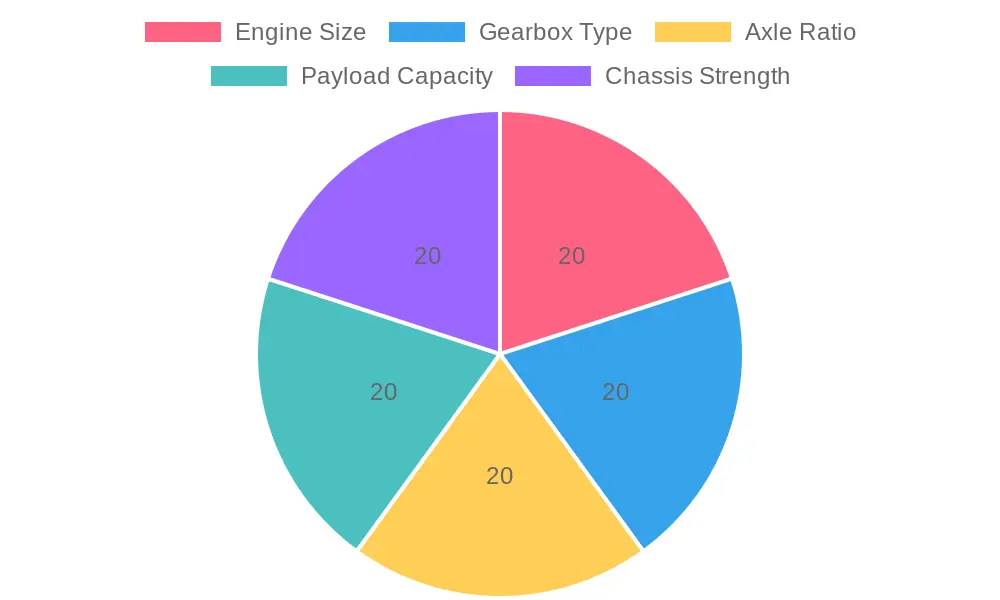
Towing capacity is a crucial factor for business owners who rely on one-ton trucks for transport and service needs. Understanding what influences this capability can help in making informed decisions when purchasing or upgrading vehicles for towing purposes. Here are the primary factors that can affect the towing capacity of one-ton trucks:
Engine Size
A larger engine typically means more horsepower and torque, both of which are critical for towing heavy loads. Engines with greater displacement can produce higher power levels, making it easier to tow heavier trailers. For example, a truck equipped with a 6.6L V8 engine will generally have a higher towing capacity than a smaller engine variant. Choosing an engine that balances power and efficiency is vital for operational costs, especially for businesses frequently engaging in towing activities.
Gearbox Type
The type of transmission (gearbox) installed in the truck can significantly impact its towing capacity. Automatic transmissions usually provide smoother shifts and can be more efficient at managing power delivery during towing. Meanwhile, manual transmissions may offer more control in specific situations but can require more skill and attention from the driver. Knowing the gearbox type and its impact on towing performance can help in selecting the right truck for specific jobs.
Axle Ratio
The axle ratio also plays a key role in determining how much weight a one-ton truck can tow. A higher axle ratio means that the engine does not have to work as hard at low speeds, delivering better towing performance. Trucks typically come with different axle ratios, and selecting the right one can optimize towing capacity. For instance, a vehicle with a 4.10 rear axle ratio will manage heavier loads more effectively than one with a 3.73 ratio, making it crucial to match the axle ratio with the intended use of the truck.
Payload Capacity
Payload capacity includes the weight of the goods being transported in addition to the trailer’s weight. When towing, businesses need to ensure that they are aware of the total load, including passengers and cargo. Exceeding the maximum payload can lead to unsafe driving conditions and damage to the truck, which makes it essential to understand the payload limitations in conjunction with the towing capacity.
Conclusion
When considering a one-ton truck for towing needs, it’s essential to account for the engine size, type of gearbox, axle ratio, and payload capacity. Evaluating these factors will ensure that the vehicle not only meets towing requirements but also operates efficiently and safely. For specific towing needs, consult with an expert or your vehicle dealer to ensure that you’re choosing the right configuration. If you’re looking for reliable towing services to assist your transportation needs, consider reaching out to experts in the field, such as Mike’s Towing Service.
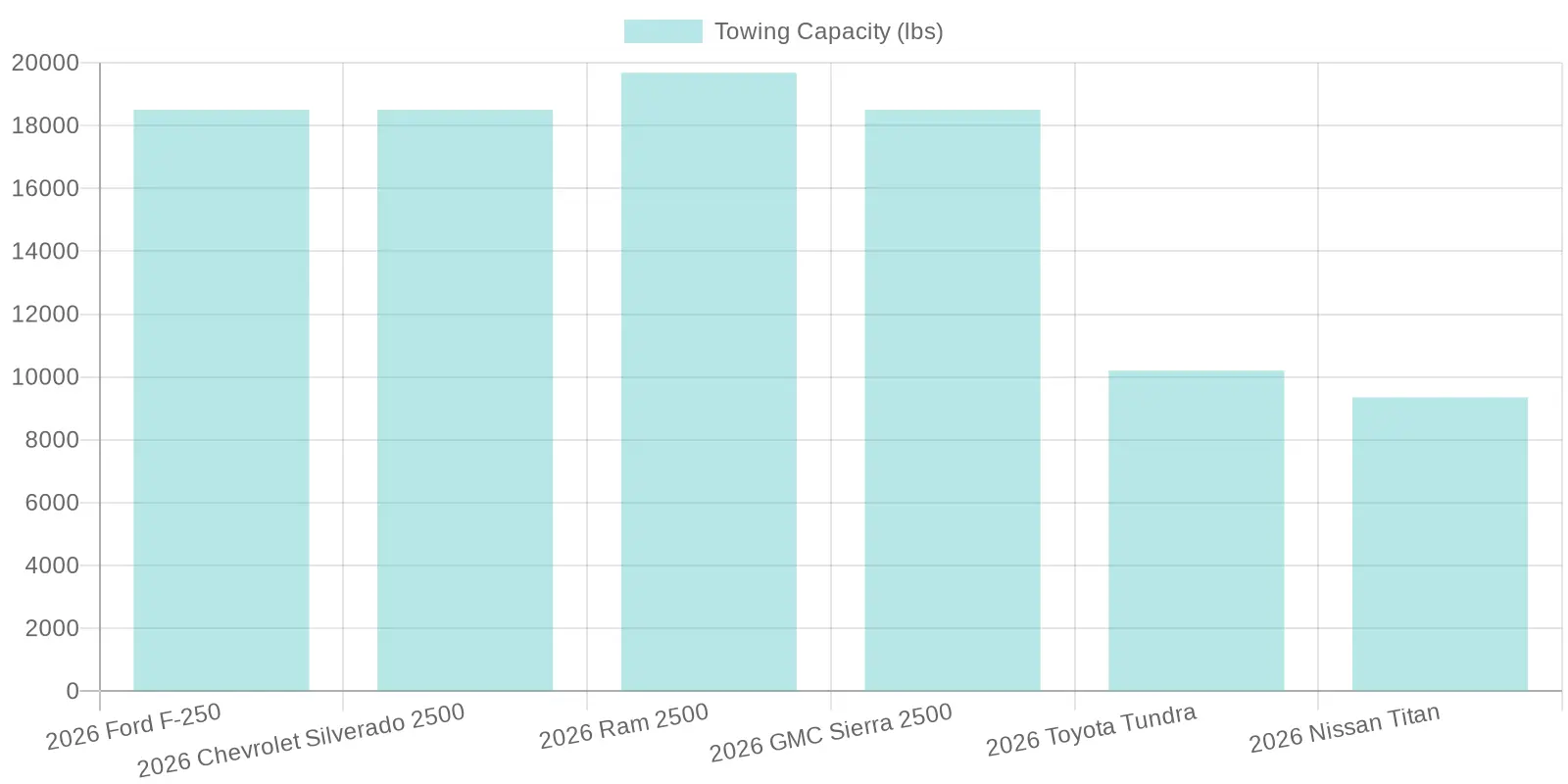
Towing Capacity Comparison of One-Ton Trucks for 2026
| Truck Model | Engine Size (L) | Axle Ratio | Towing Capacity (lbs) | Source |
|---|---|---|---|---|
| 2026 Ford F-250 | 6.2 | 3.73 | 18,500 | Ford |
| 2026 Chevrolet Silverado 2500 | 6.6 | 3.73 | 18,500 | Chevrolet |
| 2026 Ram 2500 | 6.4 | 3.73 | 19,680 | Ram |
| 2026 GMC Sierra 2500 | 6.6 | 3.73 | 18,500 | GMC |
| 2026 Toyota Tundra | 5.7 | 3.91 | 10,200 | TowStats |
| 2026 Nissan Titan | 5.6 | 3.69 | 9,350 | Nissan |
“Ensuring you choose the right vehicle for towing is crucial. Overloading can lead to accidents and significant vehicle damage. Always consult your vehicle’s towing capacity and adhere to safe towing practices.”
- Kelley Blue Book, Towing Capacity Guide: Everything You Need to Know
Choosing the right vehicle for towing is not just about numbers; it’s about safety. Understanding towing capacity can help ensure that you don’t exceed your vehicle’s limits, which can lead to accidents or costly damages. This knowledge is especially valuable for business owners who rely on their vehicles for transporting goods, ensuring a safe operation while also maximizing efficiency.
For more on safe towing practices, check out our guide on understanding towing capacity.
Legal Towing Limits for One-Ton Trucks
When it comes to towing, understanding the legal limits and regulations is crucial for business owners who rely on one-ton trucks. These trucks, often used for heavy-duty tasks, are designed to tow significant weights, but they must do so within regulatory limits to ensure safety and compliance.
Understanding Towing Limits
One-ton trucks, such as the Ford F-350 or Ram 3500, typically have a maximum towing capacity of between 10,000 to 35,000 pounds, depending on the model and equipment. This capacity is generally determined by a combination of the truck’s size, engine power, and specific manufacturer guidelines. It is important to note that exceeding these limits can jeopardize safety and may lead to penalties.
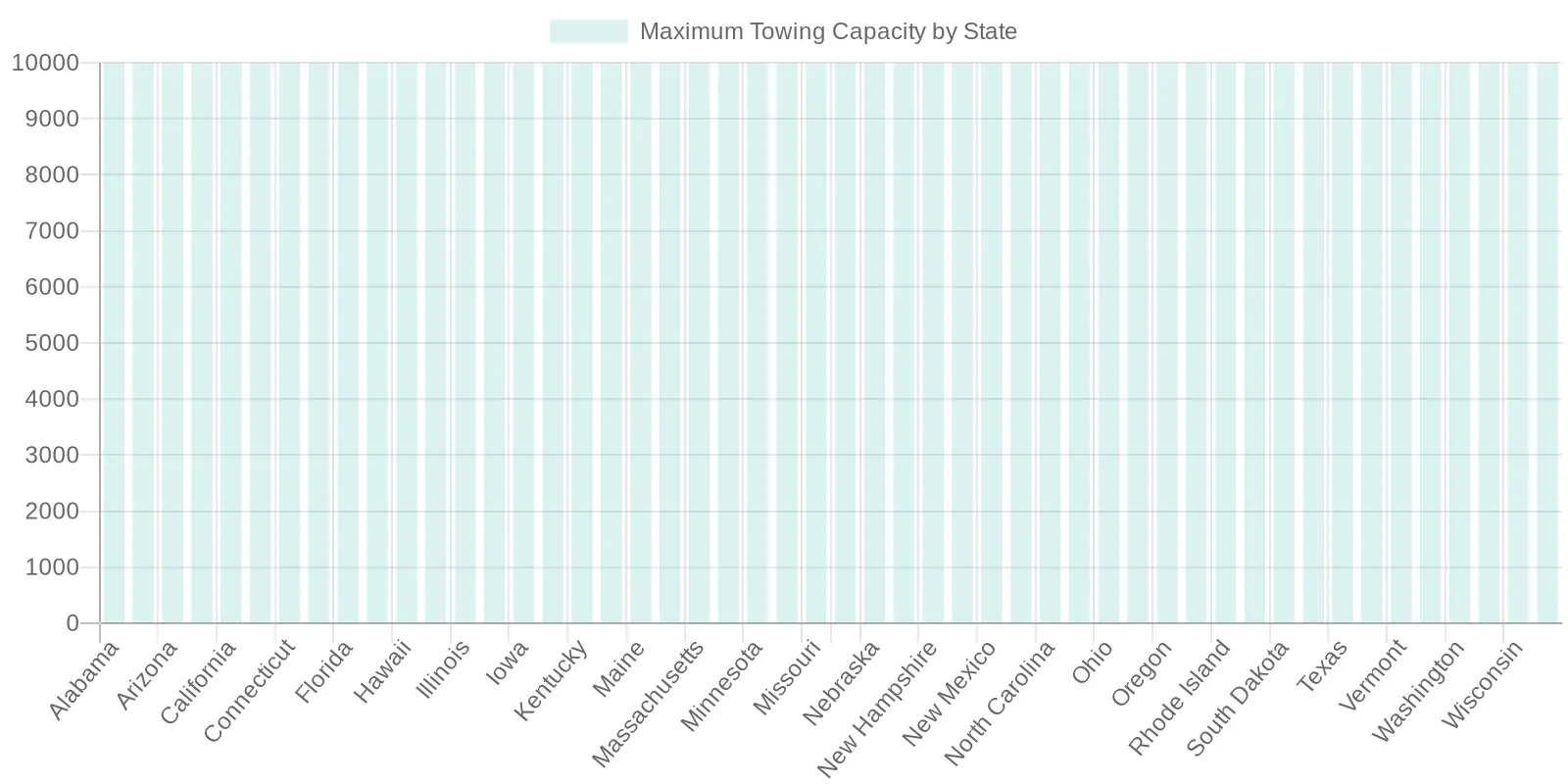
In the United States, each state has its own laws regarding towing weight limits. Most states adhere to a maximum towing capacity of 10,000 lbs for personal use vehicles or one-ton trucks without requiring a special towing endorsement. For more detailed specifics, you can view the full range of state regulations here.
Towing Regulations and Compliance
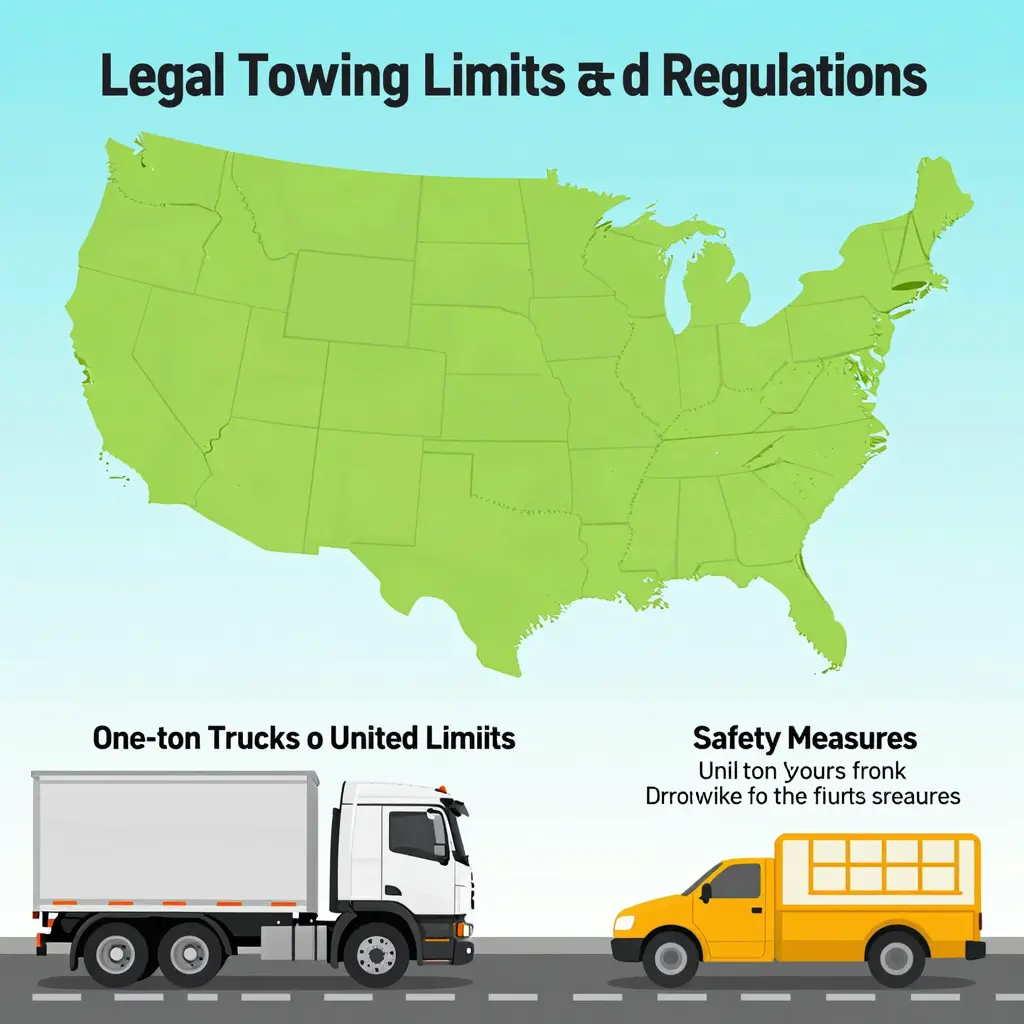
Compliance with state and federal regulations is essential for anyone involved in towing operations. The U.S. Department of Transportation (DOT) mandates particular safety features, including:
- Brakes on all wheels for heavy trailers, as outlined in DOT Towing Regulations
- Proper safety chains and functioning brake lights
- Adherence to the vehicle manufacturer’s rated towing capacity
Failure to meet these requirements can result in significant fines and, more importantly, dangerous towing situations. The National Towing Authority emphasizes the importance of state-level regulations which can vary and thus affect compliance for tow-heavy businesses.
Safety Measures to Consider
- Verify the Weight: Always check the total weight you are towing, including the trailer itself and any cargo.
- Use Proper Equipment: Ensure you’re using the correct hitch and safety chains appropriate for the weight you’re towing.
- Regular Inspections: Regularly inspect your towing equipment for wear and tear, and ensure your brakes are functioning correctly.
- Educate Yourself on Local Laws: Different states may have specific requirements for towing safely, such as having a special license or permits for towing heavier loads.
Visual Insight
To provide further clarity on the legal towing limits, the chart below outlines the maximum towing capacities for one-ton trucks across various states:
Moreover, this infographic below illustrates essential towing regulations and safety measures:
Overall, understanding and adhering to legal towing limits and regulations is vital for operating one-ton trucks safely and efficiently. Always utilize reputable towing services, like those from Mike’s Towing, to ensure compliance and peace of mind.
Conclusion
In conclusion, knowing the legal towing limits is essential for business owners who rely on one-ton trucks. Not only does it assure compliance, but it plays a significant role in ensuring safety on the road for yourself, your cargo, and others. Be sure to stay informed, equipped, and ready for safe towing practices!
When it comes to towing heavy loads, one-ton trucks offer significant power and capability. However, user experiences reveal a mixture of efficiency and challenges. Here’s a summary of various testimonials and insights gathered from different forums and user discussions.
Performance and Towing Capacity
Many users report that one-ton trucks, particularly models like the Ford F-350, RAM 3500, and Chevy/GMC 3500 HD, provide impressive towing capacities, particularly when equipped with diesel engines. These vehicles can efficiently handle towing large fifth wheels and heavy trailers, making them ideal for business owners who frequently transport equipment or recreational vehicles. A detailed examination on Camping World supports this, emphasizing the high towing capabilities of these heavy-duty trucks.
Efficiency and Fuel Consumption
While one-ton trucks are built for power, towing efficiency can vary. Users have discussed issues like overheating during long hauls, particularly when driving through mountainous areas. According to an article from MotorBiscuit, the engine type plays a crucial role in maintaining efficiency while towing, indicating that diesel engines often perform better under load compared to gasoline engines.
Challenges in Towing
Despite their strengths, some users share concerns about stability and handling when towing near the truck’s maximum capacity. A thread on Toyota Tundra Forums emphasizes safety issues faced when towing without electric brakes, highlighting the importance of proper towing equipment and techniques. Additionally, discussions on Airstream Forums reveal debates about whether a one-ton truck is always the best choice, especially for lighter trailers where a 3/4 ton vehicle might suffice.
User Insights and Personal Experiences
Real-world experiences shared on diverse platforms, such as the Good Sam Community, underscore that towing with a utility dually truck enhances stability and ease while hauling heavy loads. Users have noted a marked difference in comfort and handling, which is a crucial consideration for long-distance hauls.
Conclusion
In conclusion, while one-ton trucks provide formidable towing power and capacity, challenges such as fuel efficiency, stability, and safety concerns exist that users must navigate. Insights gathered from multiple forums illustrate the need for careful consideration regarding the choice of truck and towing practices, making one-ton trucks a viable option in many towing scenarios, particularly for business owners who regularly transport heavy loads. For more on our towing services, feel free to visit Mike’s Towing to see how we can assist you in your towing needs. This information can guide business owners in making informed decisions when choosing the right truck for their towing requirements.
Growth of One-Ton Truck Popularity and Sales
One-ton trucks, particularly models like the Ford F-Series and Ram 1500, have seen significant growth in popularity and sales over the past decade. This chart visualizes the annual sales data for these models from 2013 to 2023, highlighting key trends and shifts in consumer preferences.
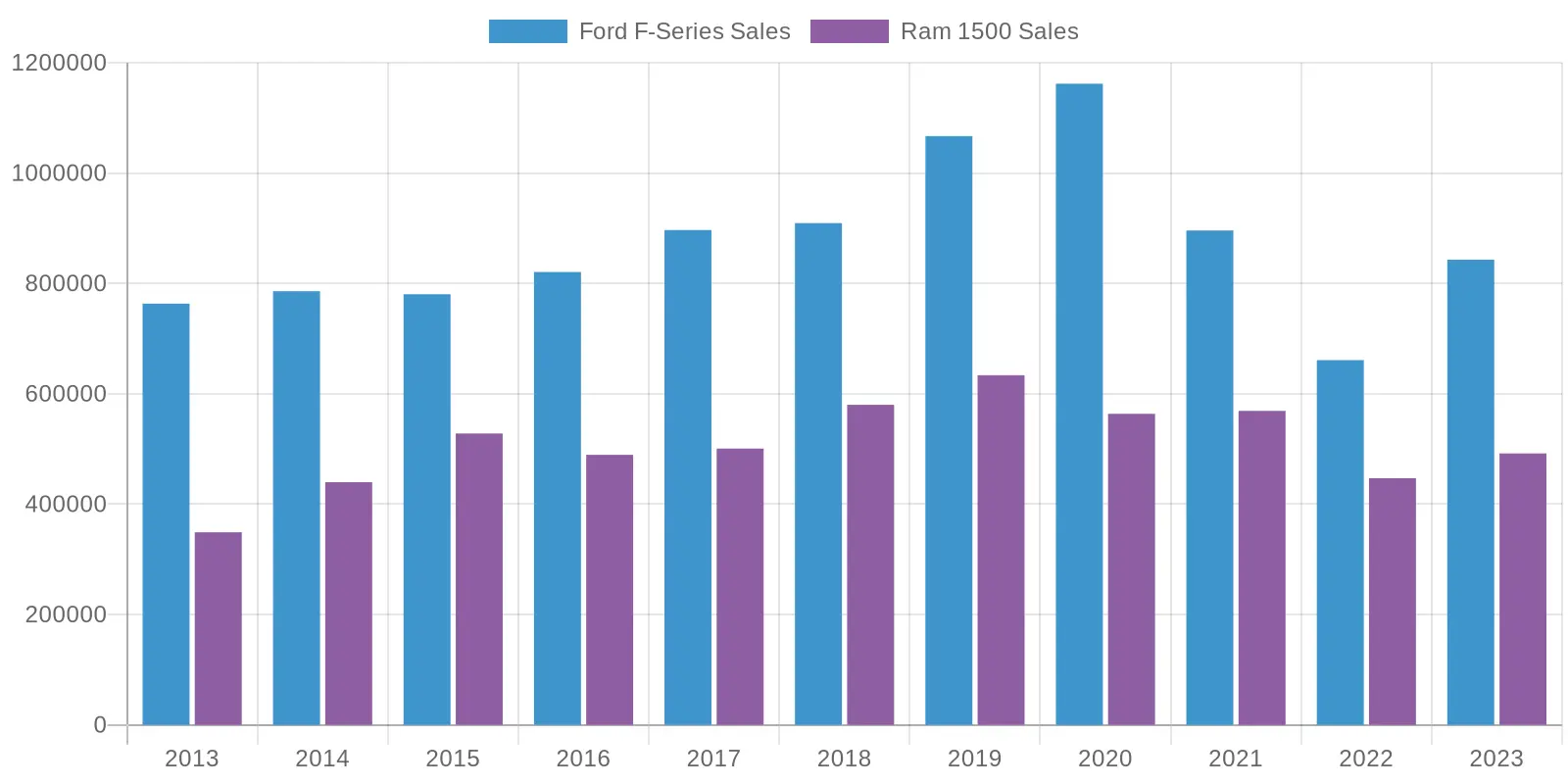
Link to the chart: Ford vs Ram Sales Comparison
Key Sales Data:
| Year | Ford F-Series Sales | Ram 1500 Sales |
|---|---|---|
| 2013 | 763,402 | 349,123 |
| 2014 | 786,000 | 439,789 |
| 2015 | 780,354 | 528,126 |
| 2016 | 820,799 | 489,418 |
| 2017 | 896,764 | 500,723 |
| 2018 | 909,330 | 580,034 |
| 2019 | 1,067,000 | 633,694 |
| 2020 | 1,162,000 | 563,676 |
| 2021 | 896,000 | 569,000 |
| 2022 | 661,000 | 447,000 |
| 2023 | 843,000 | 492,000 |
The increase in sales for the Ford F-Series demonstrates its dominance as one of the best-selling vehicles in the U.S., reflecting a notable trend towards larger trucks in both personal and commercial use. For business owners looking to purchase a one-ton truck, the F-Series and Ram 1500 present compelling options due to their popularity and robust features, particularly in towing capabilities, which are essential for varied business needs.
For those interested, you can learn more about our towing services or check out our towing services in Houston.
Conclusion: Your Towing Needs with Confidence
In summary, understanding the towing capacity of a one-ton truck is crucial for business owners who rely on heavy-duty transportation. With towing capacities ranging from 15,000 to an impressive 36,000 pounds depending on the truck’s configuration and engine type, having the right knowledge equips you to make informed decisions in your operations. As we have discussed, professional towing services not only ensure the safety of your vehicle but also provide peace of mind during unexpected breakdowns. They are trained to handle various situations effectively, minimizing potential damage and providing reliable heavy-duty support.
If you’re a business owner in need of dependable towing services or equipment, don’t hesitate to reach out to Zoomlion. Our team is ready to assist you in all your towing needs, ensuring your operations run smoothly without unnecessary delays. Contact us for professional towing solutions today! Embrace the assurance that comes with expert help.
For any inquiries or further information on how we can support your business, explore our roadside services or towing options available in your area!