
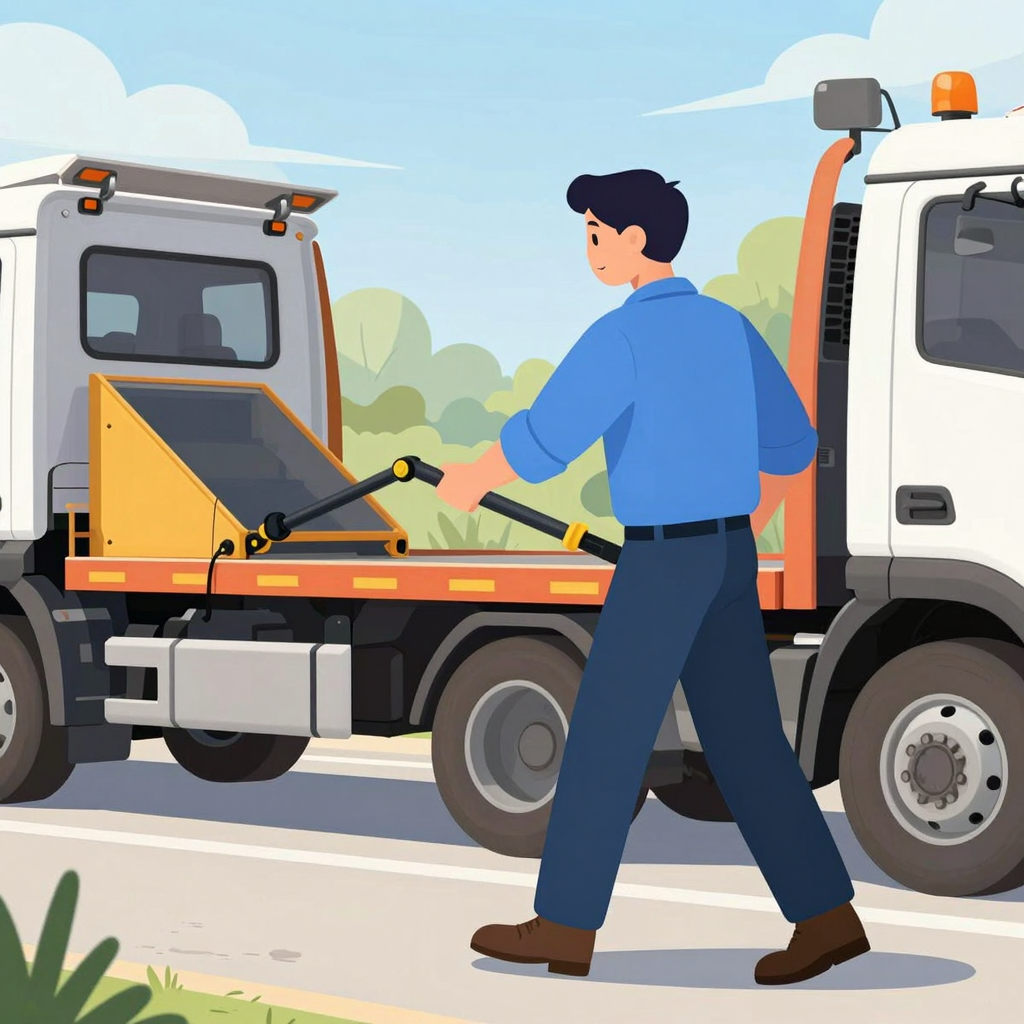
Introduction: The Importance of Knowing How to Tow a Truck
Understanding how to tow a truck is an essential skill, particularly for business owners in the construction and agricultural sectors. Tow trucks are not just a means to recover a vehicle; they are pivotal in maintaining productivity and ensuring that work continues seamlessly, even when challenges arise. Whether it’s transporting heavy equipment to a job site or dealing with breakdowns on the road, the ability to tow a malfunctioning vehicle can be the difference between a project meeting its deadlines or incurring costly delays.
In this article, we will delve into several key areas: first, we’ll cover the foundational knowledge necessary for safe towing practices. Next, we will discuss the different types of towing equipment that can be utilized, followed by essential safety tips every business owner should know. Lastly, we’ll provide insights into choosing the right towing service for your needs, ensuring you can always count on reliable support. Armed with this knowledge, you’ll be better prepared to tackle the inevitable challenges that come with running a business in these demanding sectors. For a quick overview of available roadside assistance, you can check out Mike’s Roadside Service.
Enhance your towing skills and confidence to keep your business moving forward!
Best Practices for Towing a Truck Safely and Efficiently
Towing a truck requires a careful approach to ensure safety and efficiency. Here are some best practices that business owners should consider:
1. Choose the Right Equipment
- Tow Vehicle Capacity: Make sure the tow vehicle can handle the weight of the truck being towed. Exceeding the towing capacity can lead to accidents and damage.
- Proper Hitch and Connections: Utilize the correct hitch and ensure all connections (safety chains, lights, and electrical) are secure and functional. As highlighted by the National Highway Traffic Safety Administration (NHTSA), safety chains should be connected in an ‘X’ pattern for additional security.
- Pre-trip Inspection: Conduct a thorough check of your tow vehicle and the truck being towed. This includes tires, brakes, and lights to ensure everything is in working order, as emphasized by sources like Consumer Reports.
2. Legal Considerations
- Compliance with Regulations: Familiarize yourself with local and federal towing laws, including size and weight restrictions imposed by the Carmack Amendment which holds carriers responsible for cargo damage. Proper documentation should be in place to mitigate legal disputes.
- Insurance Requirements: Ensure that your business has adequate insurance coverage that meets legal standards for towing operations. This includes potential liability for any damages that may occur during the towing process.
3. Safe Driving Practices
- Driving Cautiously: Towing changes your vehicle’s handling. Allow for extra stopping distance and be more cautious while turning, accelerating, and braking. Additionally, be mindful of weather conditions and adjust driving accordingly.
- Weight Distribution: Ensure that the cargo in the towed truck is secure and properly balanced to maintain control. Overloading can cause sway and instability.
By following these best practices, business owners can enhance the safety and efficiency of their towing operations, minimize legal risks, and ensure compliance with relevant regulations. For those in Houston looking for towing services, check out Mikes Towing for more information on our offerings.
Comparing Towing Equipment for Trucks
When it comes to towing trucks, having the right equipment is essential for safety and efficiency. Below is a comparison table of different towing equipment options along with their features, advantages, and recommended usage scenarios.
| Towing Equipment | Features | Advantages | Recommended Usage |
|---|---|---|---|
| Rollback Tow Trucks | Hydraulic tiltable flatbed | Minimal vehicle damage, great for AWD vehicles | Accident recovery, long-distance towing |
| Wheel-Lift Tow Trucks | Metal forks lift the front or rear of vehicle | Compact design, quick deployment, low cost | City short-distance rescue |
| Integrated Tow Trucks | Built-in winch and boom | Higher towing capacity, enhanced stability | Heavy-duty jobs, construction sites |
| Portable Tow Dollies | Small, mobile device for temporary towing | Easy to transport, suitable for short moves | Temporary towing, short distances |
For more information on towing services, check out Mikes Towing and Mikes Roadside Service for assistance.
Safety Precautions for Towing a Truck
When it comes to towing a truck, ensuring safety is paramount. Business owners engaged in towing services must adhere to essential safety precautions to prevent accidents and guarantee the safety of both the operatives and other road users. Here are vital safety precautions to consider:
Inspect Vehicles and Equipment
- Pre-Tow Inspection: Before you tow, conduct a thorough inspection of both the towing and towed vehicles. Look for:
- Tires: Ensure that they are properly inflated and free from damage. Uneven tire pressure can affect handling and lead to blowouts.
- Brakes: Test brakes for functionality. If the vehicle being towed has a braking system, confirm that it’s working.
- Lights: Check that all lights, including brake lights, turn signals, and hazards, are operational.
- Hitch and Chains: Verify that the hitch is correctly mounted and rated for the weight you’re towing. Ensure safety chains are crossed and securely attached to both vehicles.
- Load Distribution: Ensure that the load is evenly distributed to prevent swaying, which can result in loss of control. The load should also be secured with appropriate tie-downs.
Use Proper Safety Gear
Investing in proper safety gear can significantly reduce the risks associated with towing:
- Quality Tow Hitch and Ball: Ensure that the hitch and ball are rated for the weight of the truck you are towing. Inspect both for wear and tear before each use.
- Brake Controller: If towing a trailer with brakes, use a brake controller to ensure smooth, controlled stops.
- Breakaway Kit: This device engages the trailer’s brakes in the event of a disconnection, preventing further accidents.
Follow Safe Driving Practices
- Speed Limits: Stick to the posted speed limits, especially since towing affects braking distances. Avoid exceeding the maximum weight limits set by vehicle specifications.
- Stay Alert: Always remain vigilant of your surroundings. Changes in road conditions, weather, or traffic can affect towing stability.
- Avoid Sudden Movements: Make gradual starts, stops, and turns. Sudden movements can destabilize the tow.
Regular Maintenance
Regularly serviced vehicles perform better. Schedule maintenance checks to prevent potential mechanical failures before trips. This includes ensuring that towing equipment complies with safety standards, such as those outlined by the U.S. Department of Transportation.
By incorporating these safety precautions, you can significantly reduce the likelihood of accidents while towing. Whether you are in need of a towing service or trying to improve your towing operation, it’s crucial to prioritize safety above all. For more information about our towing services, learn more here.
“On June 20, 2016, Tom Allegretti, President and CEO of American Waterways Operators (AWO), described the U.S. Coast Guard’s Subchapter M regulations as ‘the most significant new regulation our industry has ever seen, with the potential to take safety and environmental stewardship to an unprecedented level.’” – American Waterways Operators
Adhering to towing regulations not only improves safety but also instills public trust in towing operations, reminding business owners of their responsibility to comply with legal guidelines. For further information on towing services, you can learn more about our towing company.
Steps for Towing a Truck: A Comprehensive Guide for Business Owners
Towing a truck requires careful planning and execution to ensure safety and effectiveness. Follow these steps to tow a truck properly:
1. Assess the Situation and Prepare
- Evaluate the Truck’s Condition: Before towing, assess the condition of both the truck being towed and the tow vehicle. Ensure that both are functional and that the towed truck’s transmission is in neutral and the parking brake is disengaged.
- Check Towing Capacity: Confirm that your tow vehicle is rated for the weight of the truck you intend to tow. This information is typically found in the owner’s manual.
2. Gather the Necessary Equipment
- Choose the Right Tow Method: Based on the type of truck being towed, decide whether to use a flatbed trailer, tow dolly, or a traditional towing method.
- Ensure Proper Hitch and Safety Chains: Use a Class V receiver hitch and secure safety chains in a ‘Z’ pattern to ensure stability during towing. Safety chains are critical to prevent separation if the hitch fails.
3. Perform a Pre-Tow Inspection
- Inspect All Equipment: Check the tow vehicle, trailer, and any couplings for wear and tear. Ensure brake lights and signals are functional and that all connectors are secure. Following a checklist can help ensure nothing is overlooked.
- Verify Load Distribution: If using a trailer, make sure the load is distributed evenly to prevent swaying during transport.
4. Connect the Vehicles
- Attach the Tow Dolly or Trailer: Safely connect the tow dolly or flatbed trailer. Make sure it’s locked in place and ensure that the hitch is securely attached to the tow vehicle.
- Connect Electric and Brake Systems: If applicable, connect the braking system of the towed vehicle to the controller in the tow vehicle. This is essential for controlled stopping.
5. Conduct a Functional Test
- Test Brakes and Lights: Before hitting the road, test the trailer lights and brakes to ensure they are functioning properly. This simple step can prevent accidents and legal issues.
6. Towing Protocol
- Drive Cautiously: While towing, drive at a safe speed, increase following distances, and avoid sudden maneuvers. Keep in communication with the driver of the towed truck, if present, to coordinate movements.
- Monitor for Issues: Regularly check the connections and the condition of the towing setup during transit. Be prepared to stop if any problems arise.
7. Post-Tow Procedures
- Unhook Properly: Once you have reached your destination, carefully disconnect the towing equipment, ensuring to secure it properly.
- Conduct a Post-Tow Inspection: Examine both vehicles for any potential damage or issues that may have arisen during the towing process. Maintain logs for any incidents or observations to improve future towing practices.
For businesses specializing in towing, adhering to these steps is vital for operational efficiency and safety. Learn more about our towing services here.
Preparing Your Truck for Towing
When it comes to towing another truck with your own, preparation is key to ensuring safety and efficiency. Here are the essential steps to properly prepare your truck for towing:
1. Check Weight Limits
Before you hit the road, it’s crucial to verify that your tow truck can handle the weight of the vehicle you plan to tow. Check both the Gross Vehicle Weight Rating (GVWR) and the Gross Combined Weight Rating (GCWR). The tow truck’s capacity must exceed the total weight of both the towed vehicle and any cargo you’re carrying. According to the Federal Motor Carrier Safety Administration, exceeding these limits can lead to serious safety issues and legal repercussions.
2. Gather Necessary Equipment
To ensure a safe towing process, equip your truck with the following essentials:
- Safety Chains: At least two sets to secure the towed vehicle.
- Winch and Cables: For easier recovery and secure towing.
- Wheel Chocks: To prevent the towed vehicle from rolling.
- Proper Lighting: Ensure your tow lights are functioning and visible for safety.
- Straps or Bars: Use these to securely fasten the towed vehicle; improper securing can lead to accidents.
Make sure to inspect all the equipment for wear and tear before the trip.
3. Securing the Vehicle Being Towed
Properly securing the vehicle is critical to avoid any movement during transport. Here’s how:
- Positioning: Align the vehicles so that they are close together to minimize the stress on connections during towing.
- Use Quality Tie-Downs: Ratchet straps are preferable as they offer a strong hold. Ensure that the vehicle is securely tied down, with no slack.
- Check Balance: Ensure the load is evenly distributed across both vehicles. Unbalanced loads can lead to handling issues and increase the risks of accidents.
Following these preparation steps will help guarantee a successful towing process. For more assistance or professional towing services, consider reaching out to Mike’s Towing for expert help in Houston.
Based on user experiences and testimonials regarding towing truck operations, several key themes emerge that highlight both the successes and challenges faced by businesses in the industry.
Successes in the Towing Truck Industry
- Reliability in Extreme Conditions
- Many towing truck operators report high levels of reliability, particularly during extreme weather conditions. Operators have shared experiences where robust trucks responded effectively during snowstorms and heavy rains. These trucks often boast substantial towing capacities, with some models capable of handling up to 25,000 lbs, allowing for versatile operations across varied terrains.
- Positive Customer Feedback
- Customer reviews emphasize the importance of prompt response times and professionalism in towing services. For instance, during an emergency tow, a customer recounted, “They arrived in under 20 minutes and got my car off the road safely-exactly what I needed in a crisis.” Such positive experiences contribute to high customer retention rates.
- Emission and Cost Efficiency
- Modern towing trucks, particularly new models equipped with electric-assist technology, have enhanced fuel efficiency while lowering operational costs. A case study highlighted a company that reduced its fuel expenses and increased annual revenue by 25% after upgrading its fleet to these advanced trucks.
- Technology Integration
- The adoption of GPS and real-time diagnostics has significantly improved service response times. These technologies facilitate better dispatching and maintenance predictions, showing businesses how investing in technology can lead to improved overall performance.
Challenges Faced by Towing Truck Operators
- High Maintenance Costs
- Operators report that while modern trucks are efficient, they can also incur high maintenance costs. Issues related to electrical systems and hydraulic components are particularly concerning; 65% of a surveyed group reported unexpected complications in these areas within the first few years of ownership.
- Physical and Mental Strain
- Towing can be physically demanding, requiring drivers to handle heavy equipment and work long, irregular hours. Employees report significant mental stress, especially when dealing with emotional customers during breakdowns or accidents.
- Regulatory and Insurance Hurdles
- As indicated by industry reports, towing businesses face increasing regulatory scrutiny and rising insurance costs, which can affect operational viability. Companies are urged to stay updated with the latest regulations to avoid compliance issues.
- Workforce Challenges
- Finding qualified personnel remains a struggle, with many businesses seeking trained technicians capable of specialized repairs. Additionally, the emotional toll and fatigue from constant readiness to respond to towing calls can lead to high turnover rates in the workforce.
Conclusion
The towing truck industry showcases a mix of advancement and difficulty, with companies that embrace technology and focus on customer service likely to succeed. Continuous improvements in operational efficiencies and understanding the psychological challenges faced by drivers are crucial for fostering a satisfied and productive workforce.
For more insights into professional towing services, you can learn about our roadside services or check out our Houston towing company.
Towing Statistics in 2023
Understanding the importance of proper towing techniques is crucial for business owners in the towing and transportation sector. Here’s a chart that visualizes some key towing statistics from 2023, highlighting the total towing incidents, accident rates, and peak towing volume:

- Total Towing Incidents: Approximately 46 million nationwide.
- Annual Accident Rate: 8.7 accidents per 100,000 towing events, indicating a slight increase due to rising traffic volume and congestion.
- Peak Towing Volume: The highest month for towing incidents was July, with 4.2 million towing occurrences.
These statistics underscore the need for proper techniques and safety measures when towing vehicles, to reduce accident rates and maintain operational efficiency.
For more information on safe towing practices, you can learn more about our towing services or check out our roadside assistance options.