
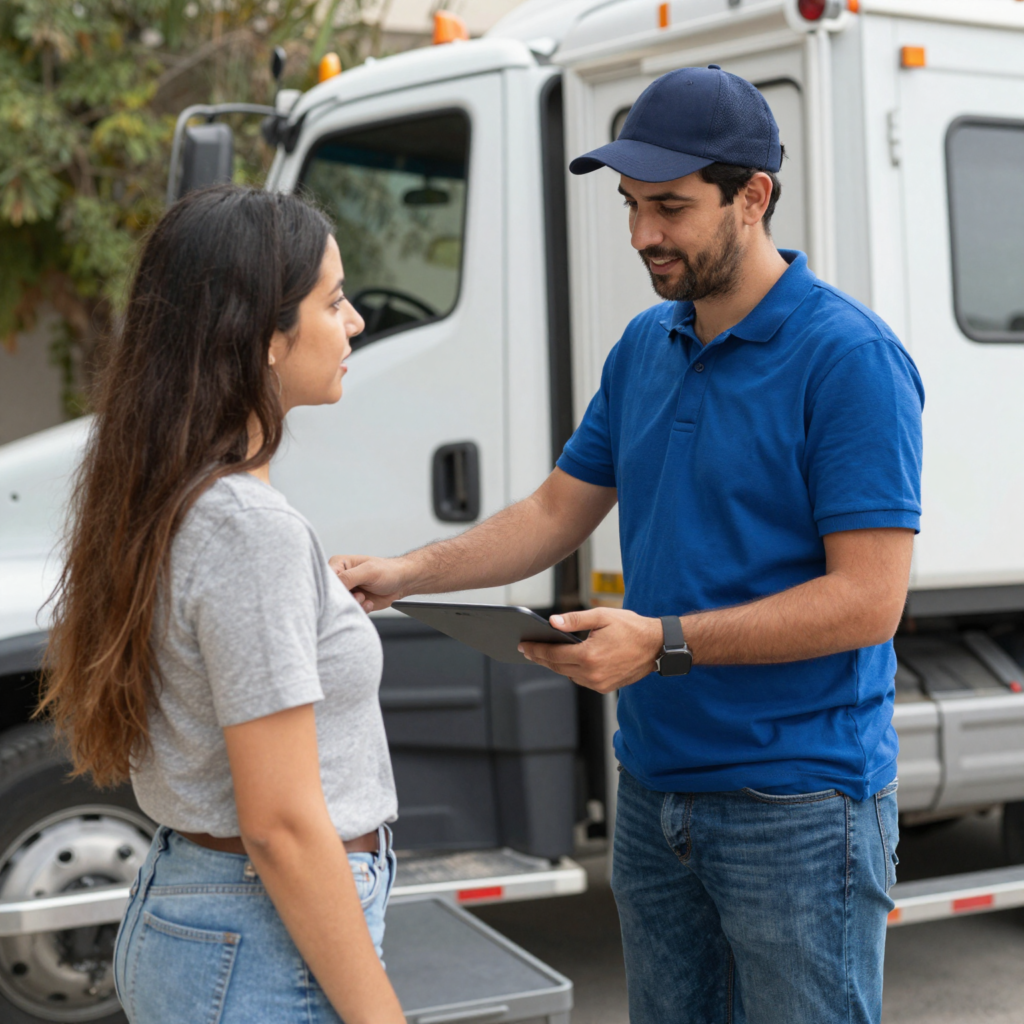
Introduction
In today’s interconnected world, the importance of effective communication cannot be overstated, especially for business owners in the towing industry. Knowing how to say “tow truck” in Spanish is not just an academic exercise; it’s a vital skill that can open doors to new customers and enhance service delivery in diverse communities. As businesses expand globally, the ability to engage with Spanish-speaking clients becomes crucial. This knowledge not only fosters better client relationships but also facilitates smoother operations, ensuring that services like Mike’s Towing are accessible to everyone.
The demand for bilingual communication in industries like towing is rising, as it allows businesses to bridge language barriers effectively. By embracing tools like Spanish translation for everyday terms, operators can simplify interactions and demonstrate inclusivity. This article will explore how understanding the Spanish language can improve business communication and customer service in the towing sector, creating a more welcoming environment for all clients. Navigating the global market necessitates these skills, and as we delve deeper, you’ll discover actionable insights that will help you enhance your service and reach.
Common Use Cases for Tow Trucks in Business
Understanding the role of tow trucks in various business scenarios is critical for effective operations. Here are some common use cases:
-
Roadside Assistance: Businesses offering roadside assistance often depend on tow trucks. They help drivers in distress by towing disabled or damaged vehicles to safety or repair shops. Learn more about our roadside services.
-
Accident Recovery: In the aftermath of vehicle accidents, tow trucks are essential for clearing roadways and transporting damaged vehicles. Timely removal helps reduce traffic congestion and safety hazards.
-
Illegal Parking Enforcement: Tow trucks are frequently used to remove vehicles that are illegally parked, especially in commercial areas where space is limited. This ensures that businesses have access to necessary parking.
-
Equipment Transport: Several businesses utilize tow trucks to move heavy equipment between job sites. Their robust design allows for the secure transport of machinery and tools that may not be roadworthy.
-
Fleet Management: Companies managing fleets of vehicles often rely on tow trucks for maintenance and logistics. This includes transporting fleet vehicles between locations for repairs or servicing.
Importance of Understanding “Tow Truck” in Spanish
For businesses operating in bilingual regions, knowing how to say “tow truck” in Spanish-“grúa” or “camión de remolque”-can improve communication with Spanish-speaking clients and partners. This can enhance customer service and foster better relationships, especially in diverse communities where effective communication is key.
By utilizing tow trucks appropriately, businesses can ensure smooth operations and maintain a professional image, fostering a more efficient work environment. For more on our towing services, visit our towing company in Houston.
How Do You Say ‘Tow Truck’ in Spanish?
For business owners working with Spanish-speaking clients or partners, understanding how to communicate basic terms can greatly enhance service and relationship-building. One such essential term is ‘tow truck.’ In Spanish, the direct translation is “grúa.” This term is widely recognized across various Spanish-speaking regions.
Regional Variations
While “grúa” serves as the standard term, there are some regional variations worth noting:
- México: The term “la grúa” is commonly used. It’s important for effective communication, particularly in urban areas where tow services are frequently needed. You can find more on local terminologies for towing in articles discussing Mexican slang for towing services.
- Spain: The term “camión de remolque” occasionally appears, especially in official contexts or legal documents. This literally translates to ‘truck for towing’ and is used to ensure clarity in legal and formal situations. Learn more about the translation.
- Argentina: Similarly, “camión grúa” may be used, signifying a tow truck with a crane, which can be a standard vehicle in this region.
Examples of Usage
- In a sentence: “Un día recibió una llamada de una grúa para un vehículo descompuesto.” (“One day he received a call from a tow truck for a broken-down vehicle.”) This example highlights the practical use of the term in everyday situations.
Conclusion
Understanding how to say “tow truck” in Spanish not only equips business owners with the necessary vocabulary but also fosters better interactions with clients and partners in the Spanish-speaking market. For those looking for towing services, Mike’s Towing provides excellent support; you can check our Houston Towing Services for assistance.

The Importance of Bilingual Communication in the Towing Industry
In the towing industry, effective communication is vital. With a diverse customer base that often includes non-English speakers, the ability to communicate in multiple languages, particularly Spanish, can enhance customer service and operational efficiency significantly.
Why Bilingual Skills Matter
Understanding Spanish in customer interactions allows towing businesses to connect more deeply with clients who are primarily Spanish speakers. According to recent statistics, 58% of customers are willing to wait longer for support in their first language. Furthermore, 62% of customers are more forgiving of service issues when they are addressed in their preferred language (Radius). This indicates that bilingual representatives can help mitigate potential frustrations and improve overall customer satisfaction.
Operational Efficiency and Customer Retention
Bilingual communication also has a direct impact on operational efficiency. Bilingual agents can handle inquiries more effectively, reducing delays that may arise from language barriers. Businesses that integrate multilingual services into their customer experience not only improve satisfaction but also increase their market reach (Language Testing).
Employing bilingual strategies can lead to better customer relationships and enhanced brand loyalty. A study revealed that organizations investing in language capabilities experience a significant boost in customer retention, with many reporting that they lose up to 29% of potential clients due to a lack of multilingual support (SuperStaff).
Testimonials from the Industry
As noted by Forbes, introducing bilingual customer support enhances service quality and creates a more loyal customer base. The ability to communicate in a customer’s native language fosters a connection that resonates beyond mere service-it builds trust (Forbes).
In conclusion, bilingual communication is not merely a nice-to-have; it is a critical element for success in the towing industry. Business owners should prioritize hiring staff who can effectively communicate in both English and Spanish to meet the diverse needs of their clientele and capitalize on the benefits of enhanced service delivery. For example, Mikes Towing emphasizes the importance of multilingual support in ensuring a seamless towing experience for all customers.
User Feedback on Bilingual Tow Truck Services
In recent years, the demand for bilingual towing services has grown, particularly in diverse communities. User testimonials provide a clear picture of both the positive and negative experiences customers have had with these services.
Positive Experiences
- Reliable and Efficient Service: Many customers have praised companies that offer bilingual services for their reliability. For instance, a review from Siva Towing highlights their quick response times and efficiency when handling emergencies. This is particularly appreciated during stressful situations where clear communication is critical.
- Enhanced Communication: Bilingual operators have received commendations for making customers feel more at ease. The ability to communicate effectively with clients in their preferred language minimizes misunderstandings and adds a personal touch to the service. Reviews frequently mention that this ability helped in explaining the towing process clearly.
- Increased Trust: A testimonial from a Facebook post about GG Towing emphasizes their honesty and fair pricing, two aspects that build trust with customers. The bilingual capability reassures clients that they will understand the costs involved without any hidden fees.
Negative Experiences
- Limited Service Areas: Some customers have lamented that not all bilingual tow truck services operate in their area. This can be particularly frustrating when a community has a significant language barrier yet lacks sufficient service options.
- Inconsistent Quality: While many have had excellent experiences, there were instances where users felt that not all employees were equally proficient in bilingual communication. This inconsistency led to some misunderstandings during service calls.
In summary, bilingual services in the towing industry often garner positive feedback, particularly regarding enhanced communication and efficiency. However, service limitations and inconsistencies can detract from the overall experience. For business owners looking to enhance their service offerings, considering bilingual capabilities can be a significant advantage. Explore more about our towing services in Houston
| Company Name | Service Areas | Languages Supported (Including Spanish) |
|---|---|---|
| Tow Squad | Los Angeles, CA and surrounding areas (e.g., Long Beach, Pasadena, Santa Monica) | English, Spanish |
| Roadside Assistance (AAA California) | Entire state of California, including Los Angeles | English, Spanish |
| Towing Service in Los Angeles | Los Angeles County, including Downtown LA, West Hollywood, Culver City, and Baldwin Hills | English, Spanish |
Sources:
- Tow Squad – Official Website
- AAA California – Roadside Assistance Services
- Towing Service in Los Angeles – Google Business Profile
For business owners considering towing services, this table offers a concise comparison of service areas and language support, ensuring you choose a provider that meets your needs.
Projected Growth of Towing Services in Spanish-speaking Areas
As the demand for towing services continues to rise in Spanish-speaking regions, businesses need to adapt by offering bilingual services. The projected growth of the towing services market underscores this necessity. In 2023, the towing services market was valued at approximately $2.3 billion and is expected to grow to $3.9 billion by 2033. This represents a Compound Annual Growth Rate (CAGR) of 5.4% over the decade, highlighting the increasing need for effective communication and service access in these communities.

Key Insights
- 2023 Market Value: $2.3 Billion
- 2033 Projected Market Value: $3.9 Billion
- CAGR: 5.4% over the decade
For more details about towing services and related support, check out our roadside assistance services or see how we can help if you’re looking for towing companies in Houston.
Impact of Bilingual Communication on Business Success
Bilingual communication is a pivotal asset for businesses, particularly in regions with diverse populations. It facilitates better customer engagement and opens up new markets. As Rines Angel Fund emphasizes, “Companies that embrace multilingualism not only enhance customer satisfaction but also witness improved market penetration and customer loyalty.”
In the towing industry, having staff who can communicate in multiple languages can lead to increased trust and rapport with clients from different cultural backgrounds. The ability to converse in a customer’s preferred language not only fosters a better customer experience but can significantly contribute to a business’s overall success.

For more insights on how bilingual services can enhance customer satisfaction, check this informative article. Moreover, understanding how to provide effective roadside service in the language of your customer can differentiate your towing business in a competitive market.
Conclusion and Call to Action
Understanding how to say “tow truck” in Spanish-“grúa” or “camin de remolque”-is essential for anyone in the towing industry. As the Hispanic population continues to rise, effective communication becomes crucial in enhancing customer relations and improving service efficiency. By being able to converse in Spanish, business owners can build stronger connections with their clientele, which can lead to increased satisfaction and loyalty.
Moreover, investing in language skills not only helps in day-to-day operations but also minimizes language barriers that could otherwise hinder business growth. To further enhance your business capabilities, learn more about the advantages of bilingual communication in the towing sector.
Don’t wait; start your journey toward bilingual proficiency today, and position your business for success in an increasingly diverse marketplace.