

Introduction
Have you ever wondered what happens to a car parked on private property when it’s time for repossession? It’s a question that can leave business owners anxious, especially when they realize that authorized towing services, such as Mike’s Towing, can repo vehicles legally from their premises. Knowing the ins and outs of vehicle repossession not only safeguards your business assets but also keeps you informed about your rights as a property owner.
In today’s fast-paced economy, understanding car repossession laws is vital for anyone running a business-especially those dealing with vehicle storage or leasing. With the risk of costly liabilities and potential disputes, insights into what tow truck drivers can do on private property are crucial. So, what should you know about the towing process and how it impacts your business? Let’s explore this important topic and ensure you’re well-prepared to navigate the complexities of property and repossession laws.
Key Considerations for Business Owners Regarding Car Repossession on Private Property
As a business owner, understanding the laws and best practices around vehicle repossession on private property is crucial. Here are some key considerations to keep in mind:
- Understand the Legal Restrictions: Repossession agents cannot enter secured areas, such as gated facilities or locked garages, without permission or a court order, ensuring that repossession must be conducted peacefully.
- Signage: Clearly posted signage in your parking areas can inform customers and employees of your repossession policy and protect your property.
- Communication with Employees: If employees use company vehicles, maintaining clear communication regarding their financial responsibilities can minimize disruptions due to potential repossession.
- Proactive Management: Establish internal policies to address late payments or financial concerns with employees to reduce the risk of repossession.
- Know Your Rights: Ensure that you are aware of both state and local laws regarding repossession to avoid any legal liabilities.
For more detailed information about towing services and practices, you can learn more about our towing company in Houston or explore our roadside service options.
Legalities Surrounding Car Repossession on Private Property
Car repossession, particularly on private property, involves a complex interplay of laws and regulations that can vary significantly from state to state. Understanding these laws is crucial for business owners who may encounter situations where they need to reclaim property or if they decide to utilize towing services for abandoned or illegally parked vehicles.
General Repossession Laws
In the United States, creditors have the right to repossess vehicles once a borrower defaults on a loan. However, they must adhere strictly to state-specific regulations. According to the Consumer Financial Protection Bureau, the repossession must not breach the peace. This means that no threats, violence, or illegal entry into a home or locked garage can occur during the repo process.
Restrictions on Private Property
Most states have strict guidelines regarding repossession on private property. Repossession agents cannot freely trespass, meaning they are not allowed to enter a homeowner’s garage or other secured areas without permission. As noted by the Federal Trade Commission, if a repo agent enters private property without consent, it may be considered illegal and can result in civil lawsuits or even criminal charges.
State Variances in Law
Every state has its own specific laws regarding repossession. For instance, in some states, lenders are allowed to repossess a vehicle from a public area such as a driveway or parking lot, but not from a more secure location like a locked garage. One detailed resource is the Nolo.com guide, which illustrates these variances across states.
Key Takeaways for Business Owners
For business owners looking to enforce vehicle repossession, it’s essential to:
- Know Your State Laws: Familiarize yourself with how your state handles private property repossession to avoid legal repercussions.
- Utilize Professional Services: Companies like Mike’s Towing offer expert towing services that comply with local laws, ensuring you handle repossession correctly.
- Document Everything: Keep accurate records of communications and actions related to the repossession process. This documentation can prove vital if legal questions arise.
Conclusion
Understanding the legalities surrounding car repossession on private property helps mitigate risks for business owners. With state laws varying widely, consulting with legal experts or reputable towing services can provide clarity and assistance in adhering to regulations while protecting your property rights.
Understanding Rising Car Repossessions: Key Statistics for Business Owners
As of 2023, car repossessions in the United States have surged to approximately 1.6 million, a longstanding peak not seen since 2019. A report from Cox Automotive highlights that this rise is largely due to elevated interest rates, soaring vehicle prices, and increased economic pressures on consumers. Notably, subprime borrowers, those with lower credit scores, have faced a striking repossession rate of 6.65% as of September 2023 – the highest since tracking began in 1994.
The Federal Reserve Bank of New York recently reported that the delinquency rate for auto loans reached 5.2% in the third quarter of 2023, indicating growing financial strain among car owners. This trend paints a troubling picture for business owners, particularly those in retail or service industries that rely on consumer spending.
Implications for Business Owners
- Increased Financial Strain: As consumers prioritize essential payments like car loans, discretionary spending on goods and services may decline.
- Risk of Property Damage: Businesses must be mindful that with higher repossession rates, vehicles might be parked on their premises, increasing the chances of property damage during repossessions.
- Potential Legal Complications: Understanding the legal aspects of repossession is crucial. In many states, tow truck operators can legally repossess vehicles on private property, but they must follow specific protocols to avoid liability issues.
For businesses looking to navigate these trends, Mike’s Towing can provide insights on managing towing and repossession services effectively.
| State | Repossession from Private Driveway/Garage Allowed? | Conditions (e.g., “Breach of Peace” Requirement) | Key Legal Notes |
|---|---|---|---|
| California | Yes, but with restrictions | Must not breach the peace; repossession agents cannot enter a locked garage or use force. | Under CA Civil Code § 2938, repossession must be conducted without disturbing the peace. Forceful entry into a locked garage is prohibited. |
| New York | No | Repossession agents may not enter private property without permission; must avoid breach of peace. | NY Personal Property Law § 205 prohibits repossession on private property unless consent is given. Entry into a garage or driveway without permission constitutes a breach of peace. |
| Texas | Yes | Can repossess from private property, including driveways and garages, as long as no breach of peace occurs. | TX Finance Code § 34.01 allows repossession on private property if done peacefully. However, using force or entering a locked garage is illegal. |
| Florida | Yes | Repossession must not constitute a breach of peace; cannot enter locked garages or use force. | FL Statute § 679.202 requires peaceful repossession. Entering a secured garage without consent is considered a breach of peace. |
| Illinois | No | Repossession agents cannot enter private property without consent; breach of peace is prohibited. | IL Finance Lending Act § 15 prohibits repossession from private property unless authorized by law. Entering a garage without permission is a breach of peace. |
| Massachusetts | No | Repossession must not involve breach of peace; entering a locked garage is unlawful. | MA Gen. Laws Ch. 258, § 17 prohibits repossession on private property without consent. Forceful entry or trespassing is illegal. |
| Georgia | Yes | Repossession allowed on private property if peaceful; no breach of peace. | GA Code § 10-1-130 permits repossession from private property provided it does not involve violence or trespass. |
| Arizona | Yes | Repossession permitted on private property if done without breach of peace; no forced entry into locked garages. | AZ Rev. Stat. § 44-1124 allows repossession on private property as long as no breach of peace occurs. Forced entry into a locked garage is prohibited. |
Best Practices for Business Owners: Securing Property Against Unauthorized Vehicle Use
As a business owner, ensuring that your property is secure from unauthorized vehicle use is vital for protecting your assets and maintaining a safe environment. Here are several best practices to consider:
1. Implement Access Control Systems
Utilize access control systems, such as keycard entries and automated gates, to restrict access to authorized personnel. Surveillance cameras with motion detection can also deter unauthorized vehicles effectively. Regular maintenance and updates of these systems will enhance their efficiency.
2. Designated Parking Areas
Clearly define designated parking areas for employees and customers. Use signage to inform unauthorized vehicles of potential towing consequences. This not only guides proper parking practices but also sets a precedent for enforcement.
3. Integrate Technology
Invest in vehicle identification systems, such as license plate recognition technology, to monitor and manage vehicles on your property. GPS tracking devices on company vehicles can help provide real-time alerts if a vehicle is moved without authorization. Integrating these systems with remote monitoring can facilitate swift actions when necessary.
4. Regular Security Audits
Conduct regular security audits to assess the current measures in place and identify areas for improvement. This can include reviewing surveillance footage, access control logs, and consulting with security professionals.
5. Collaborate with Licensed Towing Services
Develop relationships with reputable, licensed towing companies. Ensure they are familiar with your property and its specific needs. Having a contracted service can help streamline the towing process for unauthorized vehicles, ensuring compliance with local laws and providing peace of mind (learn more about professional towing services).
6. Training and Awareness
Train employees on proper protocols regarding unauthorized vehicles. Provide them with clear instructions on when and how to report them. Empowering your staff can enhance the overall security of your business.
7. Emergency Protocols
Establish emergency protocols to handle incidents involving unauthorized vehicles. This includes documentation procedures and communicating with local authorities as needed. Regular drills can help your team respond effectively under pressure.
8. Compliance with Regulations
Stay informed about local towing laws and regulations. Familiarize yourself with guidelines regarding signage, notification procedures, and the towing process to avoid potential legal issues (explore more about towing regulations).
By adopting these practices, business owners can significantly reduce the risk of unauthorized vehicle use on their properties while ensuring a safe and compliant environment.
Can a Tow Truck Repo Your Car on Private Property?
When it comes to repossession laws, knowing your rights and obligations is essential, especially for business owners. A secured creditor has certain rights under the law; however, these rights are not absolute and must be exercised lawfully. James L. Duff, Esq., a legal expert, articulates this critical balance:
“Under U.S. commercial law, a secured creditor has the right to repossess collateral if a business owner defaults on a loan, but only through lawful means-no self-help repossession is allowed. Repossession must follow state-specific procedures, including proper notice requirements and limitations on how and when property can be seized, particularly if it’s located on the business premises. Failure to comply can result in liability for damages.”
-James L. Duff, Esq.
This quote underlines that while creditors can recover secured assets, business owners retain their rights until proper legal procedures are completed. Any unauthorized seizure, particularly on private property, could be construed as conversion under civil law, resulting in possible punitive damages.
Key Considerations for Business Owners
- Lawful Means: Ensure that any repossession is conducted within the framework of the law.
- Notice Requirements: Creditors typically must provide notice before taking action to repossess property.
- Judicial Oversight: The importance of adhering to state laws cannot be overstated, as non-compliance can lead to severe consequences for the creditor.
If you’re facing repossession issues or need guidance on your rights, it’s advisable to consult with a legal professional specializing in commercial law. For more information on local towing services, check out Mikes Towing.
Frequently Asked Questions about Tow Truck Repossession on Private Property
Can a tow truck legally repossess my vehicle on private property?
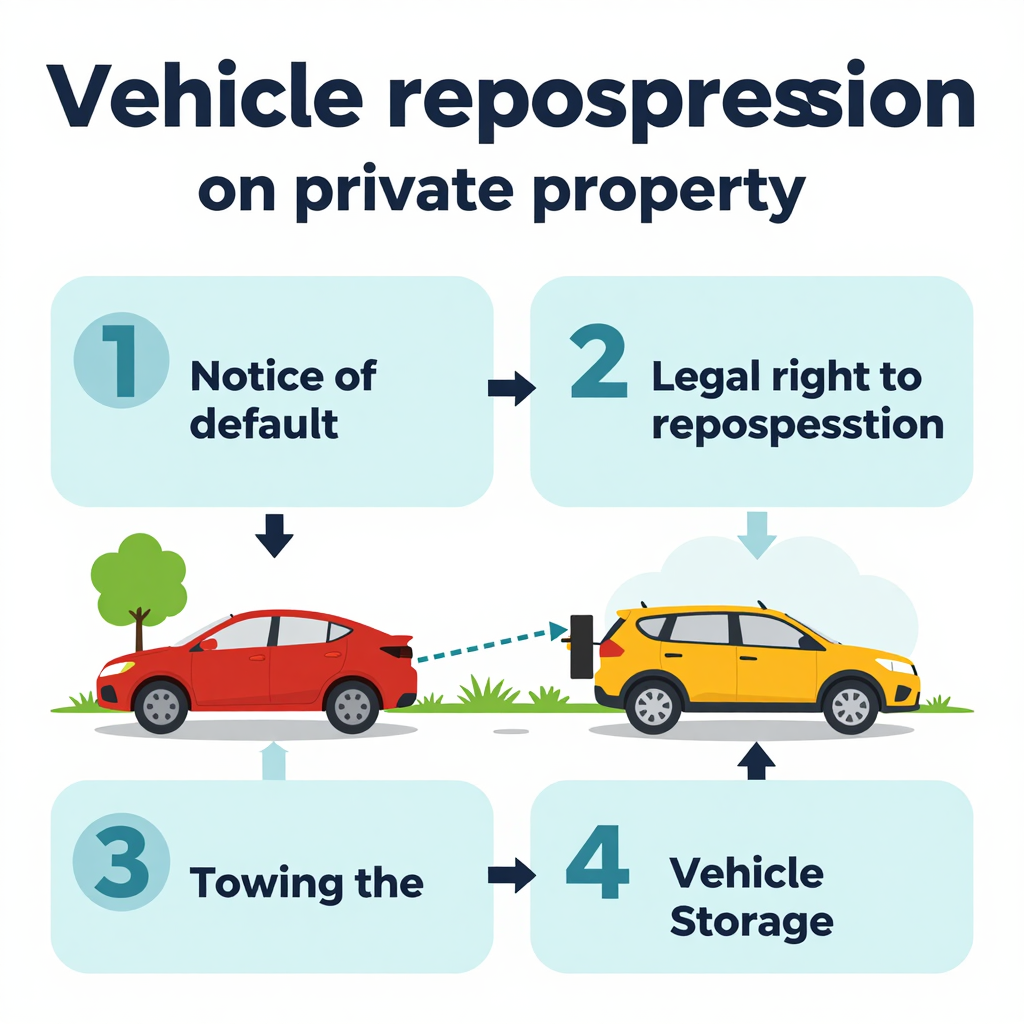
Yes, a tow truck can legally repossess your vehicle on private property if it is subject to repossession due to loan default. However, repossession must be conducted peacefully; agents cannot force entry into homes or garages, use threats, or damage any property. Violating these terms can make the repossession unlawful and may result in legal action against the repossession company.
What actions are considered illegal during repossession?
Repossession agents must not:
- Use physical force or threats to secure the vehicle.
- Enter a locked garage or shed without permission.
- Damage personal property in the process of repossessing a vehicle.
If any of these actions occur, the vehicle owner may have grounds to pursue a lawsuit for damages. You can report unlawful actions to authorities or file a complaint with the Federal Trade Commission (FTC).
What rights do consumers have about vehicle repossession?
Consumers have several rights during the repossession process, including:
- The right to receive a written notice before a repossession occurs.
- Protection against harassment or deceptive practices under the Fair Debt Collection Practices Act (FDCPA).
- The ability to seek compensation for any damages caused by unlawful repossession acts.
For more in-depth information on your rights and responsibilities during repossession, refer to guidelines from the Consumer Financial Protection Bureau (CFPB) and Nolo.com.
Conclusion
Understanding repossession laws is paramount for business owners to protect their operational integrity and avoid financial pitfalls. Navigating the complexities of these laws can seem daunting, but being informed means you can effectively manage your assets and relationships with lenders. Failure to comprehend these legalities can lead to unexpected asset seizures, legal ramifications, and significant disruptions to your business operations. As noted by the U.S. Small Business Administration, a detailed knowledge of your rights and responsibilities regarding repossession can empower you to negotiate better loan terms and shield your enterprise from needless risk. Moreover, consulting local legal experts is essential given that the specifics can vary dramatically from state to state.
If you have any questions about how these laws affect your business, or if you require professional assistance in towing or repossession matters, reach out to our team. At Mike’s Towing, we’re dedicated to providing the support you need to keep your business running smoothly. Don’t hesitate to contact us for more information and assistance with your towing and repossession needs!