
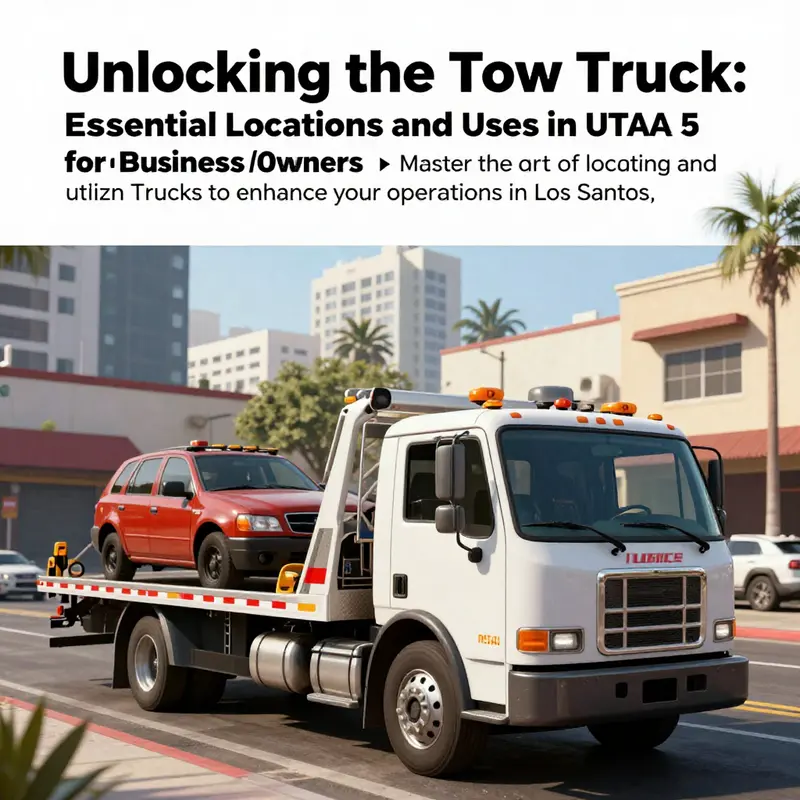
Tow trucks play a vital role in GTA 5, offering unique opportunities for business owners to engage in various missions. This guide explores not only the best locations to find tow trucks within Los Santos but also how these vehicles can be effectively used in missions and modified to suit your needs. Understanding these critical aspects will allow you to harness the benefits of tow trucks to elevate your business operations.
Finding the Tow Truck in GTA 5: Key Locations
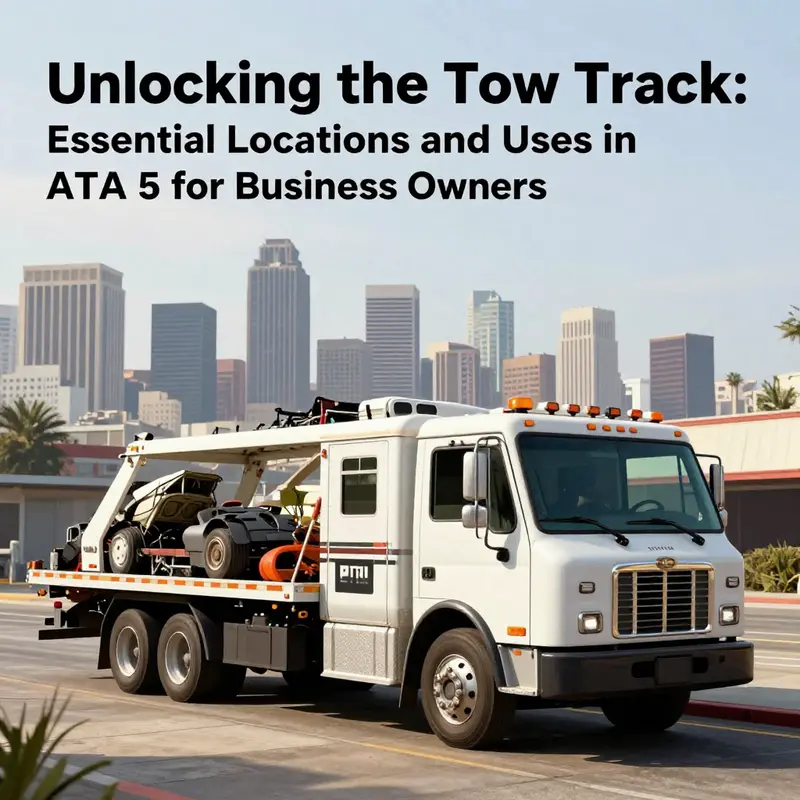
Locating a tow truck in GTA 5 is less about a single, fixed spawn and more about knowing where the game tends to seed this specialized vehicle for certain tasks. The tow truck, in the broader sense, isn’t a standard, everyday spawn you can rely on cruising the streets. Instead, it appears in a handful of strategic places and circumstances that align with missions, garages, or high-traffic zones. Reading these signals helps players stay prepared when a mission or a custom build calls for a wrecker, hauling, or a temporary cling to the wheels of a towed car. The thread that ties all of these locations together is Los Santos’ sprawling industrial network and the way the game delegates towing responsibility in both story and optional gameplay moments. In practice, the most dependable approach is to understand the combination of mission-driven spawns, plausible random appearances, and the way GTA Online expands the toolbox for players who want portable towing power. When you zero in on these patterns, the question “where is the tow truck in GTA 5?” shifts from a search query into a guided map moment that harmonizes with the city’s rhythms rather than fighting against them.
One of the clearest anchors for tow-truck spawns is mission design. Certain story beats and downloadable content chapters place a tow truck on a required path. For example, a mission tied to transporting a stolen vehicle will introduce a tow truck as the tool of the job. In these cases, the vehicle is not wandering the city by luck; it’s assigned to you to complete the objective. Similarly, when a villain or a rival character relies on a tow truck to move a car or haul a piece of contraband, the game scripts that vehicle into the mission scene, sometimes with a narrow window of opportunity. This mission-driven spawn model helps players recognize that the tow truck can be coaxed into the world precisely when the narrative needs it, rather than waiting for a random chance to line up. This is a pattern that seasoned players learn to anticipate as they advance through the main arcs and their associated side tasks.
Outside mission moments, the game offers a few plausible locations where tow trucks can appear, and a player who knows the lay of Los Santos will catch them parked or rolled into view with a bit of patience. The first of these reliable spots is near industrial facilities—places where the city’s logistical backbone runs long and heavy. On the northwest edge of Los Santos, near the edge of the San Fierro-inspired industrial cluster, the Garbage Processing Plant becomes a practical clue. The lot around that area is one of those zones where heavy machinery and heavy vehicles share space. Tow trucks can be observed idling or parked near loading docks, waiting for rotations that require specialized equipment. It’s not an everyday sight, but it’s a dependable hotspot when the mission call comes or when you simply need to position your own vehicle for a job that demands a wrecker.
Another robust anchor is the port and freight-related zones. The southern reaches of Los Santos, especially near the Port of Los Santos, are classic tow-truck magnets. The area includes freight stations that require hauling or repositioning of heavy loads. In casual exploration, you might spot a tow truck parked near docks, or tucked into a side alley near Cassidy or Boulevard Del Perro as container ships and containerized freight function as a natural stage for towing operations. The port’s transport traffic creates a plausible ecosystem for a tow truck to appear, and, when a mission or a random event aligns, the vehicle steps into the scene with minimal fanfare. This is one of those sections of the city where the world feels lived-in—where you could theoretically need a tow to remove a damaged ride or to clear a blocked lane during a chaotic moment on the waterfront.
A third, equally useful category centers on the city’s garage culture. GTA 5 pedestrians and players alike encounter a mosaic of auto repair shops and underground garages where modding and customization take place. Some unofficial repair hubs or hidden garages—situated in pockets around Vice Point or in alleys near Grove Street—hold unseen or infrequently used tow trucks. These locations serve as practical backdoors for players who want to pick up a tow truck without relying on mission scripting or random spawns. The presence of a tow truck in these nooks isn’t guaranteed, but when it happens, it’s a strong reminder that Los Santos hides multiple paths to the same tool. This mirrors how the real world uses secondary markets and service bays to keep a vehicle on the road, even if it’s not present in the open world all the time.
While the above locations provide a strong map, a player should also be prepared for spontaneous spawns in high-traffic corridors. The city’s busiest intersections, near major arteries, or close to the airport and downtown core, can occasionally yield a tow truck as a temporary guest. Industrial districts such as the San Fierro Freight Yard or the Los Santos Port also see brief appearances, especially during or after events that involve vehicle movement, cargo transfers, or escort-style sequences. In practice, the random-spawn potential sits like a subtle reminder that the game rewards timing and proximity: the closer you are to a mission hub or an active freight node, the higher your chances that a tow truck silently arrives in the periphery, roping your goals into alignment without explicit scripting.
For players who enjoy GTA Online, the towing toolkit expands in meaningful ways. Private garages purchased in the online space can be configured to house specific vehicle classes, including tow-friendly rides. The Diamond Casino & Resort and Pacific Bluffs are examples of premium real estate zones where players might arrange garages with access to specialized vehicles. Cayo Perico, too, has implications for how towing services might thread into player-owned businesses or logistics operations as part of long-term operation and progression. In this online ecosystem, the tow truck is less about random chance and more about the player’s access to facilities, customization options, and the ability to run a civilian or illicit operation that requires vehicle recovery and transport. The online layer makes the towing story feel even more authentic because players can script sequences that mimic professional roadside services, using modified vans to simulate towing work in a sandboxed economy.
If your goal is a quick acquisition, you can leverage a few pragmatic methods. The in-game phone lets you dial a Tow Truck service after unlocking that function, which is a direct, built-in way to generate a tow when the objective demands it. In GTA Online, more flexible options exist: using the Mule or Boxville-type vans, which many players adapt to imitate towing capabilities within a business or delivery context. These approaches reflect GTA’s broader design ethos: tools and vehicles exist not only to drive the plot but to empower players to craft their own missions, jobs, or scenarios around the city’s infrastructure. And while the precise spawn times of tow trucks may vary with patches and updates, the underlying logic remains consistent: tow trucks appear where they belong in the city’s machinery, sometimes waiting behind a loading dock, other times aligning with a mission’s concrete needs.
To anyone mapping this for themselves, a practical tip is to keep an eye on those industrial zones and portside areas during periods when the game emphasizes transport or cargo missions. These moments are when a tow truck is most likely to step into view, either as a scripted helper or as a vehicle awaiting a task that mirrors real-world logistics. And when you’re in a scenario that requires vehicle recovery or transport, consider the various pathways: whether the job requires a legitimate mission-driven tow, a garage-based setup, or a quick dispatch via the in-game phone. The city’s design makes all of these routes plausible, and the best approach is to stay adaptable rather than fixating on a single spawn point.
For players who want a consolidated reference as they plan their routes, the most reliable sources compile map locations, mission workflows, and spawn contingencies. In practice, cross-checking a few of these guides can help you triangulate where a tow truck is most likely to appear given your current activity. The game’s world is dynamic, but a core pattern persists: tow trucks surface where heavy transport and vehicle recovery intersect with your own objectives—the kind of convergence that makes the GTA 5 experience feel cohesive rather than random. As you explore, you’ll begin to recognize the city’s silent choreography—the way industrial zones, ports, and garages host the same tool at different moments in time—each appearance making the tow truck a little less elusive and a little more a part of Los Santos’ living engine.
For a concise primer on roadside service mechanics and to see an example of how such services are framed in a broader context, you can refer to a real-world resource that mirrors the concept in spirit: Mikes Roadside Service.
External resource: https://support.rockstargames.com/hc/en-us/articles/360050879591-GTA-5-Vehicle-Location-List
Tow Lines in Los Santos: Finding, Using, and Upgrading the GTA 5 Tow Truck Across Missions and Online
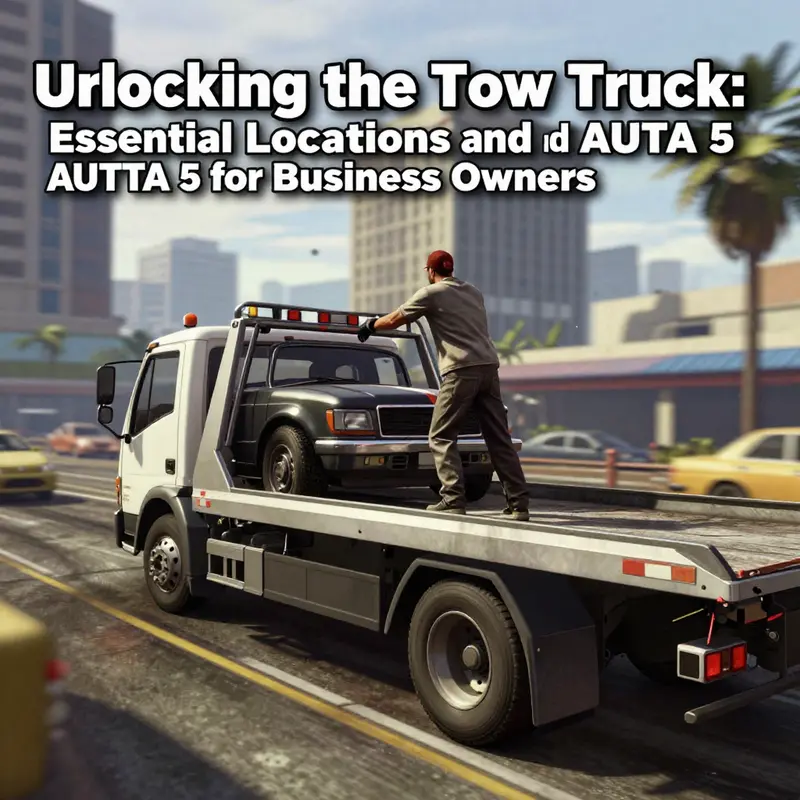
In Grand Theft Auto V, the Tow Truck isn’t a single, fixed vehicle you chase down at one depot. It’s a versatile class of vehicle that you can encounter in several distinct places around Los Santos, each with its own atmosphere and set of opportunities. This chapter threads together where you’ll most likely see a tow truck, how you can employ it in the story and in online play, and what it takes to push its performance and protection to the limit. The tow truck’s utility becomes clear once you understand its different homes in the city and how those locations align with the game’s mission tempo and online contract structure. It’s the kind of vehicle that rewards patient exploration as much as it rewards aggressive, time-sensitive maneuvering when a mission turns into a high-stakes chase through crowded streets.
First, there is the northwest edge of Los Santos, near the Garbage Processing Plant. This area sits at the city’s industrial fringe, where warehouses, loading docks, and dumpsters create a landscape that’s almost tailor-made for work vehicles. Tow trucks are parked here with enough regularity that a patient sweep of the backstreets can yield a reliable mount without triggering the attention of patrols or pedestrians. The industrial vibe isn’t incidental; the crew that works this part of the map often moves heavy loads and requires a vehicle built to haul or tow with integrity. If you’re scouting for a tow truck outside of missions, this zone is your best early stop before you commit to longer routes that thread through downtown corridors or the port.
Next, the port and freight network of southern Los Santos presents a different flavor of tow truck hunting. The Port of Los Santos and nearby freight stations, particularly near Cassidy or Boulevard Del Perro, are routinely sprinkled with tow trucks because those yards and docks handle containers, vans, and other bulky assets that need relocation without risking damage. The docks’ cordoned-off layouts, the long rows of storage crates, and the steady rhythm of cargo movement create opportunities to practice towing under realistic stress. When you’re planning a route to haul a container or to reposition a stalled vehicle within the port complex, the town’s maritime quarter becomes a practical classroom for how a Tow Truck behaves under load, how it negotiates tight entrances, and how its sturdy frame can deflect a few stubborn angles that smaller cars would dread.
Beyond those industrial frontiers, you’ll also find tow trucks tucked away in auto repair shops and hidden garages scattered across the map. Some unofficial repair hubs or concealed garages—situated near Vice Point or in alleys around Grove Street—may harbor unused tow trucks, resting in the same way a veteran support vehicle sleeps in the wings until a mission calls it to the foreground. These locations aren’t as predictable as the industrial zones, but they reward the curious player who wants a quick backup when a mission doesn’t permit a long drive or when you’d rather not risk a regular sedan getting overwhelmed by a heavy load. The sense of discovery that comes from checking these tucked-away spots is part of the game’s charm, especially when you’re juggling time and danger in a late-game sequence.
Finally, there are moments when the game itself assigns you a tow truck as part of the mission design. In several quests—most notably in late-game scenarios that hinge on moving a modified vehicle across the city—you’ll be forced to command a Tow Truck to complete a critical task. These mission-driven unlocks remind players that the Tow Truck is not merely a tool for transport but a deliberate instrument of stealth and endurance. In the story arc known as Mission #39—Tow Truck, the vehicle’s rugged framework and towing capacity become central to the heist’s stealth phase. The mission tasks you with relocating a heavily modified van while avoiding detection, and the Tow Truck’s robustness and geometry let you stay low, absorb occasional bumps, and thread through checkpoints that might otherwise threaten a smoother run with a more brittle vehicle.
If you’re looking for a quick route to a tow truck outside of the open world’s reconnaissance, the game also provides practical in-game options. You can use the phone’s towing service to summon a tow truck after you unlock that feature. In the online realm, the game’s mechanics offer a parallel path: large cargo vans can be modified or outfitted to emulate towing capabilities, allowing players to re-create the feel of a tow-truck convoy when working with contracts and freight runs. This kind of adaptation is especially useful when you’re trying to complete cargo deliveries under tight time windows or when you want to test a transport setup before committing to a full upgrade path.
What makes the Tow Truck truly compelling is not only where you can find it but how it behaves once you’ve got it. In the online universe, its durability and torque are game-changers for Freight Cargo missions, where the objective is to move containers from one site to another with an eye toward efficiency and security. Community testing data suggests that a fully upgraded Tow Truck—equipped with turbocharging and racing suspension—can post a 0–100 km/h sprint in about 6.2 seconds while carrying heavy loads. Those acceleration figures aren’t just numbers; they translate into meaningful reductions in transit times along the city’s arteries. When you weave a path that takes advantage of a strong on-ramp, a fast exit from traffic, and a calculated line through a known shortcut—say, a route that parades along Interstate 110—the savings compound. Overnight, what might take four-plus minutes can shrink to under three minutes with optimal routing, precise lane choices, and light off-road detours to bypass congested chokepoints. It’s a reminder that the Tow Truck, with the right upgrades, becomes less a bulky nuisance and more a surgical instrument for precision transport.
The assortment of upgrade paths available for the Tow Truck reinforces its dual identity as utility vehicle and performance machine. Performance upgrades such as turbochargers increase acceleration, and racing suspensions sharpen handling and stability when you’re moving a heavy load through sudden turns or uneven pavement. Improved brakes are essential when you’re carrying valuable cargo because stopping distance matters as much as forward speed in crowded city neighborhoods. Armor and protection options—reinforced chassis and, in some configurations, bulletproof tires—provide resilience against the city’s hazards, from errant gunfire to late-night road hazards. Those upgrades aren’t automatic guarantees of success, but they tilt the odds in your favor by keeping the vehicle intact and the mission on schedule.
Aesthetic customization is the cherry on top of the Tow Truck’s practical core. Players can apply paint jobs, decals, and liveries to personalize their ride, making it stand out in the lot or blend into a low-profile convoy when the mission requires discretion. The visual options aren’t just vanity; they’re a way to signal intent, mark achievements, and even identify a preferred vehicle in a crowded online session. When you’ve tuned the chassis for maximum durability and installed a sleek livery, you don’t just feel ready for the next Freight Cargo run—you look ready, too. In the end, the Tow Truck is a vehicle of two temperaments: it’s the stubborn, dependable workhorse that thrives in heavy tasks, and it’s a highly adaptable platform that rewards experimentation with upgrades, routes, and load management.
Of course, no chapter about the Tow Truck would be complete without acknowledging its limits. It isn’t designed for aerial transport, and its heft makes some maneuvers impractical in tight airspace or when you need to sprint through a sky-high checkpoint. The tow-focused playstyle shines on ground-based objectives, where durability and towing capacity translate into tangible time savings and steadier progress through mission sequences. Whether you’re threading the needle through a police perimeter or staging a precise handoff of cargo on a back street, the Tow Truck’s best moments come when you leverage its rugged frame to protect what matters most: the load, your route, and your own rating on the clock.
For players who want a structured reference on the mission side, Mission #39—Tow Truck is a touchstone. It’s not just about acquiring a vehicle; it’s about using the Tow Truck to move a heavily modified van in a way that minimizes risk and maximizes stealth. The mission emphasizes the behavior of the Tow Truck in a high-stakes scenario and demonstrates how its weight distribution, grip, and towing setup can keep you composed even when the city becomes chaotic. When you pair that mission context with online freight contracts, you begin to see a through-line: the Tow Truck is most effective when you treat it as a purpose-built tool for controlled, efficient transport rather than a casual car to park and drive home. If you’re hungry for more, the IGN guide provides a comprehensive walkthrough with step-by-step details and Gold Medal considerations that illuminate the path through Mission #39 and beyond.
In sum, the Tow Truck’s locations across Los Santos—industrial outskirts near the Garbage Processing Plant, the port and freight yards, the hidden repair hubs, and mission-driven deployments—create a cohesive ecosystem in which this vehicle thrives. Its ability to carry heavy loads, endure rough treatment, and respond to a disciplined upgrade strategy makes it a cornerstone for players who want to master both the campaign and the online contract scene. The city’s rhythm rewards those who learn when to rely on the Tow Truck’s raw power, when to dial in precision upgrades, and when to lean on careful route planning to avoid police or traffic snarls. The result is a vehicle that feels less like a novelty and more like a reliable partner in a long, complex game of delivery, stealth, and strategic timing.
External reference for deeper strategy and mission-specific workflows is available through IGN’s detailed Tow Truck guide, which compiles map locations, mission workflows, and practical tips for maximizing performance and Gold Medal requirements: https://www.ign.com/wikis/grand-theft-auto-v/Tow_Truck
Final thoughts
Mastering the ins and outs of tow trucks in GTA 5 can significantly enhance how business owners operate within the game. By knowing where to find these vehicles and understanding their capabilities, you can not only improve your missions but also engage in various gameplay strategies that can lead to financial success. Equip yourself with this knowledge, and elevate your gaming experience in Los Santos.