
Introduction
When it comes to efficiently managing a business that relies on heavy-duty trucks, understanding how much can I tow with my truck is paramount. For operations that depend on the reliable transport of equipment, whether for construction, logistics, or maintenance, knowing your truck’s towing capacity can make or break your operational efficiency. Tow capacity not only affects how much you can load but also impacts your bottom line – too little, and you risk overworking your vehicle; too much, and you risk costly breakdowns or worse, accidents. That’s why at Mike’s Towing, we bring years of expertise in the machinery industry to help business owners like you navigate this critical aspect of fleet management.
By recognizing the importance of towing capacity, you can ensure your vehicles are equipped for the job at hand. This knowledge also allows you to make informed decisions when purchasing new trucks or leveraging your existing fleet effectively. Since we specialize in towing services throughout Houston, we understand the diverse demands of local businesses. Let’s dive into how you can efficiently assess your truck’s towing capacity and optimize your operations accordingly!
Legal Towing Limits
Understanding the legal towing limits is crucial for truck owners, especially business owners managing a fleet. These limits are tiered according to weight classes and are regulated both federally and at the state level. Adhering to these towing limits is not only a matter of legal compliance but also of safety on the roads.
Weight Classes and Regulations
The legal towing limits are typically categorized into five classes:
| Class | Weight Limit |
|---|---|
| Class 1 | 0 – 6,000 lbs |
| Class 2 | 6,001 – 10,000 lbs |
| Class 3 | 10,001 – 14,000 lbs |
| Class 4 | 14,001 – 26,000 lbs |
| Class 5 | Over 26,000 lbs |
- Class 1 usually has no specific weight restrictions, but vehicle and trailer ratings must be considered.
- Classes 2 and 3 often do not have explicit limits, but regulations can vary by state, and trailers may need brakes depending on weight.
- Class 4 covers heavier loads and generally follows both state and federal regulations.
- Class 5 exceeds 26,000 lbs, which requires special permits in many states, and the maximum gross vehicle weight is often capped at 80,000 lbs under federal law.
Importance of Adhering to Limits
Exceeding legal towing limits can result in severe penalties, including hefty fines and increased insurance costs. More importantly, it raises the risk of accidents due to compromised vehicle performance and control. Truck owners should also note that equipment and braking requirements may differ based on the weight class of the trailer towed.
For detailed insights on towing services and additional towing regulations, check our roadside service for tips and expert guidance. Understanding the legal landscape will ensure safety and compliance on the road.
| Truck Model | Maximum Towing Capacity (lbs) | Relevant Notes on Towing Capabilities |
|---|---|---|
| 2023 Ford F-150 | 14,000 | The maximum towing capacity varies significantly by engine, drivetrain, and configuration. The 3.5L V6 EcoBoost engine with a 10-speed automatic transmission and rear-wheel drive achieves the highest capacity. Additional features like the Trailer Tow Package and heavy-duty cooling are required for optimal performance. |
| 2023 Ram 1500 | 12,750 | The maximum towing capacity is achieved with the 3.6L Pentastar V6 engine paired with the 8-speed automatic transmission and rear-wheel drive. A trailer brake controller and tow package are standard on higher trims to unlock full towing potential. |
| 2023 Chevrolet Silverado 1500 | 13,400 | The highest towing capacity is offered by the 2.7L Turbo I4 engine with an 8-speed automatic transmission and rear-wheel drive. For maximum towing, the Heavy-Duty Trailer Tow Package and upgraded cooling system are essential. |
| 2023 Toyota Tundra | 12,000 | The maximum towing capacity is available with the 3.5L V6 twin-turbo engine and 10-speed automatic transmission in rear-wheel drive configurations. The Tundra’s towing capability is enhanced with the available Towing Package, which includes a trailer brake controller and improved cooling. |
When it comes to towing, various elements contribute significantly to a truck’s overall towing capacity. Understanding these factors can help business owners select the right vehicle for their towing needs. Below are the key factors affecting towing capacity:
1. Engine Size
- Power and Torque: A larger engine typically provides more horsepower and torque, both of which are critical for towing heavy loads. More torque allows the vehicle to manage heavier trailers and loads effectively.
- Engine Type: Diesel engines generally provide more torque than gasoline engines, making them suitable for heavy-duty towing.
2. Axle Ratio
- Definition: The axle ratio indicates how many times the driveshaft turns for each rotation of the wheels. A lower ratio (e.g., 3.73:1) provides more torque, which enhances towing capabilities.
- Impact on Performance: A higher axle ratio (e.g., 4.10:1) means better acceleration and towing power but can lead to decreased fuel efficiency. Choosing the right axle ratio is essential for maximizing towing performance.
3. Transmission Type
- Automatic vs. Manual: Automatic transmissions often have a more straightforward towing experience, with features like Tow/Haul mode that optimizes the vehicle’s performance under load.
- Gear Ratios: Different gears in a transmission can influence how the vehicle responds under heavy loads. More gears provide better control and efficiency, allowing the truck to perform better in various towing scenarios.
4. Hitch Setup
- Type of Hitch: The hitch’s design and weight rating play critical roles in how much weight a truck can safely tow. Weight-distributing hitches can help evenly distribute the load for better handling.
- Hitch Class: Higher-class hitches can tow more significant weights. Ensure the chosen hitch meets or exceeds the truck’s towing capacity for safety and compliance.
5. Payload Capacity
- Truck Weight: The weight of the truck itself affects how much additional weight it can handle. Understanding the gross vehicle weight rating (GVWR) is crucial to ensure the total weight of the vehicle and the trailer does not exceed safe limits.
- Impact on Towing: Ensure that the total combined weight (truck plus trailer) adheres to the manufacturer’s specifications for towing capacity. Exceeding these limits can lead to safety risks and potential mechanical failures.
6. Braking System
- Trailer Brakes: Adequate braking systems, especially when towing larger loads, are essential for safe stopping. A dedicated brake system for the trailer enhances overall stopping power and ensures that you can manage heavier loads effectively.
- Sway Control: Systems that prevent trailer sway are vital for safety, especially when towing heavier trailers.
Conclusion
Business owners should carefully evaluate these factors when determining the appropriate truck for towing tasks. The right combination of engine size, axle ratio, transmission, hitch setup, and braking systems can significantly improve performance and safety during towing. By making informed choices, you can effectively meet the towing demands of your business.
For more detailed advice on towing services, check out Mike’s Towing in Houston and our roadside assistance services.
Towing Equipment and Accessories
When it comes to towing, having the right equipment and accessories is vital for ensuring safety and enhancing efficiency. Various towing accessories can make a substantial difference in your towing experience, particularly if you are managing a business that relies on vehicles for transporting goods or equipment.
Types of Towing Equipment
-
Hitches: A reliable hitch is the cornerstone of any towing setup. Hitches come in various types, including fixed, adjustable, and pintle hitches, suitable for different towing capacities and vehicle types. They connect your vehicle to the trailer, allowing for secure transportation.
-
Brake Controllers: If you’re towing a trailer that carries additional weight, installing a brake controller can enhance stopping power and prevent accidents. Brake controllers modulate the braking force of the trailer’s brakes, maintaining control even in challenging situations. As outlined in Essential Trailer Hitch Parts And Their Functions, these controllers are crucial for maintaining safe stopping distances.
-
Sway Bars: To mitigate trailer sway, which can be dangerous at high speeds or during abrupt maneuvers, sway bars help stabilize the trailer. These accessories are particularly beneficial for larger loads, as they significantly improve towing safety and control. The Top 5 Must-Have Accessories for Safer Trailer Towing emphasizes the need for such equipment.
The Importance of Choosing the Right Gear
Utilizing appropriate towing accessories not only boosts safety but also improves towing efficiency. When you invest in high-quality equipment, you are ultimately safeguarding your loads, your vehicles, and your peace of mind. Poorly fitted or inadequate towing accessories can lead to accidents, damage, or even legal issues. As discussed in Gear Up: Must-Have Towing Accessories for Commercial Vehicles, the right gear enhances performance over time, making it essential for businesses that depend on reliable towing solutions.
In conclusion, equipping your vehicles with the proper towing accessories is an investment in safety and efficiency. Make sure to assess your specific needs and choose quality equipment tailored to your towing demands.
Understanding Towing Accidents and Safety Compliance
Towing can be a critical service for businesses, especially those that operate fleets of vehicles. However, it’s essential to recognize the risks associated with improper towing practices. Statistics show that the towing industry is not without its dangers, with various reports underscoring the vital need for compliance with safety guidelines.
In 2023, the Insurance Institute for Highway Safety (IIHS) reported that approximately 4,354 fatalities occurred in large truck crashes, which often involve towing incidents. Notably, 65% of these fatalities involved occupants of cars and other vehicles, highlighting the dangers faced by others on the road alongside towering trucks. This underscores the critical importance of not only the truck driver’s knowledge but also the compliance with towing laws and safety measures.
The National Highway Traffic Safety Administration (NHTSA) noted that over 2.55 million police-reported traffic crashes occurred in the U.S. in 2023, indicating a substantial array of incidents where towing practices may contribute to road safety concerns. Among these, 5,375 large trucks were involved in fatal crashes, showcasing a stark 8.4% decrease from previous years, but reflecting a long-term 43% increase over the past decade in serious towing-related incidents.
Risks of Improper Towing
- Inexperienced Drivers: Many accidents result from untrained or inexperienced drivers attempting to tow heavy loads, leading to improper setups and potential disasters on the road.
- Equipment Failure: Using inadequate or faulty towing equipment can expose businesses to liability and accidents that may cause injury or damage to property.
- Weight Limits: Exceeding the recommended towing capacity can lead to loss of control, braking issues, and over-stressing the towing vehicle, resulting in accidents.
Safety and compliance are not just legal obligations but also critical factors for ensuring the safety of all road users. Businesses engaged in towing should prioritize proper training for their drivers and adhere strictly to towing guidelines. Investing in quality towing equipment, and maintaining vehicles are vital steps in mitigating risk.
By understanding the statistics and practicing responsible towing, business owners can protect themselves, their employees, and the public. For those in need of reliable towing services, consider exploring options like Mikes Towing for safe and efficient roadside assistance.
Towing Capacity Range by Truck Type
To assist you in selecting the right truck for your towing needs, here’s a breakdown of the towing capacity ranges for different types of trucks:
| Truck Type | Towing Capacity Range (Pounds) |
|---|---|
| Light-Duty | 7,000 – 13,000 |
| Medium-Duty | 10,000 – 26,000 |
| Heavy-Duty | 26,000 – 46,000 |
Source: U.S. Department of Transportation, Federal Motor Carrier Safety Administration (FMCSA), and industry standards (2025-2026 data).
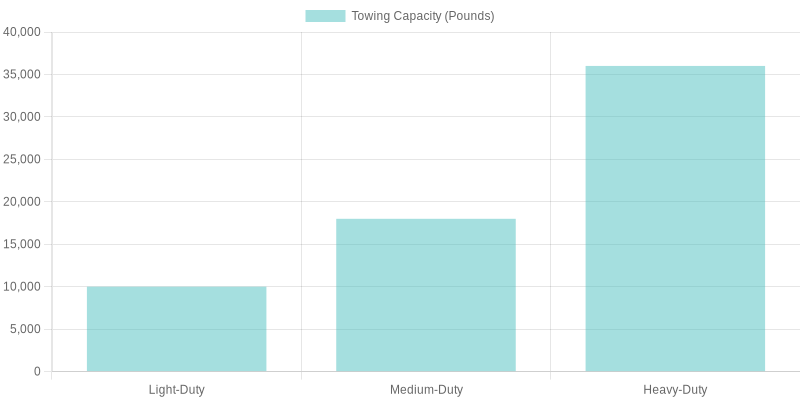
This chart offers a visual representation of the towing capacities, making it easier for business owners to choose the appropriate truck for their specific requirements. For more information on roadside assistance, check out our roadside service page or learn about our towing company in Houston.
Conclusion
In conclusion, understanding your truck’s towing capacity is crucial for business owners who rely on vehicles for transporting goods or equipment. Knowing how much weight your truck can handle not only ensures compliance with safety regulations but also protects your vehicle and potential cargo from damage.
As discussed, factors such as vehicle type, engine specifications, and the hitch class play significant roles in determining towing capacity. Additionally, familiarity with your truck and proper loading techniques can enhance performance and safety while on the road.
If you are unsure about your specific towing needs or require assistance in determining your truck’s towing capacity, we invite you to reach out to us. At Mike’s Towing, we specialize in providing tailored towing solutions and can assist you with expert insights and quotes. Don’t wait – contact us today to discuss your needs or learn more about how we can support your mission to protect lives and property. Your next towing venture begins with the right information and guidance!