
Introduction to Towing Capacity for 3/4 Ton Trucks
When it comes to the demands of business, having a reliable vehicle is crucial, especially for owners who often transport goods or equipment. One of the best options available on the market today is the 3/4 ton truck, known for its impressive towing capacity. These trucks are specifically designed to handle heavier loads, making them a great choice for businesses that need to transport trailers, heavy equipment, or larger cargo.
The towing capacity of 3/4 ton trucks typically ranges between 10,000 to 12,000 pounds, depending on the make and model. This range allows business owners to haul various items, from construction materials to recreational vehicles. However, it’s essential to understand not just the capacity but also the key considerations for safe and efficient towing. Factors such as the truck’s engine power, axle ratio, and the weight of the vehicle itself all play a significant role in determining how much can be towed effectively.
Additionally, understanding the importance of proper hitching and load distribution can significantly impact towing safety. Overloading can lead to serious accidents and may also lead to wear and tear on the vehicle, leading to costly maintenance issues. Ensuring that the truck is equipped with the right accessories, like trailer brakes and sway control, is equally vital for secure towing.
For business owners, selecting a truck with an adequate towing capacity not only enhances operational efficiency but also ensures that goods are transported safely and securely. If you’re interested in learning more about reliable towing services and how they can complement your business needs, feel free to explore our range of services here. Additionally, ensuring access to roadside assistance can make all the difference in keeping your operations running smoothly; check out our roadside service options here for further insights.
In this article, we will explore how much a 3/4 ton truck can tow and the various factors you need to consider to ensure you make an informed decision for your business’s transportation needs.
Key Specifications of Popular 3/4 Ton Truck Models
For business owners looking into the capabilities of 3/4 ton trucks, understanding their specifications is crucial. Here’s a summary of popular models available in the market:
-
Ram 2500
-
Towing Capacity: Up to 16,000 lbs
-
Engine Specifications: 5.7L V8 HEMI; up to 410 hp
-
Features: 4WD, advanced towing technologies, and strong suspension system for heavy loads.
-
Ford F-250 Super Duty
-
Towing Capacity: 20,000 lbs (with fifth-wheel or gooseneck)
-
Engine Specifications: 6.2L V8 gas engine; up to 430 hp
-
Features: Max trailer tow package, trailer sway control, and integrated trailer brake controller.
-
Chevrolet Silverado 2500 HD
-
Towing Capacity: 18,500 lbs (with gooseneck)
-
Engine Specifications: 6.6L V8 Duramax Turbo-Diesel; up to 445 hp
-
Features: Advanced trailering systems, durable cargo box, and several cab styles.
-
**Find out more here **
-
GMC Sierra 2500 HD
-
Towing Capacity: Up to 18,500 lbs
-
Engine Specifications: 6.6L V8 gasoline; up to 401 hp
-
Features: Enhanced trailering control, comfortable interior, and safety options designed for heavy loads.
-
Nissan Titan XD
-
Towing Capacity: Approximately 12,500 lbs
-
Engine Specifications: 5.6L V8; 400 hp
-
Features: Robust design focused on both towing and hauling customers’ payloads.
These specifications play a crucial role in understanding how much a 3/4 ton truck can tow effectively, making informed decisions for your business operations easier. Remember to consider the payload capacity, engine specs, and features that best suit your needs.
For more assistance with towing services, feel free to contact Mike’s Towing.
Factors Affecting Towing Capacity of 3/4 Ton Trucks
When it comes to determining the towing capacity of 3/4 ton trucks, several factors come into play that can drastically alter their performance and effectiveness in business operations. Understanding these factors not only helps you choose the right truck but also enables you to maximize its potential for your business needs.
1. Weight of the Vehicle
The weight of the truck itself is a fundamental factor in towing capacity. A heavier vehicle may have a greater towing capacity, but it also can limit the payload. Proper weight distribution is crucial. If the truck is loaded incorrectly, it could lead to decreased performance or even dangerous situations on the road. An understanding of both Gross Vehicle Weight Rating (GVWR) and Gross Combined Weight Rating (GCWR) ensures safe towing practices.
2. Engine Type and Torque Output
The engine type significantly influences towing capability. Engine specifications such as horsepower and torque output determine how much weight a truck can effectively pull. Diesel engines typically deliver higher torque and more power compared to gasoline engines, which makes them ideal for heavy-duty towing situations. According to TruckReview.com, factors like horsepower and the engine’s cooling system play vital roles in determining towing performance.
3. Hitch Ratings and Setup
The type of hitch installed on the truck directly affects towing capacity. Hitches are rated for weight capacities, which must be matched appropriately with the truck’s tow rating. Using the right hitch enables safer towing practices and prevents potential accidents. The trailer’s tongue weight should also align with the truck’s hitch rating to ensure optimal weight distribution.
4. Suspension System and Drivetrain Configuration
A strong suspension system is essential for supporting heavy loads and maintaining vehicle stability. Trucks equipped with heavy-duty suspensions, specifically those designed for towing, can enhance handling performance under load. Furthermore, the drivetrain configuration, such as 4×4 vs. 4×2, can affect traction, particularly in challenging terrains.
5. Axle Ratio
The axle ratio impacts how much torque is applied to the wheels. A lower numerical axle ratio means that a truck can pull heavier trailers at a lower speed which can be advantageous in hauling operations. Conversely, a higher axle ratio can improve fuel efficiency at highway speeds but may not be as effective for heavy towing.
Impact on Business Operations
Understanding the towing capacity and its related factors can greatly impact business operations, especially for those who rely on transportation, logistics, or towing services. Key takeaways include:
- Operational Efficiency: Businesses can reduce downtime as a reliable towing setup minimizes the likelihood of equipment failures or inefficiencies, ensuring smooth operations.
- Cost Management: Properly understanding and utilizing the towing capacity can lead to better fuel economy and reduced wear and tear on vehicles, ultimately saving on costs. For more solutions on how to manage vehicle downtime, explore how heavy-duty towing can improve business operations.
- Safety Compliance: Compliance with weight regulations helps avoid costly penalties and enhances the overall safety of operations.
At the end of the day, selecting the right 3/4 ton truck with an appropriate towing capacity is vital for optimizing business performance. Whether you’re managing a fleet of vehicles, transporting goods, or working in heavy machinery, understanding these towing factors ensures you are well-equipped to handle the demands of your business.
Understanding Towing Capacities of 3/4 Ton Trucks: A Guide for Business Owners
When it comes to hauling heavy loads, 3/4 ton trucks such as the Ford F-250, Chevrolet Silverado 2500HD, and Ram 2500 are often considered the workhorses of the truck world. In 2023, these trucks exhibit robust towing capabilities, which are critical for business owners who rely on reliable and efficient transportation solutions.
Current Industry Standards for Towing Capacities
According to recent reports, the towing capacity for 3/4-ton trucks varies broadly, typically ranging from 12,000 to 17,500 pounds based on various configurations and engine types. Here are some peak figures for popular models:
- Ford F-250:
- 17,000 lbs for the 7.3L V8 gasoline engine
- 17,500 lbs for the diesel version
- Chevrolet Silverado 2500HD: 17,500 lbs (diesel with Max Trailering Package)
- Ram 2500: Up to 17,000 lbs (diesel version)
These values represent the maximum towing capacity under optimal conditions and are influenced by several factors: engine type, transmission, axle ratio, and the configuration of payloads. The increasing reliance on diesel engines has emerged as a trend, given their higher torque output compared to gasoline counterparts, enhancing overall towing capabilities.
The Importance of Compliance and Safety Standards
Businesses need to stay compliant with relevant towing regulations and standards. Compliance assessment often requires proper installations, such as heavy-duty trailer hitches, and adhering to vehicle requirements set out by manufacturers.
In some regions, regulatory updates may require comprehensive checks for safety and performance standards before operation. For example, the recent regulations in Western Australia require all tow trucks to undergo roadworthiness inspection, ensuring they meet current standards. Business owners should stay updated on local regulations that may apply to their operations.
Business Applications and Benefits
For business owners, understanding the towing capacity and industry standards is crucial for ensuring operational efficiency. Here’s how these standards can be applied:
- Fleet Planning: Utilizing trucks with appropriate towing capacities enables businesses to plan their fleet according to the loads they frequently transport.
- Equipment Investment: Decisions regarding purchases of new trucks or sets of trailers can be based on the current towing capacities available in the market. This optimizes investment in equipment necessary for business operations.
- Safety and Liability: Compliance with industry standards reduces the likelihood of accidents caused by overloading, protecting both assets and personnel.
- Enhancing Service Offerings: Businesses that offer towing services can leverage their vehicles’ higher towing capabilities to attract clients needing heavy loads transported efficiently.
Understanding these distinctions can set businesses apart in the competitive market, ensuring they meet customer needs while maximizing productivity.
For more detailed towing services and assistance, consider exploring Mike’s Towing Services.
.
Summary
In conclusion, the towing capacity of 3/4 ton trucks in 2023 highlights the impressive yield and performance improvements attributed to modern engineering. For any business owner, aligning their operations with the current capabilities and standards ensures not just optimal performance but also long-term efficiency in operations.
For further insights on towing services and consultations, reach out to Mike’s Towing Company to understand how these capacities can aid your business.
| Model | Maximum Towing Capacity | Engine Type | Manufacturer’s Suggested Price |
|---|---|---|---|
| Ford F-250 Super Duty (2023) | 18,500 lbs (8,391 kg) | 6.7L Power Stroke V8 Diesel | ~$65,000 |
| Chevrolet Silverado 2500HD (2023) | 14,000 lbs (6,350 kg) | 6.6L LBZ V8 Diesel | ~$55,000 |
| Ram 2500 (2023) | 17,950 lbs (8,142 kg) | 6.7L Cummins I-6 Diesel | ~$60,000 |
| GMC Sierra 2500HD (2023) | 14,000 lbs (6,350 kg) | 6.6L LBZ V8 Diesel | ~$57,000 |
| Toyota Tundra (2023) | 12,000 lbs (5,443 kg) | 5.7L V8 Gasoline | ~$50,000 |
2023 3/4 Ton Truck Towing Capacity Comparison
Understanding the different towing capacities of 3/4 ton trucks can be crucial for business owners who rely on heavy-duty towing capabilities. The above table provides a detailed comparison of various models, showcasing their maximum towing capacities, engine types, and pricing. Knowing these specifications is essential when considering which truck is best suited for your towing needs.
For more information on towing services, explore our options.
Safety Tips for Towing with 3/4 Ton Trucks
Towing with a 3/4 ton truck can be highly efficient for business owners who need to transport heavy loads. However, safety should always be the top priority to prevent accidents and ensure secure transport. Here are some practical safety tips to consider:
1. Understand Your Truck’s Limits
- Know Your Gross Combined Weight Rating (GCWR): It’s crucial to check your truck’s GCWR and ensure that the total combined weight of your truck, trailer, and cargo does not exceed this limit. Overloading can lead to brake failure and handling issues.
2. Proper Hitch Selection
- Choose the Right Hitch: When towing heavy loads, opt for a weight-distributing hitch. This type of hitch spreads the weight evenly across the vehicle’s axles and improves stability and braking.
3. Load Cargo Properly
- Balance the Load: Ensure that cargo is loaded evenly. The tongue weight (weight on the hitch) should be about 10-15% of the total trailer weight. Improper loading can lead to swaying and instability on the road.
4. Regular Maintenance Checks
- Inspect Before You Drive: Conduct a full inspection before hitting the road, including brakes, lights, tires, and safety chains. Regular maintenance ensures that your truck and trailer are in top shape for towing operations.
5. Pay Attention to Braking
- Consider Brake Systems: Ensure that both your truck and trailer have functional brake systems. For heavier loads, utilizing trailer brakes is essential to help reduce stopping distances safely.
6. Drive Defensively
- Adjust Your Driving Style: Allow for greater stopping distance and be cautious with turns and lane changes. High winds and sudden stops are particularly challenging when towing, so driving defensively is essential to maintain control.
7. Use Technology Wisely
- Leverage Towing Features: Many modern 3/4 ton trucks come equipped with towing packages that include trailer sway control and stability management systems. Familiarize yourself with these features to enhance safety.
8. Educate Your Employees
- Training and Awareness: Provide safety training for any employees who will operate the truck and trailer. Ensure they understand the importance of safety checks and proper towing techniques.
Infographic on Towing Safety Tips
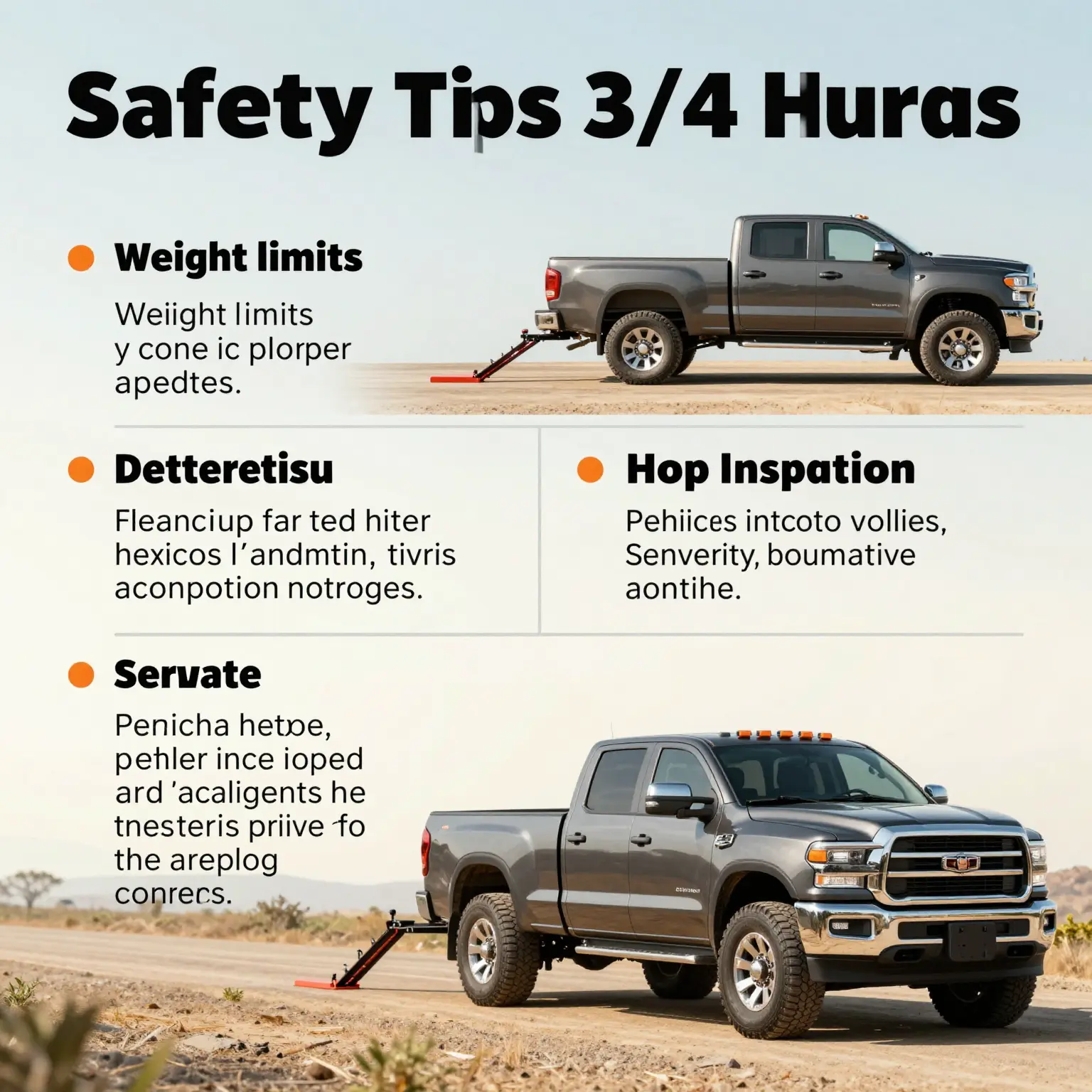
These guidelines aim to help business owners transport their loads safely and efficiently. For anyone seeking more specifics on towing operations, learn more about towing safety practices or consider getting professional towing services when in doubt.
Relationship Between Payload and Towing Capacity for 3/4 Ton Trucks
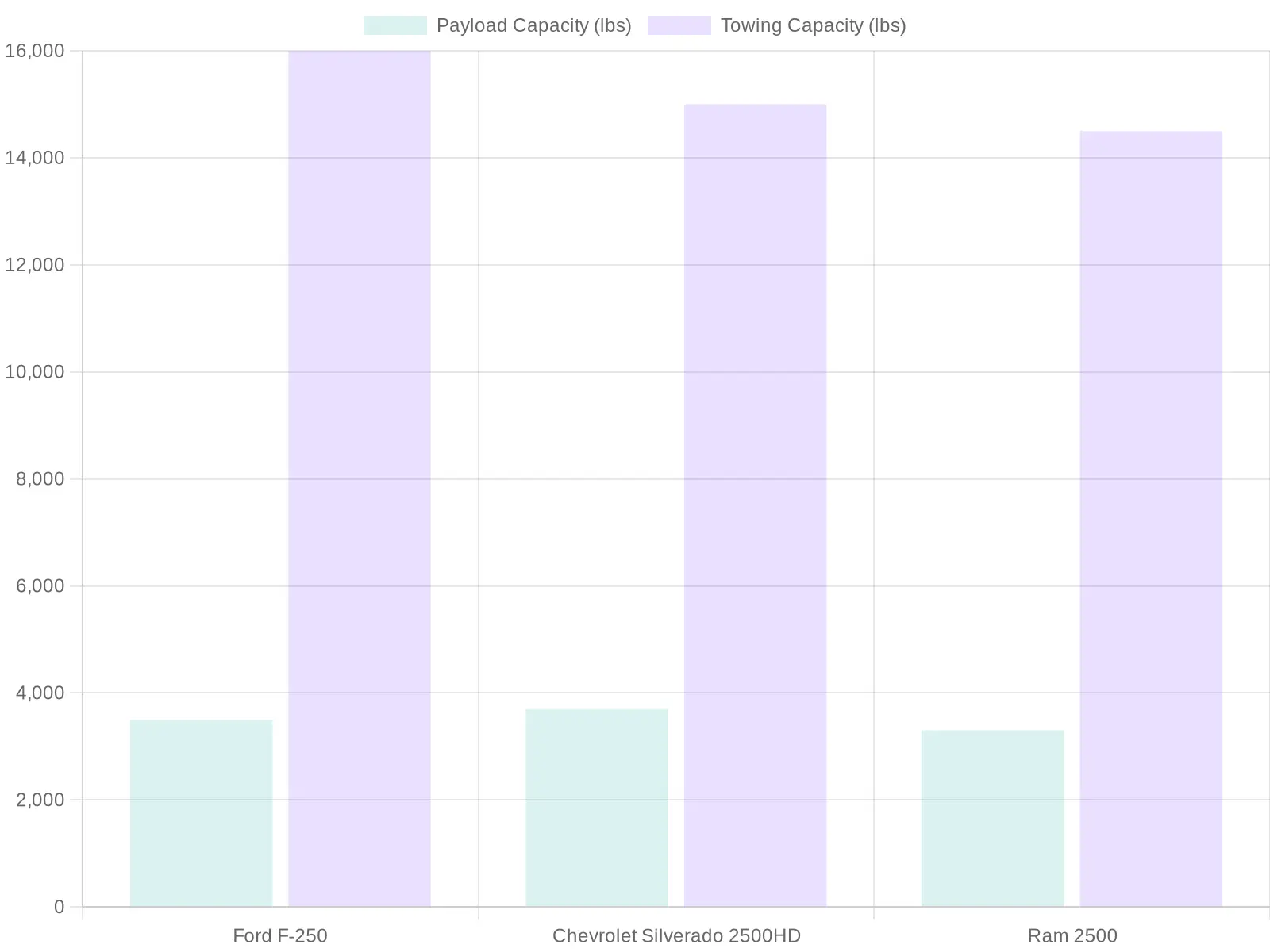
For business owners considering the appropriate 3/4 ton truck for towing tasks, understanding how payload directly impacts towing capacity is crucial. The following chart illustrates the relationship seen in popular 3/4 ton truck models: Ford F-250, Chevrolet Silverado 2500HD, and Ram 2500.
Truck Payload and Towing Capacities
| Truck Model | Payload Capacity (lbs) | Towing Capacity (lbs) | Notes |
|---|---|---|---|
| Ford F-250 | 3,500 | 16,000 | Towing capacity decreases by 20% when payload exceeds 80% of max (2,800 lbs) |
| Chevrolet Silverado 2500HD | 3,700 | 15,000 | Towing capacity decreases by 20% when payload exceeds 80% of max (2,960 lbs) |
| Ram 2500 | 3,300 | 14,500 | Towing capacity decreases by 20% when payload exceeds 80% of max (2,640 lbs) |
Note: The towing capacity is reduced by 20% at payload levels exceeding 80% of maximum capacity. This reflects real-world engineering constraints where increased load in the bed reduces available towing capacity due to total vehicle weight limits and drivetrain stress.
For further insights, check out Mikes Towing services and truck towing in Houston.
How Much Can a 3/4 Ton Truck Tow?
When considering towing capacities, particularly for 3/4-ton trucks, it’s crucial to understand that capabilities vary significantly between models and configurations. Most 3/4-ton trucks can typically tow between 10,000 to 14,000 pounds, depending on the manufacturer and specific options chosen.
Factors affecting towing capacity include:
- Engine Power: Higher horsepower engines typically increase towing limits.
- Transmission Type: More robust transmissions provide better support for towing heavier loads.
- Chassis Strength: A stronger frame helps support the weight of the trailer.
- Towing Packages: Many manufacturers offer specific towing packages that enhance these vehicles’ capabilities.
Safety Recommendations
Towing safely requires adherence to specific guidelines and checks. According to towing experts, it’s essential never to exceed the Gross Combined Weight Rating (GCWR), which is the total weight your vehicle can safely handle, including the trailer, cargo, and passengers. As industry insider Jack Roberts noted, “Regular inspection of hitch systems and ensuring the vehicle’s cooling system is rated for continuous high-load operation are critical safety measures.” His insights highlight the importance of engineering designs that focus on load distribution and structural integrity.
For more detailed services, see our offerings on towing in Houston and towing service in Houston.
“Our collaboration with Chevrolet and GMC Truck ensures these Class 4 and 5 vocational trucks deliver exceptional towing performance-up to 30,000 lbs GCWR-while maintaining reliability in both commercial and high-profile applications.”
- Jack Roberts, Monroe Truck Equipment
Understanding your 3/4-ton truck’s towing capacity and adhering to safety guidelines ensures not only compliance with regulations but also the safety of all road users. Consider inquiries on Mike’s Wrecker Service for expert towing assistance.
Conclusion
In summary, understanding the towing capacities of a 3/4 ton truck is not just a technical requirement but a foundational aspect of ensuring safe and efficient business operations. As we discussed, knowing the towing limits can help prevent serious issues such as mechanical failures, accidents, and legal complications. For business owners, the risks associated with misjudging these capacities can prove costly, leading to fines, increased insurance premiums, and service interruptions.
Recent studies reveal that over 43% of commercial towing incidents can be linked to overloading vehicles beyond their specified limits. Proper knowledge of towing capacities can also enhance operational efficiency; companies that implement comprehensive training see marked improvements in vehicle longevity and fuel efficiency, alongside decreases in maintenance costs. As outlined by industry resources like the Truck and Trailer Safety Association and the National Fleet Management Institute, businesses are urged to prioritize towing capacity assessments in their operational protocols.
In an industry where every minute counts, having the right knowledge translates directly into real-world benefits-and as many fleet managers agree, it is an investment worth making. Proper understanding extends not only to the mechanics of your vehicles but enhances your service reliability and overall performance.
Call to Action
Are you ready to optimize your towing capabilities and ensure your business runs smoothly? At Mike’s Towing, we specialize in helping businesses like yours understand the importance of towing capacity and integrating that knowledge effectively into your operations. Whether you need towing services or guidance in fleet management, our team is here to help. Contact us today to learn more about our services and how we can support your business needs!