
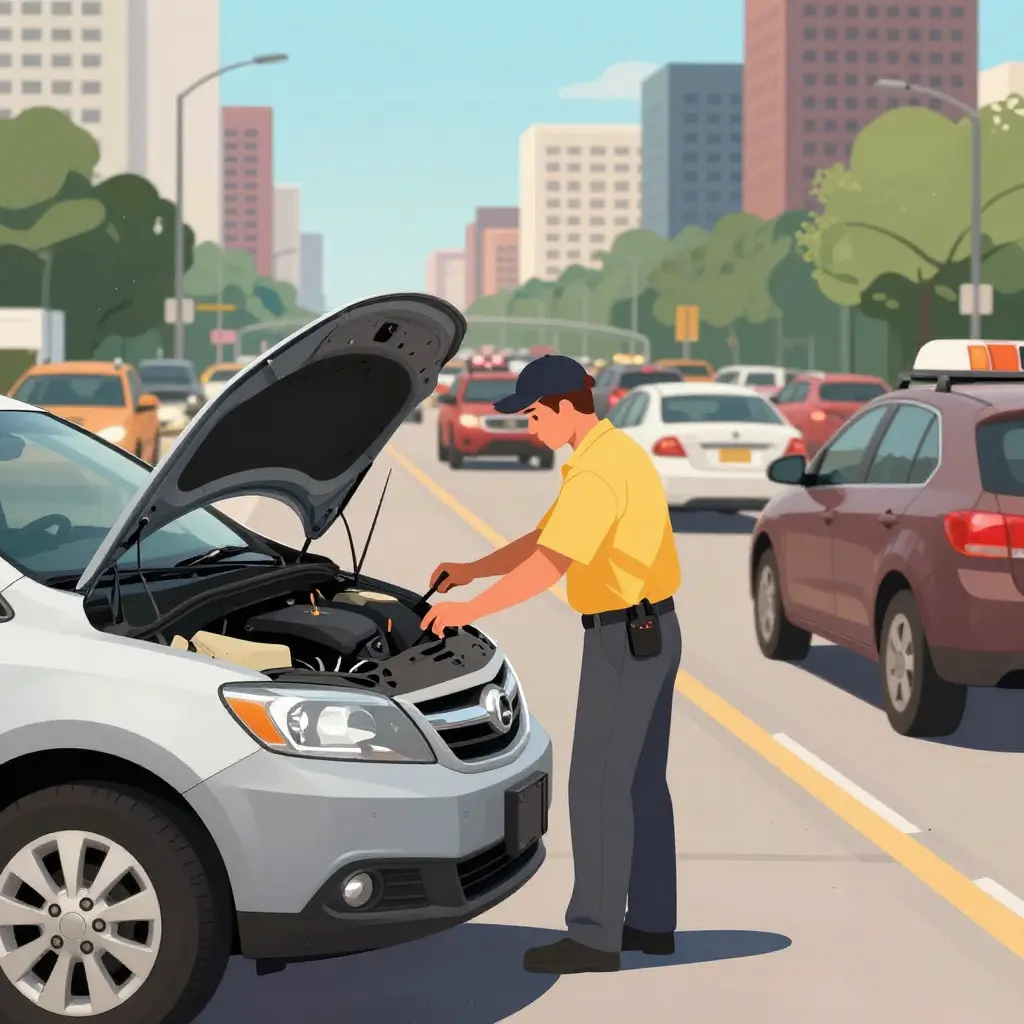
On I-10 in Houston, a tow operator starts sizing up a stranded vehicle before attaching a single hook. A tow service is a licensed, insured business that moves vehicles which can’t be driven safely, using specialized trucks and trained crews. When you call a tow service in Houston, the responding team begins assessing the scene as soon as it arrives.
On a busy interstate, the operator confirms the vehicle’s position, the traffic flow, and whether the car is sitting stable. Then the crew looks at weight, drivetrain, and damage to decide whether this is a standard roadside job or something heavier.
A typical tow truck Houston drivers see handles most passenger cars. Loaded semis and buses need heavy-duty recovery instead, with different rigging, winches, and safety margins. The checks follow the same logic in both cases; the equipment and the risk do not.
Why an I-10 Breakdown Is a High-Risk Situation
A breakdown on Interstate 10 in Houston is not an ordinary roadside stop. This corridor carries some of the heaviest traffic volumes in Texas, with hundreds of thousands of vehicles moving through daily, so a stalled car becomes an obstacle almost immediately. Lane closures and sudden braking make rear-end collisions a constant worry.
Shoulder space is often the bigger problem. Many stretches of I-10 leave only a narrow, sometimes crumbling strip between your vehicle and live lanes. A distracted driver who drifts a foot at highway speed is already too close.
Surface heat adds to it. Houston pavement can climb past 140 degrees Fahrenheit in summer, hot enough to soften tires, blister bare hands, and turn hot metal or leaking fluids into a genuine hazard.
Because of all this, the minutes before the hookup matter most. A careful pre-hookup inspection lets a towing in Houston team size up the scene, set a work zone, and confirm attachment points quickly, so you leave the danger zone sooner.
What Happens Before the Hookup
By the time the cables touch your car, most of the work is already done. What looks like a quick job is really a short sequence of decisions a good crew works through in order.
Arriving and Securing the Scene
When a tow truck pulls up, the operator turns on the beacon, sets out cones, and angles the rig to shield the work zone from passing traffic. Visibility comes before speed.
Assessing the Vehicle
Then comes a walk-around. The driver inspects the tires, steering, and underside to see what failed and where the vehicle can be lifted without causing damage.
Confirming the Driver Is Safe
Before any lifting begins, the operator confirms you’re unhurt and clear of the roadway. It’s a quick check, but it decides whether you wait inside the cab or on the shoulder, and it keeps people out of harm’s way.
Choosing the Right Method
Only then does the operator choose: flatbed, wheel-lift, or a roadside fix as simple as a jump start. The wrong call can scratch a bumper or damage a drivetrain, so this decision carries weight.
None of these steps is busywork. A careful tow service protects your car from damage, keeps you clear of traffic, and guards the operator doing the lifting. That’s the standard behind any reliable Houston tow truck.
Before a single cable tightens, the operator walks the scene. The checklist below covers what a tow service in Houston examines on I-10, from flashers and wheel angle to drivetrain and undercarriage clearance, and why each item matters.
| Stage | What the Tow Service Checks | Why It Matters |
|---|---|---|
| Scene safety and hazard lights | Flashers on, cones placed, reflective vest, safe approach lane | Prevents secondary crashes and warns fast-moving I-10 traffic |
| Vehicle position and wheel angle | Steering straight, wheels centered, body clear of lanes | A straight pull reduces stress on suspension and body panels |
| Parking brake and gear selection | Brake released, transmission in Neutral or Park as required | Wrong gear can lock wheels or damage the drivetrain during the lift |
| Drive type | Confirms two-wheel, all-wheel, or four-wheel drive | AWD and 4WD need flatbed or dolly support to avoid damage |
| Tire and wheel condition | Tread, inflation, damage, loose lug nuts | Flat or damaged tires change how the vehicle rolls onto the bed |
| Undercarriage clearance and documentation | Low-hanging parts, tow points, VIN and plate, damage photos | Protects bumpers and exhaust and records condition before towing |
Understanding Each Pre-Hookup Check
A good Houston tow service never rushes straight to the winch. Each item on the checklist exists to protect you, your vehicle, and everyone sharing I-10.
Parking Brake and Gear Position
The brake and gear settings change as the job moves through stages. For the winch pull, the parking brake comes off and the transmission goes into Neutral (or Park, where the vehicle’s manual or the tow method requires it) so the wheels can roll. A brake left on drags the vehicle up the bed, and the wrong gear can damage the drivetrain. Once the car is on the bed, the brake goes back on and the transmission into Park to hold it. On a sloped shoulder, that sequence is the difference between a clean hookup and a runaway.
Drive Type
Whether your car is front-wheel, rear-wheel, or all-wheel drive decides how it is lifted. All-wheel-drive vehicles typically require a flatbed, because a wheel-lift leaves one axle spinning, which can burn out internal components. Conventional cars can often use a wheel-lift, where only two wheels leave the ground. The operator checks first, because guessing wrong causes expensive damage.
Damaged Wheels and Low Clearance
A blown tire, bent rim, or lowered suspension changes the whole approach. A wheel-lift needs healthy tires that roll, so damaged wheels usually push the job toward a flatbed. Low-clearance cars need ramps or extra blocking so the bumper and undercarriage clear the deck on the way up.
Hazards and Traffic Exposure
The operator also scans for hazards: leaking fuel, shattered glass, a crumpled guardrail, or a car sitting half in a live lane. Traffic exposure on I-10 shapes where the truck parks, which direction it approaches from, and whether flares or cones go out before the winch line is attached.
The Inspection Sequence at a Glance
The diagram below shows the pre-hookup flow as a simple 2D schematic: a tow truck icon, your stranded vehicle, and four numbered callout points tied together with directional arrows.
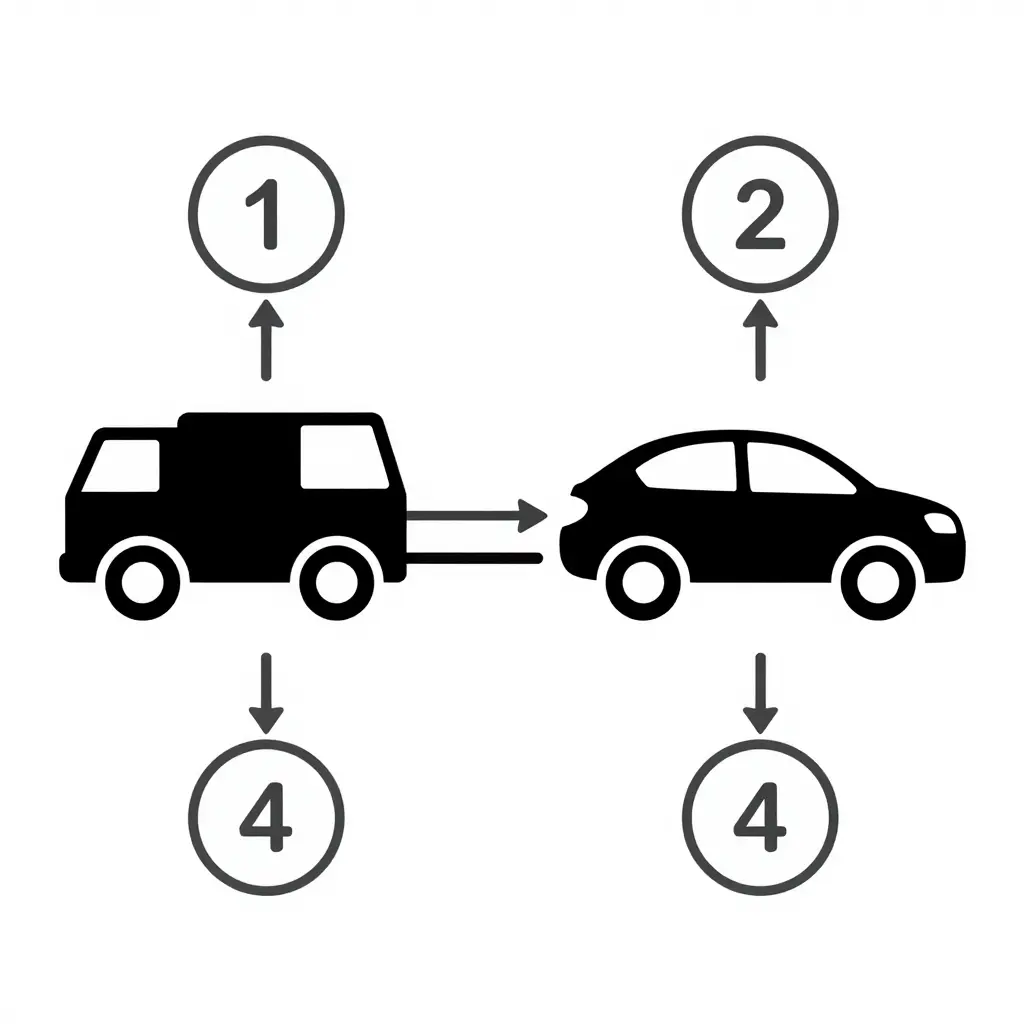
Reading the four stops
- Wheel – the operator checks tire condition, wheel straps, and how the tire will sit on the lift or dolly.
- Parking-brake area – confirming the brake state so the vehicle does not roll during the lift.
- Hazard-light area – making sure the vehicle is signaling and visible to oncoming traffic on the shoulder.
- Hitch point – locating the correct tow point so the load stays balanced and the frame stays safe.
The steps follow one another in a fixed order, which is one reason a professional hookup can feel calm even in heavy traffic. To see how these checks fit into a full callout, explore our Houston tow service to learn what to expect on the roadside.
Knowing the order of the inspection, and the warning signs an operator reads along the way, makes it easier to understand what happens next after a roadside assistance call.
How the Inspection Unfolds
- Confirm the call location and vehicle details, then survey the scene for safe approach angles.
- Check the vehicle’s stance, tire condition, and anything leaking beneath it.
- Verify drive type, transmission position, and whether the wheels roll or are locked.
- Identify secure attachment points, then position the truck and set the controls.
- Load, secure, and complete a final walk-around before leaving the shoulder.
Warning Signs the Operator Watches For
- A vehicle sitting in the travel lane, forcing traffic to swerve at speed
- Transmission or drive type uncertainty, which decides how it can be lifted
- Deformed tires or locked wheels that resist rolling onto the deck
- Fluid leaks spreading under the vehicle, hinting at a full break or fire risk
- Blocked access from debris, guardrails, or tight shoulders that limit truck placement
Crews use these cues to decide how the recovery will run.
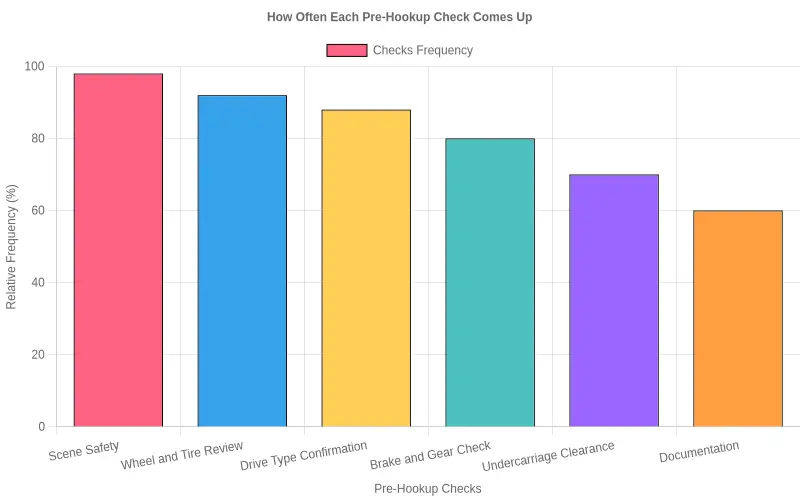
This chart summarizes which checks appear most often in routine tow-service practice, from scene safety down to paperwork.
What the Safety Guidance Says
Safety guidance from highway and towing organizations tends to agree on a few points. Stranded drivers should stay belted inside the vehicle where possible, treat the shoulder as a live traffic lane, and avoid standing behind or between vehicles. Towing-industry guidance adds a documented pre-tow inspection: verifying the transmission and drivetrain configuration, confirming the parking brake and gear position, checking tire and wheel condition, and noting any damage or aftermarket equipment that could affect securement.
Those recommendations line up with the checks described earlier. The walk-around confirms the tire and axle condition that securement depends on. The drivetrain check prevents towing-related damage. Keeping passengers clear follows the advice about staying visible and out of traffic lanes.
For tow service customers, the payoff is a transparent inspection that reduces both risk and later disputes. Operators who explain each step, use proper lighting and reflective gear, and keep drivers in a safe position are following a standard, not offering an extra. When you request a towing service in Houston, expect these checks as part of the job.
What to Expect During the Pre-Hookup Inspection
When you’re stranded on I-10, a tow truck operator will typically run a quick, safety-focused inspection before connecting anything to your vehicle. It usually takes only a few minutes, and your cooperation makes it go faster. Here’s how to prepare.
Expect a few clear questions: your vehicle’s drive type (front-wheel, rear-wheel, or all-wheel drive), whether it has any prior damage, and whether it has been modified. These details decide the safest way to lift and secure your car. A modified suspension or aftermarket bumper, for instance, changes where the truck can attach its equipment.
While the inspection happens, your job is simple. Stay clear of traffic – stand on the shoulder or behind a barrier, never in the lane. Keep your hazard lights on so approaching drivers see you from a distance. When the operator arrives, calmly share your drive type and disclose any damage or modification up front. Being upfront prevents delays and avoids surprises.
For dependable towing near me in Houston, a professional crew will walk you through each step. Good roadside help is calm, transparent, and quick, so you’re back on the road with minimal stress.
Quick Prep Checklist
- Turn on hazard lights and move to the shoulder if possible.
- Stand away from traffic, behind the guardrail when available.
- Know your drive type before the truck arrives.
- Mention any existing damage or aftermarket modifications.
- Keep your phone handy and stay calm during the inspection.
Frequently Asked Questions About Pre-Hookup Inspections
Why does a tow service inspect my vehicle before hooking up?
The inspection protects both your car and the operator. It lets the driver spot hazards like leaking fluids, loose panels, or fragile bumpers before any equipment touches your vehicle, and catching them early prevents extra damage during the tow.
Does drive type change how a vehicle is towed?
Yes. All-wheel-drive and four-wheel-drive vehicles usually need a flatbed or dolly, because spinning wheels can wreck the drivetrain. Front-wheel-drive and rear-wheel-drive cars offer more flexibility, depending on the situation.
What if my wheels are damaged or locked?
Damaged or locked wheels call for special handling. A skilled tow service Houston TX may use skates, dollies, or a flatbed to lift the vehicle safely without dragging it. That protects your rims, tires, and suspension from further harm.
Can a driver refuse additional checks?
You can ask questions, but skipping safety checks is risky. Most reputable companies treat these steps as standard practice, not optional add-ons. Refusing them could leave you responsible for damage that follows.
How long does the inspection take?
A typical pre-hookup inspection takes only a few minutes. Even on a busy stretch like I-10, a professional tow truck Houston crews rely on can complete it quickly and safely. The brief pause is worth the protection it provides.
A tow service runs a defined set of safety checks before the hookup, and those checks decide how safely and correctly the vehicle leaves I-10. Setting a safe work zone, confirming the vehicle’s weight and drivetrain, checking the tires and parking brake, and choosing the right attachment points all shape how the car is lifted and moved. Skip one, and the tow can strain the frame, stress the drivetrain, or put the operator and passing traffic at risk.
What separates a quick hookup from a careful one is the operator behind the wheel. A professional treats these checks as routine, reads each vehicle on its own terms, and adjusts the plan before anything moves. For drivers stuck on a Houston freeway, that discipline is the practical payoff: a tow that clears the road safely, correctly, and without surprise damage. Choosing a knowledgeable Houston towing company is really about trusting that process.