
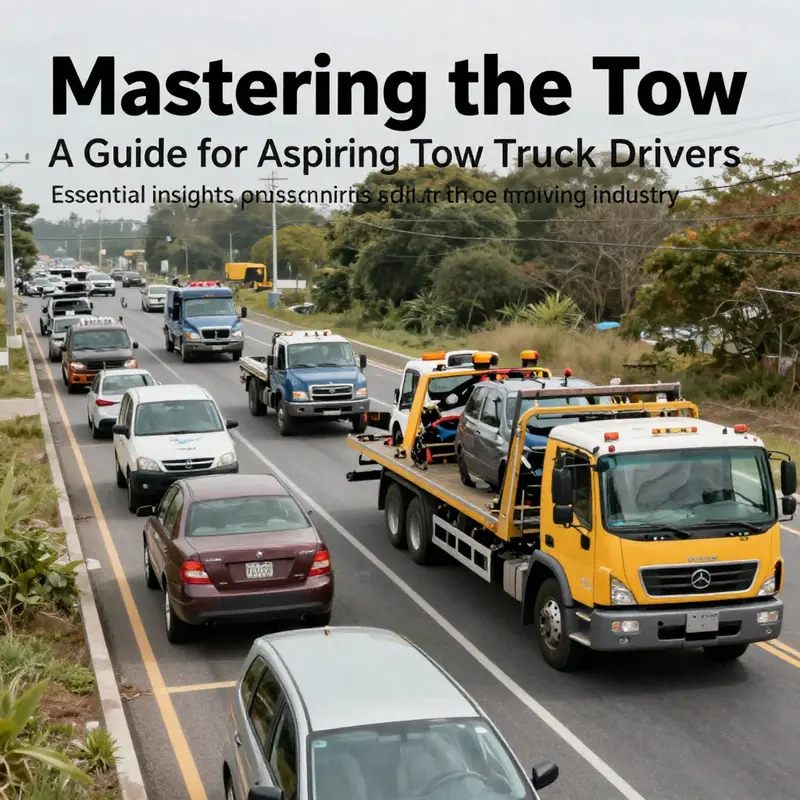
A tow truck driver plays a vital and often underappreciated role in maintaining roadway safety and assisting those in distress. Understanding how to become one is fundamental for business owners looking to expand operations in this sector. In this guide, we’ll dissect the key requirements for entering the towing profession and the essential skills and training needed for success. First, we’ll explore the regulatory and practical elements of becoming a licensed tow truck driver. Next, we’ll delve into the necessary skills and training to ensure operability and safety. This holistic understanding prepares you to navigate the towing landscape effectively.
From License to Road Readiness: The Essential Path to Becoming a Tow Truck Driver
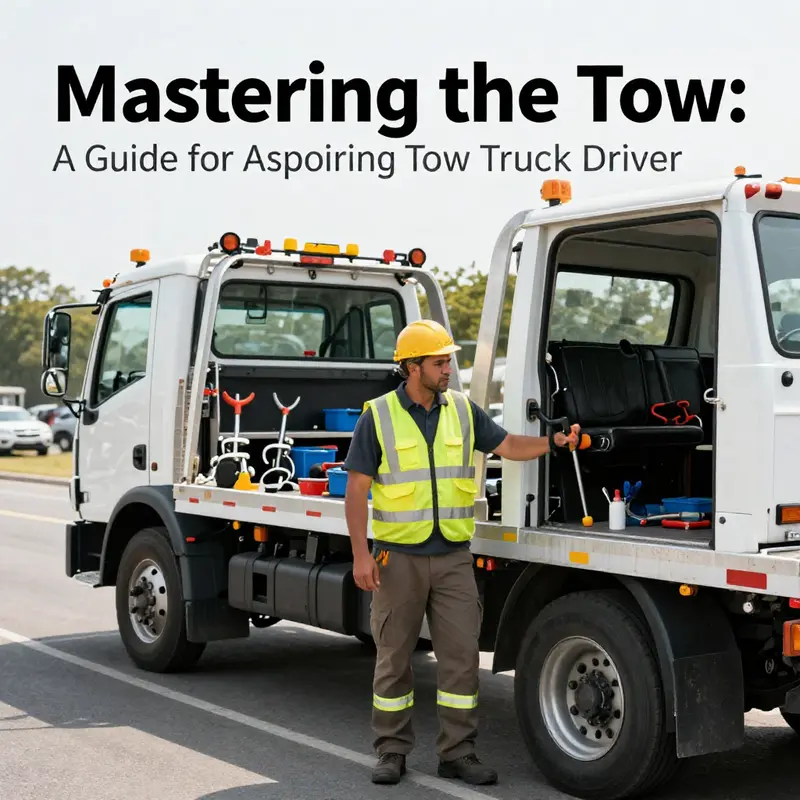
Choosing to become a tow truck driver is more than picking up a tool and hitting the road. It is a carefully staged journey that blends legal eligibility, safety discipline, and hands-on competence. The path starts with clear age and licensing thresholds, because the role sits at the intersection of transportation and public safety. In most places, you must be at least 18 to 21 years old to begin, but exact requirements shift by jurisdiction. The first milestone is the commercial driver’s license, or CDL, with the right endorsements. This isn’t merely a driver’s license; it is a credential that signals your ability to operate heavy equipment and manage the specific risks of towing operations. A Class B or Class C CDL is commonly required, depending on how the wrecker or tow vehicle is classified in your area, and you’ll need endorsements that authorize you to tow and operate the specialized equipment that accompanies a wrecker truck. Without those endorsements, many employers will simply not consider you for the job, regardless of your enthusiasm or physical stamina. The licensing stage is not only a legal hurdle but a practical one as well. It ensures you can handle the heavy frames, winches, and hydraulic systems that sit at the core of most tow operations, and it sets the foundation for the safety culture that protects you, your passengers, and the motorists you assist.
Beyond the CDL, there is the ongoing requirement of a clean driving record. Tow truck driving sits in a high-stakes lane of work where insurers and employers scrutinize your history. A pattern of serious violations or repeated accidents can derail opportunities before you step into a shop. The emphasis on a clean record reflects the liability calculus of the job. Roadside recoveries can be unpredictable and tense, and any lapse in judgment can multiply risk. This is not simply about meeting a standard; it is about preserving a track record that demonstrates reliability under pressure. The next filter is the background check and drug screening. Employers rely on these checks to ensure drivers won’t expose their fleets to liability or endanger the public at large. A clean result on these screens is a prerequisite for employment, and even minor issues can pause a candidacy while you address them.
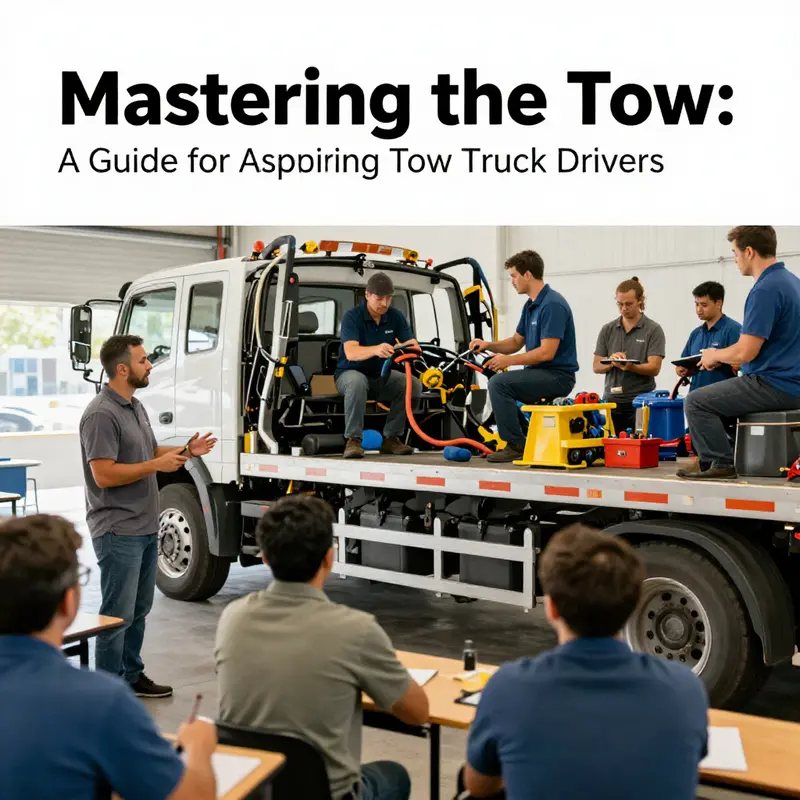
Once you clear the fundamentals of age, licensing, and background, the practical training begins to shape a driver who can handle a vehicle, a scene, and a chain of custody for damaged or disabled cars. Specialized training programs, offered by registered vocational schools or training organizations, form the bridge between theory and on‑the‑job performance. The curriculum typically covers vehicle handling under load, safety procedures for stowage and securing towed cars, and emergency response protocols that can save lives in a roadside crisis. Students learn to operate winches and hydraulic lifts with precision, understanding load dynamics so a vehicle does not shift or slip during recovery. They also study the sequence of steps that protect a scene, from signaling passing traffic to securing the tow point without causing further damage. This training isn’t optional fluff. It is the difference between a competent driver and a comprehensive professional who can rise to the demands of a serious roadside incident.
In many regions, additional certifications are either recommended or required. Hazardous materials handling can become relevant when a wreck involves dangerous goods, or when you are called to recover a vehicle that has hazardous residues. First aid, too, gains importance in the wake of accidents, because responders often confront medical situations on site before paramedics arrive. These certifications extend the scope of a tow driver’s responsibilities and broaden the possibilities for meaningful, even life-saving, work on the roadside. While the core of the job remains vehicle recovery, the added credentials expand your qualifications and give you an edge in competitive markets. They also reinforce the safety-first ethos that governs the profession. The emphasis on safety spills into the daily rhythm of the job. You must maintain readiness to adapt to changing conditions—weather, traffic, lighting—and to communicate clearly with other responders and with distressed motorists.
Beyond the formal requirements and certifications, the role tests personal qualities that are not easily taught in a classroom. Strong communication is essential when you pull up to a stranded driver and must explain procedures, timelines, and any potential risks. A calm, patient demeanor helps you de-escalate tense situations, soothe anxious passengers, and coordinate with dispatch, police, or medical teams at the scene. The job often involves working at night, during storms, or in locations that feel remote or hazardous. The ability to stay focused, make quick, sound judgments, and maintain professional boundaries under pressure shapes a driver who can perform consistently even when fatigue or adrenaline threaten to cloud judgment.
As a practical roadmap, you begin by verifying the specific requirements for your location through official channels—state or provincial motor vehicle departments, licensing authorities, or labor agencies. They provide the exact age minimums, CDL classifications, endorsements, and any state-specific certifications that may apply. A good starting point, for many aspirants, is to consult trusted career guidance resources that lay out licensing steps, training options, and the sequence of credentials in one coherent plan. A practical step is to connect with a local towing company or roadside service that can outline what they look for in a candidate and describe any preferred training tracks. Networking with employers in the field can reveal apprenticeship opportunities or company-sponsored training that helps accelerate your readiness. In this sense, the journey is not only about ticking boxes; it is about aligning your development with real-world needs and the operational standards that keep tow crews effective and safe on every call.
For those who want a tangible anchor as they plan, a resource such as Mike’s Roadside Service provides a practical lens on what a company values when building a team of responders. Engaging with a recognized roadside service hub can give you a clearer picture of the day-to-day realities, the equipment you’ll master, and the kind of on-the-ground training that translates classroom knowledge into reliable performance. Mike’s Roadside Service can serve as a reference point as you map your path from eligibility to active duty. This is not a promotion but a real-world touchstone for understanding the operational context you’re aiming to join. As you progress, you’ll also want to keep a close eye on the official, location-specific guidance that governs licensing, professional standards, and continuing education. The field rewards those who stay curious, seek formal training, and continually refine their craft through supervised practice and independent study.
The culmination of these steps is an appointment with a towing company, a roadside assistance network, or an insurance-related recovery fleet. Employers value a blend of formal credentials, demonstrated safety awareness, and the capacity to work with urgency and empathy on scene. On-the-job training is still common, especially for new drivers, and it helps bridge the gap between the theory learned in a program and the practical skill of coordinating a safe tow under real traffic conditions. As you gain experience, you’ll learn to read scenes quickly, to assess risks, to anticipate the needs of distressed motorists, and to coordinate with other responders with audible and visual signals that keep everyone safer. The progression from candidate to independent operator is built on a foundation of compliance, competence, and composure, all anchored in the steady, methodical approach that sets reputable tow professionals apart.
In sum, becoming a tow truck driver is a process that respects both law and safety, but it also honors the quiet, hard-won rhythms of a skilled operator who can secure a vehicle, manage a scene, and support a person in a difficult moment. If you want this path to be more than a checklist, commit to the disciplines—training, certification, and ongoing practice—that transform potential into a reliable, trusted presence on the road. The steps are navigable, the standards are clear, and the payoff is not only a career but a service that keeps communities moving when they need it most. For those who are ready to take the next step, the route is defined, the call is certain, and the road awaits.
External resource: https://www.indeed.com/career-advice/finding-a-job/how-to-become-a-tow-truck-driver
Beyond the Hook and the Wheel: Essential Skills and Training that Shape Safe, Reliable Tow Truck Drivers
Becoming a tow truck driver starts with a doorway of safety and service that opens long before you clip your first chain. The role blends mechanical savvy, people skills, and split-second judgment. You are not simply piloting a vehicle; you are a mobile service professional who steps into chaotic scenes and steady, methodical work zones. The heart of the job rests on a few core competencies that most employers view as non-negotiable: solid mechanical understanding, precise knowledge of towing techniques, strong communication, and a clear sense of situational awareness. This chapter explores those essentials in a way that connects to the real world you will face on the highway, on city streets, or in a private driveway where a stranded motorist awaits help. The narrative will show how each skill is not a separate box to check but part of a cohesive practice that grows with experience, training, and a disciplined safety mindset. If you’re starting from scratch, you’ll find that the path to competence is not a single course but a sequence of learning opportunities, each building on the last, with hands-on practice at its core.
Mechanical knowledge forms the backbone of a competent tow operator. A driver must read the landscape of a vehicle in distress and translate it into a plan for safe recovery. What looks like a simple winch pull or a routine hook-up often involves evaluating bumper damage, tire placement, and frame integrity. You learn to determine which securing points to trust, how to distribute weight, and where to apply restraint without causing further harm. This is not just about securing a wreck; it is about preserving life, protecting other road users, and safeguarding the equipment you operate. The practical portion of training emphasizes the use of winches, hydraulic lifts, straps, chains, and binders. You practice setting up anchors, selecting appropriate traction, and recognizing when a vehicle’s position makes a traditional approach unsafe. The goal is to translate textbook rules into tactile judgment—knowing when to adjust a plan as conditions change, whether you’re facing slick pavement, uneven ground, or a vehicle pinned by a curb amidst active traffic.
Communication sits beside mechanics as a critical driver of safety and efficiency. A tow operator speaks with dispatch to understand the scope of the job, with a driver who may be shaken or injured, and with law enforcement who may be directing traffic around a collision scene. Clear, calm, and concise communication helps lines of action stay coordinated. It includes listening for details—location, vehicle type, and potential hazards—and asking clarifying questions when instructions are ambiguous. You also learn to communicate visually, using signals and hand gestures that colleagues can read even in cluttered or noisy roadside environments. The best operators cultivate a client-friendly demeanor without sacrificing firmness when safety requires it. They explain what they will do, in what order, and what the driver or bystander should expect next. This combination of listening, speaking, and observing sharpens judgment and reduces the ambiguity that can escalate stress on a roadside standstill.
Situational awareness is the thread that ties mechanical work and communication into a safe outcome. Roadside work sits at the intersection of risk and reward: quick decisions must coexist with deliberate, methodical actions. A driver learns to survey the scene as a whole—looking for moving traffic, weather changes, bystander activity, or unstable vehicles. The scene can change in seconds as passing vehicles create wind gusts or sway unstable loads. A strong tow driver maintains an internal map of escape routes, knows where to position the truck to shield the work area, and remains ready to pivot if an approach becomes unsafe. This heightened awareness extends beyond the lane lines into the inside of a vehicle, where you assess occupant safety, potential medical concerns, and the need for additional help such as police units or highway assistance. Training emphasizes practice under varied conditions—night operations, rain, snow, and busy urban corridors—to build a practiced sense of timing, spacing, and hazard analysis.
Training pathways are varied but purposeful. Most employers require a commercial driver’s license (CDL), typically Class B or Class C, with endorsements related to towing and operating specialized equipment like wrecker trucks. Yet a license alone does not certify readiness. Many programs pair the CDL with formal training in accident scene management, proper towing techniques, and safety protocols. Vocational schools, community colleges, and on-the-job apprenticeships often deliver this blend of theory and hands-on practice. The emphasis is on applying the rules of the road to the unique demands of towing—from securing a front-wheel drive vehicle to stabilizing a rear-wheel drive with a hydraulic lift. You learn to rig cargo properly, adjust for vehicle height, and anticipate how weight transfer affects stability during transport.
For those entering the field without experience, certification can give a meaningful edge. Accredited programs—whether through community colleges or specialized training institutions—cover both the theoretical underpinnings and practical skills needed on a real worksite. These programs commonly include classroom instruction on safety regulations and industry standards, followed by supervised practice in secure hook-ups, proper winching techniques, and effective after-action reviews. The value lies not only in learning the steps but in building a repeatable discipline: checking equipment, confirming weight distribution, and verifying that all participants understand their roles before a lift begins. Certification also signals to employers a commitment to safety and ongoing professional development, which can smooth the path toward independent operation and advancement.
Regulatory familiarity is a constant companion to hands-on training. Tow operators must navigate a patchwork of local laws that govern traffic prohibitions, towing on urban streets, and highway interventions. Understanding which routes are permitted for certain weights, when permits are required, and how to interact with municipal authorities reduces the potential for penalties and delays. Training modules typically emphasize these legal considerations as much as mechanical techniques because compliance is inseparable from safety. In practice, this means knowing when to call for additional support, how to secure a scene to protect the public, and how to document the incident so that insurers and agencies have a clear, auditable record.
The professional path also includes a deliberate approach to career development. On-the-job training remains a standard entry point for many new drivers. Under supervision, you learn the rhythms of the job—dispatch response times, equipment checks, load assessments, and the precise choreography of a tow or transport. The mentorship model helps you convert a sequence of isolated tasks into an integrated workflow. Over time, you develop a personal checklist that becomes second nature: confirm the vehicle’s position, verify chain and strap configurations, position the wrecker to maximize control, and communicate every action as it unfolds. This is where experience compounds skills. A driver who has repeatedly faced different vehicle configurations, road conditions, and customer expectations gains speed without sacrificing safety.
The practical value of training becomes evident when you consider the human element of the work. Roadside emergencies often involve anxious motorists, frustrated witnesses, or distressed families. The most effective drivers blend technical competence with empathy and professionalism. They explain what they are doing, manage expectations, and maintain composure even when confronted with the most trying scenes. They know the limits of their equipment and themselves, and they are honest about what can be accomplished in a single pass versus what might require additional resources. In this sense, training is not a single milestone but an ongoing practice of learning, reflection, and adaptation. If you are evaluating how to begin, seek programs that couple hands-on practice with real-world scenarios and feedback from instructors who understand the tempo and hazards of roadside work. Consider programs that offer a clear path from trainee to independent operator, including supervised first runs, progressive responsibility, and ongoing safety refreshers.
For those who are curious about how to explore training options, a practical starting point is to look for community-led resources or programs offered by local operators. If you’re evaluating training options, consider programs like Mikes Towing. This kind of pathway can provide not only technical instruction but also exposure to the culture of professional towing—where careful planning, respect for the road, and a service mindset matter as much as the load you carry. As you move from classroom to cab, you’ll learn to translate theory into confident performance: the moment you decide which anchor point to trust, the second you confirm a hook-up is secure, and the instant you communicate a plan so everyone on the scene understands what comes next.
Ultimately, the journey to becoming a skilled tow truck driver is a synthesis of knowledge, practice, and judgment. The field rewards those who commit to safety, accuracy, and clear communication as daily habits. Your training should be viewed as a living container—an evolving toolkit that adapts to new equipment, updated safety standards, and changing regulatory landscapes. As you accumulate experience, you will recognize that every call is a chance to refine your approach, to reduce risk, and to deliver dependable service when people need it most. The road ahead is long, but with robust training and disciplined practice, you build a professional identity grounded in capability, accountability, and care for the road and its travelers. For a broader look at the job’s outlook and qualifications, consult the U.S. Bureau of Labor Statistics. https://www.bls.gov/ooh/transportation/tow-truck-drivers.htm
Final thoughts
Becoming a qualified tow truck driver not only requires meeting specific legal requirements but also demands a solid skill set and thorough training. As a business owner, understanding these elements equips you to foster a capable workforce ready to handle the challenges of the towing industry. Investing in your drivers’ skills will enhance service quality, boost safety, and improve customer satisfaction. By emphasizing both compliance and training, your towing operation can thrive in a competitive market.