
Understanding the earnings of tow truck drivers is crucial for business owners operating in this sector. The financial landscape is shaped by various factors including location, experience, and specific job functions. This comprehensive guide delves into the salaries of tow truck drivers across Canada and the United States. Each chapter aims to provide insights that can help business owners make informed decisions regarding workforce compensation, operational budgets, and overall financial strategies. From exploring the national average salaries to understanding the geographical variances in pay, and finally comparing Canadian rates with those in the U.S., this article will leave readers equipped with valuable knowledge about tow truck driver earnings.
Money on the Move: A Closer Look at How Much Tow Truck Drivers Earn Across Canada
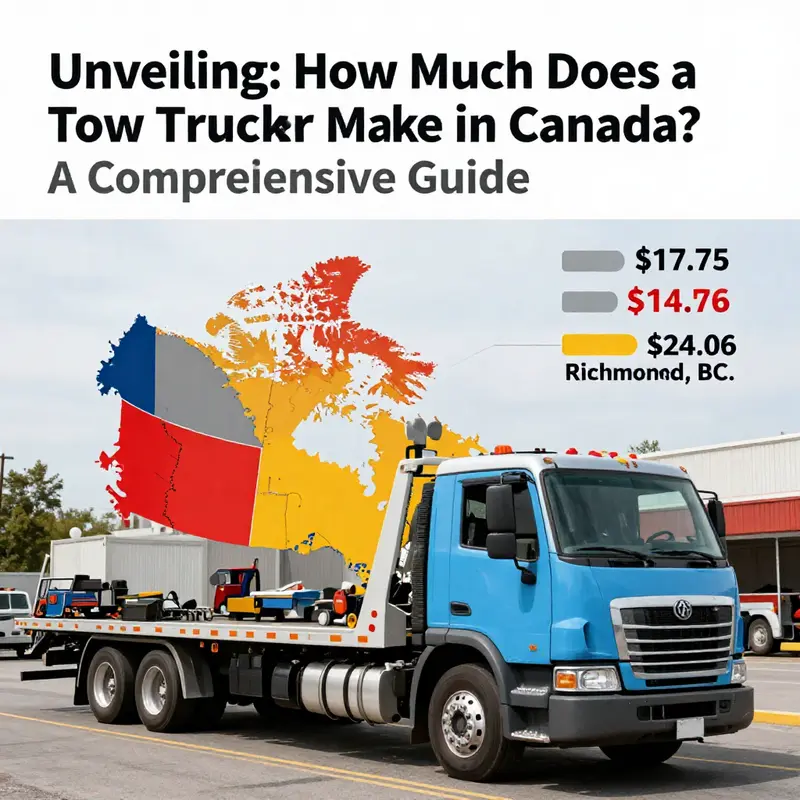
Tow truck work sits at the crossroads of service, availability, and risk, and the pay reflects that reality. Across Canada, the base wage for a tow truck driver sits around $17.75 per hour, based on 469 salaries reported through December 11, 2025. That national average provides a starting point, but the real story is a tapestry of local variation driven by province, city, employer, and the kind of duty the job entails. In British Columbia, drivers tend to earn a touch more on average—about $17.85 per hour—with close to two hundred salary reports feeding that figure. Alberta’s base hourly pay sits lower on average, around $16.01, yet the range within postings can shoot way above that figure in energy-industry hubs or remote regions. Fort McMurray, for example, has postings that show hourly rates in the $40s or even higher, underscoring how remote locations and essential service demands can push pay well beyond the provincial average. Across the border, the United States, by comparison, reports an average around $21.26 per hour, illustrating how local cost of living, demand, and hours shape compensation. These numbers, while informative, translate into real earnings only when overtime, on-call premiums, and bonuses are factored in, which many drivers rely on to round out the base wage.
The cadence of a tow truck driver’s day matters as much as the rate itself. Volume, call frequency, and hours worked can tilt earnings considerably. In busy urban corridors, evenings and weekends bring a stream of rescue calls, often accompanied by on-call premiums and the potential for overtime pay. In contrast, rural or small-town rosters may deliver steadier but less intense demand, making base pay more modest even when overtime is available. The structure of the employing entity also matters. Large fleets and service providers can standardize shifts and payroll, while small operators or owner-operators may offer more flexible schedules but with earnings that swing with the number of calls and the distances traveled between assignments. In practice, the pay landscape looks less like a single line and more like a ladder, with base hours anchoring pay and supplementary components lifting totals for those who can stay on call and respond quickly in challenging conditions. This dynamic is visible in the broader market data, which show a wide hourly spread, sometimes from the low-teens to the mid-30s, depending on the job, region, and the inclusion of on-call or surge-based compensation.
A practical way to frame earnings is to translate the hourly base into annual potential, keeping in mind that actual results hinge on hours, overtime, and the frequency of high-demand periods. A straightforward forty-hour week at the national average yields roughly $37,000 a year before taxes, assuming consistency across the year and no overtime. For drivers who regularly work evenings, nights, or weekends, the annual figure can climb, but so can fatigue and wear. Conversely, a driver in a smaller community with fewer calls may face a lower annual total, even if overtime enters the picture from time to time. Some employers publish ranges that illustrate the spectrum clearly: a driver might see an hourly spread from about $14 to $34.50, with the higher end reflecting heavy-duty tasks, longer travel to scenes, or specialized roadside work. The essential takeaway is that the base rate tells only part of the story; the rest comes from the combination of overtime, on-call pay, and the nature of the assignments that a given role handles.
For those weighing career options, the regional heat maps tell a story about opportunity. Metro areas with high call volumes and dense traffic typically offer more opportunities for overtime and premium callouts, while rural regions can still reward reliability and efficiency with solid base pay and fewer hours on standby. Experience and training—especially safety certifications that align with local regulations—play a significant role in earnings potential. A seasoned driver who can navigate complex roadside rescues efficiently, communicate well with customers, and manage time and travel costs effectively often secures higher pay and steadier overtime, particularly when paired with a reputable fleet. The personal calculus also includes travel time, fuel, and maintenance for a driver who moves between calls, choosing a schedule that minimizes downtime and maximizes productive hours. In this context, a local operator’s pay structure—balance between base rate and on-call or surge components—offers a practical window into how pay can be optimized in day-to-day operations. For readers curious about how a typical operator structures compensation, consider looking at a local profile such as Mikes Towing to see how a regional shop balances service needs with scheduling.
All told, the question of how much tow truck drivers make is not a single-number inquiry but a location-and-availability question. The Canadian numbers provide a framework for budgeting and decision-making, while the real earning potential sits in the balance of province, city, employer type, and the ability to capitalize on overtime and on-call opportunities. The best way to gauge current prospects remains consulting up-to-date salary data from reputable job platforms, paired with local postings that reflect the specific market you’re targeting. When you project earnings, include not just wages but the costs and benefits that come with on-call readiness, travel between assignments, and the occasional long, demanding shift. For a broader, current snapshot beyond the narrative here, you can explore the latest figures on Indeed, which maintains Canada-specific salary data for tow truck drivers: https://ca.indeed.com/career/tow-truck-driver/salaries.
Geography and Paychecks: How Tow Truck Wages Shift by Location
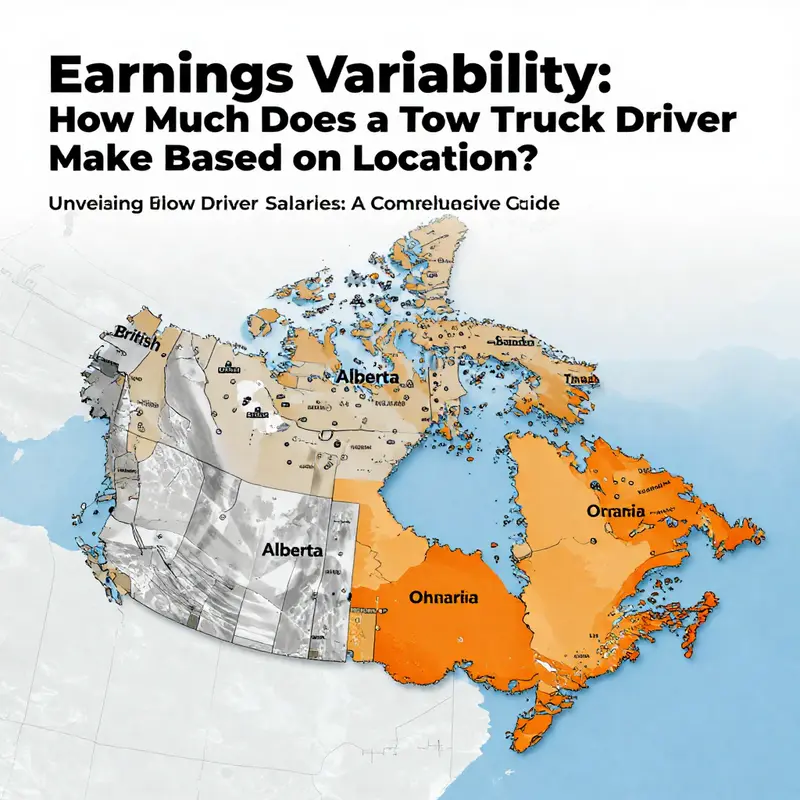
When you ask how much a tow truck driver makes, the answer isn’t a single number. It’s a map: wages bend with the street grid, the density of demand, and the cost of living that frames every city and town. Location acts as a multiplier, and the chapters of that multiplier read differently in the United States than in Canada, with sharp contrasts between urban hubs and more rural pockets. A driver in a busy metro or in a resource boom town often sees a higher clock rate than someone parked in a quiet suburb or a smaller community. The data bear this out clearly and in multiple layers. In the United States, Indeed reports an average hourly wage around $23.64 for tow truck drivers as of February 2026. That figure sits about 19 percent above the broader national average for many line-of-work categories, signaling that the job carries a premium in markets where emergencies, waiting times, and rapid response translate into more calls or longer hours. Yet a single number doesn’t capture the range, because California and New York City typically host higher pay scales driven by living costs and heavy demand, while other regions hover lower, reflecting different traffic patterns, regulation, and competition among service providers. In Canada, the picture becomes even more geographically nuanced. The national average hovers near $17.75 per hour, according to the latest compilation from Indeed, but the spread within the country shows visible elevation in coastal and metropolitan markets. In British Columbia, the hourly range commonly lands between roughly $22 and $39.50, a spread that mirrors both urban competition and out-of-province demand. Concrete examples illustrate how this plays out on the ground: a Surrey-based posting offered as much as $39.50 per hour, while a Richmond operation reported pay in the $22–$24 per hour band, a gap that underscores how specific employers and local market conditions shape the take-home. Alberta presents a similar pattern with notable outliers: while the overall average sits toward the lower end relative to British Columbia, postings in stronger energy hubs have shown rates like $36.10 per hour in Chestermere, and even higher figures appear in high-demand periods or specialized roles, including Fort McMurray’s well-known premium environment. Other Canadian regions reveal the volatility of pay as well, such as Ontario, where annual earnings can range widely depending on the employer’s scale and whether the job accounts for all hours and on-call duties. One Ontario example lists a broad annual range from $50,000 to $80,000, while another Guelph-based firm offers about $36 per hour, illustrating how proximity to larger populations and trade routes translates into more consistent, higher compensation. The Canadian map, then, isn’t a simple ladder but a patchwork—urban centers with dense incident activity and longer shifts, versus smaller towns where demand can be steadier but rates stay conservative. This is not just about raw numbers; it’s about how market forces shape opportunities: the willingness of a company to pay for quick response, the cost structure of the operation, and the pool of drivers available in a region. These dynamics become striking when you compare a general posting to a specialized or high-risk assignment—the kind that may require extra training, heavy equipment handling, or after-hours availability. The broader implication for someone entering or navigating the field is clear: where you work often matters more than the title you carry. If you seek higher earnings, aiming for high-demand metros or resource-driven regions can tilt the scales, but you also introduce yourself to longer shifts, tougher roading conditions, and a different pace of life. Local market conditions also interact with company size and reputation. Larger fleets, diversified services, and closer ties to emergency and roadside networks can offer more predictable streams of calls and a steadier wage floor. For readers exploring this landscape, it helps to see a practical reflection of the market at the ground level. Consider how a regional operator frames its service offerings, the way shifts are structured, and the tempo of daytime versus after-hours work in a given locale. A sample view from a regional service provider underscores this: Mikes Roadside Service illustrates the real-world balancing act between coverage area, response time, and pay structures in a competitive market. Mikes Roadside Service. This kind of local context matters because, beyond the numbers, it’s the combination of demand, regulation, and business model that determines payday swings across the country. To complete the picture, the data from Indeed provides a nationwide anchor, while the Canadian examples reveal the depth of variance within a single country. The result is a landscape where earnings are as much about place as about the wrench or the wrecker. For a broader snapshot of pay data across the industry, see the detailed figures at Indeed’s Tow Truck Driver Salaries page: https://www.indeed.com/career/tow-truck-driver/salaries.
null

null
Final thoughts
Through this exploration of tow truck driver salaries, we have uncovered the stark variances based on geography and market conditions. Business owners must remain cognizant of these differences when planning budgets and benchmarking wages within their organizations. Understanding local and national trends not only aids in attracting qualified personnel but also enhances operational efficiency. Knowledge is power in navigating the competitive landscape of the towing industry, ensuring sustainable growth and profitability for your business.