
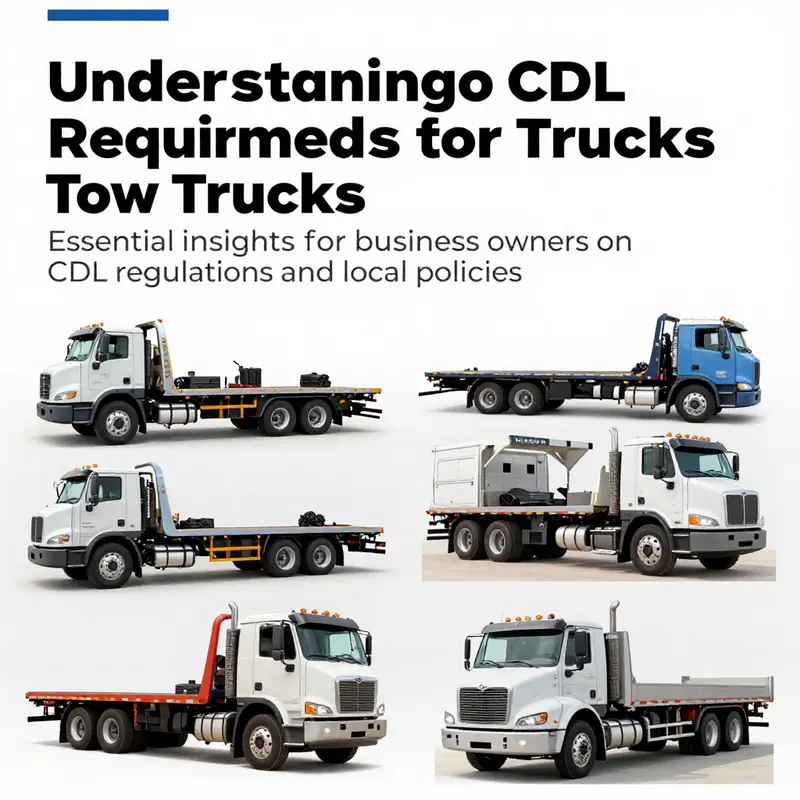
Operating a flatbed tow truck requires a clear understanding of CDL (Commercial Driver’s License) regulations, especially for business owners in the towing industry. Whether you need a CDL can depend on the weight of your tow truck and the nature of its use. This article will provide comprehensive insights split into two critical chapters: the weight regulations that determine if a CDL is required and the specific state regulations and considerations that could affect your operations. Business owners must navigate both federal guidelines and local laws to ensure compliance and avoid potential penalties, so let’s delve into these important factors.
Carrying the Weight: Demystifying CDL Requirements for Flatbed Tow Trucks
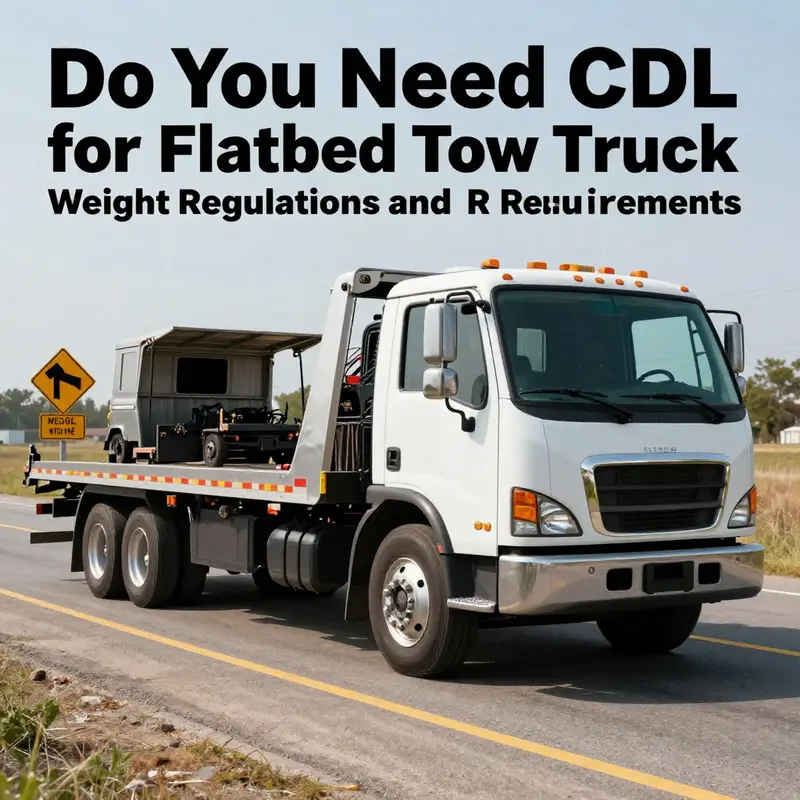
Weight governs licensing decisions for flatbed tow trucks. The key numbers are GVWR and GCWR, not the truck’s appearance. If the GVWR on the plate is greater than 26,001 pounds, operating the vehicle in interstate commerce generally requires a CDL. If the GVWR is 26,001 pounds or less, you may use a regular license for non commercial or intrastate operations, but there are caveats depending on use and state rules. When a vehicle tows another vehicle or is connected to a trailer, you must check the GCWR. If the GCWR exceeds 26,001 pounds, a CDL is often required for interstate work. The line is about use: a lighter flatbed that tows a heavy vehicle may push into CDL territory because of the combination weight, even if the chassis alone would not. The classification of CDL (Class A or Class B) depends on the combination: Class A typically for combinations where GCWR exceeds 26,001 pounds and the towed vehicle weighs more than 10,000 pounds. Class B generally for single vehicles with GVWR over 26,001 pounds that do not form a heavy combination exceeding thresholds. However, state adoptions vary; some states interpret intrastate use differently. For this reason, operators should verify with the state DMV and FMCSA for the jurisdiction-specific rules.
Next steps: inventory typical loads, weigh the bed and towed vehicle, calculate GCWR for common service scenarios, and consult the DMV and FMCSA for guidance. If you anticipate crossing state lines or routinely handling heavier tows, prepare for the licensing process: determine the correct CDL class, medical certification, knowledge tests, and the driving test. Safe operation demands understanding the heavier braking distances, longer stopping times, and handling characteristics of heavier vehicles, as described in CDL safety standards.
Ultimately, weight and use together determine licensing. Even a flatbed that sits below the GVWR threshold can trigger CDL if the way it is used pushes the GCWR over the limit or if interstate activities come into play. Where regulations differ by state, err on the side of caution and verify before operations. For authoritative guidance, consult the FMCSA and your state DMV; keep documentation of typical loads and routes, and review licensing needs whenever fleet configurations change.
Between Weight, Use, and State Lines: Do You Need a CDL for a Flatbed Tow Truck?
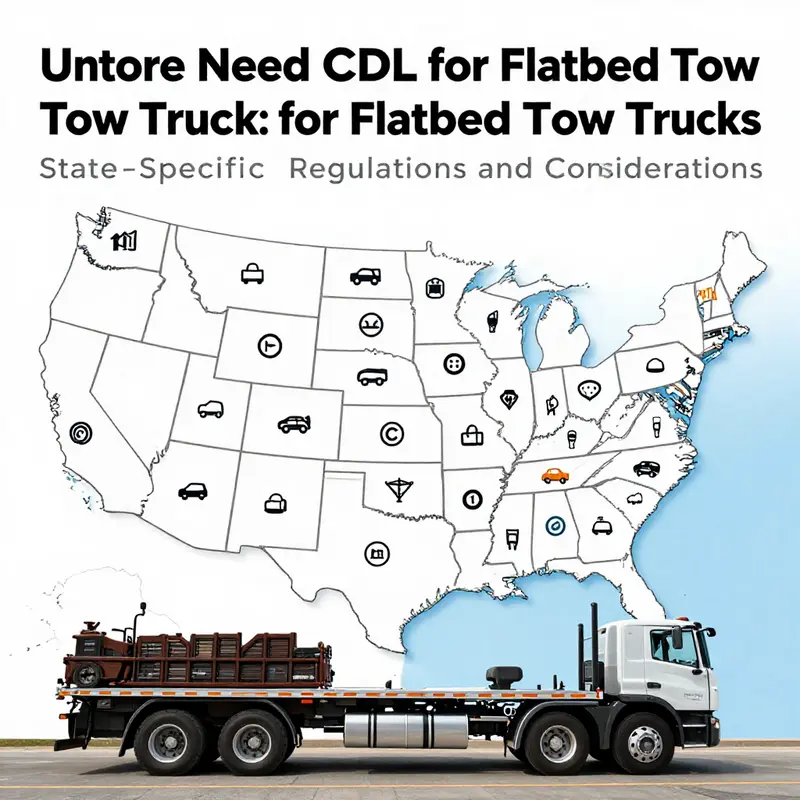
Questions about a CDL for a flatbed tow truck rarely have a single, simple answer. The reality rests on a precise mix of numbers, how the truck is used, and the rules that apply where you operate. For many operators, the door to compliance swings on the vehicle’s weight: the Gross Vehicle Weight Rating on the flatbed unit itself and, when towing, the weight of the vehicle being hauled. In practical terms, when a flatbed’s GVWR sits at 26,001 pounds or more, a Commercial Driver’s License becomes the rule of the road in most contexts. That threshold is baked into federal guidelines and echoed by many state statutes because it aligns with the level of training, testing, and safety standards that federal authorities want drivers to meet when they command large, potentially hazardous vehicles. Conversely, if the flatbed’s weight stays under that line, a standard driver’s license is typically sufficient for a solo operation that does not involve moving more than a modest load. This dichotomy shapes a lot of the day-to-day business decisions for towing operators who must balance service willingness with legal risk. Yet the picture is never static; it changes when the vehicle is used for different kinds of work or when a second vehicle is involved in the operation. The moment you begin to tow a car, the rules tilt in subtle but important ways. The concept of Gross Combination Weight Rating, GCWR, captures that nuance. Take a flatbed that weighs 20,000 pounds and that regularly tows a 12,000-pound tractor; the combined weight can exceed the 26,001-pound threshold even though the tow truck alone does not. In that case, a CDL becomes a likely necessity. The highway code is not a single, flat gate but a set of gates, occasionally open, sometimes closed, depending on how you connect the truck, the trailer, and the payload. It is easy to miss these subtleties when the truck is bought for hopeful, strategic business growth and the weight plates aren’t the first thing a new operator checks. The weight labels, the GVWR and GCWR inscriptions on the placards, are not mere numbers; they are legal signals about training, licensing, and in some cases, insurance. A careful inspection of the vehicle’s data plate will reveal whether the combination you intend to drive classifies as a Commercial Motor Vehicle under federal rules. In the same breath, the use case matters. If your flatbed tow truck is employed purely for personal or small-scale noncommercial recovery—truly a hobbyist scenario—the licensing demand may stay modest. But if your work is conducted as a business activity, or you move vehicles for hire, the thresholds expand in real and consequential ways. A dealership shifting cars for sale, a roadside assistance outfit, or a wrecking service recovering vehicles from an accident scene will often cross the line not by the truck’s weight alone but by the nature of the operation. In such cases, even a lighter truck can trigger CDL requirements depending on the load’s weight and the state’s interpretation of “commercial activity.” The state line itself adds texture to the story. Federal guidelines establish the baseline, but states may tailor the rules to reflect local transportation needs, road conditions, and enforcement priorities. Some jurisdictions keep the standard threshold tight, while others have a broader view of what counts as a commercial operation, or they apply additional constraints for towed loads, axle configurations, or the use of the vehicle in commerce. For a small operator who wants clarity, the most reliable path is to check both the GVWR on the truck’s data plate and the GCWR if a vehicle is being towed. If either, in combination with the towing arrangement, pushes the total toward or beyond 26,001 pounds, a CDL becomes the probable requirement. In a landscape like this, the exact state you operate in matters. While federal law provides a framework, state DMVs do the day-to-day enforcement and licensing decisions. A driver might legally hold a standard license in one state for a certain operation, but cross into another state with the same unit and find a different standard. That divergence underscores why a cautious approach pays off. It is not enough to memorize a single number; you must understand the weight of the truck, the weight of the load, and the way the law in your state defines “commercial operation.” The guidance is both practical and procedural. When the question of a CDL arises, many operators begin by checking the truck’s GVWR label at the manufacturer’s plate or on the frame. If the GVWR is 26,001 pounds or more, the driver should anticipate CDL requirements, especially if the work is performed for hire or on a schedule that resembles a business service. If the GVWR is under 26,001 pounds, the door often remains open to using a standard license, but this is where GCWR becomes a key triage tool. If you tow another vehicle and the combined weight of the tow truck and the towed vehicle crosses the 26,001-pound line, the CDL comes into play. The nuance does not stop there. The purpose of the operation matters, too. Transporting vehicles for a dealership, auction, or repair service counts as a commercial activity in many states and can trigger CDL requirements even when the weights hover near the threshold. The line between private use and commercial use is one of the most common reasons a decision on licensing becomes more complex. A responsible operator will not rely on guesswork. The safe approach is to consult the state DMV for the precise interpretation of the weight metrics and the business nature of the operation. For those who want to see how this plays out locally, a concrete frame of reference exists in many states, including North Carolina, where a DMV resource explains how trailer towing intersects with CDL needs. The NC guidance emphasizes that, in practice, when you operate a commercial motor vehicle with aGVWR above the threshold, or when towing a vehicle that exceeds 10,000 pounds, a CDL is typically required. It is a reminder that the line is drawn not just by what you drive, but by what you tow and for whom you work. The guidance also makes clear that state-specific rules can alter the answer. If you run a towing business in a state that treats even lighter tows as commercial, or if your operation involves the transport of multiple vehicles or specialized equipment, you should expect a CDL to be part of your licensing picture. The practical upshot is this: a flatbed that weighs more than 26,000 pounds puts you in CDL territory, full-stop. A flatbed that weighs less, yet pulls a heavy car or SUV in a way that pushes the combined weight over the limit, also triggers CDL requirements. The general rule of thumb becomes a workable lens: know the truck’s GVWR, know the weight of what you tow, and know the state’s specific stance on commercial activity. In the day-to-day reality, most professional flatbed operators who handle disabled vehicles, wrecked cars, or fleet relocations will find themselves in the CDL category. That is not a judgment of the person behind the wheel so much as a reflection of the weight and the function of the vehicle when deployed for business, not merely pleasure. The licensing question then folds into training, compliance, and safety. A CDL carries with it a suite of prerequisites: the appropriate class, the likelihood of testing, and the responsibility to maintain the vehicle and the operator to standard safety practices. The process is not a one-time event; it is a continuing obligation that informs equipment choice, hiring, and daily scheduling. It influences insurance considerations and the ability to operate across state lines. It also feeds into the operational discipline during emergencies, when speed and accuracy in loading and unloading fuse with regulatory compliance to safeguard drivers and the public. As you plan purchases or fleet expansion, the weight math is more than arithmetic. It becomes a decision about training, risk, and the kind of service you want to deliver. If your business model depends on rapid response and routine towing of heavier loads, the CDL is a practical necessity. If, however, you are deploying a lighter flatbed in a noncommercial, limited-scope scenario, there may be room to operate under a standard license, provided you stay within the weight bounds and your use remains simple. The question remains dynamic because state rules can introduce exceptions or added requirements. This is precisely why many operators develop a habit of confirming the current regulations with the state DMV or with the federal FMCSA, especially when plans shift—perhaps you upgrade to a heavier unit, or you begin towing more regularly. A practical approach to staying compliant is to document your truck’s GVWR and GCWR, keep records of how you use the vehicle, and routinely recheck the licensing requirements whenever your operations change. It is also worth recognizing that the licensing landscape can influence strategic decisions about equipment choices. If you anticipate adding heavier loads or expanding the towing services you offer, you may choose to purchase a flatbed with a higher GVWR to align with a CDL-friendly plan rather than risking last-minute licensing changes. Keeping this alignment avoids operational holdups and the potential cost of noncompliance. For readers seeking a local, tangible reference point, consider how a nearby fleet or service provider frames the CDL question in their day-to-day operations. A real-world example can be found by looking at the broader context of tow services in a major metropolitan area; you can explore a local perspective on the topic of practical CDL requirements through resources that discuss how tow trucks operate in Houston and the surrounding region. Tow Trucks in Houston provides a concrete sense of how the weight and usage logic plays out in a real city environment. Tow Trucks in Houston can offer a narrative glimpse into how operators balance licensing, equipment choices, and regulatory expectations in a busy market. This kind of local lens helps translate the weight-and-use framework into actionable planning, especially for new fleets weighing their options. It is important to note that the precise rules vary by state, and the local DMV’s guidance often reflects practical enforcement considerations that emerge from years of experience on the road and on the lot. When in doubt, lock in a clear conversation with the DMV official who handles commercial licensing in your jurisdiction. The FMCSA website remains a critical resource for federal thresholds and for understanding how state decisions fit into a national safety framework. In the end, the simplest, most reliable verdict is this: if the flatbed itself weighs 26,001 pounds or more, you will need a CDL for most standard operations. If the truck weighs less, you may still require a CDL if you are towing a heavy vehicle such that the GCWR exceeds the 26,001-pound line, or if your business activity elevates the operation to commercial status in your state. Always confirm with your state’s DMV and, when necessary, with the FMCSA to ensure you interpret the law correctly and stay compliant as your fleet evolves. The goal is straightforward—operate safely, legally, and with a clear plan for training and licensing that aligns with the weight realities of your equipment and the business you run. External resource: https://www.dmv.state.nc.us/vehicles/trailer-towing-cdl-requirements/
Final thoughts
In summary, identifying whether a Commercial Driver’s License is necessary for operating a flatbed tow truck is critical for business owners in the towing industry. The weight of your towing vehicle combined with the local and federal regulations establishes the need for a CDL. By understanding both weight regulations and state-specific considerations, you can better navigate compliance and focus on your business operations. Staying informed and aware protects not only your business interests but also the safety and well-being of your team and customers.