
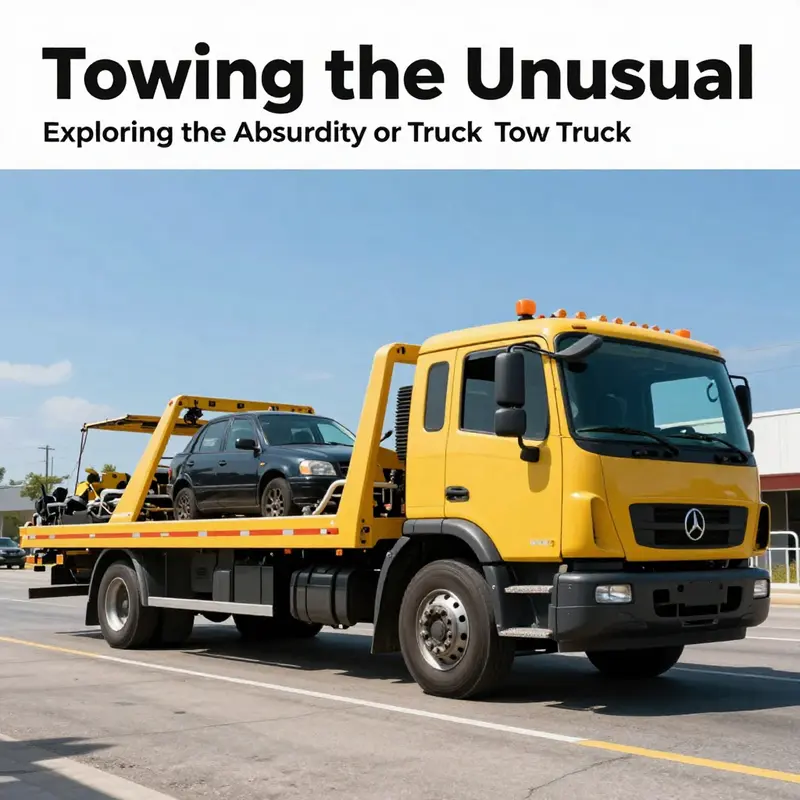
The phrase ‘a tow truck towing a tow truck’ encapsulates a whimsical yet relatable phenomenon in both humor and practicality. For business owners in the towing industry, this concept not only offers a chuckle but also invites deeper contemplation about operational efficiencies and service strategies. In this exploration, we delve into how the absurdity of needing one tow truck to pull another reflects social undercurrents, assesses the technical realities of this scenario, and evaluates its cultural impact across communities. Each chapter weaves these themes together, providing insights that could inspire innovative thinking within your own business practices.
Tugging at Irony: The Tow Truck Towing a Tow Truck as a Mirror of Modern Dependence
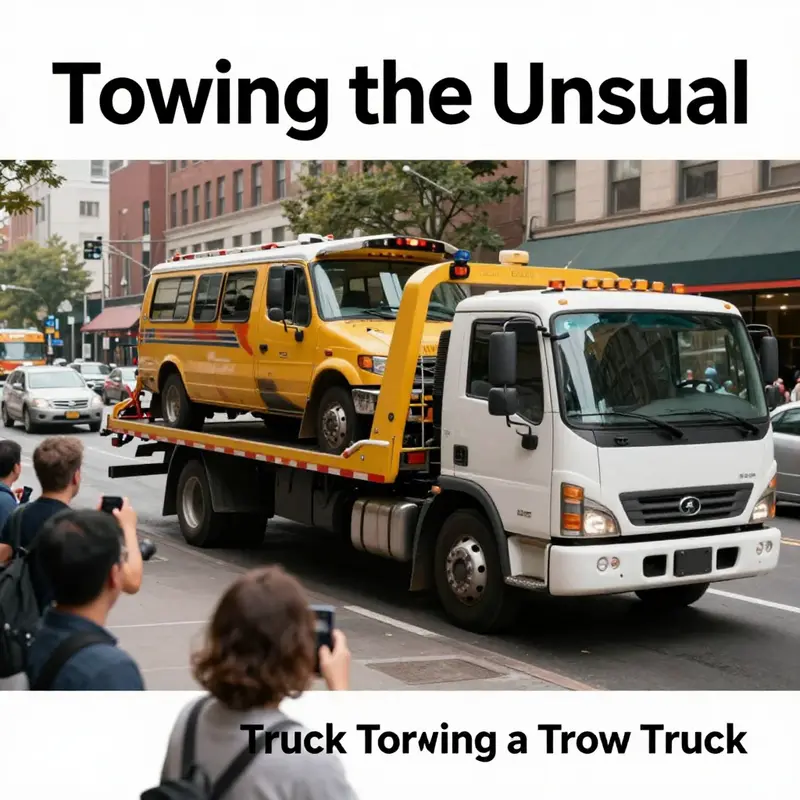
On a sunlit stretch of road, the sight seems almost too perfect to be real: a tow truck pulling another tow truck, the landscape narrowing to a line of conflicting roles that somehow lift into a joke that lands with a sigh instead of a punchline. This paradox—an instrument built to salvage others finding itself in need of salvage—is not merely a gag in a meme feed. It is a compact paradox that exposes the delicate machinery of modern mobility, the social choreography of roadside rescue, and the quiet, stubborn resilience of people who keep traffic moving when the system squeaks and shudders under pressure. When we zoom in on the image, we uncover a layered conversation about reliability, vulnerability, and the social contract that binds drivers, operators, and the public in moments of crisis. The humor emerges from the reversal, from seeing a tool of repair become a patient, from watching authority momentarily surrender its own control. Yet the joke doubles back on the observer, inviting a second, more serious look at how we depend on strangers to keep our lives running, almost uninterrupted, even as those same strangers admit to nerves, fatigue, and the very real limits of their equipment.
The mechanical reversal is a visual pun with depth. A tow truck is not just a vehicle; it encapsulates confidence, a promise that a problem can be treated, and a form of roadside governance. When it becomes the one that needs to be towed, the scene unsettles the certainty around the status of the professional who moves accident and breakdown away from danger. The reversal invites a broader meditation on vulnerability. It asks us to consider what happens when the systems designed to stabilize us show a crack, a moment of dependence on the very network they support. The image becomes a small public service announcement about humility: even the most trusted tools have faults, and even the most capable operators can be caught in a moment when assistance is not only possible but necessary. The humor is not cruel; it’s a reminder that human beings remain in control of the most complex systems by leaning on one another.
Within this frame, the tow truck driver’s craft reveals itself beyond the mechanical. The profession, often stereotyped as brisk, unsentimental, and even stoic, is in truth a discipline of communication as much as of physics. The driver must calibrate weight and angle, but also tone and timing, to de-escalate risk in tense roadside moments. In the real world, a calm voice can turn a potential confrontation into cooperation long before the tow rope ever leaves the hook. This social skill is the quiet core of the job, and it resonates even more when the image of one tow truck towing another becomes a social mirror. If the first vehicle carries the responsibility of rescue, the second embodies a different kind of rescue: a rescue from the anxiety that accompanies stalled traffic, blocked lanes, and the uncertainty of a breakdown’s duration. The reversal thus becomes a study in mutual aid rather than a simple gag about incompetence. It points to the truth that every frontline operation is an ecosystem, reliant on precise math and human empathy in equal measure.
In the larger public imagination, tow trucks carry a stake in how we narrate crises. They are not glamorous; they are indispensable. They work in the margins where streetlight pale meets exhaust, where a paused commute becomes a shared moment of pause, and where the social fabric shows its fibers under strain. The meme of a tow truck towing a tow truck travels quickly through communities because it condenses these collective nerves into a single, portable image: the system is strong enough to lift others, but not so invincible that it cannot ask for help back when it falters. The joke becomes a vehicle of social commentary, a compact snippet that invites us to reflect on redundancy, efficiency, and the sometimes brutal arithmetic of emergency services under heavy demand. When networks buckle—whether due to weather, demand, or maintenance—these moments reveal a larger truth about interdependence: resilience is not the absence of weakness but the capacity to mobilize resources, to read the room, and to call in a neighbor for assistance when the road asks for it.
For readers who feel the tug of this paradox in their own lives, there is a practical takeaway that sits neatly beside the humor. The best tow operators are also ambassadors of calm. They translate a crisis into a plan, they demystify the process of recovery, and they steady the environment so drivers can accept the delay without resentment. In this sense, the image of a tow truck towing a tow truck is less a punchline and more a narrative about community under pressure. It is a reminder that the road is shared space, that infrastructure is maintained through cooperation, and that even the most robust tools rely on others to stay whole. To explore practical echoes of this idea in action, consider the service landscape where patience and clear communication underpin every successful recovery. Mikes Towing offers a window into that ethos, showcasing how technicians balance competence with compassion, and how a simple tow can become a moment of mutual reassurance rather than a source of tension.
External resource: You don’t have to be mean – Towtrucker defuses a tow before it. https://www.youtube.com/watch?v=7Y2Qc3r9R1U
Tow Within a Tow: The Delicate Engineering Behind One Tow Truck Pulling Another
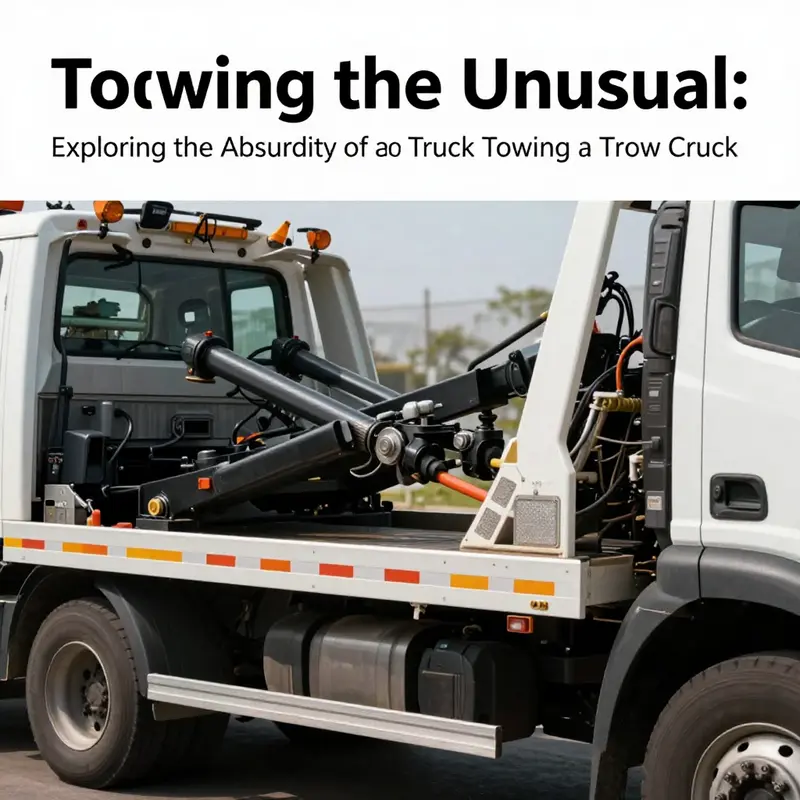
The image is instantly memorable: a tow truck poised to pull another tow truck. It reads like a joke, a paradox that pokes fun at the very idea of a vehicle designed to move cars being tasked to move another vehicle that is already a vehicle in distress. Yet beneath the humor lies a thin, strict seam of engineering. In the right hands, under tightly controlled conditions, a tow truck can indeed pull a disabled companion, but the operation sits at the edge of what reliable equipment and trained operators will tolerate. It is less a routine maneuver and more a carefully calculated risk, a test of weight, leverage, and control that can, when misjudged, cascade into damage, injury, or worse. To understand why the meme endures, we must first reconcile the absurd with the engineering realities that govern heavy recovery work. The discussion rests on a few core questions: can the pulling truck actually handle the combined mass, how should the two vehicles be connected, and what safeguards keep the operation within the boundaries of safety, legality, and practical necessity?
First, the question of towing capacity anchors the entire enterprise. Tow trucks are rated by the maximum weight they can safely haul, a spec that varies with design, drivetrain, and suspension. Standard, everyday tow trucks often carry ratings in the range of 20 to 30 tons, with lighter models reserved for passenger cars and light trucks. Specialized heavy-duty wreckers exist that push much higher, but even these formidable machines face limits when the load includes another vehicle that itself may be large, immobile, and resistant to movement. The combined weight—sum of the disabled truck’s mass and the rolling resistance of its tires, brakes, and drivetrain—must be within the towing vehicle’s capability, penalized only slightly by the added drag from the coupling system and the dynamics of a long, loaded tow line. When both vehicles are modest in size, and the distance is short, the operation moves from theoretical possibility to practical feasibility. When either vehicle is heavy, or the terrain complicates the pull, the math shifts toward risk and the likelihood of failure.
The method of attachment is a second nontrivial constraint. A simple chain or a standard winch is not the right tool for this job, as those approaches can fail at the worst possible moment or introduce runaway slack that unsettles the entire rig. Instead, engineered couplings—heavy-duty tow bars or purpose-built connectors designed for high-stress recovery—provide a controlled, rigid link between the two machines. The attachment must tolerate significant tension and dynamic loads without deforming or detaching. Moreover, the hook-up sequence is a choreography: the towing vehicle must stage the approach, align the load, and secure the connection while ensuring that the disabled vehicle is positioned to roll rather than drag heavy components across the pavement. The connection also needs to prevent excessive oscillation or sway, which could magnify in a straight line and around corners, turning a careful maneuver into a dangerous one.
Vehicle condition weighs heavily on the feasibility and safety of the operation. The disabled tow truck must be in a state that allows safe towing. Brakes should be functional or locked, and the transmission should be in neutral. All wheels must roll freely without dragging on the ground in a way that would cause heat, wear, or differential damage. If the drivetrain is compromised, if the brakes seize, or if there is any locked component that resists motion, attempting to tow becomes a recipe for catastrophic failure. The operator must assess fuel leaks, steering integrity, steering linkages, and the possibility of residual energy in an engine or hydraulic system. This is not a test in improvisation; it is a test in risk budgeting where every component—mechanical, hydraulic, and control systems—must be accounted for and brought into alignment before motion occurs.
Control, safety, and regulatory compliance form the triad that governs any heavy recovery. The longer the effective length of the combined rig and the heavier the payload, the more pronounced the sway and the instability become at even modest speeds. An experienced operator, often with a spotter or escort vehicle, is essential to monitor for trailer-train effects, sudden pulls, or unexpected ground conditions. Speed is deliberately slow, with clear communication cues to coordinate throttle, steering, and braking. The decision to perform such a maneuver is never taken lightly; it is weighed against safer alternatives, typically the use of a flatbed or low-bed wrecker that can transport the disabled vehicle with guaranteed stability and reduced risk to the towed unit. Legal and regulatory frameworks further constrain these operations. Many jurisdictions impose limits on weight, require permits for unusual towing configurations, and mandate specific equipment standards. Operators must stay current with local rules to avoid penalties or liability should something go wrong.
All this reveals why the scenario remains a niche, even controversial, option. The humor of the meme is grounded in the absurdity of a vehicle designed to move cars having to move another vehicle in distress. The reality is much more measured: when the circumstance is extreme, and no better option exists, a highly engineered, carefully executed tow between two tow trucks can occur. But it is not routine; it is conditional, dependent on exact weight, solid attachment, sound mechanical health, and disciplined operation. For readers who wish to glimpse professional nuance beyond the general constraints, consider the practical guidance shared by seasoned operators in the trade—a perspective that emphasizes planning, weight budgeting, and safety margins over spectacle. mikes-towing offers a window into the mindset and precautions that frame such recoveries in the real world. And for those seeking authoritative standards and regulatory context, official guidelines from Transport WA outline the broad safety and compliance landscape that governs heavy-duty towing in professional practice. You can consult the state guidelines at https://www.transport.wa.gov.au/ for a sense of the formal expectations surrounding these complex operations.
In the end, the comedic spark of a tow truck towing another tow truck rests on a kernel of truth: human ingenuity will push machinery to its limits when the objective justifies the risk. Engineers, operators, and regulators collectively map those limits, ensuring that even the most absurd scenario remains tethered to safety, capability, and accountability. The result is a chapter in which humor and engineering converge, revealing how even a seemingly simple paradox can illuminate the careful balance of force, restraint, and responsibility that underpins modern recovery work.
Tow Lines, Shared Rescue: The Cultural Echo of a Tow Truck Towing a Tow Truck
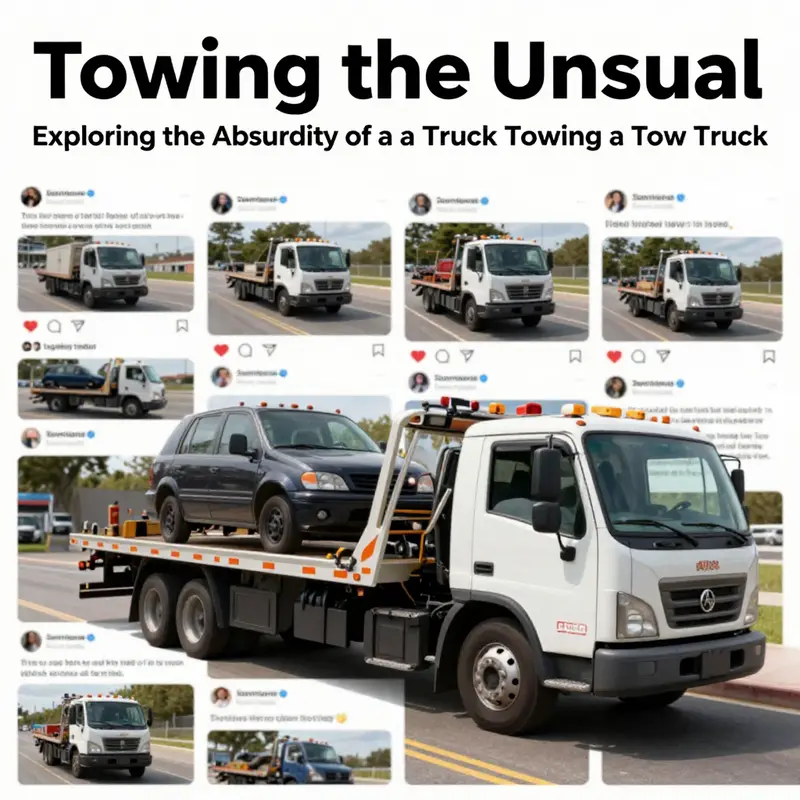
A tow truck towing another tow truck unfolds like a parable of modern mobility: power tested by a stubborn fault, efficiency pressed into a counterintuitive role, and humor arising from the sheer practicality of a system that must endure even its own failures. The image lands with a surprising blend of awe and chuckles, a paradox that feels almost staged yet remains stubbornly real. In one frame, you see brute force and precision—the hydraulic arms, the mirrored choreography of chains and winches—working to move a vehicle that itself carries the tools to move others. The visual logic is immediate: if a machine is built to fix, recover, and redeploy, how does it handle the moment when it itself becomes a patient? The humor is not simply that a tow truck is being towed; it is that the act exposes a depth of dependency within a network that many would rather pretend runs without friction. This duality—strength and fragility coexisting on the same street—gets under the skin of how people think about rescue, repair, and the careful choreography that keeps traffic honest and moving.
The cultural resonance of this image rests on a core irony: the very symbol of control sometimes requires care from a peer. “Help the helpers” could be a tidy maxim, but the scene invites a more nuanced reading. It suggests that even the most specialized operators live inside a system that can turn surprising and inconvenient at a moment’s notice. When a tow truck needs another tow truck, the moment becomes a public vignette about preparedness, coordination, and mutual reliance. Social media, quick to laugh and quick to share, elevates the incident into a small, enduring lesson about how modern infrastructure depends on teams, not solo virtuosos. The meme-like quality—“the tow truck that needed a tow truck”—transcends a single incident and becomes a shorthand for the broader truth that resilience is collective, not solitary. The audience recognizes that the iron and steel of recovery work rests on a human grid of responders who must communicate, anticipate, and recalibrate on the fly.
Across platforms, the trope travels easily into stories and clips that frame the moment as both dramatically cinematic and practically instructive. On one hand, you witness the scale of recovery operations—the sheer force and precision required to lift and guide a heavy vehicle through obstructed space. On the other hand, viewers learn something practical: the right tool, the right sequence, and the right partner can turn a failure into a controlled, choreographed recovery. In real-world reporting, this theme shows up as dramatic recoveries where a flatbed or a heavy-duty unit is needed to extract a vehicle from a precarious position or from a confined setting. The dichotomy of spectacle and utility is essential here; the image offers a window into the realities of road safety, incident response, and the subtle artistry of risk management that underpins every roadside intervention. Within this cultural frame, it also reframes the tow operator as part of a larger ecosystem rather than a lone technician in a black-and-yellow silhouette, reminding the public that expertise travels in teams and that every mission is a collaboration.
Behind the social echo is a practical grammar of equipment and roles. Modern towing is no longer a single tool with a single job; it is a spectrum of machines designed for different tasks: low bed configurations for carrying high-value or low-clearance vehicles, wheel-lift setups for versatile recoveries, and integrated systems that combine lifting, pulling, and stabilization in a single, adaptable chassis. When a tow truck itself falters, the response normally escalates to a more capable unit, sometimes an integrated or premium configuration capable of lifting and threading a stranded vehicle without further harm to surrounding assets. In this sense, the paradox becomes a teaching moment about how professional fleets plan for contingencies: the right backup, the right sequencing, and the right operator with the trained judgment to choose between stability and momentum. The result is a quiet respect for the complexity of a rescue operation, the skill required to conserve energy and space, and the discipline to keep roadside scenes safe for bystanders and motorists alike. The image thus serves as a living demonstration of what it means to be prepared, not merely to be powerful.
Within this broader framework, the image of one tow truck pulling another also underscores the social value placed on professional timing and ethical conduct on the road. It is easy to underestimate the importance of rapid, coordinated response, but the sequence matters: assessing the vehicle’s weight distribution, selecting the appropriate recovery method, and maintaining clear communication with any drivers nearby. The public gains a sense that roadside services are more than mechanical prowess; they embody a form of civic responsibility that recognizes the fragility of even the most dependable systems. In communities where the road is a shared resource, the moral of the story extends beyond efficiency. It becomes about trust in the network of people who keep the wheels turning, even when the wheel itself squeaks or refuses to roll. The tale reinforces that no vehicle is immune to breakdown, but with the right combination of expertise and teamwork, a seemingly absurd moment can resolve into a validated demonstration of collective reliability. In short, the image acts as a lens on the resilience of modern transport and the quiet resolve of those who safeguard it.
For readers who want to explore how this ethos translates into everyday service, it helps to see the wider ecosystem at work. Roadside providers and recovery teams operate with a shared vocabulary and a common aim: resolve, restore, and return people to their journeys with as little disruption as possible. The idea that a single truck can become the subject of a larger recovery narrative invites a broader reflection on the infrastructure of support that underpins daily life. It also prompts a cultural appreciation for the careful planning that goes into every move on the street, from the placement of barriers to the coordination of dispatch and the measured pace of a successful lift. In this sense, the humor of the paradox becomes a doorway into a more meaningful understanding of how we maintain momentum on busy arteries and ensure that, even when a helper needs help, the network around them is ready to answer.
As a note of closing reflection within the chapter’s arc, the story of a tow truck towing a tow truck invites readers to see not just the mechanics but the values behind the practice: preparedness, mutual aid, and the humility to acknowledge that even the most specialized tools rely on collaboration. The image keeps teaching us that resilience is a form of collaboration, a continuous choreography of human skill and machine capability. It is a reminder that roadways, though engineered for efficiency, are dynamic landscapes where help travels in tandem with urgency. To experience the broader cultural rent of this paradox is to recognize that the road, with all its risks and delays, remains a shared space where teamwork keeps the journey alive. In this sense, the humor becomes a civic virtue, and the spectacle becomes a quiet celebration of the people who make recovery possible. roadside service. The conversation continues, turning a quirky image into a lens for understanding modern rescue across highways, boulevards, and the edges of our daily routines. External resource: https://www.reddit.com/r/AskReddit/comments/1b2x9k8/whatisthemostunlikelyvehiclethathasbeen/.
Final thoughts
The whimsical idea of a tow truck towing another brings joy and humor to discussions in the towing industry while also raising essential points about efficiency and resource management. For business owners, embracing this absurdity can foster creativity in service delivery and operational dynamics. Whether it’s through laughter or learning, the interplay of humor and practicality in the towing sector is worthy of consideration. Moving forward, you can harness these insights to engage customers, streamline processes, and ultimately, enhance your business model in an increasingly competitive market.