
For business owners, knowing the cost dynamics of tow truck services is crucial, whether responding to roadside emergencies or planning recovery operations. Understanding how much tow trucks cost per mile helps in budgeting and negotiating contracts with service providers. This article delves into the factors influencing these costs and breaks down the pricing model, ensuring business owners can make informed decisions for their towing needs.
The Mile-by-Mile Equation: Why Tow Costs Vary Across Distance, Vehicle Size, and Time
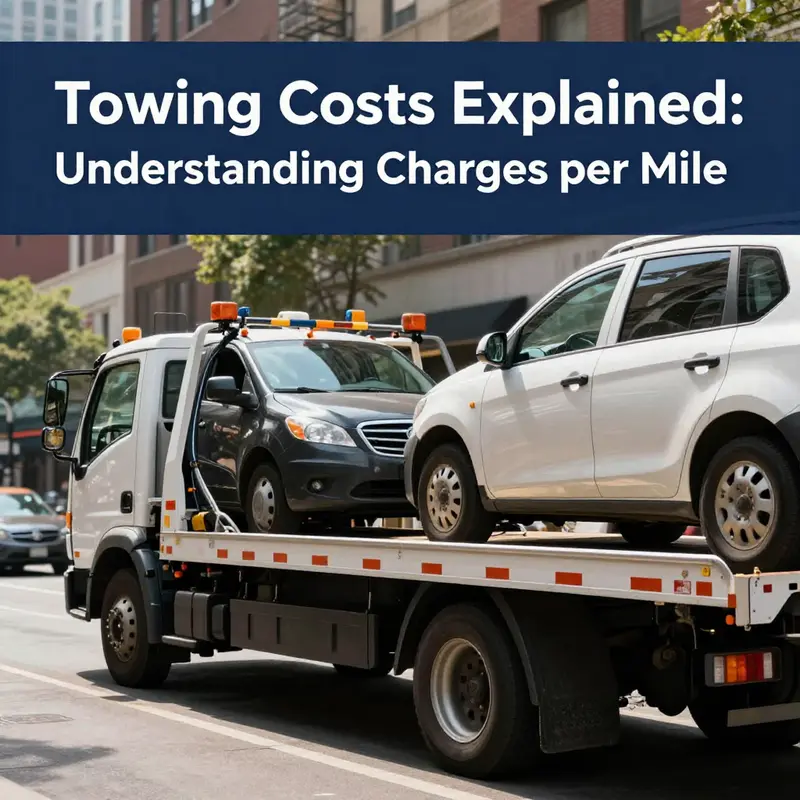
Tow pricing is not a single number; it unfolds as a mile-by-mile equation influenced by distance, vehicle size, urgency, and location. Most providers charge a base fee plus a per-mile rate, but the final total depends on factors such as the weight and type of the vehicle, the time of day, and local market conditions. Longer distances burn more fuel and require more labor, but the per-mile rate may change with weight and service type.
Vehicle size and weight affect equipment needs and risk; heavier vehicles require heavier winches and more rigging, which raises both the base and per-mile costs. Time of day and urgency add surcharges for after-hours or weekend calls, and may trigger additional services like priority dispatch.
Location matters: urban areas often have higher base fees and per-mile rates due to congestion and higher operating costs, while rural areas may spread fixed costs over more miles. Road conditions, local regulations, and the vehicle’s condition can further alter the price, sometimes necessitating a different tow method and extra time.
The result is a price that reflects more than distance: distance sets the ceiling, but weight, timing, route, and method shape the final bill. Always ask for an itemized written estimate that breaks out base fee, per-mile charges, and any extras before work begins.
Reading the Per-Mile Equation: Unraveling What Tow Trucks Really Cost by the Mile
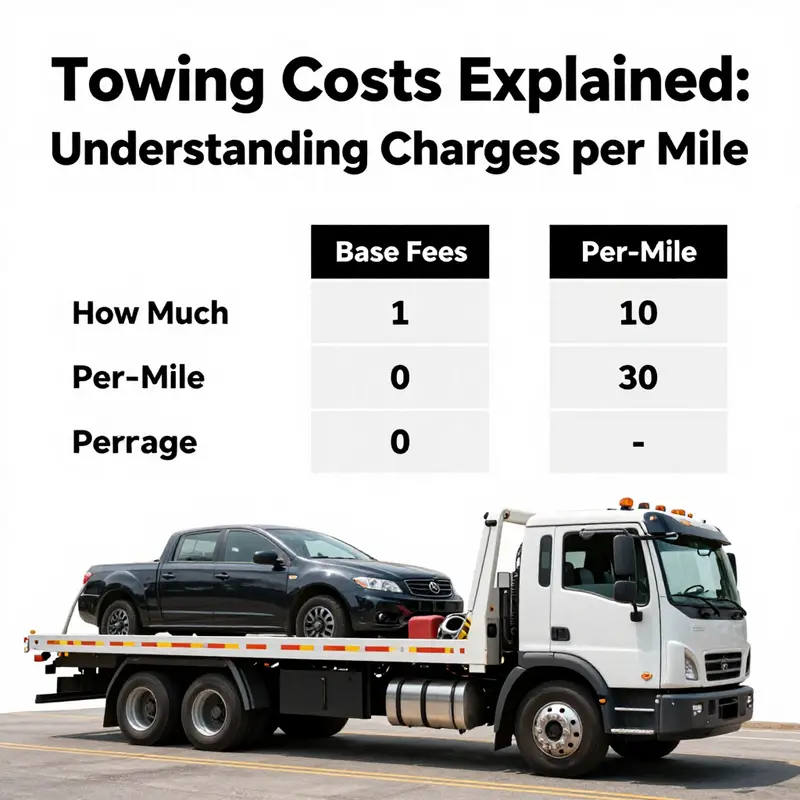
When you’re stranded on the side of a highway or tucked into a parking lot that won’t be revisited until morning, money can feel as uncertain as your vehicle’s fate. The sticker shock of a tow bill often comes not from a single number, but from how the base fee and the per-mile charge add up across the distance between you and safety. The common pricing model you’ll encounter is straightforward enough in theory: a base service fee plus a price per mile for the actual towing distance. In practice, the numbers vary widely, with base fees typically in the $50 to $100 range or higher, and per-mile charges commonly landing somewhere between $1.50 and $3.00. A short move, say five miles, can end up around $75 once you factor in the base fee and the distance. A longer haul, such as fifty miles, can push past the $300 mark, and that is usually when the type of vehicle and the service method begin to tilt the balance toward the higher end.
Yet that per-mile figure is only part of the equation. The distance is the most visible element, but several other factors quietly reshape the final number. The vehicle’s size and weight are obvious drivers. Heavier vehicles demand more equipment, more labor, and often more time on the clock to secure and transport the load. This is not just about horsepower or curb weight; it’s about the logistics of rigging a safe and compliant tow. A standard car slides onto a hook and roll setup with relative simplicity, while a large SUV or a pickup with a crew cab can require additional attachments, more power from the winch, and careful weight distribution that slows the process but protects the vehicle and the operator.
Time of day matters just as much as distance. Emergency calls after hours, weekends, or during a snowstorm carry a built-in premium, reflecting not only the urgency but the additional staffing and readiness required. The service type can swing the price in a meaningful way too. A simple hook-and-roll tow, where the truck hooks up and drives away, is typically cheaper than flatbed towing, which is necessary for vehicles that require full immobilization or special alignment to avoid damage. The choice of method isn’t cosmetic; it’s often dictated by the vehicle’s undercarriage, frame, or drivetrain, and the final cost will reflect those safety considerations.
Location adds another layer of complexity. In urban areas, demand can spike quickly, and local ordinances or higher operating costs may push base fees and hourly rates upward. Rural areas, by contrast, might present longer travel times to reach a stalled vehicle, which can inflate the per-mile portion simply due to distance—yet some rural providers may offer lower base fees to stay competitive in thinner markets. It’s a reminder that the same mile can feel much more expensive in one place and relatively affordable in another, depending on local economics and the density of service providers.
The kind of service requested further threads into the price. A typical scenario begins with a base fee that covers the dispatch, on-site assessment, and the initial hookup. The per-mile rate then charges for the actual towing distance, but some providers fold in additional charges that aren’t always obvious at first glance. Winching, wheel lifts, dollies, and specialized equipment each add to the bottom line. If the tow requires extra labor—such as multiple tow setups, long-distance navigation, or handling a vehicle with unusual dimensions—the engineering and manpower required increase, and so does the bill. Communication systems and dispatch support, though unseen by the customer, also contribute to operating overhead that eventually threads its way into the quoted price.
It helps to imagine two contrasting cost scenarios to see how the pieces fit together. A short, straightforward tow of a small car in a city might come in near the $75 mark, assuming a modest base fee and a few miles of distance. If the same short tow occurs at night in a busy metro area with a flatbed for extra care, the premium could push higher even for the same mileage. Now picture a 50-mile tow of a midsize SUV with a flatbed and a priority service request. The distance itself would lift the charge, but the vehicle’s mass, the equipment load, and the need for a precise, damage-free transport could easily push the total upward toward or beyond $300. The math is never purely linear; it bends with the vehicle, the time, and the conditions surrounding the tow.
Some readers may wonder whether there are regional conventions or industry differences that explain these numbers. In freight and heavier transport markets, for example, a tiered cost framework sometimes appears, using distance and load as multipliers. A parallel but not directly comparable example from another context might show charges such as 0.45 yuan per ton-kilometer for lighter loads and 2.00 yuan per ton-kilometer for heavier ones. While this freight-oriented example doesn’t map directly onto passenger-vehicle towing, it illustrates how providers structure pricing to account for weight and distance, sometimes with tiered rates that escalate as the job grows more demanding. That understanding helps explain why two neighboring towns with similar mileages can produce noticeably different bills.
What should a consumer do with this knowledge? First, always ask for a detailed estimate before agreeing to service. A reliable tow operator will outline the base fee, the per-mile charge, and any potential add-ons, including winching, dollies, or flatbed usage. It’s common to see a combined figure for a 50-mile tow in the $200 to $400 range, especially when premium service, heavy equipment, or expedited delivery is involved. However, outliers exist where the price climbs higher due to vehicle weight, complex retrievals, or if tolls and fuel surcharges are applicable. The prudent approach is to request an all-inclusive quote that lists every potential fee and to ask how any unforeseen complications would affect the final total. A written estimate is worth the paper it’s not printed on in a crisis if it helps prevent surprise charges later.
To put these principles into practical terms, consider the way a local provider handles requests. In many communities, a well-oiled operation will break down the pricing into a base event fee plus a per-mile component, with a careful accounting of any extras. If you’re negotiating, it’s reasonable to confirm whether the quoted price includes fuel surcharges or tolls. If not, you’ll want a separate line item or a cap on surcharges so you can gauge the maximum you might owe. When possible, obtain estimates from more than one provider, compare not only the dollar amounts but also breakouts of the line items. It’s not about chasing the cheapest option but about finding a balance between reasonable cost and reliable care.
For readers seeking a reliable point of reference while you weigh your options, a local resource such as Mikes Roadside Service can be a helpful companion. It’s wise to review the range of services they offer and how they present pricing in real-world scenarios, which dovetails with the broader understanding outlined here. Mikes Roadside Service can provide practical context on what to expect during a roadside incident and how to navigate the quoting process with a clear eye for hidden costs. The experience of speaking with a nearby provider can demystify the pricing structure and help you plan more effectively for future emergencies.
All of these elements—distance, vehicle type, time of day, location, service method, and overhead—combine to form the final bill. The per-mile rate is not a standalone verdict; it is part of a broader pricing ecosystem that reflects the demands of the job, the risks involved, and the operating realities of the towing business. The best approach is to approach a tow with informed expectations, ask for a transparent, itemized quote, and remember that the mile-by-mile cost is only part of a larger, context-driven calculation.
External resource for further reading: for a formal breakdown of towing costs and region-specific information, consult the American Automobile Association’s overview of towing costs. This resource provides updated base fees, per-mile rates, and additional charges that affect total pricing across different locales. Access the AAA towing costs page at https://www.aa.com/roadside-assistance/towing-costs.
Final thoughts
In summary, understanding how much tow trucks cost per mile can significantly impact financial planning for businesses that rely on towing services. By considering the various factors that influence these costs, from vehicle type to time of day, and grasping the breakdown of fees, business owners can better navigate the towing landscape. This knowledge empowers owners to minimize expenses and choose the most appropriate towing service for their needs.