
As a business owner in the towing industry, understanding the CDL (Commercial Driver’s License) requirements is crucial for compliance and safety. The necessity of a CDL often hinges on factors such as vehicle weight and the nature of the towing operation. This article delves into the federal regulations that govern the need for a CDL, explores state-specific requirements that may vary, and discusses the implications for drivers and operators. Gaining clarity on these aspects is essential for seamless operations within your towing business.
null
null
Tow Truck Licenses in Flux: A State-by-State Roadmap for Licensing and Weight Rules
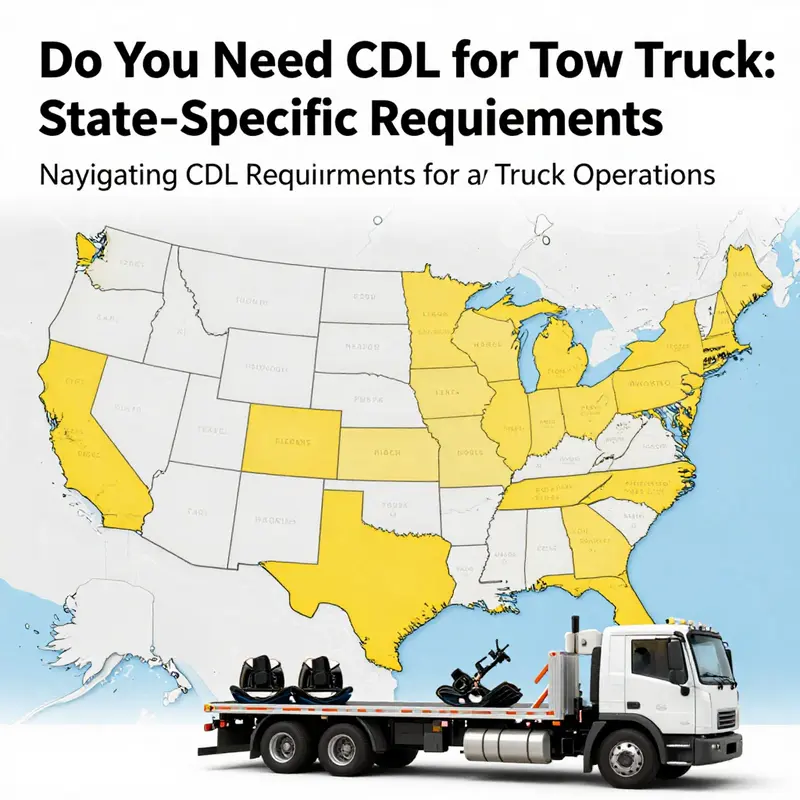
The simple question, do you need a CDL for a tow truck, has no single answer across the United States. It is shaped by weight, the kind of towing you perform, and the state where you operate. The federal baseline offers a framework, but it is not the final word in every jurisdiction. At its core, the rule hinges on two numbers: the tow vehicle’s own weight and the combined weight when it pulls a disabled vehicle. If the tow truck’s Gross Vehicle Weight Rating tops 26,001 pounds, or if you are moving vehicles as part of a commercial operation, a CDL is generally required. If the vehicle you tow pushes the combined weight past that 26,001-pound line, a Class A CDL might come into play. If the tow truck alone weighs more than 26,001 pounds but you are not moving a heavy towed vehicle, a Class B CDL is typically the standard. If the towed vehicle is heavy enough that the total weight crosses the threshold, even with a lighter tow truck, state authorities may demand a higher class of license. Federal guidelines provide the baseline, but the exact interpretation and any exceptions sit with state DMVs and safety agencies, which means a driver could be compliant in one state and not in another when crossing borders. The federal touchstone remains clear, yet state exams, endorsements, and testing practices add nuance. If you want the official foundation, consult the FMCSA’s site, which outlines the general framework for when a CDL is required and how weight and towed loads fit into Class A or Class B scenarios.
When you move from theory to practice, California offers a pointed example of how state rules can tighten the path to licensing. California’s emphasis on heavy loads quickly pushes many tow-truck operators into CDL territory, especially when large vehicles or multiple vehicles are involved in a tow. What distinguishes California in recent years is not only the weight thresholds but also enforcement practices. As of early 2026, the California Highway Patrol began conducting roadside English Language Proficiency tests for commercial drivers, including tow-truck operators. This aligns with federal expectations that drivers can read signs, understand instructions, and communicate effectively with law enforcement. More significantly, starting in 2026, California CDL exams are conducted in English only, reinforcing a national standard for clear communication on the road. These shifts are designed to improve safety and reduce ambiguity in high-stress roadside situations. In practice, this means a practical tow-truck operation in California often requires more formal licensing and proven language proficiency, particularly if the job involves heavy tows or commercial fleets.
Across the rest of the states, the spectrum widens. Some jurisdictions still allow a standard driver’s license for lighter, specialty tow tasks, while others require a CDL regardless of weight for sophisticated or commercial recovery operations. The picture changes with the nature of the work: if you are operating in a fleet that regularly hauls vehicles for rental or dealership networks, you are far more likely to encounter CDL prerequisites. In any case, the safest approach is to start with a precise weight audit. Look up the GVWR of the tow truck and estimate the combined weight with the heaviest towed vehicle you might encounter. Then, contact the state DMV or the department that oversees commercial vehicle operation to confirm the exact requirement. This isn’t merely bureaucracy; it’s a matter of safety, training, and the ability to handle demanding roadside situations with the right license and knowledge. For a practical, state-linked perspective on licensing basics, you can explore resources like mikes-towing, which provide local context and guidance for operators navigating licensing matters in their area.
In sum, the question of CDL necessity for tow trucks is seldom a one-size-fits-all answer. It is a weight-driven decision filtered through state rules, enforcement priorities, and the kind of towing you perform. Start with the federal framework, then map the weights to your state’s regulations, and finally prepare for language and testing requirements if your state like California has tightened its standards. This approach helps ensure you’re not just compliant, but prepared to operate safely within the law.
External resource: For authoritative federal guidance on CDL requirements and weights, see the FMCSA official guidelines: https://www.fmcsa.dot.gov/.
Internal resource: practical state-focused guidance can be found at mikes-towing.
Tow Truck CDL Essentials: Weigh, Towing, and the Road to Compliance
Operators who respond to roadside emergencies or handle vehicle recoveries often ask a direct question: do I need a CDL to drive a tow truck? The honest answer: it depends on weight, towing configuration, and where you operate. Federal regulations establish a baseline under FMCSA that the critical line is the combined weight of the tow truck and whatever it is towing. If that gross combination weight rating (GCWR) exceeds 26,001 pounds, a Commercial Driver’s License is required. This is the federal floor, but many states layer their own rules on top. The result is a practical calculation rather than a single number you memorize. In the field, what matters most is the total weight you are moving and how that weight is distributed on the highway. For a driver, understanding this is the difference between a routine job and a licensing milestone that changes the scope of work and accountability on the road.
A simple example helps ground the rule. If a tow truck has a GCWR of 25,000 pounds and is towing a vehicle that weighs 30,000 pounds, the combined weight is 55,000 pounds. That total clearly surpasses the 26,001-pound threshold, so a CDL is required, and the appropriate class depends on the specifics of the arrangement. Conversely, a heavy tow truck that itself weighs over 26,001 pounds will typically fall under Class B CDL requirements, even if the vehicle being towed is lighter. If the towed load is placed in a way that pushes the total over 26,001 pounds, Class A CDL considerations come into play. The nuance is why many operators double-check both the truck’s ratings and the weight of any vehicle being towed.
State regulations add another layer. While FMCSA sets the baseline, states may require additional endorsements or impose stricter thresholds for specific towing tasks—for example, when the operation involves towing oversized equipment or commercial vehicles. In practice, this means an operator might need a Class B CDL for a heavier tow truck or a Class A CDL if the combined weight crosses the higher threshold with particular loads. Endorsements related to the nature of the load or the environment—such as heavy equipment, air brakes, or hazmat considerations—can also influence licensing needs. Understanding these distinctions helps prevent costly penalties and ensures the job is performed by someone with the proper training.
Beyond the license class, the licensing process itself carries tangible obligations. Obtaining a CDL requires passing written exams and a skills test, then demonstrating the ability to operate the vehicle safely under real-world conditions. Medical certification is mandatory, and drivers must meet hours-of-service rules that govern driving time and rest. A clean background check is typically part of the process as well. These requirements aren’t mere bureaucratic hurdles; they reflect the stakes of handling heavy trucks on crowded highways and in dynamic tow scenarios. When a driver lacks the right credentials, the risk isn’t just personal—it’s legal exposure for the operator and potential liability in the event of an incident.
For drivers weighing their path into towing, the steps are practical and deliberate. Start by obtaining accurate weight data for your fleet and for any vehicles you may tow. Then consult your state’s DMV to confirm the exact CDL class and endorsements you’ll need for your typical operations. The federal baseline from FMCSA remains your reference point, but the state rules will define the precise credentials and duties you can perform. If your work takes you through Houston or nearby areas, you can explore practical guidance specific to local operations at tow-trucks-in-houston. This can offer a grounded sense of how others structure their training, licensing, and safety practices in a real market context.
Ultimately, safety underpins why these licensing structures exist. Heavier combinations require more rigorous training to ensure the vehicle can be controlled safely in adverse conditions, with secure load handling and effective emergency response. Non-compliance brings penalties and can elevate liability in the event of an accident. The takeaway is clear: know the GCWR of your tow rig, know the weight of every load you tow, and align your licensing with the actual work you perform. For formal guidance and the federal framework, consult the FMCSA site and your state DMV resources to chart a compliant path through the licensing landscape.
External resource: For official details, consult the FMCSA website: https://www.fmcsa.dot.gov/
Final thoughts
In summary, navigating CDL requirements for tow truck operations is essential for legal compliance and successful business management. Federal regulations provide a fundamental guideline, but it’s imperative to account for state-specific nuances that may affect your operations. Ensuring that your drivers are properly licensed not only protects your business from legal liabilities but also enhances the safety and efficiency of your services. Stay informed and compliant to foster a thriving towing enterprise.