
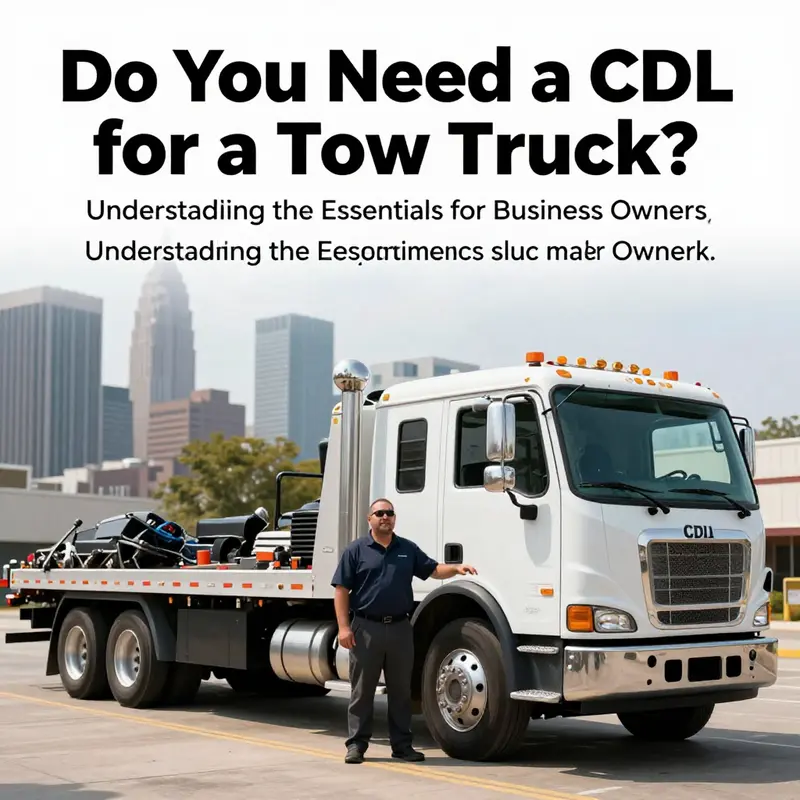
Understanding whether you need a Commercial Driver’s License (CDL) to operate a tow truck is crucial for any business owner in the towing industry. The requirements can significantly impact your operations, based on not only the weight of the vehicles involved but also the specific state regulations you must adhere to. This article will break down the essential aspects of CDL requirements for tow truck operators, including regulations that vary by state, and the significance of weight classifications and CDL types. By the end, you’ll have a comprehensive understanding of the requirements to ensure your towing operations are legally compliant and efficient.
null
null
State Gatekeepers: Navigating CDL Requirements for Tow Truck Operators
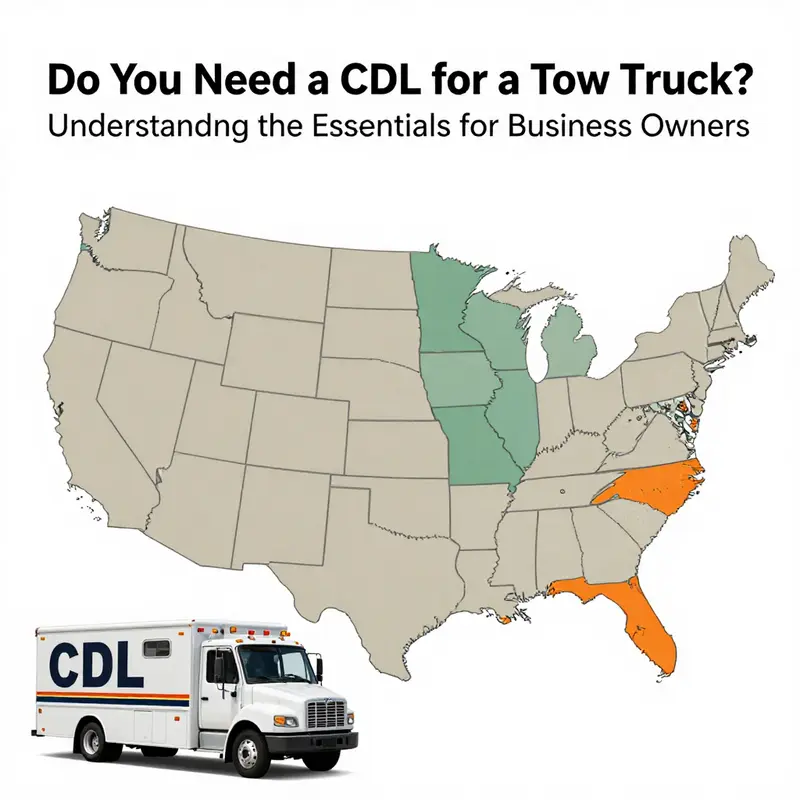
The moment a tow truck hums to life, the driver steps into a regulatory landscape that goes beyond road polish and quick reflexes. Weight, how the vehicle is used, and where the work happens all feed into a simple question with big consequences: do you need a Commercial Driver’s License to operate a tow truck? The short answer is often yes, but the exact rules are a map drawn by federal guidance and state lines. At the core are two intertwined ideas: the weight of the tow truck itself, measured as Gross Vehicle Weight Rating, and the weight of what it is towing. The federal framework establishes broad thresholds, but states fill in the blanks with their own interpretations, exemptions, and endorsements. This is why any tow-truck operator, or someone planning to become one, must move carefully from the garage to the DMV with weight specs in hand and a clear sense of the work to be done.
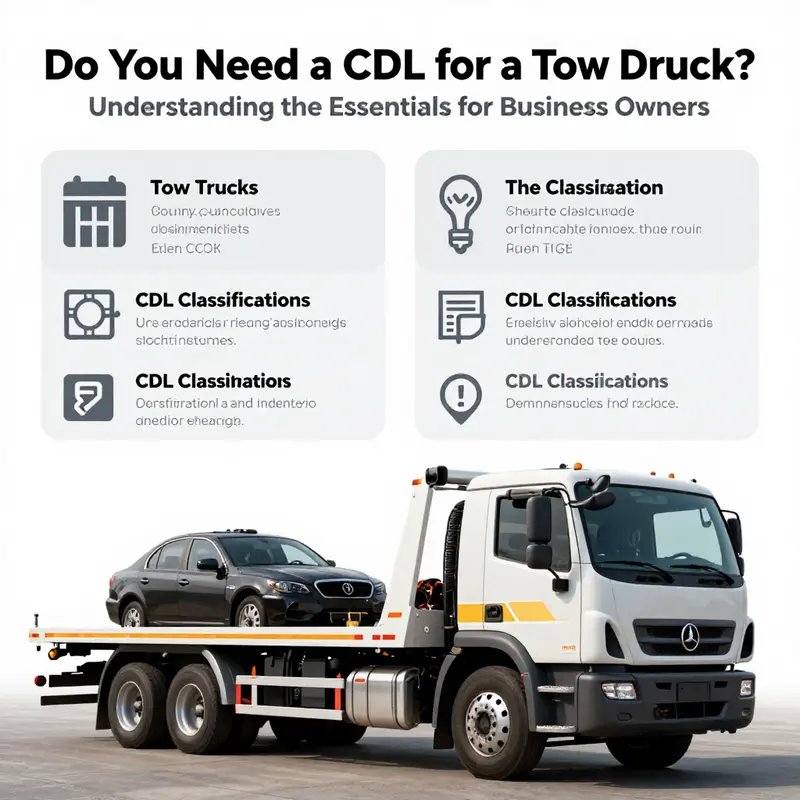
In broad terms, a CDL is typically required when the vehicle’s GVWR exceeds 26,001 pounds, or when the tow operation involves towing a vehicle that weighs more than a certain threshold—commonly around 10,000 pounds. Those numbers are not decorative; they determine the license class. A Class B license is generally associated with larger tow trucks that are themselves heavy enough to push the GVWR past the 26,001-pound mark. If the vehicle is smaller but still crosses certain criteria—often tied to what is being towed—a Class C license may be sufficient. The essential idea is straightforward: the more gravity your truck and its payload carry, the higher the licensing bar you must clear. And because some operations involve specialized equipment, the rules sometimes introduce endorsements or additional requirements to cover unique situations, such as transporting hazardous materials or carrying passengers. Yet for the typical tow operation, endorsements beyond the standard CDL are comparatively less common.
Nonetheless, there is no single nationwide brochure that applies in every county, city, or township. The federal government, through the FMCSA, sets baseline standards, but states—each with its own DMV—can add twists, refine thresholds, or require additional testing. This is not a casual distinction. It is the difference between a clean, compliant operation and a risk of penalties, insurance gaps, or the inability to dispatch certain jobs. For a prospective tow-truck driver or a shop owner, this means confirming the precise Class and any endorsements with the state DMV before purchasing equipment, hiring CDL holders, or bidding on contracts. A practical step is to know both the GVWR of the tow vehicle and the GVWR of any likely towed vehicle, then cross-reference those numbers with state regulations. In many cases, the combination of a heavy tow truck and a heavy towed load triggers a Class A scenario, which encompasses the most stringent licensing requirements; in others, a heavy truck that tows lighter equipment may fit under Class B or Class C with the proper qualifications.
Specific state uptake often shapes the day-to-day reality of a tow operator. Some states emphasize the same weight thresholds but require different endorsements or renewals. Others impose stricter renewal intervals, or mandate additional safety training, behind-the-wheel evaluations, or periodic re-testing as a condition of continued licensure. Because state rules evolve, drivers and business owners must treat CDL knowledge as a living compliance discipline rather than a one-time hurdle. The safest posture is to treat the DMV and the FMCSA as ongoing partners in keeping the fleet legal, insured, and ready to roll. This is why many operators keep a small library of reference notes—GVWR figures printed on door jambs, payload charts for common hook-and-tow configurations, and a calendar of licensing deadlines—so that a busy shop floor never loses sight of the regulatory horizon.
Turning to a concrete example can illuminate how these rules shape everyday decisions. In New York State, for instance, the process of becoming a tow-truck driver with a CDL is framed by the state’s Commercial Driver’s Manual, which emphasizes both eligibility and compliance. Applicants and current CDL holders must be classified as “Not Prohibited,” meaning they should not carry disqualifying restrictions that would impede safe operation, such as serious traffic violations or criminal records that the state deems incompatible with driving heavy vehicles on public roads. The path to the license itself requires multiple steps, including a written exam that covers core truck operation concepts and crucial systems, such as air brake usage. A separate practical driving skills test then demonstrates the applicant’s ability to maneuver and control a tow truck in realistic driving and safety scenarios. The process begins at a local DMV office, where the candidate applies for the CDL, schedules the written tests, and begins accumulating the credentials necessary to operate professionally.
The New York framework highlights why safety and professionalism sit at the heart of tow-truck work. Because tow operators regularly navigate congested streets, highway interchanges, and the unpredictable behavior of other drivers, the statewide emphasis on air brakes, braking performance, and vehicle handling is more than an academic requirement. It is a public-safety measure, reinforcing the responsibility of drivers to maintain control under heavy loads, manage auxiliary equipment such as winches and stabilizers, and communicate clearly with customers and other road users. In practice, the Not Prohibited standard translates into a baseline of conduct that supports safe operation, including the ability to present a clean driving record, comply with licensing rules, and demonstrate reliability and accountability in the field.
Beyond the baseline CDL itself, the NY example also demonstrates that the licensing process is not merely bureaucratic; it is educational. The tests—written and practical—are designed to verify knowledge and competence. They also create a framework for ongoing professional development as vehicles evolve, payloads change, and new safety technologies are introduced into tow operations. For operators, this means acknowledging that licensure is not a one-off achievement but a credential that confers permission to perform a defined set of duties. It also means recognizing that staying within the law requires periodic attention to changes in state regulations, updates to the manual, and documentation that proves you have kept up with required safety trainings.
In addition to state-level distinctions, there are practical implications for the day-to-day life of a tow-truck business. When a crew member holds a CDL, it is essential to ensure the license matches the vehicle and the job. A Class B permit is often required for the larger, heavier trucks, especially when the truck tows another vehicle that is near or exceeds the 10,000-pound threshold. If a company operates a smaller, lighter tow truck, a Class C license may be appropriate, but only if the vehicle and its towed load meet the state’s criteria. In all cases, endorsements—such as those for tank vehicles or passengers—should be considered only if the vehicle configuration or service model actually demands them. As the work grows more complex, the cost of misclassification becomes real: penalties, insurance complications, and the risk of non-compliance can outweigh the upfront savings of a less rigorous licensing path.
For anyone contemplating a tow-truck career or expanding a towing business, the practical takeaway is clear. Before starting engines or signing contracts, verify the exact CDL class required by your state for your specific vehicle combination, and confirm any endorsements that might apply to your operations. Keep your weight figures, and learn how to translate those figures into the proper licensing pathway. And as you map out the legal terrain, prioritize safety, training, and professionalism as core business values. The New York example illustrates how the rules translate into a pathway that protects the public while providing a clear route for qualified drivers to serve their communities. For readers seeking more detailed, state-specific guidance, refer to reputable career resources that outline the steps to becoming a tow-truck driver in New York and beyond: https://www.indeed.com/career-advice/finding-a-job/how-to-become-a-tow-truck-driver-in-ny. This external resource complements the state manuals by offering practical perspectives on eligibility, testing, and professional development, while the core principle remains universal: if you intend to operate a tow truck, you must align your license with the vehicle’s weight and the work you perform, and you must stay aligned with the state and federal rules that govern safe, compliant road service.
null
null
Final thoughts
Understanding the necessity of a CDL for operating a tow truck is not only about compliance but also about ensuring safety and efficiency in your towing business. Every operator must be aware of their state’s regulations and the weight classifications that dictate the type of CDL required. By following the guidelines outlined in this article, you can protect your business from potential legal repercussions and enhance your operational capabilities. Staying informed will help you navigate the complexities of towing requirements and position your business for success.