
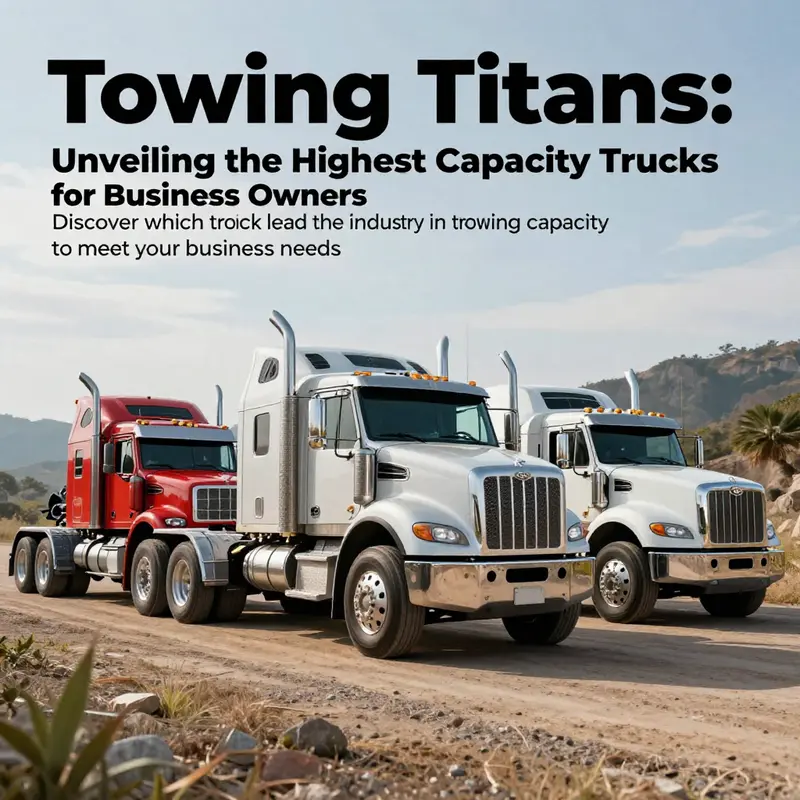
As a business owner, reliable towing capabilities can determine the efficiency of your operations, especially if your work involves transporting heavy loads. The right truck can not only save time but also ensure safety and productivity on job sites. In this exploration, we will identify the leading trucks in terms of towing capacity, specifically the Ford F-450 Super Duty and its esteemed competitors, exploring their specifications and capabilities. Subsequently, a comparative analysis will delve deeper into how Ford and Ram trucks stack up against one another to help you make an informed decision that caters to your towing needs.
Peak Tow Power: Understanding the Contenders in the Race for the Highest Towing Capacity
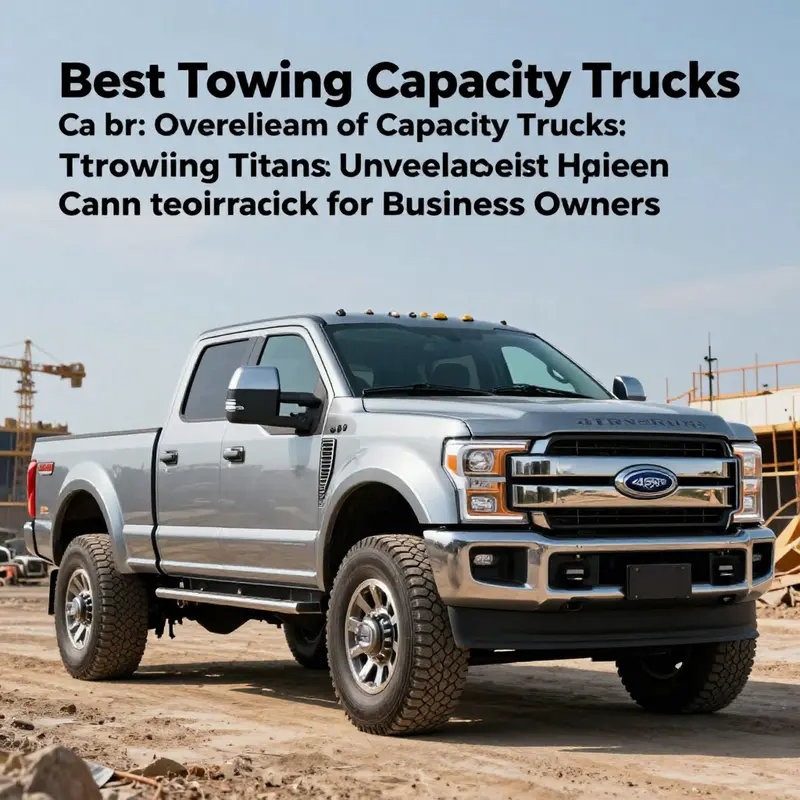
Towing capacity is more than a single number on a spec sheet. It is the sum of engineering decisions that determine how much weight a truck can pull, how safely it handles that weight, and how forgiving the vehicle is under real world conditions. In 2026, the landscape of heavy hauling is defined by a clear hierarchy: a dedicated heavy‑duty pickup that can tow roughly forty thousand pounds when equipped with a high output turbocharged diesel V8, a second‑tier one‑ton that can approach the mid‑thirties in the right configuration, and a robust flagship in the same family that sits just shy of the forty thousand mark. These are not mere bragging rights; behind each number there is a combination of frame rigidity, axle strength, gearing, cooling, transmission response, and a carefully tuned drivetrain that keeps the power usable under load. For buyers who routinely move large trailers, equipment, or other heavy masses, understanding what drives these numbers helps translate max capability into practical decisions and safer, more predictable performance on the road or job site.
The leading contender in raw towing power is the heavy‑duty segment’s pinnacle model. With a 6.7‑liter V8 high‑output turbo‑diesel engine delivering about 500 horsepower and a staggering 1,200 pound‑feet of torque, this truck can reach an impressive 40,000 pounds of maximum towing capacity. That figure is not a mere curiosity; it reflects a purpose‑built approach to heavy hauling. The engine’s torque is delivered in a way that keeps the draw on the trailer steady and confident, even when the weight is at the legal ceiling for a single-vehicle combination. The powertrain is paired with reinforced chassis components, a heavy‑duty front suspension, and cooling systems designed to keep temperatures in check during long pulls through varying terrains. This combination makes the truck a favorite in commercial sectors where the job is constant, and the loads are predictable in weight and profile. It represents the upper end of what’s practically possible in a road‑legal consumer pickup, and it reminds potential buyers that on the right configuration, a pickup can rival many industrial pulling machines in terms of sheer capability.
Right behind the leader sits a remarkably capable one‑ton model that can haul up to about 36,610 pounds when properly equipped. This contender is typically offered with two engine choices: a gasoline V8 and a turbocharged diesel inline‑six. The diesel option, with its torque advantage, is the core reason it lands in the upper echelon of towing capacity. The engine‑to‑torque relationship matters as much as peak horsepower because pulling power is largely about torque at the wheels, especially as the load increases and the truck negotiates climbs or wind resistance. The chassis in this class is engineered to ride a fine line between stiffness for stability and a ride quality that remains workable on a day‑to‑day basis. The transmission, axle ratio, and cooling package are all calibrated to maintain performance when the trailer is heavy, the ambient temperature is warm, and the road grade is unforgiving. The result is a practical tool for heavy‑hauling tasks that require more than brute horsepower but demand consistent, tractable performance across a wider range of loads and environments.
A third strong contender in the same family can tow up to roughly 38,000 pounds under optimized conditions. This figure sits just below the top tier, yet it reflects the same design philosophy: a heavy‑duty chassis, a high‑output diesel option, and a drivetrain tuned for maximum pull while maintaining control and reliability. The engine choice mirrors the expectations of this class—high torque, solid horsepower, and the ability to sustain effort over extended periods. In practice, drivers may experience slightly different numbers depending on the exact trailer configuration, hitch type, and payload. Still, the underlying message is clear: the flagship models in this segment are engineered to deliver substantial pulling power when the circumstances align. The emphasis across these trucks is not merely raw numbers but the assurance that the power is usable, controllable, and predictable across the job’s duration.
Beyond these top echelons, the broader field of trucks that can tow large loads remains dominated by the one‑ton and three‑quarter‑ton segment. In this space, maximum towing is typically in the mid‑to‑high teens of thousands of pounds, with capable diesel engines offering a balance of torque and efficiency. The best of these mid‑range machines often highlight a modern diesel option with a torque peak that helps with downhill control and steady acceleration under heavy load, paired with a suspension and chassis that keep the ride manageable and the steering responsive. It is important to note that while their maximum tow ratings may not match the heaviest duty rigs, these pickups frequently offer better payload capacity, more refined ride quality, and more modern technology packages, which can translate to safer tow operation and easier handling of the trailer in day‑to‑day use. For many buyers, the best overall towing experience comes not from chasing the highest number but from balancing the weight they expect to move with the controllability and comfort they require for regular use.
For anyone evaluating which direction to go, several practical considerations help translate the headline numbers into real‑world outcomes. First, a higher towing rating often comes with trade‑offs. The same platforms that push the ceiling on how much can be pulled simultaneously tend to impose stricter payload limits and a stiffer ride when unloaded. The cooling system, transmission cooling, and axle strength that enable the heavyweights to remain stable while towing at the limit can also contribute to a harsher ride on normal roads. That is not to say comfort is sacrificed in all cases, but it is a factor worth weighing against the needs of the job. Second, the configuration matters as much as the core powertrain. A high‑output diesel paired with the right towing package and a matching hitch setup will deliver the maximum capability, but it requires careful selection of gear ratios, axle, and brake upgrades to maintain control and braking performance as the weight on the hitch increases. Third, real world towing requires a more nuanced approach than peak numbers suggest. Trailers have different wind profiles, braking systems, and weight distributions; the practical capability that a truck can bring to a given trailer depends on how well the entire system—truck, hitch, trailer, and braking—is matched and maintained. In other words, the numbers tell a story about potential, but the actual performance depends on how a buyer configures the vehicle for the job and how well they maintain it.
As you sift through these considerations, a few guidance points emerge. If your primary task is to move the largest trailers or to run extreme hauls with minimal downtime, a flagship heavy‑duty package with the high‑output diesel promises the most headroom. It is in this corner of the market that the peak capability emerges, a margin that can be critical when legality, safety, and efficiency all hinge on the trailer’s weight and distribution. For those whose typical loads are substantial but do not routinely reach the ceiling, a one‑ton model with a strong diesel and an optimized towing package often provides a better blend of capability, daily usability, and value. It can deliver most of the heavy‑hauling power with a more forgiving ride, higher payload tolerance, and better overall efficiency when the trailer is not attached. And for buyers who want a balanced upgrade—strong towing, better ride quality, and access to advanced tech—the middle ground offers compelling performance without pushing the limits of weight and stress on the chassis.
For readers who want to connect these insights to everyday realities, an accessible resource is available locally. If you ever need a tow in a hurry or want professional assistance planning a heavy haul, a trusted tow operator in your area can be a practical resource to consult during the decision process and before you hit the road. For a direct professional contact in the Houston area, you can explore services here: Tow Truck Houston. This link offers a sense of how towing professionals think about load, weight distribution, and safety, which can complement the more technical perspective offered by manufacturer specifications.
Ultimately, the race for the highest towing capacity reflects a broader engineering ambition: to combine raw pulling power with control, reliability, and usable performance across real driving conditions. The top contenders demonstrate what is possible when power is coupled with a chassis, cooling, and drivetrain tuned for heavy work. They remind buyers that towing capacity is not a single value but a spectrum shaped by how the vehicle is built, how it is equipped, and how it is used. For many, the best choice lies not just in the peak number but in the harmony between capability, daily practicality, and long‑term cost of ownership. The numbers can inform the decision, but the decision itself is about choosing the configuration that aligns with your hauling needs, your typical payload, and the kind of work you want the truck to perform day after day.
External resource for broader context on towing capacity and real‑world usage can be consulted here: https://www.consumerreports.org/cars/pickup-trucks-towing-capacity/
Tow Power Benchmark: Reframing the Heavy-Duty Tug-of-War Between Ford and Ram
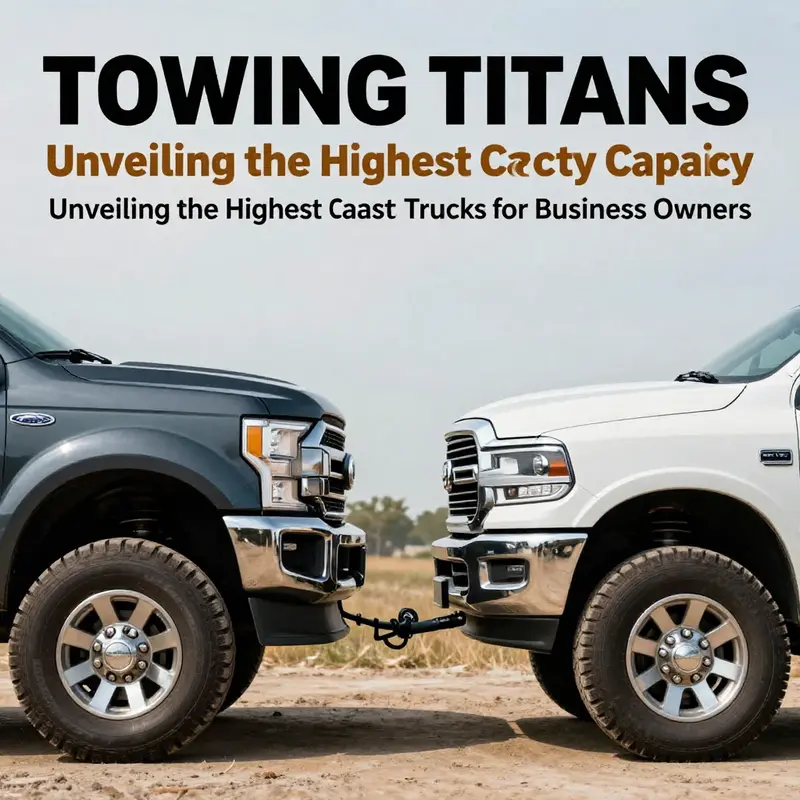
When the question hangs in the air—what truck has the best towing capacity—the knee-jerk answer often points to an absolute number, a single peak that promises certainty. Yet in the world of heavy-duty pickups, that certainty dissolves into a more nuanced truth: towing capacity is not a flat line but a landscape shaped by engine torque, axle geometry, transmission strategy, frame stiffness, suspension tuning, and the specific configuration chosen by the buyer. The comparison between Ford and Ram in this space is a study in how different engineering philosophies translate into maximum pulling power, and it reminds us that the best choice depends on the mission you have in mind. In the current data set, the Ford side of the ledger emphasizes raw capability married to robust hammering power, while Ram’s heavy-duty lineup leans into a higher ceiling when certain configurations are dialed in. To understand the tug-of-war, we begin with the raw numbers and then map them onto the realities of real-world hauling.
On the Ford side, the most direct heavy-duty offering, when equipped with the high-output 6.7-liter turbocharged diesel V8, is described in the data as delivering around 400 horsepower and about 800 pound-feet of torque, or roughly 1,084 newton-meters. The transmission is a six-speed automatic, and the maximum towing figure cited is up to 11 tons, or 22,000 pounds. Those figures sit in the realm of the heavy-duty class that commercial operators rely on for routine, high-stress towing tasks. The engineering rationale behind these numbers is clear: Ford’s design leans into a rugged, high-torque platform with reinforced chassis elements, and in certain configurations a six-wheel setup can be employed to distribute weight and increase stability under heavy tow loads. This is a truck built not for casual weekend hauls but for the daily grind of moving oversized trailers, heavy equipment, and other substantial payloads that demand dependable, repeatable performance.
Yet the Ram side of the ledger presents a different kind of ceiling. In the data provided, the Ram 1500—a half-ton pickup—tops out around 12,750 pounds under favorable conditions, clearly signaling that it sits in a different segment with different expectations about everyday use, comfort, and luxury in addition to capacity. The Ram 3500, Ram’s direct heavy-duty competitor to Ford’s one-ton class, is identified as capable of substantially higher tow numbers, with the maximum cited capacity often described as around the mid-30,000-pound range depending on configuration and the towing package selected. In one articulation of the results, this places the Ram 3500 in a position to rival or exceed the Ford’s heavy-duty option when configured for maximum towing, underscoring Ram’s strategic emphasis on a torque-rich diesel platform and the option-rich packages that tailor the truck to hauling extreme weights. The Ram 3500’s emphasis on torque delivery, frame strength, and rear-axle gearing reflects a philosophy that prioritizes sustained, high-load performance for specialized towing scenarios, including large trailers, commercial applications, and industrial equipment moves. In short, Ram’s approach illustrates that a higher maximum tow figure can be realized with the right combination of engine tuning, drivetrain configuration, and heavy-duty suspension components.
The numbers tell a story, but they also expose a nuanced reality: a higher maximum towing rating in one configuration does not guarantee a universal edge across every hauling scenario. The Ford platform, with its high-output diesel and reinforced heavy-duty underpinnings, excels in delivering reliable, robust power that translates into strong performance across a broad spectrum of high-torque tasks. The Ram platform, by contrast, demonstrates that with careful configuration—especially within the Ram 3500 lineup—the upper end of capacity can be pushed higher still, particularly in applications that benefit from torque curves and drivetrain tuning designed for heavy, steady pulls. This divergence is less about a single champion and more about a spectrum in which each brand accommodates different towing styles, payload distributions, and use-case realities. In the end, the question of which truck has the best towing capacity cannot be answered with a single, universal winner; it demands attention to category, configuration, and intended use.
To put the contrast in practical terms, consider how the numbers align with the kind of work a buyer expects to do. A truck designed to tow a multitude of heavy loads on a regular basis—think commercial scenarios where stability, braking, and steady pull across long distances matter most—will often find the Ford in its element. The six-wheel configurations and reinforced suspension common in high-end heavy-duty deployments contribute to a sense of security when weight and momentum are at play, even if the peak figure on a spec sheet starts lower than some rivals. Those who prioritize maximum raw payload-to-tow ratio in particular towing packages may discover that the Ram 3500 can eclipse the Ford in sheer capacity when the configuration is tuned for peak slog power. In these cases, the upper-end numbers reflect a curated assembly of engine choice, gearing, axle ratios, and chassis reinforcement that together enable a higher potential pull, even if it requires a more exacting match of components and a careful interpretation of the rating.
These distinctions matter because towing capacity in the real world is not only about what a truck can pull on a clean test bench. It is about how that power is delivered, how consistently it can be applied, how the trailer’s weight is distributed, and how the vehicle’s braking, steering, and stability systems respond under load. The torque delivered at the engine, the gearing that translates that torque to the wheels, the strength of the frame, and the resilience of the suspension all shape the experience of towing. The Ford chassis and its diesel engine strategy aim to provide a broad-based, dependable feel under heavy loads, with a design emphasis on durability and repeatability in demanding commercial settings. The Ram approach emphasizes the ability to achieve very high towing figures in configurations where the drivetrain is optimized for maximum headroom, often with a premium emphasis on torque delivery and payload handling, enabling substantial pulls when the load is managed correctly.
In practice, this means the question shifts from a singular “which is best” to a more nuanced assessment: what type of towing will you do, with what kind of trailer, and under which conditions will you operate? If a buyer’s routine demands consistent performance across a wide variety of heavy tows, the Ford option, with its reinforced structure and proven heavy-duty traits, offers a compelling, reliable baseline. If the mission centers on achieving the highest possible maximum tow figure within a specific configuration, the Ram lineup provides a potent alternative when tuned to the right combination of engine, package, and drivetrain components. The asymmetry here is not a flaw but a design choice that reflects two brands prioritizing different aspects of weight-moving capability.
The implications extend beyond raw numbers and into the realm of field experience and maintenance considerations. When you are in the truck yard, or on the highway with a heavy dual-axle trailer in tow, what matters most is the predictability of the performance. Torque delivery at the right RPM, the cadence of gear shifts, the stability of the chassis under sway, and the effectiveness of the trailer braking system all contribute to a safer, more efficient pull. The Ford heavy-duty platform tends to emphasize a broad, stable torque delivery that remains robust under sustained pulls, which is particularly valuable when long-distance or commercial hauling is the norm. Ram’s heavy-duty configuration offers potential advantages in maximum-lift scenarios when the configuration is optimized, but that advantage is contingent on precise setup, load balancing, and rigorous adherence to the recommended specifications. In other words, you don’t just buy a number—you buy the confidence that your chosen configuration will perform reliably when it counts the most.
For readers seeking practical, on-the-ground guidance that complements these spec figures, actionable insights can be found from experienced towing professionals who operate in real-world settings. For a direct, human-centered perspective on heavy-haul tasks and how to translate spec sheets into reliable performance, you can refer to resources such as Mikes Towing. This source provides practical context on towing operations, vehicle setup, and load management that helps bridge the gap between numbers and day-to-day field results. Mikes Towing offers a perspective rooted in hands-on experience, helping buyers interpret the implications of heavy-duty ratings for actual jobs rather than abstract lab tests.
In the closing view of this comparative lens, the question of which truck has the best towing capacity remains nuanced. The Ford option brings a robust, dependable platform favored in many commercial contexts, with a configuration that emphasizes consistent, long-term performance under heavy loads. The Ram lineup demonstrates that, with the right combination of engine tuning, package selection, and drivetrain setup, the upper bound of towing capacity can be pushed higher, particularly in configurations designed for maximum load handling. This is not a simple competition with a single winner; it is a reminder that the best choice hinges on how you plan to use the truck, what kind of loads you expect to tow, and how you value aspects like stability, reliability, and overall efficiency over the life of the vehicle. The landscape is dynamic, with ongoing engineering refinements that continuously shift the balance as new configurations and technologies emerge. If readers want to anchor their understanding in official, model-specific data, they can consult the manufacturer’s specifications pages for the latest figures, and compare them against the type of towing tasks they expect to perform.
External resource: Ford’s official Super Duty page provides detailed specifications and configuration options that illuminate how Ford structures its heavy-duty lineup and positions its maximum-tow capabilities within a broader performance envelope. https://www.ford.com/trucks/f-series/super-duty/
Final thoughts
Selecting the best truck based on towing capacity involves understanding the specific needs of your business. With standout options like the Ford F-450 Super Duty leading in capacity at 40,000 pounds, followed closely by the Ram 3500 and Ford F-350, making the right choice can significantly boost your operational efficiency. Each of these trucks caters to various industrial needs, whether hauling trailers, equipment, or goods. The insights provided can empower you to invest in a vehicle that not only meets your tasks but enhances your overall business performance.