
The towing industry plays a critical role in emergency response and vehicle recovery, making the profession of a tow truck driver essential. As a business owner looking to expand your workforce or streamline operations, understanding how to become a professional driver in this field is vital. This article outlines the necessary requirements and qualifications, details on training and certification, and explores employment opportunities and career growth. Engage with this guiding framework to facilitate workforce development in your towing operations.
null
null
From CDL to Callouts: A Practical Path to Becoming a Tow Truck Driver
Becoming a tow truck driver is more than mastering a heavy winch or learning to hook a disabled car. It is a role that sits at the intersection of technical skill, street smarts, and a steady, service minded approach to people in distress. The job requires not only a solid license but a disciplined path through legal and safety requirements, followed by hands on training that turns theory into the kind of practical competence you can rely on on the toughest nights.
Eligibility is the first gate. In most places you must be at least 18 to apply, though many commercial operators insist you are 21 before you start hauling trailers or heavier loads. You also need a valid driver license, typically a standard Class C license, as the baseline. A clean driving record matters because a pattern of speeding tickets, at fault crashes, or accumulating penalties signals risk to employers who bear responsibility for public safety on busy streets and highways. Because tow work places you in vulnerable, high visibility situations, a background check is standard. And because the job involves the potential for impairment of judgment, most reputable companies require a pre-employment drug screen.
If you pass these prerequisites, the next major milestone is the Commercial Driver’s License, or CDL. A tow truck is a commercial vehicle, and in most states you will need a CDL with the appropriate endorsements to operate one legally and safely. The most common is the T endorsement for tow trucks, which signals that you are trained to manage the unique challenges of pulling and moving other vehicles. Acquiring a CDL means both knowledge and skill tests. You will encounter written exams that cover traffic laws, weight limits, brake systems, and vehicle inspection. The practical test pushes you through a segment of road maneuvers and a skills assessment that simulates real roadside tasks. It is not enough to know how a behemoth vehicle operates; you must demonstrate it under pressure, in weather that may be less than friendly.
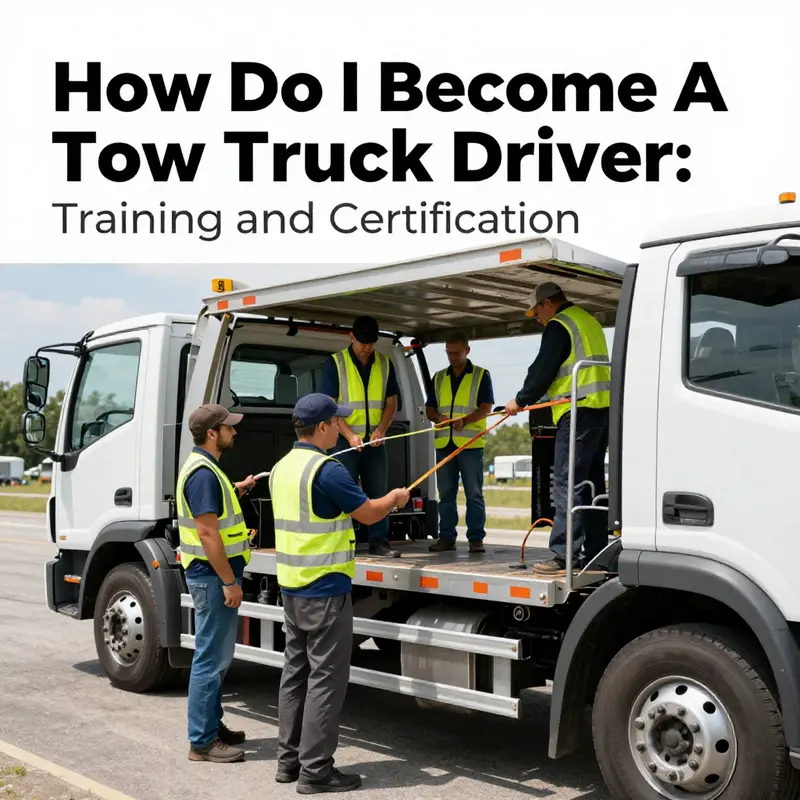
Yet the CDL is only the doorway to the work, not the finish line. Most aspiring tow truck operators also enroll in specialized training that focuses on the craft itself. This can be through a vocational school, a training organization, or an employer led program after you are hired. The core curriculum typically includes vehicle recovery techniques, the safe use of winches and hydraulic systems, securing and transporting disabled vehicles, and safety procedures for roadside scenes. It covers how to assess a scene, how to communicate with dispatch and the people you encounter on the street, and how to reduce risk when the situation is dynamic and the clock is ticking. The emphasis is squarely on preventing injury—to you, to the vehicle, and to the motoring public.
Background checks and drug screening continue to play a critical role even after you obtain your CDL. The screening process is about reliability as much as anything else. Tow truck teams often work alone at odd hours, then converge with a dispatcher and other responders in potentially chaotic environments. Employers look for people who can stay calm, follow procedure, and make safe, measured decisions when every second counts. A clean driving record becomes a predictor of consistent performance; a pattern of violations may reflect broader risk factors. The personal habits you cultivate now—regular attendance, honesty on the job, and a demonstrated commitment to safety—can influence the opportunities you find after you graduate from training.
The road to employment is as much about planning as it is about licensure. Cost and time are real considerations. CDL programs vary in length, but many aspiring tow operators complete the essential learning within a few months. Some employers sponsor training as part of a job offer, which can ease costs but may require a commitment to stay with the company for a period. Others pay for or subsidize a school program if you show a strong safety record and a good fit for their fleet. In any case, you should assess the total investment—not just tuition but the time away from work and the effort required to prepare for the tests. Skills you develop during training—precise hook up of a vehicle, secure restraint, careful handling of fluids and tires, and a disciplined approach to traffic management—become the competencies you will rely on daily.
Beyond the credential and the classroom, the practical realities of tow work shape the kind of professional you become. Shifts can be long and unpredictable, often spanning nights, weekends, and holidays. You may drive through rain, snow, or heat to reach an accident scene or a roadside breakdown. The job demands physical stamina, mechanical acuity, and a knack for quick, safe problem solving. You learn to read a roadway, to identify hazards from distance, and to anticipate how other drivers will react in tense moments. You also learn about the equipment that makes the work possible: the winch, the wheel lift, the chains and straps, the hydraulics, and the safety gear that protects you and the vehicle as you load or unload. You will develop a sense for when a vehicle needs to be towed in a certain orientation, and when it is safer to wait for a larger recovery crew or a tow truck with specialized equipment. The daily routine blends field work with constant attention to maintenance and readiness—ensuring your truck is inspected, fueled, and stocked with the right gear before you roll.
As you grow in this field, there are pathways for career development that keep a driver engaged and expanding skill sets. Some drivers specialize in heavy-duty towing, others in roadside assistance, and still others in recovery operations that require more advanced rigging and planning. With experience, the door opens to supervisory roles, dispatch coordination, or even entrepreneurship—owning or managing a small towing operation that builds a reputation for reliability and safety. A strong work ethic, a record of safe practice, and the ability to communicate clearly with customers and other responders are just as important as technical know-how. You may find that building a robust professional network—mentors who can guide you through tight calls, and colleagues who share best practices—accelerates your growth. The path is not a straight line; it requires ongoing learning about vehicle systems, new safety standards, and evolving regulations around weight limits and transport rules.
The personal dimension of becoming a tow truck driver is also worth attention. Your life may revolve around late hours and the ability to respond to a call promptly. You will face the tension of helping someone in distress while maintaining your own safety and that of your crew. In this context, discipline, humility, and a patient, methodical approach matter. You learn to balance speed with care, efficiency with safety, and the need to protect your own health with the demands of a physically strenuous job. The industry rewards reliability, not bravado. It rewards drivers who show up prepared, who invest in ongoing training, and who treat the vehicles and the customers with respect. If you are drawn to a career that combines mechanical problem solving with service, and if you are ready to commit to continual improvement, the tow truck driver path offers a tangible sense of purpose along with a steady, practical payoff.
Along the journey, you will encounter local variations in licensing, background screening, and the specifics of what counts as an acceptable driving record. The precise steps you take depend on your state or province and the company you aim to join. A thoughtful approach is to map out the prerequisites in your area, align them with a credible training program, and then proceed through the sequence with attention to safety, time, and cost. If you want a practical model for how the requirements come together in real life, consider the example of a reputable local provider in a nearby market, which illustrates the type of work, training, and standards you should seek to emulate. And as you plan your next move, keep an eye on the craft’s standards and the evolving practices that keep drivers safe and effective on every call.
To see how this plays out in a real work environment, you can explore the broader world of roadside assistance and towing services such as the Houston area, and consider how the daily duties translate into a robust skill set. For a concrete local reference, you can check a nearby service page tow service in Houston TX. This kind of link helps illustrate the kind of operations, equipment, and service standards you will be striving toward as you enter the field.
For those seeking a broader, step-by-step guide beyond the local example, a detailed external resource is available. It outlines the official steps and considerations in becoming a tow truck driver, including licensing, testing, training, and background checks. See the Indeed guidance at https://www.indeed.com/career-advice/finding-a-job/how-to-become-a-tow-truck-driver.
Becoming a Tow Truck Driver: A Practical Roadmap from Licensing to Leadership on the Road
Choosing to become a tow truck driver is choosing to be a dependable point of contact when transportation fails and someone is having a rough day. It is a role that blends practical mechanical know-how with quick decision making, strong customer service, and the willingness to respond to emergencies at any hour. For many people, the job delivers steady, hands-on work in a growing field, with the potential to build a long-term career around service, reliability, and even entrepreneurship. The current demand is evident in the numbers from major job platforms, which show thousands of openings across the country and a steady appetite from employers for drivers who can handle the pressure of roadside calls, winching, loading and unloading, and the delicate balance of safely moving damaged or immobilized vehicles. This demand is not just a statistic; it reflects a tradition of local dependability that keeps fleets moving, yards organized, and households back on the road sooner rather than later. To begin this journey, a clear sequence of steps and a steady commitment to safety and professionalism are essential. The pathway starts with basic eligibility and progresses through licensing, training, and, for many, opportunities to shape a career that spans supervision, fleet management, or even starting a towing business.
First comes the eligibility framework that most employers and regulatory bodies align around. In many places, you must be at least 18 years old to begin and up to 21 for certain commercial operations where the risk and exposure are higher. You need a valid driver’s license to qualify, typically a standard Class C license, and you must maintain a clean driving record. A clean record isn’t just about avoiding tickets; it signals to potential employers that you are capable of handling a vehicle in demanding situations without compromising public safety. In today’s hiring climate, the background check and pre-employment drug screening are standard. These checks are not merely bureaucratic hurdles—they are part of the safety framework that ensures drivers, roadside workers, and other motorists stay protected while tow operations take place. When you picture a tow truck crew arriving at a stranded motorist, you are seeing a small team under pressure, where reliability and trustworthiness matter as much as a steady hand on the controls.
Beyond these baseline requirements, the transition to a professional tow driver typically includes obtaining a Commercial Driver’s License, or CDL, with the appropriate endorsement. Tow trucks are classified as commercial vehicles, so the CDL is not optional; it is a practical necessity. The most common endorsement you will seek is the “T” endorsement, which authorizes you to operate a tow truck designed to tow other vehicles. Some states may require additional endorsements or specific endorsements tied to the types of towing you will perform, such as heavy-duty operations or combination vehicles, so it is important to check local rules. The process to acquire a CDL is a structured but straightforward path: you must pass knowledge and skills tests, meet medical requirements, and prove you can demonstrate safe operation of a large vehicle with the added complexities of towing equipment and payload. Training for the CDL often begins with formal classes and testing, but it does not stop there. A good deal of the practical know‑how is learned on the job, under the supervision of seasoned operators who teach you how to perform vehicle recoveries, operate wheel lifts and dollies, secure loads, and navigate the particular hazards of roadside work. Some prospective drivers also pursue specialized programs at vocational schools that focus on towing techniques, load securement, and the safe management of emergency scenes. This blend of classroom learning and hands-on practice helps ensure you are not only legally capable of driving but also competent at the specialized maneuvers you will perform in the field.
The career landscape for tow truck drivers is not limited to entry-level driving. The field rewards individuals who cultivate a blend of technical skill, problem solving, and customer service. As you gain experience, you can move into supervisory roles, where you oversee a team of drivers, coordinate calls, and manage the efficiency of a small fleet. Some drivers transition into fleet management, where the focus shifts to maintenance scheduling, route optimization, and cost control. For those with an entrepreneurial spark, there is the possibility of starting your own towing company. In the long run, this path can provide greater autonomy and the chance to build long-term relationships with local businesses, hospitals, service stations, and municipalities that rely on dependable towing services around the clock. The transferable skills acquired in tow work—mechanical aptitude, judgment under pressure, customer communication, and basic business operations like invoicing and scheduling—translate well to broader transportation and logistics roles.
An honest appraisal of the role also includes a look at the realities of the job market and the conditions on the road. The Indeed data referenced in the research results points to nearly twelve hundred tow truck driver roles actively listed across the United States, underscoring robust demand. Many of these positions offer full-time schedules that resemble a traditional Monday-to-Friday rhythm, plus paid training, health insurance, employer discounts, and flexible hours. These benefits help create a stable entry point for people entering the workforce or looking to pivot into a new line of work that is both practical and purpose-driven. For someone just starting, this combination of a solid pay structure and structured training is often a compelling mix, especially for those who enjoy hands-on work and the sense of immediate impact that comes from helping a motorist regain mobility after a breakdown.
If you are serious about pursuing this career, you will want to align with a local operator who can provide the on-ramps you need. A real-world example can be found in local towing shops that emphasize training and employee development; exploring a reputable provider such as Mikes Towing can give you an impression of how a well-run towing operation approaches customer service, safety, and day-to-day logistics. This kind of example matters because the work is as much about reliability and communication as it is about mechanical skill. You will be expected to explain what you are doing to a stranded driver, manage the scene safely, and reassure customers during what is often a stressful moment. Maintaining composure, following established safety protocols, and documenting incidents properly are all part of the professional standard drivers must meet as soon as they are on the road.
For non-citizens seeking work in the United States, there are additional considerations rooted in legal work authorization and language proficiency. A green card or citizenship provides the broadest scope of opportunity, while other legal work authorizations may also permit tow work. In every case, you will need to demonstrate basic English proficiency to read road signs, follow instructions, and communicate effectively with customers and other drivers. The job does not demand fluency in every aspect of English, but the ability to understand instructions and to convey critical information clearly can be crucial when you are operating under time pressure and in potentially hazardous environments. The practical reality is that language and legal status are practical gatekeepers—factors that ensure crews can work safely and cooperatively in a high-stakes setting.
The pathway to growth in this field is built on continuous learning and hands-on experience. In addition to the initial licensing steps, ongoing training on safe towing practices, vehicle recovery methods, and the handling of emergency situations remains essential. The work evolves with new equipment, improved hydraulics, and evolving safety standards, so drivers who stay curious and committed to professional development tend to stand out. The combination of a strong entry point, the possibility of advancement into leadership roles, and the potential for entrepreneurship makes tow truck driving a compelling option for those who value stability, practical skill, and service to their community.
If you are mapping out your own plan, start with the basics: confirm the age and licensing requirements for your state, secure a clean driving record, and prepare for the background check and drug screening. Then pursue the CDL with the T endorsement and seek out reputable training opportunities—whether through employer-sponsored programs or accredited vocational courses. As you prepare to enter the field, remember that the job market is supportive for those who approach the role with a professional mindset, strong safety habits, and a customer-first attitude. The road ahead may be demanding, but it is also a path toward reliable work, practical skills, and the chance to grow from a driver on the roadside into a leader within a local transportation ecosystem. For more practical guidance and step-by-step insights, you can consult the widely cited guide on becoming a tow truck driver published by Indeed.
External resource: Indeed’s Complete Guide to Becoming a Tow Truck Driver
Final thoughts
Becoming a tow truck driver is a multi-faceted process that involves meeting specific requirements, completing necessary training, and understanding the landscape of career opportunities available in the field. For business owners, investing in the development of reliable and well-qualified drivers is crucial to enhancing service quality and ensuring operational efficiency. As you consider expanding or training your workforce, take these insights into account to facilitate the growth of a skilled team that can respond effectively in critical situations.