
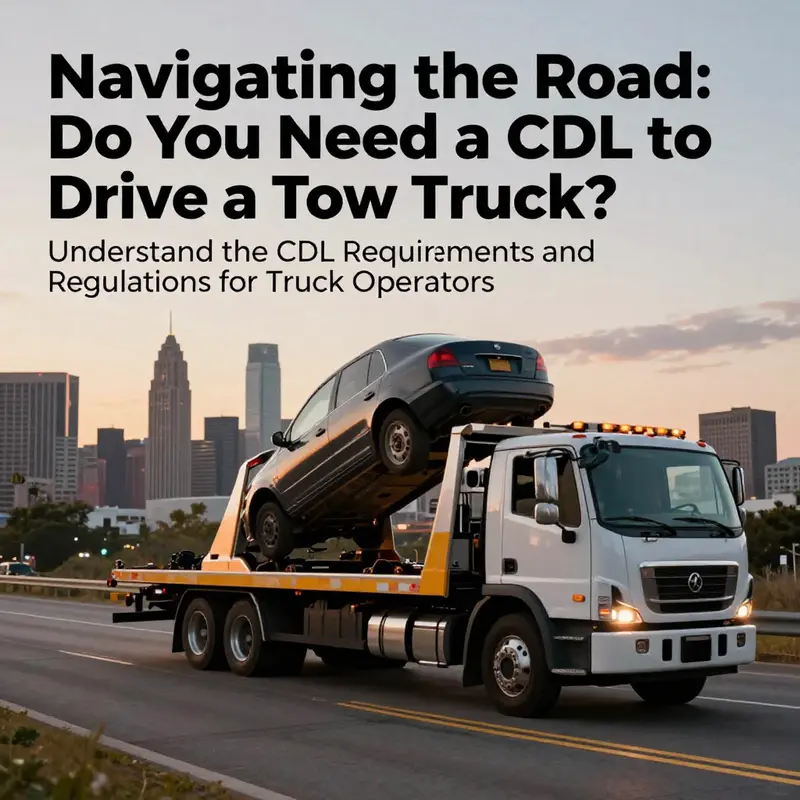
For business owners in the towing industry, grasping the nuances of commercial driver’s license (CDL) requirements is pivotal. Regulations vary by state and depend on towing specifics, so clear insight can save time, promote safety, and ensure compliance. The chapters that follow will explore federal CDL requirements necessary to drive a tow truck, delve into the importance of endorsements that enhance your CDL, and illuminate the variations you may encounter at the state level. This guide will help you make informed decisions as you manage and operate your towing business.
Tow Truck CDL Essentials: Navigating When a Commercial License Is Required
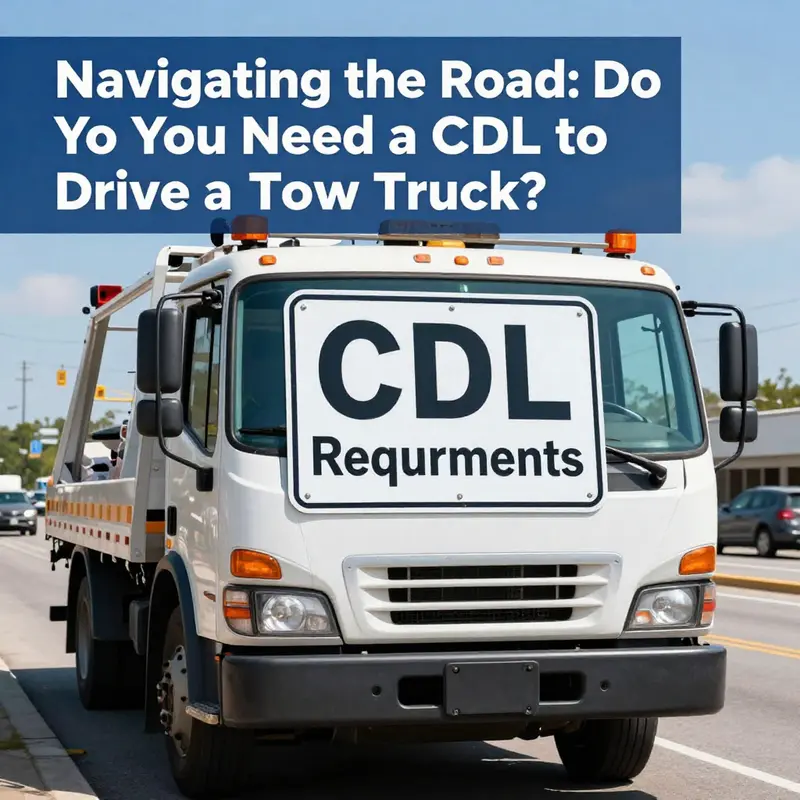
The question, do you need a CDL to drive a tow truck, invites a practical, often jurisdictional answer. For most operators in the United States, a Commercial Driver’s License is required when the combined weight of the tow truck and the vehicle it’s towing crosses a defined threshold or when the tow truck itself is heavy enough to demand a commercial credential. In practice, that threshold centers on the classic line at 26,001 pounds for combined weight, and 26,000 pounds for the tow truck itself. These figures are not mere numbers on a page; they determine whether a person can legally operate a heavy recovery unit on public roads, how training must be structured, and which endorsements must accompany the license. State rules vary slightly, and while some jurisdictions carve out narrow exemptions for specific emergency or non‑commercial uses, those exceptions are rare and typically do not apply to routine commercial towing operations. The upshot is that most tow operators will pursue a CDL and the appropriate endorsements to ensure legality, safety, and the ability to serve a broad range of customers when called upon at any hour.
Within this framework, the endorsements matter as much as the license class. In many states, a Class B CDL suffices for a single heavy vehicle over 26,000 pounds, but tow work often triggers additional endorsements. The “T” endorsement, dedicated to tow trucks, is widely required. If the operation includes transporting people, such as in a recovery scenario where crew members ride along, a “P” (Passenger) endorsement may come into play. When hazardous materials are at stake—whether due to the nature of the towed load or the truck’s own fuel and containment systems—an “H” (Hazmat) endorsement can become a condition of employment. Each endorsement represents a layer of training, testing, and responsibility, reinforcing the professional standard expected of operators who live on the edge of traffic and the consequences of a single misjudgment.
The regulatory landscape also includes overarching safety and fitness requirements. In the United States, the Federal Motor Carrier Safety Administration (FMCSA) governs CDL rules, but the day‑to‑day process is filtered through state motor vehicle agencies. A prospective tow operator typically begins with a medical examination, ensuring the driver can meet the physical demands of operating heavy equipment for long hours. A clean driving record remains essential; insurers and employers look for a history that demonstrates reliability and the ability to navigate complex road situations without escalating risk. Before a license is issued, applicants often undergo knowledge tests and practical driving evaluations tailored to heavy vehicles, towing equipment, and the unique handling characteristics of a wrecker or recovery unit. The path is designed not only to certify competence but to reduce the likelihood of preventable incidents on busy highways and at accident scenes.
The Canadian context mirrors this emphasis on weight, responsibility, and accountability, though the licensing framework sits within provincial systems rather than a single national CDL. In Canada, the emphasis remains on ensuring the operator has matured to at least 18 years old, holds a valid driver’s license, and can demonstrate the capacity to manage a tow‑truck operation that meets weight and equipment criteria. More importantly, many provinces require a Commercial Driver’s License or an equivalent professional operator credential for tow trucks, particularly when heavy towing gear or specialized rigs are involved. In practice, operators should anticipate background checks and drug screening as part of the licensing journey, reflecting a broader commitment to safety and public confidence. As provincial rules evolve, drivers may encounter different definitions of licensing classes, medical requirements, and the specific tests necessary to perform heavy‑tow tasks in a compliant manner. In any case, the consistency across Canada’s provinces is the emphasis on trained, vetted, and licensed professionals who can operate heavy equipment without compromising road safety.
For anyone navigating these questions, the path begins with a clear inventory of the vehicle’s weight, the towed load, and the types of operations expected. If a tow truck’s combined gross vehicle weight rating (GVWR) and towed vehicle push the boundary beyond 26,001 pounds, a CDL becomes a practical necessity. Even when the tow unit itself weighs more than 26,000 pounds, many operators will pursue CDL credentials to unlock the full range of service opportunities and to meet insurance and employer requirements. Beyond the license class, the endorsements carve out specialized capabilities that directly reflect the realities of the job: the ability to operate a tow truck safely, to transport crew members when necessary, and to handle loads that may include hazardous or sensitive materials, depending on the locale and the contract.
Operational realities also shape how these rules are applied. Some fleets operate on public roadways, call upon municipal or highway authorities, and perform roadside assistance in fast‑paced environments. In those contexts, the CDL isn’t merely paperwork; it is a framework that governs training, hours of service, vehicle inspections, and the ongoing discipline of maintaining a professional driving record. Operators should expect to complete routine safety training on equipment like winches, wheel lift systems, tilt‑back mechanisms, and the procedures for securing towed vehicles. The combination of mechanical competence and regulatory awareness reduces on‑scene risk, protects other motorists, and preserves the tow operator’s ability to work consistently across jurisdictions.
To connect this framework with real‑world experience, it helps to consider how different regions handle the same core challenge. An operator who understands the weight thresholds and endorsements can tailor training, employment opportunities, and route planning to maximize safety and efficiency. For instance, a tow company serving a large metro area will weigh the benefits of securing a Class B CDL with the T endorsement, ensuring readiness for a broad spectrum of calls—from light vehicle recoveries to heavier wrecks. A fleet that regularly hauls including passengers around a service site will need the P endorsement, whereas work that involves transporting any hazardous material will demand the H endorsement, with all corresponding safety protocols and regulatory compliance steps in place. In all cases, a well‑structured licensing path translates into fewer permit headaches, clearer insurance terms, and a more confident crew delivering timely assistance.
For readers curious about more concrete, locale‑specific guidance, consider exploring resources that anchor these rules in practice. A good starting point is to review regionally relevant guidance or case studies from operators in your area, such as those found in industry hubs where tow services are a daily necessity. If you want a vantage point tied to a major city for comparison, you can learn about how tow work is framed in Houston and surrounding markets through resources focused on local towing operations. Tow trucks in Houston serve as a practical illustration of how the legal framework translates into daily work on crowded roadways, during weather events, and at accident scenes. See for yourself how a local perspective translates the weight thresholds, endorsements, and safety expectations into on‑the‑ground procedures and staffing decisions: Tow trucks in Houston.
As you plan your career or fleet strategy, remember that the core goal of CDL regulations is safety, reliability, and accountability. The precise licensing steps—whether they occur under FMCSA guidance in the United States or through provincial authorities in Canada—are ultimately designed to ensure that tow operators can perform complex tasks with predictable competence. The process may seem intricate, but it yields tangible benefits: the trust of clients and the public, the ability to operate across broader service areas, and the confidence that a driver has met standardized training and testing. Always verify the latest requirements with your local licensing authority; rules evolve, and even small changes in weight thresholds or endorsement definitions can alter the path to eligibility. If you would like to explore the regulatory landscape from an official, cross‑border perspective, you can consult external resources that summarize provincial and national approaches to commercial licensing for heavy vehicles, including tow operations.
External resource: Transport Canada provides up‑to‑date information on licensing requirements and provincial variations for commercial tow operations. https://www.canada.ca/en/transport-canada.html
Endorsements on the CDL: The Key to Safe, Legal Tow Truck Operations
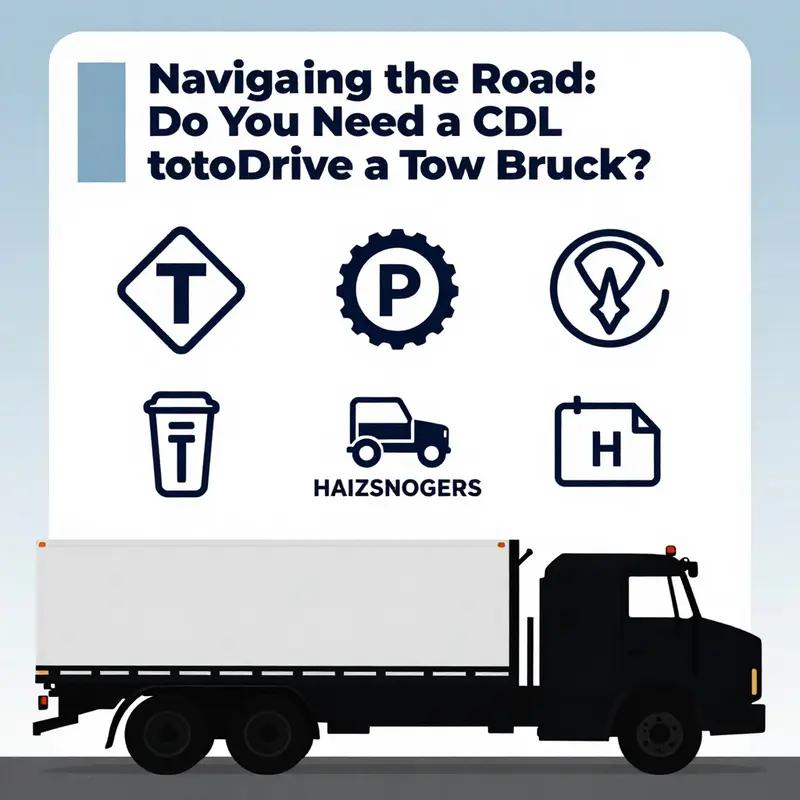
Tow trucks sit at the intersection of urgency and safety. They rush to scenes of breakdowns, collisions, and storms, then operate in lanes full of other vehicles that may not expect a heavy recovery rig to swing into view. In this high-stakes environment, the licensing framework is not a wish list but a practical safeguard. For many operators, a Commercial Driver’s License (CDL) is not just a bureaucratic hurdle; it is the entry ticket to the right to drive, the assurance of training, and the accountability needed to move people and equipment safely through busy streets. The heart of that framework lies in endorsements. Endorsements are more than letters on a license; they certify that a driver has met specialized training, knowledge, and skills required to handle particular vehicle types or cargo. For tow truck work, the T endorsement is the one that matters most. It signals that the driver has been tested not just on general driving but on the unique handling, braking, and safety considerations of a vehicle designed to pull or recover other vehicles. Without this endorsement, a driver may be legally restricted from operating a tow truck, even if their CDL remains valid. This is not simply a legal formality. It maps directly to the safety of road users and to the efficiency and reliability of the towing operation itself. In practice, the presence of a T endorsement reduces training time for employers, lowers liability exposure, and opens doors to higher-responsibility roles within recovery fleets. It is a credential that speaks to readiness: a driver who has earned the T endorsement has demonstrated the readiness to manage heavy, dynamic, and potentially hazardous roadside tasks with under-control speed, precise positioning, and careful load handling. The risk landscape in tow work is unique. A tow truck can be required to work near traffic, on shoulder lanes, or in dimly lit or congested environments. The vehicle itself is heavy and can transform the scene into a complicated choreography: approach, attach, secure, and lift, all while keeping the towed vehicle stable and the recovery crew out of harm’s way. The endorsement thus stands as a testament to training that covers not only the mechanics of towing but the practical judgment that keeps bystanders safe and other drivers from being put at risk. Beyond the T endorsement, operators may encounter situations where additional endorsements are necessary. If a towing operation involves transporting hazardous materials—fuels, solvents, or certain cleaning agents used on site—an H endorsement may be required. The presence of fuel or chemical loads, even in small quantities, shifts the safety profile of the job and invites stricter handling, routing, and reporting requirements. The N endorsement, which governs tank vehicles, can appear in specialized tow operations where the unit is configured to carry liquid loads like large-volume fuels or other liquids. While these scenarios are less common in everyday towing, they do exist in certain fleets, particularly those connected to road service networks or fleet maintenance operations that include fuel supply or hazardous materials management. Endorsements, then, are not mere add-ons; they are markers of competence and responsibility. They signal to employers, regulators, and the public that the driver has the consolidated training necessary to perform a demanding role with accountability. For a prospective tow-truck operator, this means more than meeting a rule. It means aligning with a professional path that prioritizes safety, efficiency, and the ability to handle evolving job requirements with confidence. The practical benefits extend to the employer as well. A driver with the correct endorsements reduces the likelihood of training gaps, incident risk, and regulatory violations. It also enhances a company’s capacity to offer a broader range of services, from complex recoveries to fuel transport in specific contexts. The result is a workforce that can respond quickly, correctly, and safely to roadside emergencies, which, in turn, strengthens public trust in tow professionals. For individuals entering the field, endorsements can translate into steadier work, better pay, and more opportunities for advancement within a fleet. The path to these credentials begins with understanding the regulatory framework, acknowledging that state rules do vary and that federal guidelines, administered by the Federal Motor Carrier Safety Administration (FMCSA), provide baseline standards. Since state motor vehicle departments implement and enforce these standards, prospective drivers should connect with their local DMV to learn the exact steps, fees, testing requirements, and medical qualifications in their jurisdiction. A practical way to frame this journey is to view endorsements as a toolkit. Each endorsement adds a specific capability to the driver’s repertoire. The T endorsement equips the driver to operate towing or recovery vehicles. The H endorsement, where applicable, makes it possible to transport hazardous materials safely. The N endorsement covers tank operations and is relevant in unusual but possible configurations. The combination of endorsements often yields a broader scope of work, allowing a driver to participate in more complex recoveries and to collaborate with different teams—fuel suppliers, accident scene responders, or fleet operators—without needing to pause for extended retraining. This blend of legal permission and professional competence reinforces a straightforward truth: the right endorsements are a core component of safe practice, not a bureaucratic addendum. For readers seeking a tangible anchor in this landscape, consider a real-world snapshot of how endorsements inform career choices. For a look at how a tow-focused path fits into daily operations and career progression, this overview provides context you can relate to in your own jurisdiction: mikes-towing. Of course, every jurisdiction maintains its own nuances. State rules may carve out exemptions for certain emergency or non-commercial activities, though these exemptions are relatively rare and typically do not apply to standard commercial towing. The guiding principle remains consistent: endorsements certify that the driver is prepared to perform the job safely and legally, which in turn protects the public, the operator, and the vehicle being recovered. In practical terms, obtaining endorsements is not a one-off effort. It requires a combination of classroom knowledge, behind-the-wheel testing, and, in some cases, background checks for Hazmat. It also means committing to ongoing refresher training to keep pace with evolving safety standards, new equipment, and updated regulations. The safer you drive, the more efficiently a tow operation can proceed, which translates to faster service at the roadside, lower risk of damage, and better outcomes for customers. The licensing journey is ultimately about clarity: knowing what you can do, what you cannot, and how to bridge the gap with targeted training when needed. For aspiring tow technicians, the road to the right endorsements begins with a candid assessment of the work you intend to perform, the equipment you expect to operate, and the environments you’ll encounter. It also involves a conversation with your employer about expectations, because fleets often value drivers who come with the appropriate endorsements and demonstrate a strong safety record. This alignment between regulatory compliance and practical capability is what keeps tow operations both lawful and trusted by the communities they serve. For readers who want a precise, jurisdiction-specific map, the FMCSA’s official resources offer the authoritative baseline. See the external resource below for official guidance on CDL requirements and endorsements. External link: https://www.fmcsa.dot.gov/ If you are exploring how to structure your own career path in towing, you can start with a targeted discussion with your local licensing office and seek guidance from recruiters or veteran operators who regularly navigate the complexities of endorsements and certifications. The combination of legal clarity, safety emphasis, and professional credibility makes endorsements more than a checkbox; they are a foundational investment in a durable, responsible, and rewarding career on the road.
Weight, Rules, and Roadways: Navigating State Variations in Tow Truck CDL Requirements
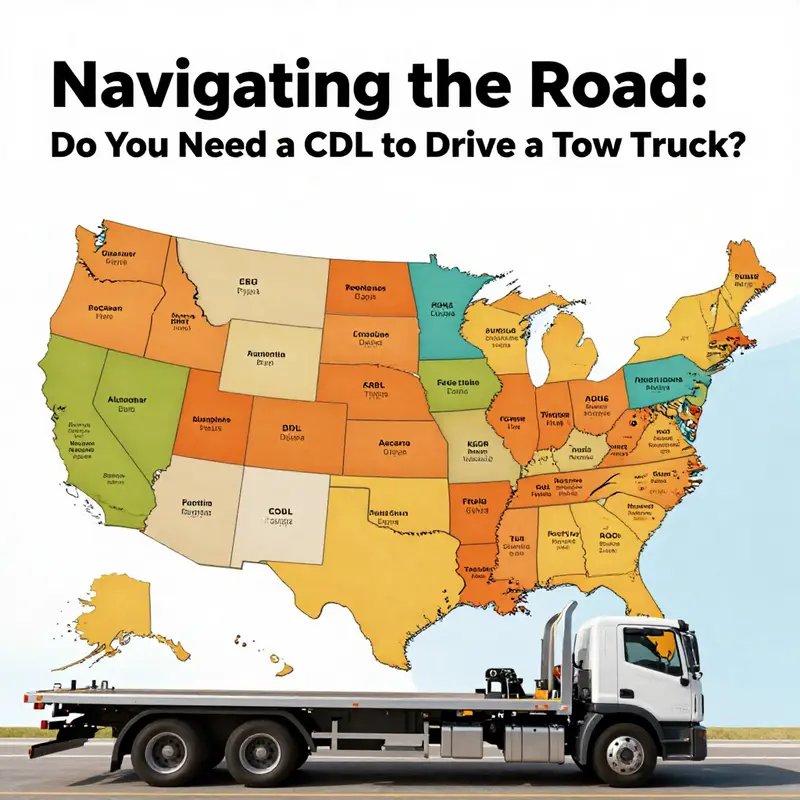
For tow truck operators, the question of whether a Commercial Driver’s License (CDL) is necessary is rarely answered by a single nationwide rule. Instead, it unfolds as a careful reading of weight classifications, how a given state defines those weights, and whether the operation crosses lines that turn a routine recovery into a regulated commercial voyage. The practical effect is that a tow truck that sits on the edge of a 26,001-pound threshold can either trigger a CDL or sail past it, depending on where the work is done and what exactly is being moved. This is not merely an academic observation. It shapes training, insurance, payroll, and the day-to-day decisions a dispatcher and driver must make when a heavy vehicle breaks down on a highway or when a fleet arrives on the scene of an accident with a heavy towed load in tow. It is, at bottom, a study in how weight, vehicles, and jurisdiction collide to form a patchwork of rules that every tow operator must understand to stay compliant and safe.
In California, the rule leans toward a careful threshold that can catch operators off guard if they don’t consider both the tow truck and the towed vehicle. A CDL is required when the tow truck has a GVWR of 26,001 pounds or more, and the vehicle being towed exceeds 10,000 pounds. This means that even if the towing chassis itself sits just under the traditional single-vehicle CDL line, a heavy towed load can push the operation into CDL territory. The logic here underlines a broader California safety posture: when a heavy vehicle is being moved, the combined risk to public safety justifies CDL-grade oversight. There are exemptions, too, but they are narrow and typically tied to emergency recovery operations that aren’t used for routine commercial hauling. For operators who want to verify the precise language or explore the nuance of exemptions, the state’s DMV guidance provides a concrete reference point.
In Texas, by contrast, the screening criterion centers more on the tow truck’s own weight than on the weight of the towed vehicle. A CDL is required only when the tow truck’s GVWR exceeds 26,001 pounds, regardless of what is being towed. If the tow truck weighs less than that threshold, it can legally tow heavier vehicles without a CDL, a rule that can simplify operations for smaller fleets or diverse recovery crews operating on flexible assignments. Still, Texas remains vigilant about security and safety through endorsements. HazMat and tank vehicle endorsements, where applicable, can introduce additional requirements for drivers who may encounter hazardous materials in the course of roadside recovery or transport.
New York adopts a stricter interpretation that broadens CDL applicability in tow operations. In this state, a CDL is required if either the tow truck or the vehicle being towed exceeds 10,000 pounds. The practical effect is that a lighter tow truck can still fall under CDL requirements if it happens to pull a heavy load, and a heavier tow truck will still require a license when any part of the operation crosses the 10,000-pound threshold. This approach emphasizes a uniform caution: the moment a vehicle crosses a five-figure boundary, the operator should be prepared with appropriate licensing and endorsements. It serves a safety-first philosophy, one that makes the state’s enforcement more predictable for motorists and law enforcement, but also more demanding for smaller operators who may not strictly plan their equipment around a single GVWR marker.
The variation across California, Texas, and New York illustrates a broader reality for tow professionals: the weight definitions a state uses—whether GVWR, gross vehicle weight, or a combined calculation—can dramatically alter licensing requirements. A fundamental concept here is the distinction between the tow truck’s own weight and the weight of the towed vehicle. Some states look at the combined weight of the truck and its load, others at the truck’s weight alone, and yet others at the weight of either component when it surpasses a certain limit. This can lead to situations where a driver with a perfectly valid CDL in one state may need added endorsements or even a different license in another state. The best defense against surprises is proactive, up-to-date research of state statutes and DMV pages before scheduling work that straddles multiple jurisdictions.
Every operator should also consider the endorsements that commonly accompany a CDL. The standard Class B license covers single vehicles over 26,000 pounds, but tow operations frequently require the Tow Truck endorsement, labeled as a “T” endorsement in most states. In some scenarios, operators also need a “P” endorsement if passengers are involved—for example, in certain recovery operations where personnel are transported with the vehicle. Where hazardous materials are involved in the tow or the towed cargo, a HazMat endorsement can become a non-negotiable requirement. The effect of these endorsements isn’t merely bureaucratic; they shape driver training, driver qualification files, and the safety culture of the entire operation.
The practical takeaway for fleets and solo operators alike is a rhythm of verification. Before engaging in any job that might test the weight thresholds, it is prudent to check the state DMV or equivalent licensing authority’s published rules. The weight categories can be arcane, especially when a towed vehicle’s weight is close to important cutoffs. For a small fleet that operates in multiple states, one way to simplify is to adopt a standard operating procedure: know the heaviest vehicle you will tow in any given job, verify the GVWR of the towing asset and the towed asset, and confirm whether either figure triggers a CDL or a particular endorsement in the state where the operation will occur. This approach reduces last-minute licensing decisions on the roadside and protects the operator from inadvertent violations that can carry fines and insurance implications.
For operators who are near or at a state border, it can also be helpful to anchor the operational plan to a nearby hub. If a crew frequently works around a metropolitan area that straddles multiple states, consider situational training that covers the most common regulatory scenarios they will encounter. A practical way to gauge readiness is to review a few representative loads—one that stays well within non-CDL territory, one that sits around the 26,000-pound line for the tow truck’s own GVWR, and another that pushes beyond the threshold with a heavy towed vehicle. The aim is not to game the system but to ensure that when a real-world call comes in, the driver can quickly determine the licensing requirements and proceed with the appropriate endorsements in hand.
For readers who want a concrete example of how to stay connected with the broader scene of tow operations, consider exploring local resources about available services in your area. For instance, in regions where heavy towing is common, professionals frequently rely on established networks and local knowledge to anticipate regulatory expectations and safety practices. You can explore a practical reference about tow services here: Tow trucks in Houston.
Ultimately, the state-by-state mosaic of CDL rules for tow trucks is less about a single universal mandate and more about a disciplined, forward-looking approach to licensing, endorsements, and weight calculations. The core message remains consistent: weight matters, but so does context. The same truck that is compliant in one state may require a different license in another if the towed load changes or if the state definitions shift. Operators who stay informed—checking the latest DMV guides, understanding how their GVWR and the towed vehicle’s weight interact, and pursuing the necessary endorsements—will navigate this landscape with confidence and reduce the risk of compliance gaps on the road. As you prepare for the next shift, keep a current copy of your state rules and a clear plan for endorsements, so every tow operation begins with the right credential and ends with a safe, compliant delivery. For authoritative guidance beyond state summaries, the federal regulator maintains the central framework that underpins CDL rules nationwide, accessible here: https://www.fmcsa.dot.gov/.
Final thoughts
Understanding the requirements surrounding CDL licensing and endorsements when operating a tow truck is crucial for business owners. With diverse state regulations, ensuring compliance not only protects your business but also promotes safety on the roads. By navigating these regulations effectively, you can enhance your towing operations, safeguard your drivers, and optimize the transport of vehicles. Stay informed about federal and state laws to maintain a competitive edge in the towing industry. Compliance is key, and informed decisions lead to successful business practices.