
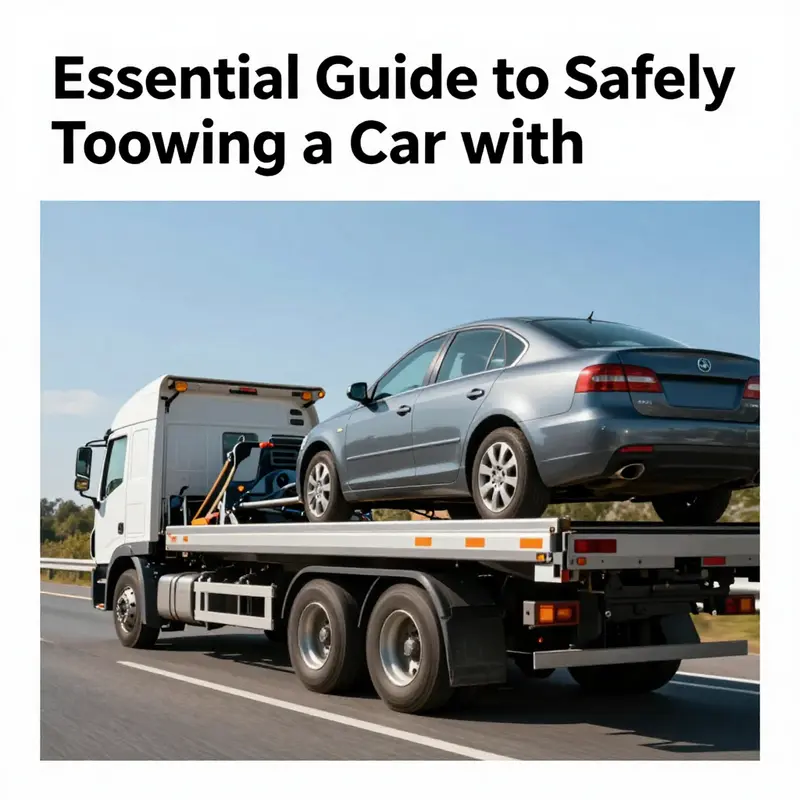
Towing a car with a truck is a critical capability for business owners involved in logistics, vehicle sales, and roadside assistance. Not only does this skill ensure the safe transport of vehicles, but it also minimizes damage to both the towing truck and the vehicle being towed, safeguarding your investment. This article explores vital steps in the towing process, focusing on thorough preparation and inspection techniques while equipping you with the right tools for success. Understanding these components holistically will empower your operations and enhance safety on the road.
Preparation with Precision: The Essential Inspection Before Towing a Car with a Truck
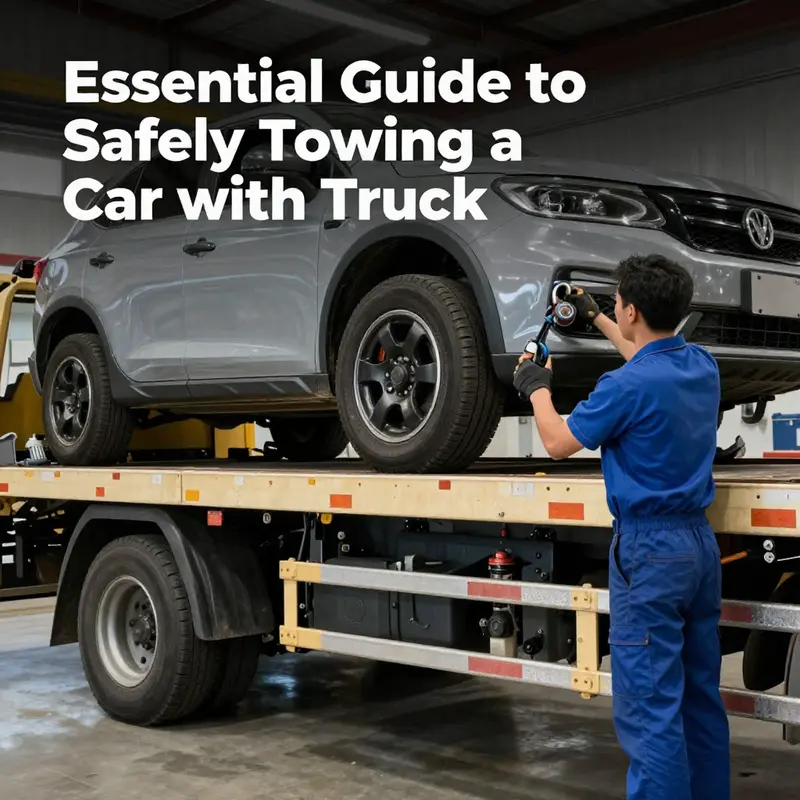
Preparation with precision begins long before the first engine cough or the tow line tightens. Towing a car with a truck is as much about discipline and foresight as it is about horsepower. The mindset is straightforward: confirm capacity, secure the right equipment, and verify every connection so that the moment you move, you do so with confidence, not with second-guessing. The backbone of that confidence lies in two closely linked circles of responsibility: the truck’s ability to handle the load and the mechanics of the tow itself. Start by confirming that the truck can legally and safely haul the weight of the other vehicle. Towing capacity is not a vague guideline but a limit built from the geometry of the drivetrain, brakes, suspension, and tires. The safe approach is to consult the owner manual or the manufacturer’s specifications to verify that the combined weight of the towed car and our trailer or hitch setup stays within the rated limit. Exceeding that limit invites mechanical failure, unpredictable handling, and the risk of losing control at a moment you can least afford it. With the weight confirmed, the focus shifts to the chain of physical connections that bind the two machines together. The hitch, whether it’s a ball mount, a fifth-wheel setup, or a hitch receiver, needs careful scrutiny. Look for wear, corrosion, cracks, or any looseness. The hitch should be rated for the load and installed securely, and the safety chains must be crossed under the trailer tongue so that, if the primary connection fails, the tongue stays in place and the towed vehicle remains tethered to the truck rather than drifting away. The trailer wiring harness deserves equal attention; a degraded connection can blind you in busy traffic or at night, turning a routine tow into a situation with no visible brake lights or turn signals. The inspection should be methodical rather than hurried, and the habit formed should be to check each component, then recheck before departure. The towed vehicle demands equal respect. For automatic transmissions, neutral is essential, and the parking brake should be released for the actual movement while the vehicle remains attached. Manuals add another layer of caution: neutral, yes, and in some long-distance or extreme cases, driveshaft disconnection is recommended or required to prevent drivetrain damage. The tires on both vehicles should be inspected for inflation, cuts, or uneven wear; a compromised tire can fail with little warning and complicate what begins as a controlled maneuver into a hazardous one. Lights and electrical connections are the last line of safety in the chain. If the towed vehicle’s lights do not synchronize with the truck’s signals, you create a hazardous blind spot for other drivers. Test the brake lights, turn signals, and running lights, ideally with a second person or a helper using a test light or by observing the indicators in the truck’s dash. The objective is redundancy: multiple checks that reinforce safety rather than relying on a single demonstration of function. In this domain, the manual’s advice often serves as a compass. For heavy or specialized situations, consider the merit of a dedicated tow truck or flatbed recovery vehicle, since flatbeds reduce drivetrain exposure by lifting all wheels off the ground. This setup is particularly advantageous for automatic transmissions, AWD, or situations where the vehicle’s condition demands minimal drivetrain involvement. As you weigh the options, remember that every mile of towed travel is a mile of risk that is best mitigated by meticulous preparation. If you want a real-world perspective on how professionals narrate and structure the process, a towing guide from an established provider emphasizes slowing down, avoiding sharp turns, and inspecting connections frequently throughout the journey. In practice, the rhythm of preparation and inspection should feel almost second nature, a sequence that becomes muscle memory through repetition. If you’re new to the task, read through the steps slowly, then walk through them with the vehicle parked, taking notes and making checklists that can be consulted before every tow. The safety implications extend beyond the moment of hookup; they ripple through traffic behavior, daylight or darkness, and weather. Before you even roll toward the first intersection, you want to know that the tow is grounded in both mechanical soundness and disciplined operation. For added perspective from a practitioner, see Mikes Towing.
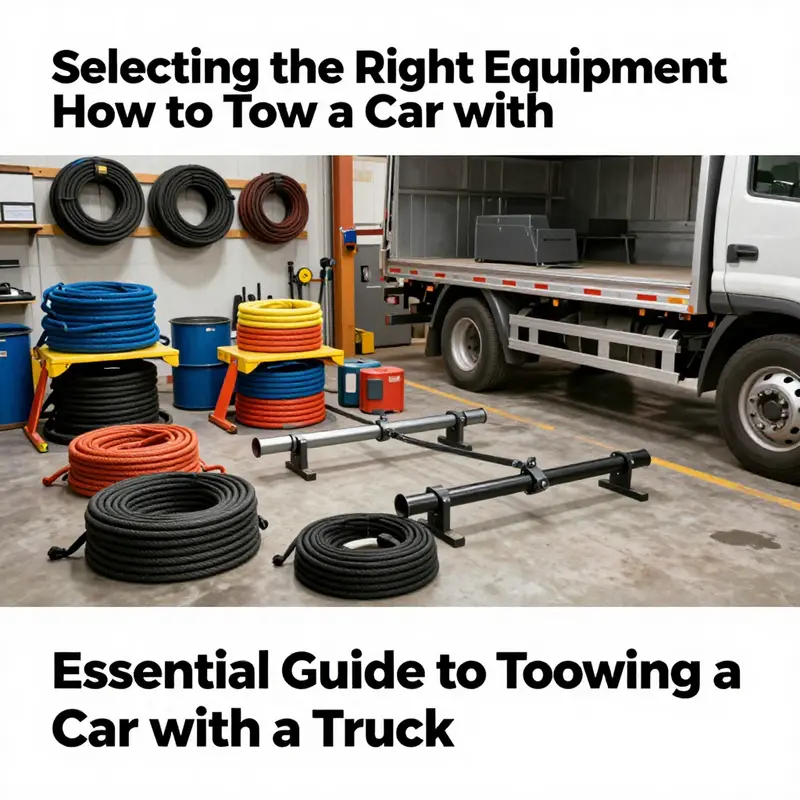
Once the basic confirmations are in place, there is another layer to consider: the overall approach to the tow’s logistics. If the towed car is an automatic, and there is any doubt about the condition of the transmission or the suitability of a long-distance pull, you should take advantage of the flatbed option whenever feasible. A flatbed minimizes drivetrain involvement by keeping all four wheels off the pavement, which is especially prudent for vehicles with exposed or compromised transmissions, or in conditions where the road could deliver a shock to a vulnerable system. In contrast, a traditional rope or rigid tow bar, while useful for short moves on level ground, demands careful handling and a steady, slow pace to prevent dynamic loads that can stress mounts, harnesses, and connections.
The careful reader will notice that every control—and every decision—points back to a single principle: restraint. Do not rush the setup, do not accept a marginal connection, and do not assume that yesterday’s checks guarantee today’s safety. The moment you tighten the final connection, you are stepping into a controlled environment in which your awareness, communication, and adherence to procedure determine the outcome. And that certainty comes from a clear picture of what you’re about to do and why you’re doing it that way. For drivers new to the task, the conversation about signals, distance, and expectations can feel almost ceremonial, but during a tow, those rituals are the language of safety. Establish simple signals and rules of engagement with your spotter or with a passenger who can watch the towed vehicle’s behavior. A short system—one horn beep to slow, two beeps to stop—reduces ambiguity and helps both drivers stay synchronized without overcomplicating the communication chain.
Looking ahead to the road, the tow demands a conservative travel style. Start slowly, gradually applying power to gauge how the tow line tightens and to ensure there is no slack, twist, or kinking in the connection. Maintain a strict speed limit—usually no more than 30 km/h (about 18 mph)—and steer with an eye toward the long arc of the route rather than the next curve. Abrupt braking or sharp steering can generate sudden loads that the tow system is not prepared to absorb, risking a failure that could cascade into a collision. The towed vehicle’s steering should be kept light, with the driver keeping hands on the wheel but not fighting the line; sharp steering can induce strain that the tow device and chain would rather avoid. If the road narrows, or a turn must be taken, slow down further and communicate early with your partner in the cab. Weather matters as well: night driving, rain, fog, or ice heightens the likelihood of a misstep, so lights—marked side markers, brake lights, hazard lamps—become not just helpful but essential. In poor conditions, consider postponing the move or selecting a route that minimizes exposure to hazards, and always reassess the setup if you detect any unusual movement or noise in the tethering system.
The practical takeaway from these thoughts is that preparation is not a choreography but a philosophy: to tow is to manage risk through deliberate, repeatable steps. The drawings on the whiteboard of a workshop suggest a checklist, yet the true value lies in the practiced recognition of when a component looks off or when a connection tests too tight or too loose. After the tow is complete, the work does not finish with a mere stop. You must gradually slow, come to a controlled halt, and inspect every element—hooks, chains, connection points, and the tow line itself—for wear, deformation, or damage. Then, store the equipment properly so you can count on it again next time without surprise.
In the end, the careful approach to preparation and inspection forms the backbone of safe towing. It protects the truck, the towed vehicle, and the people sharing the road. It also reduces the likelihood of costly damage and the dread of sudden failure. If you’re looking for additional insight into the mechanics behind the different towing configurations, remember that the safest, most reliable transport for heavy or compromised vehicles is often a flatbed setup, which removes drivetrain wear from the equation and keeps the vehicle immobilized in a secure, controlled bed. The guidance here aligns with the broader industry emphasis on using the correct equipment, verifying capacity, and maintaining clear communication throughout the tow. External resources on towing guidelines reinforce this approach and provide practical, real-world tips that echo these principles across diverse scenarios.
External resource: https://www.uhaul.com/towing-tips/
null
null
Final thoughts
Mastering the techniques for towing a car with a truck is essential for ensuring operational effectiveness and safety for all involved. By focusing on thorough preparation and selecting suitable equipment, business owners can mitigate risks associated with towing. This not only safeguards the vehicles but also protects your business’s reputation. Equip your fleets properly, conduct regular inspections, and implement best practices in towing to enhance your service offerings. The right approach to vehicle towing could be pivotal in expanding your business’s capabilities and fostering trust with your clients.