

Understanding Tow Truck Costs: A Vital Insight for Business Owners
In the fast-paced world of business, understanding the intricacies of operational costs can be the difference between success and failure. For those involved in logistics, transportation, or roadside assistance, one cost that often goes overlooked is that of tow truck services. Whether a fleet vehicle breaks down unexpectedly or a delivery truck requires roadside assistance, knowing the economics behind towing can save time, money, and potential client relationships. This article delves into the essential aspects of tow truck costs, offering insights that every business owner should consider.
The towing industry is multifaceted, influenced by a variety of factors such as distance, type of vehicle, and regional pricing differences. Many business owners may underestimate these costs, leading to unexpected expenses that can disrupt budgeting and operational planning. For example, costs can vary significantly in urban areas compared to rural regions, and failing to account for these variances can lead to budgeting inaccuracies and financial strain.
Understanding tow truck costs not only aids in accurate forecasting but also prepares business owners for negotiations with service providers. With the right knowledge, you can make informed decisions about when to call for a tow, what types of services best fit your business needs, and how to select a reliable towing partner.
In this comprehensive guide, we will explore the factors that influence towing prices, examine real-world examples, and highlight tips for managing these costs effectively. Get ready to empower your business strategies by understanding towing service options and the key elements that affect pricing in the towing industry.
Pricing for tow truck services is influenced by a variety of factors, which can dramatically affect the final cost to the customer. Understanding these factors can help business owners make informed decisions when it comes to utilizing towing services. Here are some of the key elements that impact tow truck pricing:
1. Type of Vehicle
The type of vehicle being towed plays a significant role in determining the cost. Tow truck companies typically categorize vehicles into three main groups:
- Standard Vehicles: Standard cars or light trucks usually incur the lowest towing fees, often ranging from $75 to $125 for local tows.
- Heavy-Duty Vehicles: Larger vehicles such as trucks, vans, or SUVs may require specialized equipment, resulting in higher costs ranging from $150 to $300 or more.
- Specialty Vehicles: Vehicles like luxury cars or those requiring delicate handling might come with an additional premium for services, which can exceed $400 for more complex tows.
For instance, towing a sedan from a local garage might only cost a flat fee, whereas transporting a large bus from a highway could significantly raise the total due to the complexity involved.
2. Distance to Tow
The distance involved in the tow is another critical aspect that affects pricing. Typically, tow truck services charge a base rate plus a per-mile fee. Here’s how this structure often works:
- Local Tows: A standard flat rate applies to the first few miles (e.g., 5-10 miles), usually falling under $100.
- Long-Distance Tows: Charges can escalate quickly, with fees ranging from $2 to $10 per mile depending on the company’s pricing policy and the region.
For example, towing a vehicle 50 miles may start from a base rate of $100, but by the time the mileage fee is added, the total can escalate to $250 or more.
3. Service Duration and Complexity
The time of day and the nature of the service can further complicate pricing. Here are some considerations:
- Emergency Services: Calls made after regular business hours or during weekends typically incur additional surcharges, sometimes adding 25% to 50% to the final bill.
- Service Type Complexity: Costs can vary significantly depending on whether the tow is straightforward or requires additional effort (like extracting a vehicle from a difficult location or an accident scene). Services that involve hazardous materials or significant recovery operations can also lead to increased fees.
4. Geographic Location
The cost of tow truck services can vary widely based on geographic location. Urban areas tend to charge more due to higher operational costs, whereas rural areas might have lower rates but potential additional charges for longer wait times and distances. For instance, in cities like Houston, tow truck services may average around $100 per tow, but this could be higher in more affluent neighborhoods or during peak hours. Businesses can learn more about pricing in Houston to get a clearer picture of what to expect.
5. Company Policies and Additional Fees
Different towing companies have unique pricing models. It’s prudent for business owners to understand each company’s fee structure, especially regarding:
- Base Rates
- Mileage Charges
- After-Hours Fees
- Impound Fees
Some companies may also offer package deals that could save you money for regular towing needs. It’s beneficial to compare several companies like Mike’s Towing to ensure you are receiving a fair price for services rendered.
Conclusion
Understanding these factors will equip business owners to make smarter choices when engaging towing services. By being aware of how vehicle type, distance, service complexity, location, and company fees influence costs, you can better negotiate terms and avoid unexpected expenses. Using a transparent and straightforward approach will typically lead to a more satisfactory overall experience.
By knowing the basics of how tow truck pricing works, business owners can ensure they are prepared for any unexpected vehicle problems that may arise.
Understanding Tow Truck Costs
When it comes to towing services, one of the most pressing questions for business owners is: How much does a tow truck service cost? The cost can vary significantly based on several factors such as:
- Distance: How far your vehicle needs to be towed plays a huge role in pricing.
- Type of Vehicle: Larger vehicles may incur higher fees due to the additional equipment required.
- Time of Day: Towing during off-hours or holidays can also raise the cost.
- Local Rates: Each region may have different pricing structures, so it’s essential to research local rates.
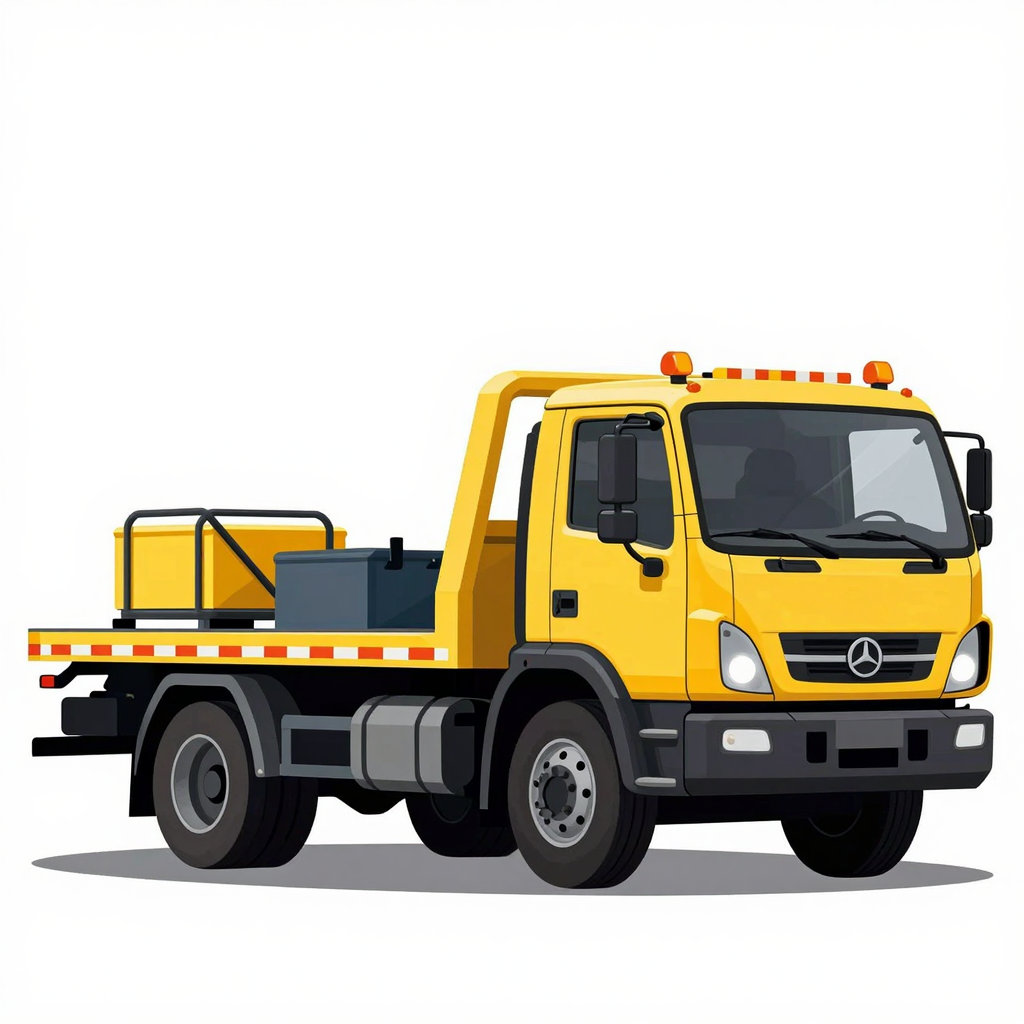
For a clear idea of services available, check out what Mike’s Towing offers, including roadside assistance and local towing services.
Common Tow Truck Services and Their Pricing
As a business owner, it’s crucial to understand the various services provided by tow truck companies and how these services can affect your expenses. Here’s a breakdown of common tow truck services:
-
Roadside Assistance: This service typically includes minor repairs on site, such as jump-starting a battery, changing a tire, or providing fuel delivery. Understanding the costs for these services will help you gauge how they fit into your overall roadside assistance strategy, especially if windshield repairs or other preventative measures can offset costly tows later.
-
Accident Vehicle Recovery: After an accident, securing a tow company that can quickly and safely recover vehicles is essential. This service often includes removing vehicles from hard-to-reach places and is charged based on distance and complexity. Towing fees for accident recovery can range significantly, often starting at $75 and increasing based on the vehicle’s condition and the recovery requirements.
-
Disabled Vehicle Towing: If a vehicle cannot be driven due to mechanical failure or mishap, it needs to be towed to a nearby repair shop or back to a business location. Pricing for disabled vehicle towing generally starts at about $50 and can go up to $150 or more, depending on the vehicle size and distance.
-
Flatbed Towing: Slightly more specialized, flatbed towing is recommended for high-value or damaged vehicles. This can help prevent further damage to the vehicle being towed. The cost for this service can be anywhere from $100 to $250 depending on the vehicle type and distance. Companies like Mike’s Towing provide reliable flatbed towing services at competitive prices.
-
Wheel-lift Towing: This method uses a hydraulic lift to elevate the front or rear of the vehicle, making it quick and efficient for tow truck operators. This service is commonly used for lighter vehicles and may cost around $75 to $125.
-
Heavy-Duty Towing Services: For those with large or commercial vehicles, heavy-duty towing is necessary. These services typically start at $300 and can go up depending on the weight and distance involved. Using companies like Mike’s Towing in Houston can ensure operational support that minimizes business downtime.
-
Emergency Towing: 24/7 emergency towing services are essential for any business owner. They provide peace of mind with availability at odd hours. This service usually comes with a higher price tag – expect to pay $150 to $300 based on the urgency and time of day.
In conclusion, understanding these common services and their pricing helps business owners budget more effectively for vehicle-related emergencies. Furthermore, expert towing companies like Mike’s Towing provide tailored solutions to suit varying business needs, ensuring operational continuity and safety.
Analyzing Regional Pricing Variations in Tow Truck Services
Tow truck pricing varies significantly across different regions in the United States, influenced by factors such as local demand, competition, and operational costs. According to data from AAA Roadside Assistance, the average cost of towing differs greatly from east to west. For example, in the Northeastern states like New York and New Jersey, the average towing fee reaches around $145. In contrast, the Midwest, including states like Illinois and Missouri, sees lower rates averaging about $110.
The South offers more competitive pricing, with averages between $95-$110; Texas and Florida fall within this range, promoting a robust market for towing companies. However, the trend shifts dramatically in the West Coast states, where services in California can surge to an average of $160, indicative of higher operational costs and demand in metropolitan areas.
Furthermore, the rugged terrain and urban density can also impact costs. As noted by NAPA Auto Parts, metropolitan areas like Los Angeles often see towing costs beginning at $175, contrasting sharply with more rural regions where services might start as low as $98, such as in Dallas. Additionally, factors such as night or holiday service can raise fees significantly, by as much as 20% to 50%. This points to how essential it is for towing service providers to adjust their pricing strategy based on local market conditions and operational expenses.
Overall, business owners must continuously evaluate their pricing models in relation to regional trends to remain competitive. Understanding these pricing variations is crucial for setting service rates effectively and ensuring profitability in the towing industry. For local specific services, you can explore Mike’s Towing Service for competitive rates tailored to your needs.
Understanding the Costs of Tow Truck Services Across Regions
When it comes to towing services, costs can significantly vary depending on the region. Understanding these variations can help business owners budget and plan their towing needs effectively. Here’s a comparative analysis of average tow truck service costs across various regions in the USA for 2023:
Average Costs by Region
| Region | Average Cost of Tow Truck Service (2023) |
|---|---|
| Northeast | $135 |
| West Coast | $128 |
| Southeast | $115 |
| South | $110 |
| Midwest | $95 |
From the data gathered, we see that the Northeast region has the highest average cost at $135, primarily due to higher labor and operational costs in metropolitan areas. The West Coast, closely following, averages $128, influenced by the cost of living and fuel prices.
In contrast, the Midwest offers the most competitive pricing at around $95, making it an appealing option for those looking to minimize towing costs. The Southeast and South are also reasonable, averaging $115 and $110 respectively, with slight increments in pricing due to local demand and traffic conditions.
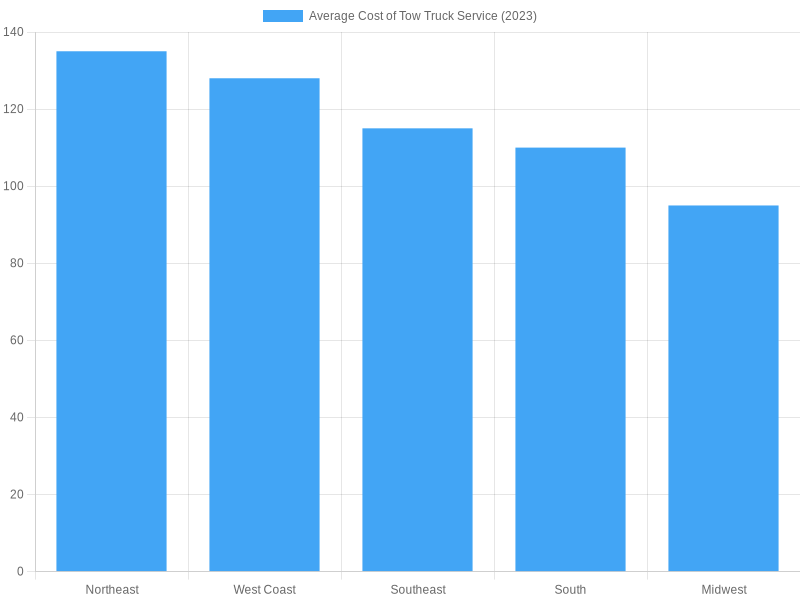
This chart visually represents the data, helping you grasp the regional differences quickly. For more information on towing services, check out our Houston towing services or roadside assistance.
Understanding these costs is crucial for business owners, especially in regions where towing expenses might unexpectedly cut into operational budgets.
Source: Data aggregated from multiple regional transportation cost reports and industry analyses, including the American Automobile Association (AAA) and National Towing Association (NTA), 2023.
The Influence of Regulations and Insurance on Tow Truck Pricing
Tow truck pricing is significantly impacted by local regulations and insurance requirements. These factors not only shape the operational frameworks of towing companies but also dictate the costs passed on to consumers.
1. Understanding Local Regulations
Local regulations concerning towing fees, processes, and consumer protections vary widely across states and municipalities. In some states, like California and New York, towing rates are strictly regulated, requiring tow operators to provide upfront estimates and itemized bills before services are rendered. In contrast, states like Texas and Florida employ more lenient regulations, allowing for rates determined largely through market competition with limited governmental oversight.
For instance, the National Association of Automotive Service and Repair (NAASR) states that:
- California imposes a base towing fee ranging from $80 to $150 with additional per-mile rates of $1.50 to $4.00.
- Texas has a similar base fee but allows for more variability in its pricing structure since it relies heavily on market forces.
- Illinois, on the other hand, demands a structured fee schedule and adherence to consumer protection laws requiring written estimates to be provided.
2. The Role of Insurance Policies
Insurance requirements introduce another layer of cost. Tow truck companies are required to maintain specific insurance coverage that can include:
- General Liability
- On-Hook Insurance (Coverage while a vehicle is in the tow truck)
- Garage Keepers Liability (Coverage for vehicles in the company’s care)
These insurance policies can be hefty. Premium rates often depend on the frequency of claimed incidents, the nature of services offered (emergency vs. non-emergency), and even the geographical area in which the company operates. Consequently, these costs are often reflected in the pricing models used by towing companies.
3. Variance in Costs by State
The differences in local regulations and required insurance can lead to notable variances in towing fees. A quick analysis shows how these costs compare across various states:
| State | Base Towing Fee (per incident) | Per-Mile Rate | Maximum Allowable Fees | Required Disclosures | Rate Regulation Authority | Notes |
|---|---|---|---|---|---|---|
| Arizona | $125 – $175 | $1.00 – $2.00 | $1,000 | Yes | Arizona Public Service Commission | Pre-towing disclosure required. |
| California | $80 – $150 | $1.50 – $4.00 | $1,500 | Yes | CPUC | Detailed billing required. |
| Florida | $75 – $150 | $1.00 – $2.50 | $1,000 | Yes | Florida DHSMV | Written estimates are mandatory. |
| Texas | $100 – $150 | $1.00 – $2.00 | $1,500 | Yes | Texas Railroad Commission | Market-driven pricing. |
| New York | $100 – $150 | $1.00 – $2.00 | $1,500 | Yes | New York Public Service Commission | Written estimate required. |
4. Conclusion: A Complex Landscape
In conclusion, understanding the interplay between local regulations and insurance requirements can help business owners navigate the pricing landscape of tow truck services more effectively. It’s crucial to stay informed about local regulations, which can significantly affect overall costs. Learn more about how to manage towing costs effectively.
These variations highlight the importance of conducting thorough research when selecting a towing service or establishing a new towing business.
By embracing best practices, ensuring compliance with regulations, and maintaining adequate insurance coverage, business owners can strategically position themselves to manage costs and provide competitive pricing in their respective markets.
Understanding Tow Truck Pricing
When it comes to running a business, especially in the transportation or logistics sectors, grasping the nuances of tow truck pricing is not just beneficial-it’s essential. The costs associated with tow truck services can vary widely based on several factors, including:
- Location: Urban areas might have different rates compared to rural settings.
- Time of Day: Rates often increase during peak hours or for after-hours services.
- Distance: The farther you are from the towing company, the higher the mileage charges.
- Type of Service: Different types of tow trucks (flatbed vs. wheel-lift) come with varied costs.
Understanding these elements allows business owners to budget better and avoid unexpected charges. In the words of a towing industry consultant, “Knowing the price structure isn’t just about saving money; it’s about making an informed decision during a stressful situation.” This statement emphasizes the necessity for transparency in the pricing structure of towing services.
Not only does an in-depth knowledge of tow truck pricing empower business owners to make informed choices, but it also helps them select the right company when emergencies arise. Learn more about our towing services here to see how we can assist you in a pinch.
Additionally, it’s wise to familiarize yourself with local competitors’ pricing. This knowledge can aid in negotiations and ensure you receive fair treatment, especially in critical scenarios. As you strategize your towing needs, remember: selecting a reputable service means relying on clear pricing structures and documented estimates-a vital part of any responsible business plan.
Budgeting effectively for towing services can save not only money but also time and stress in urgent situations, making it crucial for modern business operations.
Weighing the Pros and Cons of DIY Towing vs. Professional Services
When it comes to managing a business fleet, the decision between DIY towing and hiring professional services can significantly impact your operations. Below, we explore the advantages and disadvantages of each option, helping you make an informed choice.
DIY Towing: Pros and Cons
Pros:
- Cost Savings: One of the main attractions of DIY towing is the potential for immediate cost savings. For simple recoveries or short-distance tows, using in-house resources could save $50-$150 per incident compared to hiring professionals.
- Control: Business owners may feel they have more control over the towing process when they handle it themselves. This can include timing and logistics that align more closely with their specific operational needs.
- Flexibility: DIY towing can provide flexibility during non-emergency situations when professional services may not be readily available.
Cons:
- Risk of Damage: A study found that 67% of small businesses attempting DIY towing experienced vehicle damage or safety hazards within the first year. Improper handling can lead to costly repairs far exceeding the initial savings.
- Liability Concerns: Handling towing in-house raises liability issues. Entrepreneurs can expose themselves and their employees to legal risks, especially if accidents occur during the process.
- Equipment Limitations: Commercial vehicles often demand specialized equipment that most businesses may lack. Professional tow companies are equipped with advanced winches, hydraulic lifts, and experienced operators who can safely navigate complex towing scenarios.
Professional Towing Services: Pros and Cons
Pros:
- Expertise and Efficiency: Hiring professional services can mean faster response times and less downtime. Businesses using professionals report a 92% reduction in downtime and a 78% decrease in related insurance claims.
- Documentation and Compliance: Professional tow services are licensed, reducing legal liabilities and ensuring compliance with local regulations. This can also aid in insurance claims management, providing documentation when mishaps occur.
- Safety Considerations: Professional operators are trained to handle a variety of towing scenarios, particularly with heavy-duty or specialized vehicles. This reduces risks associated with improper towing practices.
Cons:
- Higher Costs: The immediate expense of hiring professionals can be daunting, particularly for businesses operating on tight budgets. However, these costs are often offset by the long-term benefits of reduced risk and improved recovery time.
Conclusion
For business owners considering towing solutions, understanding the trade-offs between DIY and professional towing services is essential. While DIY towing may seem economical at a glance, the unforeseen costs and risks often make hiring a professional service the smarter choice for maintaining fleet efficiency. For those ready to streamline operations, engaging a professional towing service could prove beneficial in the long run.
Conclusion
In conclusion, understanding the costs associated with towing services is crucial for business owners who rely on tow trucks for their operations. The average cost of towing a vehicle varies significantly across the U.S., reflecting factors such as location, time of day, and the type of vehicle being towed. On average, towing services can range from $3.00 to $5.50 per mile, with urban areas typically facing higher charges. For instance, towing in New York City averages at $6.50 per mile compared to a more modest $2.75 in rural Nebraska. This data highlights the importance of budgeting for unexpected towing needs, especially as the towing market is projected to grow significantly in the coming years.
Call to Action
If you’re in need of reliable towing services or wish to get a quote tailored to your business needs, don’t hesitate to reach out to us. At Mike’s Towing, we offer competitive rates and exceptional service. Contact us today to discuss how we can assist you with all your towing requirements in Houston and surrounding areas! Visit our towing services page for more information.