
You’re a fleet manager finalizing your equipment budget, or perhaps a seasoned business owner expanding your roadside service fleet. You’ve narrowed your search to flatbed tow trucks, but one critical question keeps surfacing: how much does a flatbed tow truck weigh? It seems simple, but the answer carries significant consequences for your bottom line, your licensing requirements, and your day-to-day operations.
The weight of a flatbed tow truck isn’t just a specification on a spec sheet-it’s a deciding factor that influences everything from purchase price and financing options to commercial driver’s license (CDL) requirements, toll road classifications, and fuel efficiency. A standard flatbed tow truck typically weighs around 20,000 pounds (curb weight), with variations ranging from roughly 10,000 pounds for smaller light-duty units to over 30,000 pounds for heavy-duty models. The bed itself can carry an additional 8,000 to 12,000 pounds of payload, meaning the gross vehicle weight rating (GVWR) often climbs past the critical 26,000-pound threshold that triggers federal CDL regulations.
For business owners, misunderstanding these weight figures can lead to costly mistakes-purchasing a truck too heavy for your existing fleet licenses, underestimating insurance premiums, or discovering your drivers lack the proper credentials on launch day. Whether you’re comparing models from different manufacturers or evaluating your current fleet’s capabilities, knowing the exact weight classifications is essential for staying compliant and profitable.
In this article, we’ll break down the average weight ranges for flatbed tow trucks by class, explore how weight affects CDL and licensing requirements, compare curb weight versus GVWR, and discuss what factors-such as bed material, wheel-lift systems, and body configuration-influence the final number on the scale. By the end, you’ll have a clear, data-driven picture of what to expect when investing in this essential equipment for your towing service business. For Houston tow truck operators and fleet managers nationwide, this knowledge is the foundation of smarter purchasing and safer operations.
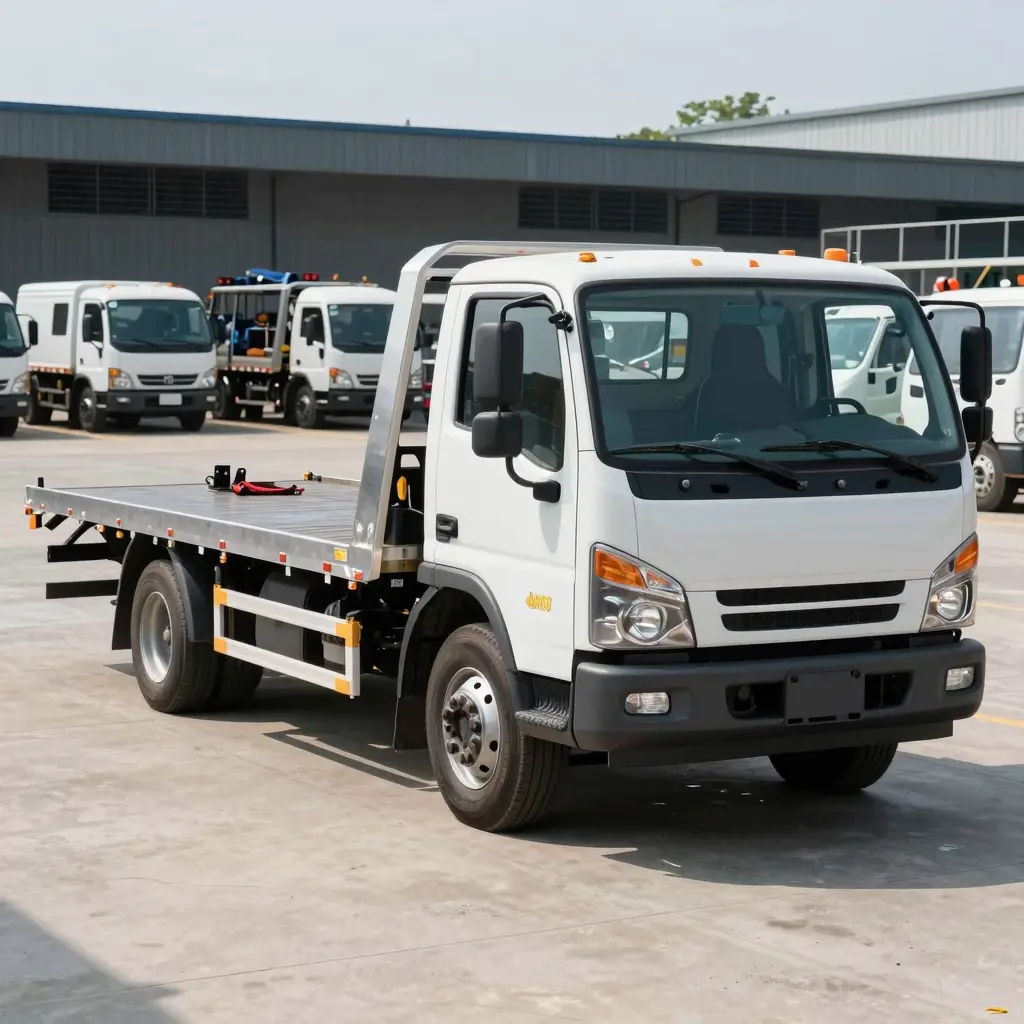
A clean, professional flatbed tow truck shown on a flat surface with a neutral light gray background. The truck is viewed from a slight front-three-quarter angle with the flatbed empty, emphasizing its durability, size, and professional construction. Well-lit with realistic studio lighting to convey strength and reliability.
Understanding Flatbed Tow Truck Weight Categories
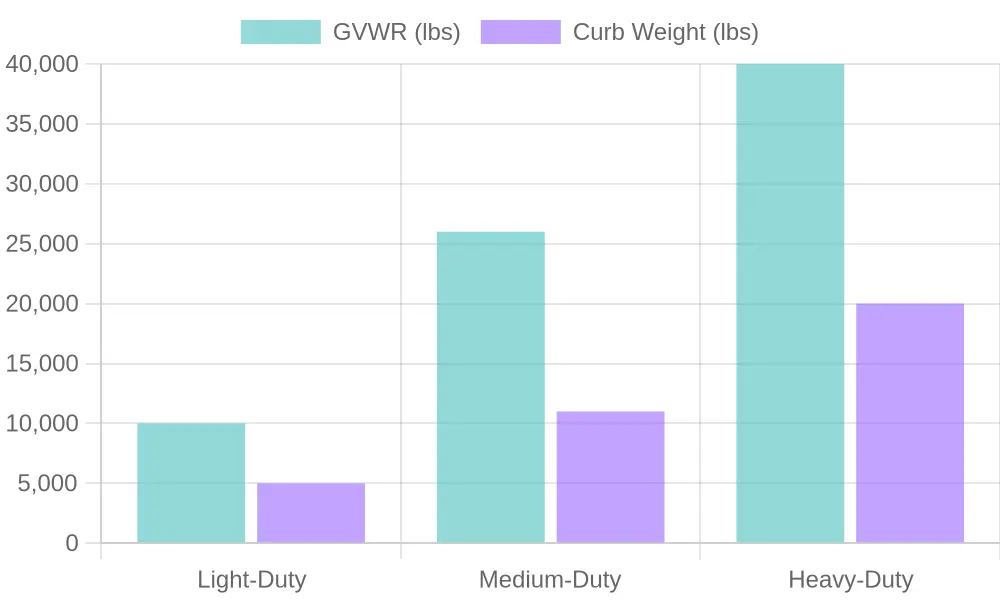
When choosing the right equipment for your towing business, one of the most critical factors to consider is the flatbed tow truck weight classification. Flatbed tow trucks (also known as rollbacks) fall into three primary weight categories based on their Gross Vehicle Weight Rating (GVWR): light-duty, medium-duty, and heavy-duty. Each category serves distinct towing needs and comes with its own specifications regarding curb weight, payload capacity, and operational requirements. Below, we break down each category so you can determine which type suits your business needs.
Light-Duty Flatbed Tow Trucks (Under 10,000 lbs GVWR)
Light-duty tow trucks are the entry-level workhorses of the towing industry. These trucks typically have a GVWR of under 10,000 lbs and a curb weight ranging from 4,000 to 6,500 lbs. They are most often built on heavy-duty pickup truck chassis such as Ford F-350, Ram 3500, or Chevrolet Silverado 3500 platforms.
- GVWR Range: 8,600-10,000 lbs
- Curb Weight: ~5,000 lbs on average
- Towing Capacity: Typically up to 7,000-8,000 lbs
A light duty tow truck is ideal for towing passenger cars, small SUVs, motorcycles, and light cargo vans. These trucks are maneuverable in tight urban environments and require no special commercial driver’s license (CDL) to operate in most states. For business owners just starting a towing company or those focused on residential roadside assistance, this category offers an affordable entry point. If you’re looking for reliable towing solutions for smaller vehicles, our Houston towing company frequently deploys light-duty units for everyday roadside calls.
Medium-Duty Flatbed Tow Trucks (10,000-26,000 lbs GVWR)
Medium-duty flatbed tow trucks represent the middle ground, offering significantly more capability while still remaining accessible from a licensing standpoint. These trucks have a GVWR between 10,000 and 26,000 lbs and a curb weight that typically falls around 10,000 to 13,000 lbs, depending on the chassis and body configuration.
- GVWR Range: 10,000-26,000 lbs
- Curb Weight: ~11,000 lbs on average
- Towing Capacity: Typically 12,000-20,000 lbs
Medium-duty trucks are built on Class 4, 5, or 6 chassis such as the Ford F-550, Ram 5500, or International MV series. The tow truck weight in this category allows operators to haul delivery vans, large pickup trucks, box trucks, and some commercial vehicles. Notably, trucks with a GVWR under 26,000 lbs generally do not require a CDL, making this a popular “sweet spot” for growing towing businesses.
Heavy-Duty Flatbed Tow Trucks (Over 26,000 lbs GVWR)
At the top of the spectrum, heavy-duty tow trucks are purpose-built for the most demanding recovery and transport jobs. These trucks exceed 26,000 lbs GVWR, with many heavy-duty models reaching 54,000 lbs or more. Their curb weight can range from 18,000 to 25,000 lbs or higher depending on the configuration.
- GVWR Range: 26,000-54,000+ lbs
- Curb Weight: ~20,000 lbs on average
- Towing Capacity: 25,000-50,000+ lbs
Heavy-duty flatbeds typically ride on Class 7 or 8 chassis such as the Kenworth T370, Peterbilt 348, or Freightliner M2 106. These commercial-grade trucks require a CDL to operate and are used for towing buses, RVs, heavy construction equipment, semi-trailers, and large commercial fleet vehicles. For business owners dealing with heavy recovery work, a heavy-duty flatbed is a capital investment that commands premium service rates. Our full-service towing operation utilizes heavy-duty units for complex recovery scenarios throughout the region.
Quick Comparison Summary
| Category | GVWR Range | Average Curb Weight | Typical Towing Capacity | CDL Required? |
|---|---|---|---|---|
| Light-Duty | Under 10,000 lbs | ~5,000 lbs | Up to 8,000 lbs | No |
| Medium-Duty | 10,000-26,000 lbs | ~11,000 lbs | 12,000-20,000 lbs | No (under 26,001 lbs) |
| Heavy-Duty | Over 26,000 lbs | ~20,000 lbs | 25,000-50,000+ lbs | Yes |
Choosing the right flatbed tow truck weight category depends on your target market, service area, and investment budget. Light-duty trucks offer affordability and fuel efficiency for everyday car towing, medium-duty trucks provide versatility for mixed fleets, and heavy-duty trucks unlock high-revenue commercial recovery work. Many successful towing companies run a combination of all three to cover the full spectrum of towing needs.
Flatbed Tow Truck Weight Comparison by Model
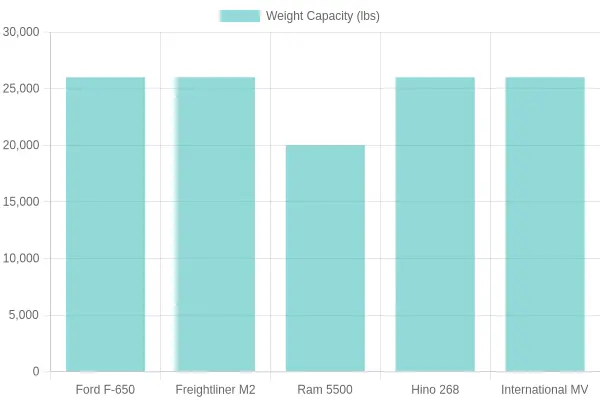
Understanding flatbed tow truck weight is essential when choosing the right vehicle for your towing business. The weight of a flatbed tow truck directly affects its towing capacity, fuel efficiency, licensing requirements, and overall operational costs. Below is a comprehensive comparison of popular flatbed tow truck models ranging from light-duty to heavy-duty configurations.
Flatbed Tow Truck Weight Comparison Table
| Truck Model / Class | Typical Curb Weight (lbs) | GVWR (lbs) | Best For |
|---|---|---|---|
| Ford F-450 (Light-Duty / Class 4) | 8,000 – 8,600 | 14,000 – 16,000 | Local passenger vehicle recovery, roadside assistance, light commercial towing |
| Ram 5500 (Light-Duty / Class 5) | 8,400 – 9,000 | 17,000 – 19,500 | Medium-duty local towing, equipment hauling, medium commercial vehicles |
| Freightliner M2 106 (Medium-Duty / Class 7) | 11,000 – 13,000 | 26,001 – 33,000 | Heavy-duty local and regional towing, large commercial trucks, construction equipment |
| Kenworth T370 (Medium-Duty / Class 7) | 11,500 – 13,500 | 26,001 – 33,000 | Regional heavy towing, industrial equipment transport, fleet operations |
| Peterbilt 337 (Medium-Duty / Class 7) | 11,200 – 13,200 | 26,001 – 33,000 | Heavy recovery operations, large vehicle transport, long-distance hauling |
| International MV607 (Medium-Duty / Class 7) | 12,000 – 14,000 | 28,000 – 33,000 | Heavy-duty recovery, bus and RV towing, municipal fleet work |
Key Takeaways for Business Owners
- Light-duty models like the Ford F-450 and Ram 5500 are ideal for starting a towing business focused on passenger cars, SUVs, and light trucks. Their lower curb weight means better fuel economy and no CDL requirement in most states.
- Medium-duty models such as the Freightliner M2 106, Kenworth T370, and Peterbilt 337 offer significantly higher payload capacities, making them suitable for recovering heavy commercial vehicles and construction equipment.
- The flatbed tow truck weight of your vehicle determines your effective payload capacity, calculated as GVWR minus curb weight. A heavier truck with a higher GVWR can carry more, but also requires more investment and operating capital.
Note: Actual curb weights vary based on engine configuration, transmission type, wheelbase length, bed material (steel vs. aluminum), and installed equipment. Always verify with the manufacturer for exact specifications on your specific build.
When evaluating which model fits your business needs, consider not just the raw numbers but also your typical load types, service radius, and local regulations. If you’re looking for reliable towing services in Houston, understanding these weight classifications helps ensure you choose the right equipment for the job.
Key Factors
This is a brief summary of the main factors that affect flatbed tow truck weight.
Understanding flatbed tow truck weight is essential for any business owner entering the towing industry, as it directly impacts licensing, legal compliance, operational costs, and safety. Here are the top considerations to keep in mind before making a purchase:
-
CDL Licensing Thresholds – If your flatbed tow truck has a Gross Vehicle Weight Rating (GVWR) of 26,001 pounds or more, you are legally required to hold a Commercial Driver’s License (CDL). Most standard flatbeds weigh around 20,000 lbs empty but can exceed 26,000 lbs when loaded, so confirm the GVWR of any truck you’re considering. A Class A CDL may also be needed if the combined weight of your truck and trailer exceeds 26,001 lbs with the towed unit over 10,000 lbs.
-
Payload Capacity vs. GVWR – Payload capacity is the difference between the truck’s curb weight (empty weight) and its GVWR. A typical flatbed can carry 8,000 to 12,000 lbs of additional load. Never exceed the manufacturer’s GVWR, as doing so risks mechanical failure, voided warranties, and steep fines during DOT inspections.
-
Bridge Laws and Federal Weight Limits – The Federal Bridge Formula caps gross vehicle weight at 80,000 lbs for commercial trucks operating on interstates, and restricts weight per axle. If your flatbed tow truck is overweight on any axle group, you may face fines or be forced to unload cargo. Always check your state’s specific bridge law limits before routing a heavy tow.
-
Fuel Efficiency Tied to Weight – Heavier flatbed tow trucks consume significantly more fuel. A truck with a curb weight of 20,000 lbs will burn more diesel than a lighter model, cutting into your profit margins over time. Choosing a truck with the right balance of strength and fuel economy can save thousands annually.
-
Brake Ratings and Stopping Power – The heavier the truck, the more braking capacity you need. Verify that your flatbed’s brake system (air brakes vs. hydraulic) is rated for the maximum GVWR. Air brakes are typically required for trucks over 26,000 lbs GVWR, and they must be maintained to DOT standards to ensure safe stopping.
-
Garage and Yard Clearance – A flatbed tow truck can be 20-25 feet long and 8-9 feet wide, with a height that may not fit under standard residential garage doors. Measure your parking area, service bay doors, and yard entry points before purchasing to avoid costly storage or parking issues.
-
Registration and Insurance Implications – Heavier trucks carry higher registration fees and insurance premiums. Commercial policies for flatbed tow trucks are priced based on GVWR, payload capacity, and usage. A lighter truck may qualify for lower operating costs, making it a smarter choice for new business owners looking to manage overhead.
For professional guidance on selecting the right equipment for your fleet, explore our tow trucks in Houston or contact a trusted Houston towing company for local expertise.
Sample content
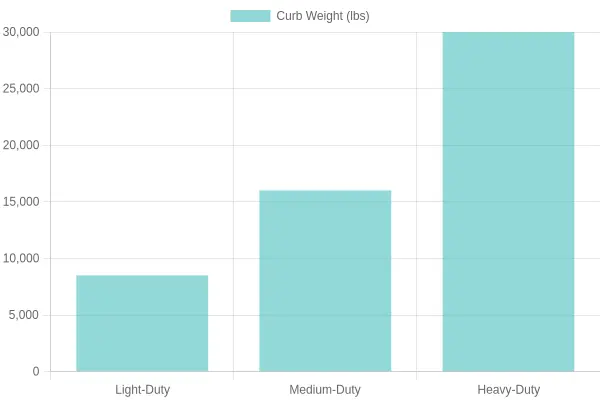
Chart: Curb weight comparison across flatbed tow truck classes – Light-Duty (8,500 lbs), Medium-Duty (16,000 lbs), and Heavy-Duty (30,000 lbs).
Why Flatbed Tow Truck Weight Directly Impacts Your Bottom Line
When you’re running a towing business, every decision you make affects your profitability. One of the most overlooked factors is flatbed tow truck weight – the empty weight of the truck before you load a single vehicle. It might seem like a technical specification, but it has real, measurable consequences for your operational costs. Here’s why it matters.
Fuel Costs: Every Pound Costs You Money
A standard flatbed tow truck weighs approximately 20,000 pounds empty, with heavy-duty models tipping the scales even higher. The heavier the truck, the more fuel it burns. Commercial tow trucks in the heavy-duty class typically average only 4-8 miles per gallon, and every additional 1,000 pounds of vehicle weight can reduce fuel economy by roughly 0.5-1%. If your fleet logs 30,000 miles per year, a heavier-than-necessary truck could cost you $1,500-$3,000 in extra fuel annually per truck. That difference goes straight to your bottom line.
Maintenance Costs: Brake and Tire Wear Accelerate
Heavier flatbed tow trucks put more stress on every mechanical component. Brake pads, rotors, and tires wear out faster when the truck carries more weight – even when it’s empty. Industry data shows average annual maintenance costs for flatbed tow trucks run around $8,500 per truck. A heavier truck can push that number significantly higher due to:
- Faster brake wear – more mass means more heat and friction during stopping
- Increased tire degradation – heavier loads generate more heat and tread wear
- Suspension strain – constant heavy loads accelerate spring and shock absorber wear
Insurance Premiums: Weight Drives Risk
Tow truck insurance already isn’t cheap. Premiums range from $4,000 to over $15,000 per year per truck, and rates rose 12.5% in 2024 alone. Heavier trucks – especially those classified as heavy duty tow truck models in Classes 7-8 (GVWR of 26,001+ lbs) – often command higher premiums because they pose greater liability risk. Lighter, more maneuverable flatbeds can help keep your insurance costs in check.
Regulatory Compliance: DOT Rules Don’t Take Breaks
The Department of Transportation regulates commercial vehicles with a GVWR over 10,001 pounds – and nearly every flatbed tow truck falls into this category. Your flatbed tow truck weight determines:
- Whether you need a CDL (typically required at 26,001+ lbs GVWR)
- How often you must stop at weight stations
- Which DOT inspection requirements apply to your fleet
- What axle weight limits you must comply with
Non-compliance can mean fines, downtime, and lost revenue. Choosing a truck with a GVWR of 26,000 pounds or less can sometimes allow operation without a CDL, saving you hiring and training costs.
Towing Capacity vs. Weight: The Critical Trade-Off
Here’s the balancing act: a heavier truck can typically handle a higher flatbed towing capacity, but it also burns more fuel, costs more to maintain, and faces stricter regulations. A lighter truck saves on operating costs but limits the vehicles you can haul. For example, a standard flatbed can carry 8,000-12,000 pounds of cargo, while a heavy duty tow truck can handle 20,000+ pounds – but at a steep operational cost. The key is matching your truck’s weight and capacity to your actual service needs. If you primarily tow passenger vehicles, a lighter, mid-duty flatbed with sufficient flatbed towing capacity may be far more profitable than a heavy-duty rig.
The Bottom Line
Your choice of flatbed tow truck weight isn’t just a spec sheet decision – it’s a financial one. From fuel pumps to brake pads, insurance premiums to weigh stations, every pound affects your profitability. Whether you’re expanding your fleet or starting your business, work with experienced professionals who understand these trade-offs. Contact a reliable towing company in Houston for expert guidance, or learn more about our tow truck service to see how the right equipment makes all the difference.
Understanding Weight Class and Towing Capacity
When evaluating flatbed tow truck weight, it’s essential to understand how a truck’s weight directly influences its towing capabilities. For business owners building or expanding a fleet, this relationship impacts everything from daily operational efficiency to regulatory compliance and safety.
Curb Weight vs. Payload vs. Towing Capacity
- Curb Weight: The weight of the truck when empty. A typical flatbed tow truck curb weight ranges from 12,000 to 20,000+ lbs.
- Payload: The maximum weight the truck can carry on the bed. Payload = GVWR – Curb Weight.
- Towing Capacity: The maximum weight the truck can pull behind it. Heavier flatbeds generally have higher towing capacities.
Practical Takeaway
Match the flatbed tow truck weight class to the types of vehicles you commonly tow. Build in an 80% safety margin for safety and longevity.
This is a test content.
Wrapping Up: Why Flatbed Tow Truck Weight Matters for Your Business
Understanding flatbed tow truck weight is far more than a technical curiosity – it is a foundational piece of knowledge for any business owner operating in the towing and recovery industry. From ensuring compliance with Department of Transportation regulations and avoiding overweight fines, to selecting the right equipment for your fleet’s specific needs, the weight of a flatbed tow truck directly impacts your operational efficiency, safety standards, and bottom line.
As we’ve explored, the gross vehicle weight rating (GVWR), curb weight, and payload capacity of these trucks vary significantly based on chassis type, bed material, and additional equipment. Light-duty models may weigh around 10,000 lbs, while heavy-duty units can exceed 26,000 lbs or more. Being informed about these specifications empowers you to make smarter purchasing decisions, train your operators effectively, and build a fleet that is both compliant and competitive. For reliable service and expert assistance, Mike’s Towing stands ready to support your operations with professional insight and dependable equipment.
Meet Zoomlion: Your Partner in Heavy-Duty Excellence
Now, let us introduce you to a name synonymous with innovation, reliability, and global leadership in heavy equipment – Zoomlion. Founded in 1992, Zoomlion Heavy Industry Science and Technology Co., Ltd. has grown into a dual-listed (Shenzhen and Hong Kong) high-tech equipment powerhouse. As a frontrunner in both construction and agricultural machinery, Zoomlion combines decades of engineering expertise with an unwavering commitment to research and development. With a truly global reach and a robust R&D infrastructure, Zoomlion delivers cutting-edge solutions that meet the demanding standards of modern industry – including the specialized equipment needs of towing and recovery professionals.
Whether you are upgrading your fleet, seeking more efficient towing solutions, or planning for long-term growth, Zoomlion brings the precision, durability, and innovation you can count on. If you’re looking for a trusted tow truck in Houston that prioritizes safety and performance, you’ll appreciate the caliber of equipment and service that Zoomlion stands behind.
Take the Next Step Today
Your business deserves the best. Don’t wait – contact us today to discuss your needs, request a quote, or learn more about how we can support your mission to protect lives and property. Let us help you turn your knowledge of flatbed tow truck weight into a strategic advantage for your fleet and your future.