
Understanding what your truck can tow is crucial for business owners reliant on transport for equipment, materials, or goods. This knowledge not only ensures compliance with safety regulations but also enhances operational efficiency. The towing capacity of your truck is determined by several factors, including the manufacturer’s specifications and the type of trailer you aim to use. This article covers two key aspects: first, we’ll explore how to ascertain your truck’s official towing capacity; next, we will delve into the types of trailers suitable for towing and the safety precautions necessary for a secure towing experience.
Tow Bound: Reading Your Truck’s Official Capacity and What It Lets You Tow
When you ask, “What can my truck tow?” you’re asking more than horsepower or top speed. Tow capacity is a carefully balanced specification that emerges from the manufacturer after considering the entire vehicle system: the engine and transmission, the frame and suspension, the braking hardware, and the axle setup. Each element contributes to a single limit called the towing capacity. In practical terms, that means your truck has an official number that represents the maximum weight it can pull safely, including the trailer itself and everything on it. This number is the product of engineering choices designed to keep you in control on the road. To navigate this landscape effectively, locate that official rating and understand the surrounding terms, such as the Gross Combined Weight Rating, or GCWR, and the related payload figures that reflect what the truck can carry while still moving safely when towing.
To begin, look in the right place for the official numbers. The towing capacity is published in the vehicle’s documentation and on the manufacturer’s specification label. This label is usually found on the driver’s side door jamb, though some vehicles place it inside the glove box or in the owner’s manual pocket. The key figures you’ll encounter are the gross vehicle weight rating (GVWR), which tells you the truck’s own weight with passengers and cargo, and the GCWR, which is the combined weight of the vehicle, trailer, and load. Alone, GVWR helps you gauge how much cargo you can carry without exceeding the truck’s structure, but GCWR provides the limit when you are towing a trailer. The distinction matters because a truck with a strong frame and capable brakes can tow more efficiently only up to its GCWR; exceeding it invites braking challenges, handling issues, and potential component fatigue. As you review the numbers, keep in mind that the official towing capacity is the maximum trailer weight you can pull while the truck remains within those published ratings, not a target you should aim for casually.
Beyond the labeled capacity, there exists a web of interrelated factors that determine how much a particular truck can tow in real-world conditions. The engine and transmission drive your ability to move a heavy load, but the suspension and frame determine how that weight is supported and distributed. The braking system must be able to handle the added inertia of a trailer, and the axle configuration sets the baseline for weight transfer and balance. A four-wheel-drive drivetrain adds traction, yet it also introduces complexity when calculating payload and tow limits. In short, the tow rating is the outcome of a careful balance among power, control, and safety. For this reason, it is essential to treat the published capacity as a hard limit rather than a flexible target. When you stay within the specified limits, you preserve steering authority, braking response, and tire life, all of which contribute to safer, more predictable towing.
Many drivers think of towing as a simple sum: the trailer’s weight plus cargo must be under the truck’s capacity. In reality, it’s more nuanced. The trailer’s weight matters, but so does tongue weight—the load that sits at the hitch and presses down on the tow vehicle’s hitch point. A healthy tongue weight is typically about 10 to 15 percent of the trailer’s total weight. Too much tongue weight loads the rear axle excessively and can affect steering and braking; too little tongue weight can make the trailer feel light and sway more easily. Proper weight distribution and a weight-distributing hitch can help keep the combination stable, especially on winding roads or hilly terrain. These considerations highlight why you should never rely on a gut feeling or a rough estimate when you plan a towing scenario. Consulting the owner’s manual for precise guidance and, where possible, using a scale to verify tongue weight are prudent steps toward maintaining control.
When thinking about the types of towing you might do, remember that the official capacity applies across various trailer configurations, but the practical limits shift with the load profile. Travel trailers and larger campers can be within range if the total weight stays within the GCWR and the trailer’s own braking and lighting requirements are met. Boats and boat trailers can also be towed within the truck’s limits, provided the weight and balance are accounted for and the hitch setup is appropriate for your configuration. Utility trailers for tools or equipment fall into a similar category, with the caveat that heavy tool loads can push payload and tongue weight into zones that demand careful weight management. For heavier, specialized jobs, some trucks are used with gooseneck or fifth-wheel setups. These configurations demand special hitches and are typically chosen for heavy-duty towing. In any case, the governing rule remains the same: do not exceed the manufacturer’s stated maximum. The consequences of overloading are not theoretical—brake fade, steering instability, longer stopping distances, and even loss of control can follow.
A practical approach to safe towing also calls for awareness of legal and regulatory requirements, which vary by country and region. In many places, trailers above a certain weight must have their own brakes, and the lighting and electrical systems must be properly connected and secured. The tongue weight guideline remains relevant in law and practice because it directly affects control and stability. If you’re moving a heavier load, a weight-distributing hitch can dramatically improve sway resistance and overall handling by harmonizing the forces between the tow vehicle and the trailer. Regular inspection and maintenance of both vehicle and trailer components—brake lines, electrical connections, tires, and connectors—are vital routines before any trip. Beyond the mechanical, consider the driver’s role in planning routes that avoid abrupt maneuvers, and leave extra space for braking, especially on curves and grades. These habits, paired with accurate capacity data, create a towing experience that is as predictable as it is safe.
Understanding how a 4WD box truck behaves under load adds another layer to the discussion. In commercial or heavy-duty configurations, the towing capacity is not only a function of the GCWR but also the payload and the specific configuration of the vehicle model. The practical takeaway is that many real-world formulas cannot replace the manufacturer’s exact rating. If you are operating a light commercial chassis or a 4WD box truck, the capacity depends on a combination of GVWR, payload, and how the model is configured for towing. Always start with the official specification and cross-check with the VIN-based data from the manufacturer’s website. This is the most reliable route to model-specific, up-to-date guidance. For readers who want a concrete, real-world perspective, you can explore practical towing resources from a common-service provider that documents towing workflows and safety checks, including the role of proper hitching practices and pre-trip inspections. For practical towing insights from a real-world operator, see https://mikes-towing.example/.
In sum, the chapter you’re reading is not about a single number but about a disciplined approach to understanding and applying the official capacity. The process starts with the owner’s manual and the vehicle’s specification label, then moves through the types of loads you plan to tow, and finally incorporates the legal and practical safety practices that keep you in command of the road. When in doubt, respect the GCWR and the payload limits, verify tongue weight, and choose hitching systems that promote stability. The journey from a manufacturer’s rating to a confident, safe tow involves careful planning, precise measurements, and consistent maintenance. By treating towing capacity as a hard boundary rather than a flexible target, you protect your vehicle, your trailer, and everyone on the road. External resources can supplement your knowledge, but the core rule remains universal: never exceed the manufacturer’s stated limits.
Tow Truths: Decoding Your Truck’s Real Towing Capacity, Trailer Types, and Safe Practices
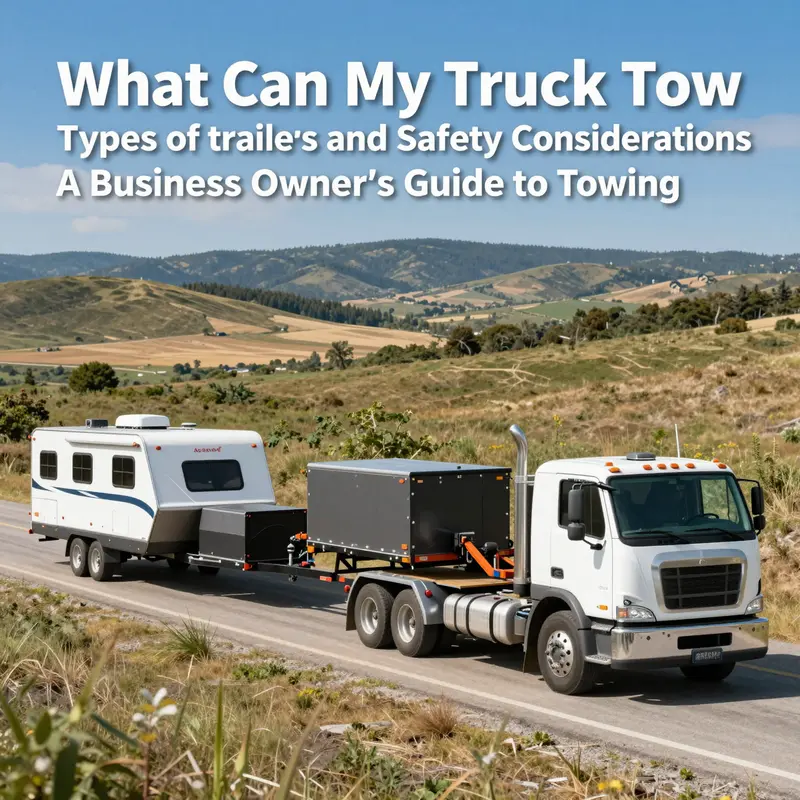
When someone asks what their truck can tow, they’re not just hunting for a single number. They’re seeking a reliable sense of the machine’s working envelope—the point where power, safety, and control meet in the real world. The backbone of that envelope is the manufacturer’s specification, a careful balance of engine output, transmission design, chassis integrity, braking capability, and axle ratios. The formal ceiling is expressed in weights that sound simple but are loaded with nuance: the Gross Combined Weight Rating, or GCWR, and the Gross Vehicle Weight Rating, GVWR. These figures aren’t just numbers on a sticker; they’re the practical limits that keep the vehicle stable, responsive, and predictable under load. The towing capacity you’ll see in the manual or on the specification label is the maximum combined weight the truck can handle when pulling a trailer, including all cargo inside the trailer and any cargo inside the truck itself. While it’s tempting to think of that rating as a straightforward cap on the trailer’s weight, the truth is more intricate. The GCWR is the total allowed weight of the truck plus the trailer, and the GVWR marks how much the truck itself can bear in terms of occupants, fuel, and payload. Subtract the GVWR from the GCWR, and you have a rough sense of the maximum protected weight that can be allocated to the trailer and its cargo. Though some manufacturers and dealerships simplify the message, the right approach is to consult the owner’s manual or the official specifications for your exact model year. In practice, the label on the driver’s door jamb or inside the glove box will anchor your planning. There is no substitute for the precise, model-year data that your vehicle’s documentation provides, and the real-world checks you perform before a tow begin with this baseline understanding. Once that baseline is clear, it’s possible to consider the day-to-day reality of how you’ll use the truck. Towing is not a one-size-fits-all activity. Different trailers introduce different dynamics, stopping power requirements, and balance considerations that must mesh with your truck’s capabilities. The most common towing scenarios—travel trailers, boats and their trailers, utility trailers for hauling equipment, and the heavier gooseneck or fifth-wheel configurations—each demand attention to weight distribution, hitch type, and braking needs. A crucial principle runs through all of them: never exceed the maximum towing capacity listed by the manufacturer. Exceeding that limit compromises braking, steering, and suspension, and it raises the risk of sway, trailer detachment, and loss of control. If you’re unsure about the right setup, a reputable professional can help evaluate your specific gear and route. For those planning trips or considering heavier loads, a practical approach is to start from the proportions of the trailer. A travel trailer, for example, will be considered safe as long as the trailer’s total weight plus its cargo remains within the truck’s stated capacity. A boat and its trailer add similar complexity, particularly when the craft adds weight behind the axle. Utility trailers, while often lighter, bring their own issues of tongue weight and hitch type. And heavy-duty towing, which uses gooseneck or fifth-wheel arrangements, introduces a distinct set of considerations, including specialized hitches and balance requirements that can dramatically alter handling characteristics. It’s tempting to treat these as separate worlds, but they are all connected by the same core rule: the total load must stay within the truck’s documented limits. A practical reminder about weight distribution follows this rule. Tongue weight—the downward force the trailer exerts on the hitch—should generally be about 10–15 percent of the trailer’s total weight. If the tongue weight is too light, the trailer can sway; if it’s overly heavy, the rear suspension and drivetrain will feel the burden, and steering can become less stable. To counter these issues, weight-distributing hitches are employed for heavier loads, helping to spread the forces more evenly across the vehicle’s frame and axle system. Regular checks are essential, too. Before every trip, inspect the hitch connection, ensure the trailer is secured with appropriate tie-downs, and confirm that all lights and brakes operate correctly. The legal and regulatory landscape adds another layer of responsibility. In many places, trailers over a certain weight must include their own braking system and reliable lighting and electrical connections. When you’re dealing with a larger trailer or heavier load, these systems become non-negotiable aspects of safe operation. The rules aren’t simply about compliance; they’re about predictable performance on the road, especially when negotiating curves, hills, or sudden stops. Tongue weight, trailer brakes, lighting, and weight distribution all contribute to a stable, controllable towing experience. The risk of neglect is not hypothetical. Overloading can lead to brake fade, reduced steering control, longer stopping distances, or even a sway that overwhelms the vehicle’s stability control systems. For this reason, always start with the numbers in your manual and then verify those numbers against actual equipment and payload. If a project requires you to move a heavy trailer in a busy area, don’t hesitate to consult local professionals who understand the nuances of your region’s roads and regulations. If you’re planning trips or arranging work that involves a towing setup in a specific locale, you can explore local resources for guidance and assistance. For instance, if you’re in or around Houston and want to connect with nearby towing services, you can explore options such as the available local providers through the standard service directories. Tapping into local expertise ensures you’re not guessing at conditions you don’t fully control, and it helps you plan around road quirks, weigh distribution properly, and select the right equipment for your vehicle and load. For readers seeking practical, hands-on support, consider resources that specialize in towing capabilities and roadside services in your area. If you’re unsure about a particular setup, a conversation with a qualified technician can confirm whether your intended trailer combination will ride safely within the GCWR and GVWR limits. For broader, authority-backed guidance, you can reference official standards and guidelines maintained by transportation authorities. These sources provide the framework for safe practices and help explain the rationale behind braking requirements, lighting standards, and the ethical obligation to prevent overloading. In addition to the numbers, the moment you detach the trailer and set the rig back on the highway, the exercise becomes about habit: routine checks, disciplined loading, and mindful driving. Regular tire maintenance on both the truck and the trailer, proper inflation, and attention to the trailer’s brake systems—all of these elements contribute to a safer, more predictable towing experience. Not every journey requires a full gooseneck or a heavy-duty wheel lift, but every journey benefits from a clear understanding of capacity and a deliberate plan for safe operation. The simple reality is that the more you know about your truck’s limits, the more confident you’ll be as you plan routes, secure cargo, and navigate the road with your trailer in tow. If you want to deepen your planning, you can look for local guidance or services that speak to towing needs in your community. For example, you can learn more about local offerings and services through a dedicated local resource network, such as towing services in Houston. This kind of connection can help you align your equipment choices with real-world conditions, including terrain, traffic patterns, and weather. In the end, your truck’s towing capacity is not a single number to memorize but a practical framework for making safer, smarter decisions about what you move, how you attach it, and how you drive to protect yourself and others on the road. For further reading and official standards, consult the external resources that govern safe towing and transport practices, and use the manufacturer’s guidance as your anchor. U.S. Department of Transportation guidelines.
Final thoughts
Proficiently understanding your truck’s towing capacity and the types of trailers you can safely tow contributes significantly to your operational efficiency as a business owner. Always refer to your manufacturer’s specifications and adhere to safety regulations to maintain performance and safety while on the road. Towing can greatly enhance your logistics capabilities when done correctly, allowing your business to thrive in transportation and delivery.