
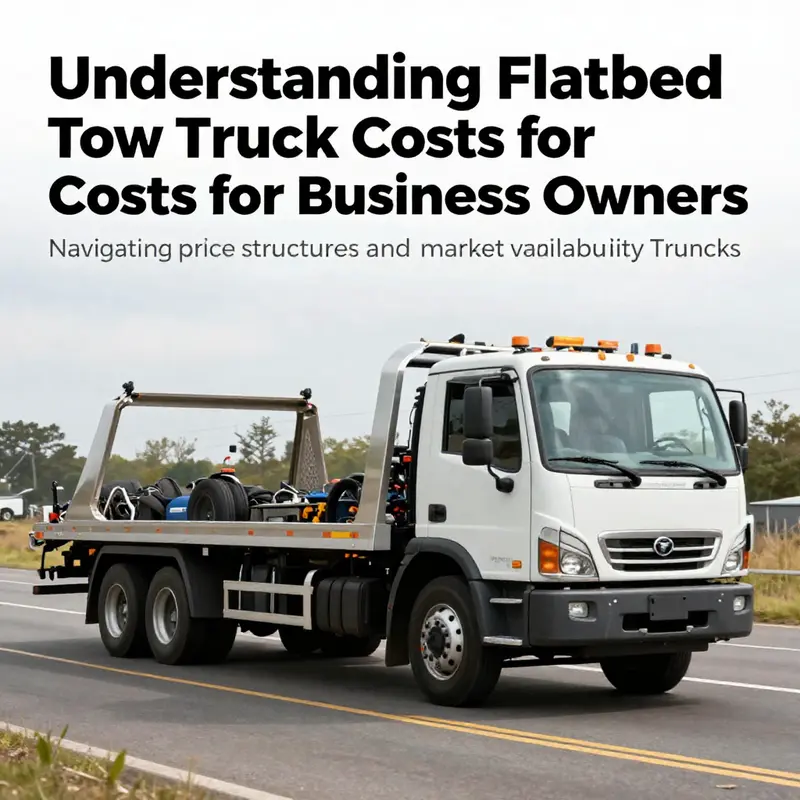
Acquiring a flatbed tow truck is a significant investment for business owners in logistics or towing services. Understanding how much these essential vehicles cost requires knowledge of various factors, such as capacity and features, which can greatly influence pricing. This guide offers a comprehensive overview of flatbed tow truck pricing structures and explores the market variability, helping owners make informed purchasing decisions. Each chapter breaks down the vital details and provides actionable insights to facilitate effective budgeting and procurement strategies.
Sizing Up the Price: How Capacity and Features Shape Flatbed Tow Truck Costs
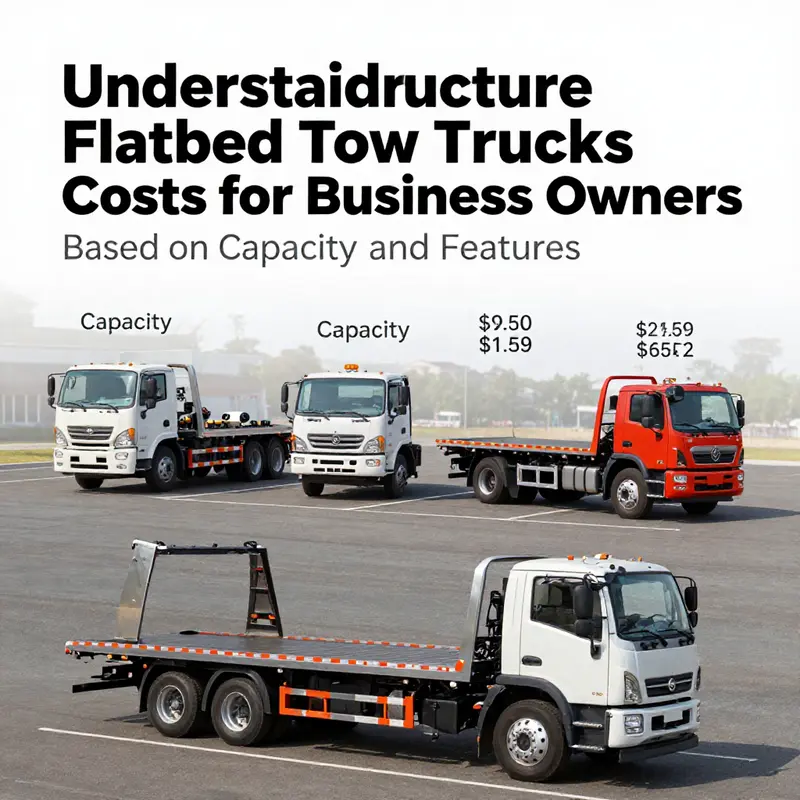
Pricing a flatbed tow truck is rarely a single-number story. It is a layered calculation built from capacity, the sophistication of the hydraulic and loading systems, build quality, and the specific tasks the machine is expected to perform. As supply chains shift and regional demand changes, buyers often discover that the sticker price only hints at the true cost of ownership. A careful understanding of capacity brackets and feature sets helps a buyer anticipate maintenance needs, uptime, and return on investment, rather than chasing the lowest upfront price alone. The market paints a spectrum in which small, urban-focused models sit beside mid-range rollback units and heavy-duty recovery machines. Across this spectrum, capacity acts as the primary price driver, but the secondary features and the long-term costs etched into the design often redefine what a truck is worth over its lifetime.
Smaller models, typically in the 3-ton to 5-ton range, establish a baseline for purchase price and ongoing expenses. These units are tailored to routine towing and short-distance recovery, especially in busy city environments where maneuverability and quick loading are paramount. The initial cost for a compact flatbed in this class tends to be lower than bigger machines, translating into appealing upfront economics for small fleets or single-operator shops. Yet the reduced price comes with trade-offs: loading precision and securing vehicles during recovery demand skilled operation, and any misstep can introduce wear on the undercarriage or the flatbed itself. Maintenance costs in this bracket are generally modest, but they accumulate if the unit is pressed into service beyond its intended daily workload.
On the other end of the capacity spectrum lie the larger 8-ton to 15-ton models. These are the machines designed for more demanding loads, including low-clearance vehicles, trucks with heavy debris, or multi-vehicle recoveries from areas where space is limited. Pricing for these units rises accordingly, not only because of the larger structural footprint but also due to the more complex hydraulic systems, longer slide beds, and more robust winching and stabilizing components. The added capacity brings clear advantages: safer and faster loading, reduced risk of undercarriage damage, and the ability to operate with a wider range of vehicle heights and wheelbases. For many operators, the higher upfront investment is offset by higher throughput, lower chance of mechanical stress, and the capability to bid on larger or more complex recovery jobs. Even so, heavier units demand increased maintenance attention and more specialized operator training to keep uptime high and fuel and parts costs predictable.
The features that sit alongside capacity often move prices in meaningful ways. A roll-back or slide-bed mechanism, for example, adds a layer of hydraulic sophistication that changes both the purchase price and the day-to-day operating economics. These mechanisms reduce the need for chains or heavy straps during positioning, which can lower the risk of vehicle damage and speed up the loading process. In practice, this translates to better safety margins and higher service versatility. Vehicles equipped with more advanced hydraulic controls, tighter tolerances on bed alignment, and enhanced stabilization systems typically command a premium. The premium reflects not only the component costs but also the engineering effort required to ensure sheet metal runs true under load, hydraulic cylinders hold position under vibration, and the system remains reliable across thousands of cycles.
Material quality and overall build also contribute meaningfully to price. Flatbeds built from high-strength steel and designed to endure tough daily use tend to sit at a higher price point, but they offer a longer lifespan with lower downtime, a crucial consideration for fleets that must maintain a tight service window. Durability translates into fewer unplanned breaks, fewer emergency repairs, and a more predictable maintenance schedule. The trade-off is straightforward: higher upfront cost for greater long-term reliability. Operators who plan to scale their business or expand into more demanding recovery work often find the better-performing, durable builds more economical over a five- to ten-year horizon, even if month-to-month cash flow appears more strained in the early years.
From a buyer’s perspective, the challenge is balancing upfront investment against long-term operational benefits. A lower-priced unit might appear attractive at first glance, especially for smaller outfits or new ventures. However, if the truck’s uptime is compromised by frequent minor failures, or if it cannot accommodate larger or more diverse recovery tasks, the fleet may face more frequent outsourcing or costly manual recoveries. Conversely, a higher-priced unit with robust hydraulics and higher-grade materials can reduce downtime, widen service capabilities, and attract a broader range of customers who require reliable roadside assistance, accident recovery, or block-clearing work. In short, the value proposition rests on life-cycle costs rather than the initial price alone.
Market data gathered across early and mid-2026 illustrate this tension with tangible ranges. Smaller 3-ton to 5-ton flatbeds commonly sit in the $22,500 to $28,500 range per unit, while mid-range 8-ton to 15-ton rollback models show a broader spread from roughly $15,500 to $29,000 for a set, depending on configuration and regional factors. Heavy-duty models with crane capabilities to assist in lifting and maneuvering heavy vehicles can command prices in the upper end of the spectrum, with some configurations approaching the high $30,000s in particular markets. A multipurpose flatbed with a robust, 4×2 chassis and an emphasis on versatility for varied recovery tasks may fall in the mid-to-upper $20,000s, again contingent on options and the level of factory-direct pricing that a supplier is willing to offer. When buyers look at factory-direct or bulk-order opportunities, the price-per-unit can dip further, sometimes starting in the mid-$20,000s for a minimal-but-capable setup when ordering multiple units. These numbers underscore a simple reality: the price you see is the landing price before negotiations, freight, any regional taxes, and the added costs of optional equipment or extended warranties.
The decision framework for buyers also includes an assessment of total cost of ownership. Higher-quality frames and hydraulic systems typically translate into longer service life and more consistent performance in high-demand scenarios. The reduced risk of undercarriage damage and smoother loading sequences diminishes the probability of incidental repairs that can erode profits in a busy towing operation. Training becomes a critical, recurring line item as capacity grows. With larger and more sophisticated flatbeds, operators must understand precise bed alignment, load securing procedures, and the safe sequencing of lifts. The investment in skilled staff, in turn, feeds back into reliability metrics and customer satisfaction, which are harder to quantify than price alone but equally decisive when a fleet competes for recurring contracts and steady demand.
Regional differences further shape the price picture. Transport costs, local labor rates, and the availability of skilled technicians can widen the price delta between neighboring markets. Buyers contemplating cross-border or cross-region acquisitions must account not just for the sticker price but for shipping, import duties, and after-sales support networks. In practice, a buyer who negotiates a package that includes spare parts and routine maintenance plans may extract more value over time, even if the upfront cost appears higher than a nearby alternative. This is where comparisons become more constructive than bare price checks: the best-value choice often emerges when fleets quantify uptime expectations, service responsiveness, and the ability to fulfill a broad spectrum of recovery needs.
For buyers seeking actionable guidance, it helps to view price as one data point in a broader decision model. A practical approach begins with a clear operational profile: the typical vehicle height and weight to be recovered, the urban or rural terrain, and the average distance of towing runs. With those variables in hand, a fleet can translate capacity needs into a target range and then layer on features that reduce risk and enhance versatility. The evaluation should also consider the cost of ownership over a typical service life, including repainting, frame inspections, hydraulic seals, and potential upgrades to meet evolving compliance standards. In this way, price becomes a conversation about purpose rather than a single number that might lock a buyer into a suboptimal fit. The conversation can be enriched by exploring regional options and local supplier networks. For example, many buyers consult local resources and reference pages to gauge availability in their area. A useful starting point for those in the United States is to explore local pages that compile nearby towing equipment options, such as those cataloged in regional service networks like tow-trucks in Houston, which can provide context on what a typical operator is purchasing and using in that market.
Along with capacity and feature sets, buyers should weigh the intangible advantages of newer mechanical designs. Modern hydraulic systems, improved bed synchronization, and smarter control interfaces reduce operator fatigue and error. Even small gains in ease of use can translate into quicker response times and a higher rate of successful recoveries, which, in turn, support a better bottom line. In a market where every extra second on a scene can matter, these marginal gains compound. Meanwhile, the decision to invest in a heavier chassis or more extensive corrosion protection may be justified in regions with harsher climates or longer duty cycles. In such contexts, upfront price differentials reflect the anticipated resilience of the equipment, and the long-term savings from fewer replacements can be substantial.
As buyers assemble their procurement strategy, the terms of sale can also influence the perceived value of a given truck. Factory-direct pricing, bulk-buy incentives, or bundled maintenance plans can shift the economic calculus, especially for fleets expanding from one or two units to a small fleet. When evaluating these offers, it pays to compare not only the upfront price but also the bundled protections against wear and downtime, the expected cadence of parts replacement, and the availability of responsive service in the operating region. These factors often determine whether a seemingly higher-priced unit ends up delivering lower total costs over the first five years of operation.
For readers seeking a broader frame of reference beyond the immediate market numbers, broader industry data and standards provide additional context for sizing the price against performance. Detailed specifications, load ratings, and performance curves help buyers project the true capability of each configuration, guarding against the trap of equating a higher capacity solely with higher price. The relationship between capacity and performance is nuanced: more capacity does not automatically equate to higher profits if the new unit sits idle for long periods or cannot be integrated smoothly into a fleet’s service mix. The optimal choice aligns capacity with demand, features with reliability, and price with long-term value rather than short-term optics.
From a practical standpoint, the purchasing decision sits at the intersection of engineering, economics, and service logistics. Buyers who approach the market with a clear sense of how much capacity they truly need, what features will deliver the greatest uptime, and how maintenance and training will be funded are most likely to secure a unit that supports steady growth. Current market snapshots show a healthy spread: lower upfront costs for smaller, simpler setups; mid-range units offering a broader suite of capabilities at moderate premium; and robust, feature-rich models that command the top-end prices but promise longer lifespans and greater versatility in recovery work. In the end, the price tag becomes a reflection of the work the truck is expected to do—and the certainty with which a fleet can promise dependable service to its customers.
External considerations, such as industry standards and best practices, remain important as well. For readers who want a broader technical lens on the subject, a comprehensive resource on specifications, hydraulics, and load ratings provides valuable context and comparison points for different models. See the external resource here: https://www.towtrucks.com/ .
Market Currents, Price Ranges, and Smart Choices: A Buyer’s Guide to Flatbed Tow Truck Prices
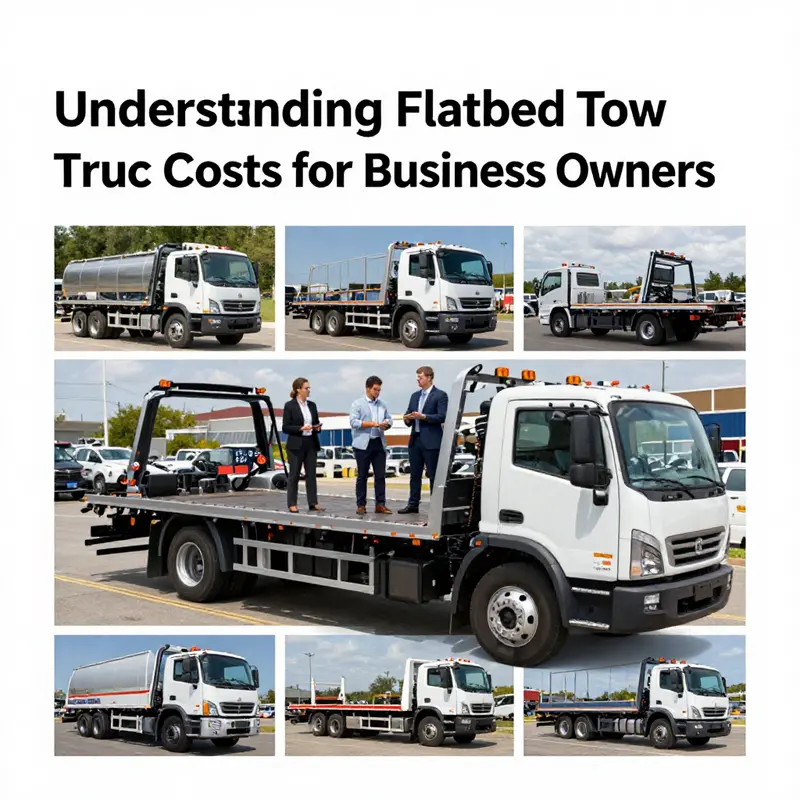
When buyers step into the market for a flatbed tow truck, they quickly discover that prices do not move in a single straight line. The economics behind these vehicles hinge on more than just the size of the bed. Capacity, year, condition, and the presence of specialized features all pull in different directions, creating a spectrum that stretches from lean-budget options to premium, feature-rich configurations. A compact, light-duty unit with a 3-ton lift might land in the low to mid-twenties of thousands of dollars, while a mid-range setup built to handle 8 to 15 tons can swing widely as low as the mid-teens to nearly thirty thousand per unit, depending on whether it is sold as a single vehicle or as part of a package. Large, heavy-duty or crane-equipped flatbeds with advanced recovery capabilities can push well above the thirty-thousand-dollar mark, sometimes nearing the mid-forty-thousands in markets with high demand and limited supply. These disparities aren’t arbitrary; they reflect the different roles these trucks are asked to play in fleets, roadside operations, and recovery assignments. In practical terms, this variability means buyers must go beyond sticker price to understand the total cost of ownership, including maintenance, spare parts, and the potential resale value of the unit later in its lifecycle.
New models sit at one end of the spectrum. A premium, brand-new unit with integrated flatbed and a capable winch—designed to deliver reliability under demanding conditions—will emphasize power, safety, and efficiency. It is designed to handle frequent, high-volume towing with minimal downtime, and its price often reflects that premium. On the other hand, pre-owned units can offer substantial value for operators who need functional capability without the latest refinements. A recently listed used unit in the market might be priced around the mid-$20,000s, presenting an attainable entry point for fleets that want to expand capacity quickly while smoothing the pinch of upfront capital expenditure. In both cases, the seller’s claimed condition, maintenance history, and the presence of critical components like the bed, winch, hydraulic system, and safety features will substantially influence perceived value and real-world performance.
The practical takeaway is that buyers should expect a broad price spread and should calibrate their expectations to their specific operational needs. A small-to-mid-capacity flatbed, typically in the 3- to 5-ton class, can be a cost-effective workhorse for a shop that handles a steady flow of light-to-medium recoveries and requires reliable performance without overinvesting. Such units frequently appear in the price range of roughly $22,500 to $28,500 per unit, depending on configuration and regional market dynamics. When the workload includes more demanding jobs or when the fleet must cover a wider service area, owners may look to mid-range options in the 8- to 15-ton class. These machines tend to have a broader price band, commonly from about $15,500 up to $29,000 per set or per unit, influenced by bed design, bed length, winch capacity, and whether additional recovery tools are included. And for fleets pursuing maximum capability and resilience in more challenging environments, heavy-duty or crane-equipped flatbeds can fall into a higher price echelon, with prices frequently rounding toward the upper end of the spectrum—often in the high-$30k range in certain regional markets.
Across regions, there are additional variables that shape price trajectories. Factory-direct offers and bulk-program pricing can create unusual discounts on larger purchases or long-term fleet refresh plans. In some cases, manufacturers will price a basic flatbed towing vehicle designed for specialized duties, such as roadblock removal or other recovery operations, starting at a figure in the low-to-mid $20k range when sold in bulk. This kind of pricing strategy rewards buyers who can commit to multiple units and who can leverage direct-from-manufacturer channels to secure the lowest possible per-unit costs. Buyers should treat these factory-direct offers as a potential lever in the negotiation, but they must also weigh the trade-offs in terms of lead times, warranty coverage, and post-sale service commitments. Given the global reach of the market, it is prudent to be aware that regional variations can also affect availability and price. Some regions may see tighter supply of certain capacities, which nudges prices upward, while others with greater competition among suppliers may produce more favorable terms for buyers.
For anyone weighing the decision, the distinction between new and pre-owned becomes central to the financial calculus. New models deliver the comfort of the latest safety features, longer expected lifespans, and the assurances that come with factory warranties. They also carry higher upfront costs and, in some markets, longer lead times before delivery. Pre-owned units, by contrast, offer a rapid path to increased capacity and fleet flexibility at a lower upfront price. However, they require careful due diligence: a history of maintenance, evidence of proper use, and a clear record of any major repairs. Vehicle-history reports, maintenance logs, and a professional inspection become indispensable tools in the buyer’s kit to mitigate risk and to calibrate expectations about the future maintenance cost curve. In this context, the market’s current dynamics suggest a balanced approach. For some fleets, a well-chosen pre-owned unit can provide a near-term capacity boost while a phased procurement plan brings in newer models over time, delivering an improved overall cost of ownership.
Another layer of complexity comes from the bed design and winch configuration, two features that directly affect performance and safety. A bed designed for flat transportation should align with the make and model year’s frame geometry, ensuring stability when loaded and during recovery operations. Winch capacity is a critical spec: a higher-capacity winch translates into the ability to recover larger disabled vehicles more safely and efficiently, but it also adds to the initial price and the potential maintenance footprint. The overall design—whether the bed integrates with a hydraulic lifting system, whether there are auxiliary recovery tools, and how the controls are laid out for operator ease—can sway both the user experience and long-term maintenance costs. In markets where fleets routinely handle heavy-duty recoveries, these features are not luxuries but essential safeguards for uptime and operational safety. Buyers who take the time to compare bed length, bed width, winch line length, and the type of mounting hardware will uncover meaningful differences in how each unit fits into daily workflows and maintenance budgets.
Given the breadth of options, buyers should anchor their process in clear, real-world criteria rather than chasing the most aggressive price tag. Start with operational needs: what capacity is truly needed, what is the typical payload or load to be transported, and what is the geographic footprint of operations. Then compare the total cost of ownership rather than the initial price alone. This includes anticipated maintenance costs, parts availability, service network strength, and the expected resale value when the unit is eventually retired or upgraded. It is also wise to verify the reliability and support network of the supplier, as a robust warranty and accessible service partner can significantly reduce downtime and lifecycle costs. To navigate these questions, many buyers consult detailed market data and current listings to benchmark what similar configurations are selling for in the present moment. A practical approach is to gather a few representative quotes, assess the difference in warranty terms, and consider whether any factory-direct terms or bulk-discount opportunities align with your purchasing timetable.
During the evaluation phase, it is helpful to consider a few concrete steps that align with best practices in fleet procurement. First, quantify the anticipated annual demand for recovery services and map that against the truck’s uptime and maintenance profile. Second, create a side-by-side comparison of at least three configurations that meet the core capacity requirements, focusing on bed design, winch capability, safety features, and operator ergonomics. Third, inspect any pre-owned unit thoroughly, request maintenance receipts, and run a vehicle history check to confirm the vehicle’s service cadence and any major repairs. Lastly, study the supply ecosystem—how long it typically takes to deliver, the availability of parts, and the level of after-sales support. These steps help ensure the chosen unit delivers reliable service and predictable operating costs across its lifespan.
For readers curious about practical examples and current listings, one useful path is to explore market listings through a major online marketplace that aggregates commercial-vehicle offerings. These platforms provide real-time data on what buyers are paying, what features accompany each unit, and how regional factors shape pricing. While price alone should not dictate the decision, it serves as a valuable reference point in a broader procurement strategy. If you want a tangible point of reference for fleet pricing and to see how a typical used unit compares with a new unit in your region, you can review recent listings on a prominent online marketplace dedicated to vehicle sales. This context helps translate the abstract ranges discussed above into concrete options for your budget and schedule.
Ultimately, the path to smart purchasing rests on aligning capability with cost, and on recognizing that market variability is a constant in heavy-duty equipment. The best buyers are those who combine a precise understanding of their operational needs with disciplined price benchmarking, supported by thorough inspections and a clear sense of total cost of ownership. In that frame, the numbers—whether in the low twenty-thousands for compact used units or higher for specialized, large-capacity configurations—become not a barrier, but a guide to making a choice that keeps the fleet productive and the budget under control. For operators who want to see how a fleet-management approach translates into decisions about flatbed tow trucks, a practical reference point is the way nearby peers balance purchase price with ongoing maintenance and service readiness. A real-world example from a service operation and its fleet supports the principle that price is merely one dimension of value, and that the most durable investments are those backed by clarity, process, and dependable after-sales support.
For readers who want to explore more about how a service operation manages its fleet and maintains readiness, you can learn about one practical reference point through a regional towing service’s online profile: Mikes Roadside Service. This example highlights how a fleet approach translates into daily procurement decisions and ongoing maintenance planning. While each market and region will produce different price signals, the core discipline remains the same: define needs, benchmark comprehensively, inspect carefully, and choose a configuration that integrates with your operational tempo while preserving long-term cost efficiency.
External resource: for a broader perspective on how buyers evaluate used versus new vehicles and build a cost-of-ownership framework, see a general buying guide from a leading consumer information resource at https://www.consumerreports.org/cars/buying-guide/how-to-buy-a-used-truck/ . This external reference provides foundational guidance that complements the market-specific price ranges discussed here and can help frame discussions with suppliers, financiers, and fleet managers seeking to optimize their flatbed tow-truck investments.
Final thoughts
Understanding the cost of flatbed tow trucks is essential for business owners aiming to expand or enhance their towing capabilities. By assessing pricing structures based on different capacities and carefully considering market variations, superimposing knowledge upon strategic purchase plans, businesses can achieve both efficiency and cost-effectiveness. Commitment to thorough research and negotiation will yield the best returns on this significant investment.