
As a business owner, understanding your truck’s towing capacity can be vital for operational efficiency and safety. Whether you’re transporting equipment, trailers, or goods, knowing the limits of your vehicle can prevent costly mistakes and ensure you meet your business demands. In this comprehensive guide, we will explore how to accurately assess your truck’s towing capacity, the factors that affect it, and best practices to follow for safe and effective towing. Each chapter is designed to equip you with the knowledge needed to make informed decisions regarding your towing needs.
Tow Power Decoded: Reading Your Truck’s True Towing Capacity
Understanding how much your truck can tow begins with recognizing that the number on a spec sheet is not a single, fixed decree. It is a ceiling carved from the whole drivetrain, chassis, and how the trailer interacts with the road. The most important frame of reference is the Gross Combined Weight Rating, GCWR, which is the maximum allowable weight of the tow vehicle plus the trailer when both are fully loaded. When you add the trailer’s own weight and its cargo, you begin to see why guessing is risky. The aim is not to chase a single weight for every situation, but to know the boundaries so you can plan for safe, legal, and durable operation on every trip, whether you’re moving gear to a job site or heading to a weekend campsite.
Two terms matter most in practice: towing capacity and payload capacity. Towing capacity refers to the maximum weight your truck can pull behind it, including the trailer and everything inside it. Payload capacity is the weight the truck can carry within the bed or cabin—people, tools, cargo, and the like. These numbers come from different parts of the vehicle’s specification, and they work in concert with each other. For example, a truck might be able to pull a heavy trailer, but if you load many passengers or heavy cargo into the cab, you’ll eat into the payload and could reduce the feasible tow load. The balance matters because exceeding payload or leveraging too much trailer weight against a modest truck can strain the suspension, brakes, and cooling system, diminishing performance and safety.
The key factors determining towing capacity are manifold, and they chain together to form a practical limit. The engine and transmission provide the power and the ability to sustain it. A more capable engine and a transmission designed for high torque transfer are crucial for towing heavier loads. The axle ratio plays a defining role as well: a higher ratio multiplies torque at the wheels, improving towing ability, but at the cost of fuel efficiency. The suspension system must be robust enough to keep the vehicle stable under load, preventing sag and ensuring predictable handling. A strong braking system and, in some configurations, added trailer brakes are essential for safe stopping with a loaded trailer behind you. Cooling systems, including a higher-capacity radiator and transmission cooler, keep temperatures in check during long pulls or hot days. Vehicle configuration also matters—whether the truck is rear-wheel drive or four-wheel drive, and whether it has a single or dual rear axle, can shift the practical towing ceiling by a meaningful amount.
Finding the exact capacity for a given setup means looking at the official sources rather than guessing. The owner’s manual is the most reliable guide, listing the exact figure that applies to your exact trim, engine, drivetrain, and options. A data plate located on the driver’s side door jamb provides the vehicle’s GVWR, GAWR, and the maximum towing capacity for that configuration. If you have access to the VIN, you can look up manufacturer specifications online or in trusted automotive databases to confirm the precise towing limit for your truck. These sources ensure that you account for the specific combination of features your truck carries, which might differ even within the same model year.
Safety and legality loom large in any towing plan. Exceeding your truck’s towing capacity is dangerous and, in many places, illegal. Overburdened brakes suffer longer stopping distances; tires overload and can fail; the structure of the frame and hitch may bend or fatigue prematurely; and stability becomes elusive, especially with gusts of wind or uneven road surfaces. A related consideration is weight distribution. Properly distributing weight between the tow vehicle and trailer is critical for stability. While preferences vary by load, a general principle is to aim for a balanced tongue weight that maintains predictable handling, with enough weight on the trailer’s tongue to keep it from wobbling or detaching from the hitch. A practical rule of thumb is to consider how the trailer weight sits on its own axle and how that translates into the downward force required at the hitch. In many cases, this means paying attention to how the trailer’s weight shifts as you load cargo forward or backward along the trailer bed.
To make sense of all this in a real-world setting, start with a clear plan. Begin by measuring both the trailer’s gross weight when loaded and the trailer’s tongue weight, ideally with a scale at the hitch or a commercial scale. Subtract the tongue weight from the trailer weight to estimate how much weight sits behind the hitch and how much load the vehicle will bear on its rear axle. Then compare these figures with your GCWR and your truck’s payload rating. If the math doesn’t add up, you either reduce the trailer’s loaded weight, reduce the payload inside the truck, or choose a smaller trailer. In practice, many trips hinge on practical limits that improve safety and control rather than pushing every ounce of capacity to the limit. And remember that aftermarket modifications—such as lift kits, larger tires, or altered suspension components—can influence the actual towing capacity, sometimes in ways that reduce reliability or increase wear on drivetrain components.
On the road, the ranges you’ll encounter are descriptive rather than prescriptive. Light-duty, or what many people call half-ton pickups, commonly have towing capacities in a broad band around 10,000 to 14,000 pounds, though specific models with robust packages can exceed this. Medium-duty, such as three-quarter-ton configurations, generally sit in the 12,000 to 18,000-pound range. Heavy-duty trucks—large, workhorse configurations—can span from roughly 15,000 pounds to well over 30,000 pounds depending on the exact setup and equipment. These figures illustrate the scale of what “tow power” means, but the real number for your truck will emerge only after you account for engine choice, gearing, suspension, braking, cooling, and the configuration of the drivetrain. Aftermarket adjustments or heavy towing packages can shift these ceilings upward, but they also bring changes to maintenance needs and operating costs.
As you plan, stay anchored to the official guidance and avoid extrapolating from hearsay or a single high-tromise claim. The most reliable source of your true towing capacity is your vehicle’s own documentation and the data plate on the door jamb. When in doubt, seek a professional assessment or a dealership consultation, so you can tailor your towing plan to the specific weight you intend to haul and the road conditions you expect to encounter. If you want practical planning and on-site checks, local towing services can guide you through the process and verify that your setup remains safe and compliant. For a local reference, you can explore nearby options such as towing services in Houston. This approach preserves the integrity of your truck and the safety of your cargo while helping you stay within the bounds of the law.
For further official guidance and data, manufacturers publish capacity guidelines and detailed specifications on their sites. This external reference provides a framework for understanding how capacity figures are constructed and how they apply to real-world applications: https://www.ford.com/trucks/
Tow Weight Truth: Reading the Numbers Behind Your Truck’s Towing Capacity
Towing a trailer is rarely a matter of a single number you can memorize. The capacity your truck can safely pull is a moving target, shaped by the vehicle itself and the conditions in which it operates. The truth is straightforward: the towing label in your manual or on the door jamb is a ceiling under ideal circumstances. Real roads rarely fit those perfect conditions, so understanding what that number actually represents helps you plan, load, and drive with confidence rather than guesswork. In practice, the question you should ask is not just how much the truck can pull, but under what conditions it can pull it and what you need to do to stay within safe limits. This perspective keeps you from underutilizing or overtaxing your truck and, more importantly, keeps you and others on the road safer.
The heart of the matter is that the manufacturer’s specified towing capacity is a carefully calculated figure. It reflects how the vehicle’s engine, transmission, frame, brakes, suspension, and cooling systems work together when everything is within designed tolerances. Those tolerances assume a certain payload in the truck, typical road grades, moderate ambient temperatures, and a properly matched trailer. When any of those variables shift—when you add weight to the trailer, climb a steep grade, or tow in extreme heat—the risk of overheating, lean weight distribution, or brake fade increases. This is why the official number should never be treated as a fixed target you can exceed with impunity. It is instead a limit that must be respected or adjusted for with a careful towing plan, appropriate equipment, and disciplined driving.
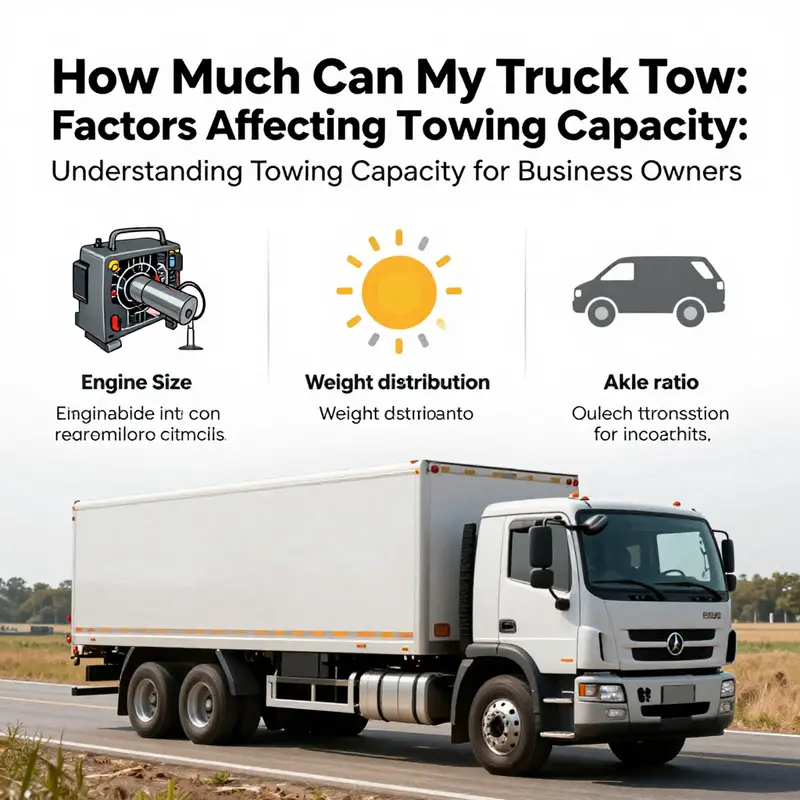
Several factors drive that limit, and they interact in ways that can surprise even experienced owners. First is the engine type and output. Larger, more robust engines—especially diesels or high-output gasoline mills—generate more torque and maintain pulling power as load increases. That extra torque is valuable when starting from a standstill with a heavy trailer or when climbing hills. The transmission matters too. Automated transmissions, with smooth torque management and optimized shift logic, generally perform better under heavy towing than manual or older designs. They help keep engine speed in the optimal range and prevent abrupt torque spikes that can stress the drivetrain. Then there is the drive system. All-wheel-drive or four-wheel-drive configurations handle weight distribution and cooling differently, which can influence how much you can safely tow, especially in challenging terrain or poor weather.
Beyond these core powertrain elements, the gearing that sits behind them—the axle ratio—plays a critical role. A higher rear-end gear ratio can improve towing performance by keeping the engine in a more favorable RPM range during highway pulls, but it often comes at the expense of higher engine revs and reduced fuel economy in everyday driving. The suspension and brakes also matter, because towing places extra demand on both. A worn suspension or tired brake system can compromise handling and stopping power long before the engine or transmission reaches a failure point. This is why a comprehensive inspection and maintenance routine matters as much as the sticker on the door.
Weight distribution is another central concept. The total combined weight—the truck plus the trailer and everything loaded on both—must stay within the GCWR, the gross combined weight rating. Exceeding GCWR is unsafe and illegal in many jurisdictions. Along with GCWR, the tongue weight—the downward force the trailer hitch places on the truck’s rear axle—usually falls in the 10 to 15 percent range of the trailer’s total weight. This ratio keeps the trailer tracking true and helps prevent trailer sway, but it also shifts more load to the rear axle. If the tongue weight is too light, you lose rear stability; if it’s too heavy, you reduce payload capacity and can overload the hitch or rear suspension. Route planning, weight distribution inside the trailer, and the choice of hitch all intersect with these numbers, shaping how much you can tow and how safely you can do it.
The actual condition of the truck matters too. A recent, well-maintained vehicle with a solid suspension and effective braking system will perform closer to its rated capacity than a similar model with worn components. Aftermarket modifications—lift kits, oversized tires, or other suspension alterations—often change aerodynamic drag, braking performance, and even cooling efficiency. These changes can erode or, in some cases, unintentionally augment perceived towing performance, but they almost always alter the official capacity and safety margins. This is why any modification should be evaluated against the manufacturer’s guidance and, ideally, in consultation with a dealer or a qualified mechanic familiar with towing dynamics.
To translate these ideas into practical planning, consider the three broad truck classifications that frame typical expectations. Light-duty trucks, common in half-ton configurations, commonly tow roughly from 10,000 to 14,000 pounds under ideal conditions. Medium-duty trucks, such as three-quarter-ton pickups, extend that range to about 12,000 to 18,000 pounds. Heavy-duty trucks, including large commercial options, span from 15,000 pounds up to well beyond 30,000 pounds depending on the model and configuration. These figures sketch a ballpark, not a guarantee, and they emphasize the variability you must manage in real life.
If you are planning a tow, the simplest, most reliable approach is to start with the manufacturer’s spec as the ceiling, then assess your actual trailer weight and hitch setup. Weigh the trailer and calculate tongue weight, then compare these numbers to the GCWR and axle capacity of your truck in its current configuration. Remember that passenger and cargo in the cab, fuel, and even the height of the truck can alter weight distribution. A trailer that weighs 7,000 pounds with 1,000 pounds of tongue weight is not the same load as a 7,000-pound trailer with 1,500 pounds of tongue weight if your rear axle is already near its limit. Plan for a margin of safety so you aren’t pushing the system to the edge during normal driving, and definitely avoid pushing it into unfavorable conditions such as steep grades or heavy stop-and-go traffic where braking performance becomes critical.
To connect planning with practical action, you can explore local expertise when needed. For practical guidance on managing towing logistics and getting reliable help when you need it, consider looking into Towing Services in Houston. Their services illustrate how professionals interpret weight, balance, and route planning for safe towing, especially in urban and mixed-terrain environments. Towing Services in Houston. This kind of resource can help you think through tow planning, safety checks, and contingency options that keep you compliant with weight limits while minimizing risk on the road.
The most important takeaway is that the numbers on the spec sheet are intended as boundaries, not targets. They encode a design compromise among power, control, and safety. Your job as a responsible truck owner is to translate those numbers into a concrete plan: confirm the exact capacity for your vehicle with your VIN-based documentation, weigh the load accurately, distribute weight properly, verify that your brakes and suspension are up to the task, and adjust speed, fuel use, and driving style to the job at hand. When in doubt, err on the side of caution and seek professional input. This disciplined approach honors the engineering that went into the truck and trailer, protects your investment, and helps everyone on the road share the load more safely.
For federal guidelines that shape towing safety standards and vehicle requirements, you can consult the U.S. Department of Transportation: https://www.transportation.gov.
Tow Truths: Reading Your Truck’s Real Capacity and Safely Handling Real-Life Hauls
The question of how much your truck can tow is less a single number and more a balance of weight, physics, and responsibility. Towing capacity is the product of many interacting systems working in concert: the engine, transmission, cooling, brakes, suspension, and the frame all play a role, but no one part can outweigh the others. To understand what you can safely pull, you must look at the vehicle’s gross combined weight rating, the hitch setup, and how the trailer and its cargo affect every pound behind the rear axle. This approach helps you move from a rough estimate to a precise, responsible plan for every trip you take.
Light-duty pickups—the ones widely used for everyday hauling and family trips—typically sit in a broad range, often quoted around 10,000 to 14,000 pounds of towing capacity. In practice, many drivers may see numbers near the upper end only when the truck is equipped with strong engines plus heavy-duty towing packages and an optimized drivetrain. Medium-duty models, built to handle heavier work, generally sit between 12,000 and 18,000 pounds. These figures are not guarantees for any individual truck; they are guidelines based on factory testing and standard configurations. Heavy-duty trucks—designed for serious enterprise and commercial tasks—can range from around 15,000 pounds to well over 30,000 pounds, depending on the exact model and the specialized configurations chosen by the buyer. Those numbers often reflect a baseline that assumes the vehicle is in good mechanical condition, unmodified in ways that would distort capacity, and towing with appropriate trailer equipment.
What many people miss is that the engine size or horsepower alone does not determine the practical towing limit. The real determinant is a composite rating called the GCWR, or gross combined weight rating. GCWR is the maximum total weight of the truck plus its fully loaded trailer when combined and standing still or in motion. It integrates the mass of the vehicle, the trailer, and the cargo, along with dynamic forces during braking and acceleration. Crossing that line is both unsafe and illegal in many places. To translate GCWR into actionable numbers, you need to know your truck’s unloaded curb weight and subtract it from the GCWR to estimate the maximum trailer weight you can tow legally and safely. Yet even that calculation is just a starting point, because you must also account for tongue weight—the downward force the trailer exerts on the hitch, typically 10 to 15 percent of the trailer’s total weight. If the tongue weight is mismanaged, the rear axle may bear too little load, or conversely, the front axle and steering could suffer from insufficient weight transfer. Both outcomes degrade handling, braking, and control.
When you plan a tow, the trailer’s design matters as much as the truck’s. A trailer with heavy tongue weight can push more load onto the truck’s rear suspension, potentially exaggerating sway or reducing traction. Conversely, a trailer with too little tongue weight can cause the tongue to ride high, leading to a disconnect between the tow vehicle and the trailer and diminishing steering feel. A properly matched setup usually relies on a weight distribution hitch and, in some cases, trailer brakes. The right combination of hitch type, suspension strength, and braking capacity helps keep the entire system within safe operating limits, ensuring stability on highways and safer stopping distances.
Another factor is the condition and configuration of the vehicle itself. Aftermarket modifications, such as lift kits or oversized tires, can shift weight distributions, alter braking responses, and affect towing capacity. Any alteration that changes a vehicle’s weight, aerodynamics, or brake heat characteristics must be considered when you assess safe towing. The manual and the manufacturer’s online resources are the most reliable guides, because they reflect the specific vehicle’s engineering design rather than a general assumption. That means pulling a trailer that closely matches the vehicle’s rating becomes more than a calculation; it becomes a verification exercise you perform before every trip.
Because the numbers in the real world are never static, many drivers turn to calculation tools that consolidate the relevant inputs: vehicle make and model, year, gross vehicle weight, hitch type, and trailer weight. These tools translate the official specifications into an actionable result, helping you decide whether a given load is within safe limits. The goal is to stay within manufacturer tolerances while preserving your truck’s warranty and, more importantly, your safety on the road. For someone new to towing, such a tool can offer a guided pathway—beginner mode walks you step by step through the essentials, while an expert mode delivers a concise, single-page calculator for more experienced drivers. No matter how you use it, the aim remains the same: avoid guesswork and stay within verified limits so that every journey ends with a safe return.
In practice, safe towing also means choosing the right local resources when you need to move heavy loads. If you are planning a complex tow or if you need professional support for heavy or unusual trailers, looking up nearby services can be a prudent step. For example, you can explore local towing services in your area to discuss options, equipment, and expertise that complement your own vehicle’s capabilities. This approach keeps you aligned with safety standards while ensuring you have support if a correction or additional equipment is required. For readers in larger urban centers, such as Houston or similar markets, there are local providers who can assist with licensing, permitting, and specialized tow setups. Tow planning should always include a contingency plan for weather, road conditions, and load adjustments, so you are prepared for the unexpected rather than scrambling when conditions change.
To summarize the practical mindset: start with your truck’s official specifications, verify them with the owner manual or the manufacturer’s locator services using your VIN, and add a margin of safety for real-world conditions. Consider the entire loading chain—trailer weight, cargo, hitch type, braking ability, suspension strength, and the potential impact of any modifications. If you need a quick, trustworthy calculator to translate those inputs into a clear safe range, rely on a weight safety calculator that adheres to manufacturer guidelines and warranty warnings. And where you may need help, remember that local towing professionals can offer guidance and support for complex or heavy towing tasks. By approaching towing with discipline and respect for the numbers, you protect your truck, your trailer, and everyone on the road.
For further reading and to explore a reliable, manufacturer-aligned approach to calculating safe towing capacity, you can consult a weight safety calculator hosted on the official site of an industry resource. https://www.rvtowcheck.com/
Internal link reference for local support: if you need guidance on nearby services, you can explore local options here: towing services in Houston.
Final thoughts
Understanding your truck’s towing capacity is crucial for maximizing efficiency in your business operations. By recognizing the factors that influence capacity and adhering to best practices for towing, you can ensure safer transportation of goods. The right knowledge allows you to optimize your vehicle’s performance, reduce risks, and enhance your operational capabilities. Make informed towing decisions that align with your business needs.