
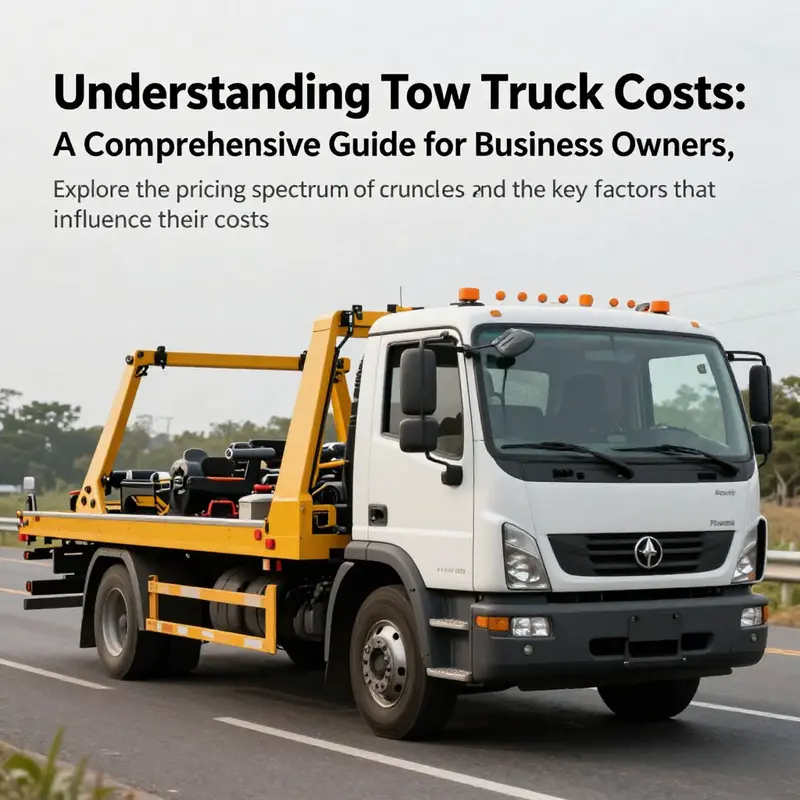
For business owners in the towing industry, understanding the costs associated with acquiring a tow truck is crucial for strategic planning and budgeting. Tow trucks serve a vital role in transporting vehicles, ranging from light-duty cars to heavy-duty machinery, and the diversity in their capabilities reflects in their prices. This article delves into a detailed cost analysis of different tow trucks, offering a breakdown that highlights key models and their price ranges. Additionally, we will explore various factors influencing tow truck pricing, enabling business owners to make informed purchasing decisions.
Tow Truck Price Tags: A Deep Dive into What Drives the Cost of Recovery Vehicles
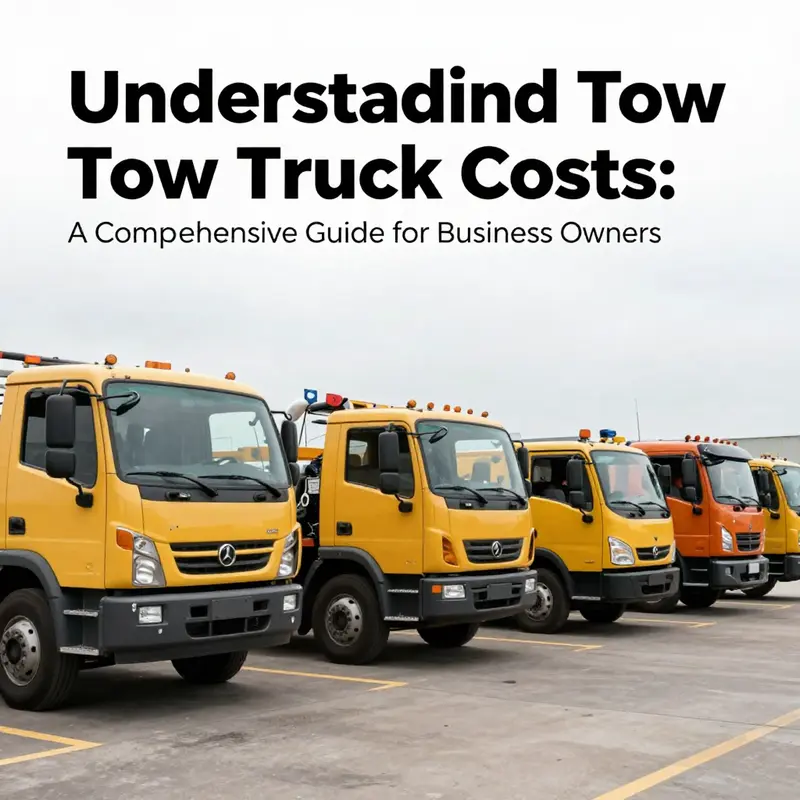
Prices for tow trucks do not sit still. They move with the scale of the vehicle, the sophistication of the recovery system, and the demands of the jobs they are asked to perform. If you’ve ever wondered how much you should expect to invest to bring vehicles home after an accident, or how a shop sizes its fleet to balance reliability with affordability, the answer lies in the interplay of type, capacity, and the features that turn a basic chassis into a dependable workhorse. The most common categories—conventional tow trucks, rotator units, and flatbeds—each occupy a different niche in the recovery ecosystem, and each commands its own price band that reflects the job roughness it is built to handle. As with any capital equipment, the sticker price tells only part of the story. The full financial picture includes maintenance, fuel, operator training, insurance, and the inevitable wear that comes with daily dispatches. When a business weighs one configuration against another, it is not simply about the initial outlay but about how that outlay translates into uptime, recovery speed, and fewer damaged vehicles during the tow. This is why a seemingly small difference in capacity or mechanism can cascade into meaningful long-term costs or savings.
Conventional tow trucks form the backbone of most fleets. They are designed with a built-in towing mechanism that integrates into the chassis, creating a sturdy, reliable platform for urban recoveries, repossessions, and routine roadside assistance. The economics of these machines are straightforward: they typically land in a mid-range price band, roughly between seventy-five thousand and one hundred fifty thousand dollars when purchased new. That range reflects a balance of durability, commonality of parts, and the ability to service and repair without waiting on specialized suppliers. For many operators, conventional rigs are a sensible starting point because they offer a robust combination of strength and maneuverability without the specialized complexities that come with more exotic gear. Yet even within this category, choices matter: the exact wheelbase, engine options, wheel-lift versus integrated booms, and the quality of the winch all contribute to the ultimate price tag and the maintenance costs that follow. A fleet that leans on urban recoveries may savor the ease of parts availability and technician familiarity that conventional models provide, but they also shoulder the ongoing costs of routine maintenance and periodic overhauls as the fleet accrues miles. The trade-off is clear: a lower upfront cost paired with predictable maintenance versus the flexibility to handle a broader range of incidents with a more expensive, more capable setup.
Rotator tow trucks, by contrast, sit at the high end of the spectrum and are purchased not for routine tow tasks but for demanding recoveries. The rotating boom is the centerpiece here, enabling the operator to reach, tilt, and lift vehicles from almost any position. In emergency response scenarios, that 360-degree reach and the extended boom can be a literal lifesaver, extracting trucks overturned on highway embankments or maneuvering long trailers from precarious spots. The price spread for rotators reflects this capability and its operational implications. A rotator-equipped unit commonly ranges from about one hundred fifty thousand dollars to three hundred thousand dollars, and potentially higher when configured with additional stabilization gear, longer booms, or specialized hydraulic systems. The advantages are tangible in the field, but so are the costs. Rotators require more extensive operator training to manage the boom safely in tight spaces, larger fuel footprints, and a bigger physical footprint on the lot. They also demand more frequent maintenance of hydraulic systems and electronic controls, which translates into higher total cost of ownership over the vehicle’s life. In a fleet that serves busy highways and accident scenes daily, the premium may pay for itself in quicker recoveries and fewer secondary damages, but for smaller operators or regions with fewer high-risk incidents, the math may not clear the hurdle.
Flatbed tow trucks occupy a different strategic niche. The hydraulic bed that tilts and slides to load a vehicle onto the platform is prized for its safety and versatility. AWD and low-clearance cars, as well as vehicles with delicate undercarriages, benefit from flatbed transport because the ground contact is minimized and the chance of wheel or undercarriage damage drops appreciably. Flatbeds are also favored in repossession work that demands careful loading or the avoidance of contact with certain vehicle features. Historically, flatbeds sit near conventional rigs in price, with used or well-equipped new models often landing in the same general range as conventional tow trucks. The appeal of flatbeds is not just the immediate loading advantage but also the lower maintenance burden they typically carry compared with rotators and some heavy hydraulics. For a shop prioritizing vehicle safety during recovery and long-term maintenance predictability, flatbeds offer a compelling value proposition, even if the sticker price occasionally edges toward the higher end of the conventional range depending on bed length, lift mechanisms, and chassis options. It is in this space that operators weigh the cost of a specialized loading bed against the potential for reduced vehicle damage and smoother, faster on-scene performance. In some markets, an ultra-basic flatbed option can appear at surprisingly low entry points, underscoring how diverse the market can be. These lower-cost platforms are usually lighter-duty and intended for smaller urban tasks, where the volume of calls justifies keeping a lighter, more maneuverable piece of equipment in service while accepting some capacity tradeoffs. Such options illustrate how even flatbed cost structures can bend toward affordability when the use case aligns with limited payloads and shorter service ranges.
Beyond the headline prices, the market also offers a spectrum of smaller, lighter-duty options that sit beneath the typical conventional tier. A deliberately simple, small flatbed chassis or a compact wrecker intended for urban corridors can be priced in the tens of thousands of dollars, with some models pitched around the mid-teens as an entry point. These options are not meant for the heavy demands of highways or industrial towing; they target tasks such as on-street vehicle recovery in dense neighborhoods, quick swaps for immobilized cars in traffic, or limited repossession work where sheer bulk and mass are less critical. The trade-off for affordability is clear: lower payload, shorter service life under demanding conditions, and a greater likelihood of more frequent maintenance. For a business considering whether to purchase new or explore the used market, these less-capital-intensive options serve as a reminder that cost does not end at the sticker price. Financing terms, warranty coverage, and after-sales support all color the true cost of ownership and the ability to keep the fleet in service when demand spikes.
While the numbers above sketch the broad landscape, the exact dollar figures for any given purchase depend on a cluster of details. Vehicle weight and towing capacity are obvious anchors, but the choice of boom type—rotator versus flatbed—will tilt the decision toward one configuration or another. Fuel efficiency and maintenance requirements operate in the background, quietly shaping ongoing expenses and downtime. Brand reputation and after-sales support can affect not only price but the speed with which repairs are completed and parts can be sourced. Financing options and warranty packages also influence the cash flow consequences of a buy, especially for smaller operations that rely on predictable monthly costs. In the end, the most important question is not “What is the lowest price I can accept?” but “What configuration will keep my fleet productive with the least downtime, while protecting the vehicles I tow and the people I serve?” This is why a careful assessment of use case, regional incident patterns, and maintenance readiness should accompany any price comparison.
For readers who want to situate these figures within a broader market context, it helps to compare current price ranges with real-time listings and industry summaries. If your plan is to expand a fleet or update one that has aged, you will likely find that new units in the conventional and flatbed categories sit in a familiar range, while rotators and heavy-duty wreckers command premiums that reflect their specialized capabilities. This nuance matters when budgeting for maintenance and replacement cycles, since a higher upfront investment can be offset by longer service life and more consistent performance when your operations rely on quick, damage-free recoveries. Conversely, a lean operation focusing on urban calls may find more value in a smaller, lighter platform, provided that its limitations align with the actual demand curve in its service area. The bottom line remains: understanding what a tow truck must do in practice helps determine how much should be invested now, and how much should be allocated for ongoing upkeep over the machine’s life.
If you want a concise reference that aligns with the broader industry discourse, explore the latest overview of new tow-truck prices from industry news sources, which aggregates current market options and price bands across conventional, rotator, and flatbed configurations. For a practical takeaway, consider how a hypothetical fleet would balance risk, uptime, and cost by selecting a mix of units that cover the spectrum of tasks most frequently encountered. In a typical mid-sized operation, that might mean a conventional unit for routine calls, a mid-range flatbed for safe handling of AWD vehicles, and a rotator only for peak demand or high-risk incidents—an allocation that mirrors the natural distribution of tasks observed in many urban fleets.
Internal link reference: For context on regional needs and fleet decisions, see the discussion of tow trucks in Houston.
External resource for broader industry pricing context: For deeper industry pricing context and current market overviews, see Tow Truck News: New Prices Overview.
Tow Truck Pricing Demystified: What It Costs, How It’s Calculated, and Why Rates Vary
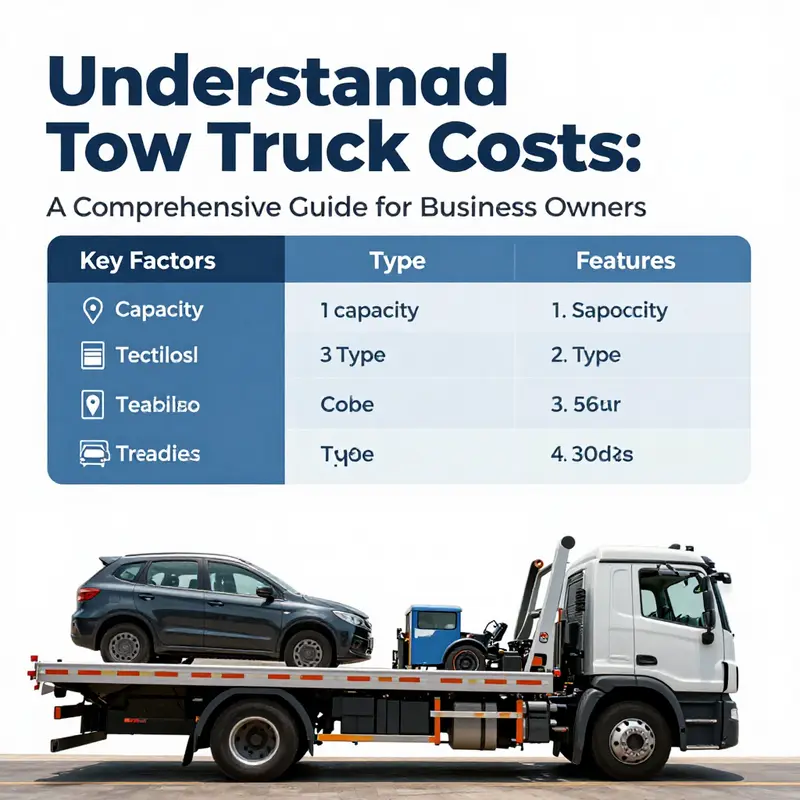
Tow truck pricing isn’t a single price but a mix of factors. The main drivers are the vehicle type and its weight, the distance moved, urgency, and location. A light-duty tow with a wheel-lift or basic flatbed is usually the least expensive option, while heavy-duty rotators or high-capacity flatbeds cost more due to capacity, maintenance, and operator requirements. The equipment also matters: a rotator adds reach and complexity, increasing the bill.
Beyond equipment, the vehicle itself affects the price: a compact sedan is quicker to tow than a luxury car, all-wheel-drive SUVs with low clearance, or commercial vehicles that require special handling. Distance adds a mileage line item, so short hops stay cheap and longer runs can grow quickly. Emergency or after-hours calls almost always carry a premium, as do urban areas with higher labor costs, stricter regulations, or police coordination.
Pricing usually breaks down into a basic access or base service fee, a first-mile charge, and a per-mile rate. Base fees often sit around $75 to $125; mileage commonly ranges from about $2 to $5 per mile, depending on the market. Local fleets may also add standby time, crew size, or special rigging as needed. In practice, two nearby calls can look different because of scene-specific factors like access, weather, or required recoveries. For buyers considering trucks, new equipment prices vary by type and capacity, with flatbeds and wheel-lifts at the lower end and rotators or high-capacity units at the top.
Final thoughts
In conclusion, understanding the cost of tow trucks is essential for any business owner in the towing industry. Prices can range widely based on type, size, and features, requiring careful consideration of your specific needs and budget. By evaluating the various models available and the factors that influence their pricing, you can make informed decisions that align with your operational strategies and financial models. The right tow truck can elevate your service offerings and enhance efficiency, so take the time to explore all your options.