
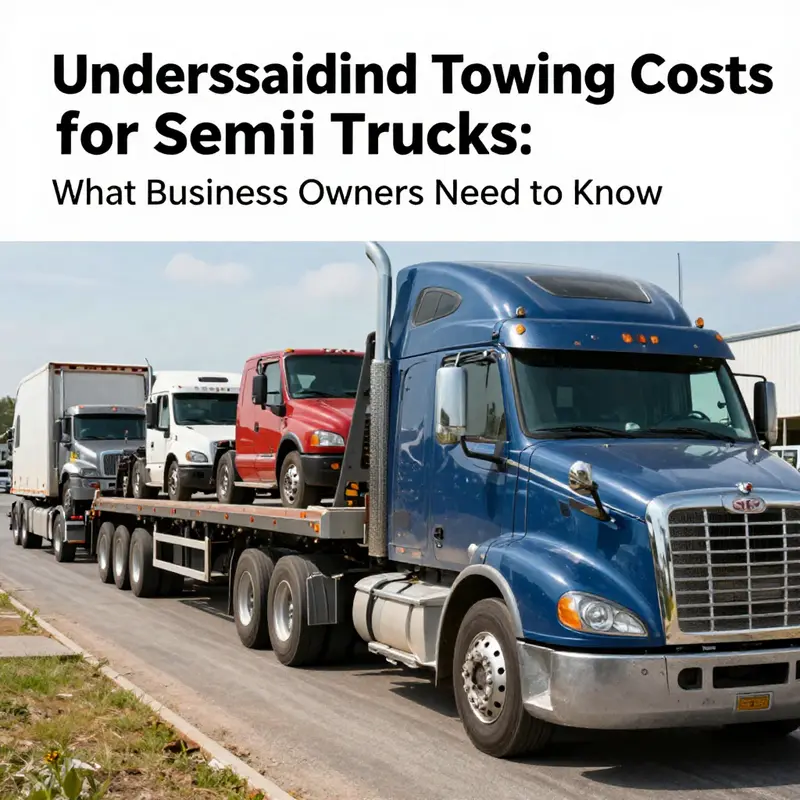
For business owners in the trucking industry, understanding towing costs for semi trucks is crucial for effective logistics management and budgeting. Whether dealing with emergencies or routine breakdowns, knowing the factors that contribute to towing expenses can help avoid unexpected financial burdens. This article will guide you through the key cost factors influencing towing semi trucks and provide insights into emergency towing costs, ensuring you’re well-prepared in any situation.
The Heavy-Duty Price: Understanding the Cost Factors Behind Towing a Semi Truck
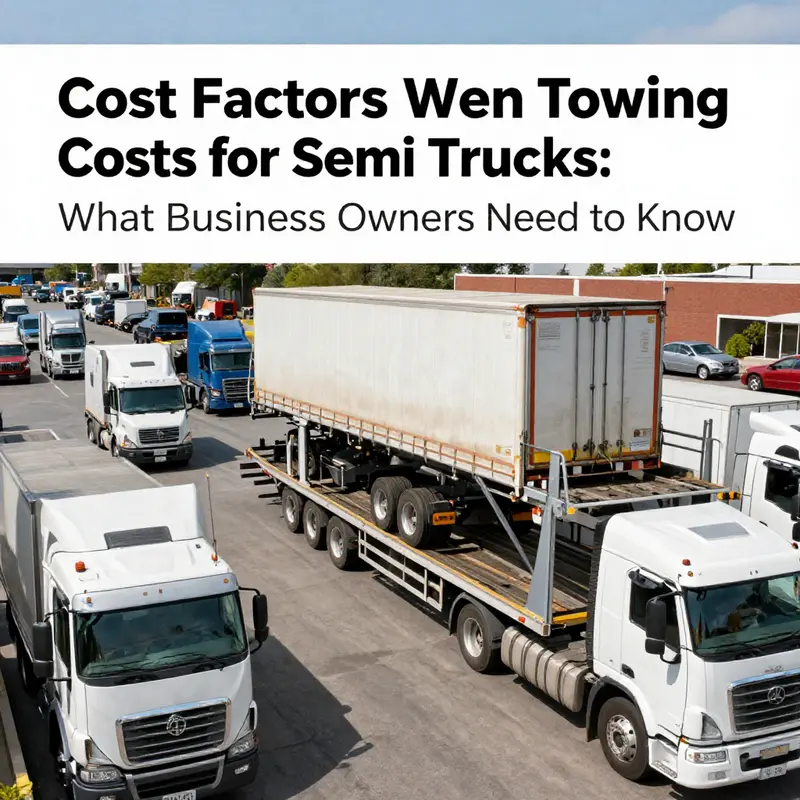
When a semi truck needs to be moved after a breakdown or an accident, the price to tow it becomes more than just a number on a receipt. It is a careful tally of multiple realities that come with hauling some of the largest, most complex vehicles on the road. Unlike a passenger car, a semi demands specialized equipment, trained operators, and the readiness to respond to a variety of situations. The final bill is rarely driven by a single factor; it is the result of how distance, timing, vehicle specifications, and recovery challenges converge in a single incident. Understanding these factors helps fleet managers and drivers anticipate expenses, avoid sticker shock, and make informed choices about the best path to a safe and efficient recovery.
Distance remains the most influential driver of cost. Towing a semi involves a base fee followed by a per-mile rate. This simple structure conceals the practical realities behind those numbers. A short tow in an urban setting may still require a substantial base commitment because the service must mobilize heavy-duty equipment and a specialized crew. A typical urban short tow can begin in the range of a few hundred dollars, with the exact amount dependent on the service area and the exact mobilization costs. As the distance increases, the per-mile component becomes the dominant factor. Long hauls frequently push the total well beyond the modest figures associated with light vehicles. A 50-mile haul, for instance, can easily surpass three hundred dollars, and longer trips—especially those spanning state lines or traversing remote regions—can quickly escalate to five hundred dollars or more. Rural contexts amplify this effect because gaps between repair facilities or impound lots can lengthen the viable routes and extend the time the crew must remain on site. The challenge is not just the miles themselves but also the time and resources required to manage those miles safely with a vehicle of such heft. The numbers reflect not only the distance traveled but the risk and responsibility that accompany moves of large commercial equipment.
Time of day and urgency are equally potent cost drivers. Emergencies do not respect the clock, and there is a premium attached to rapid response. Late-night requests, weekend calls, or holiday incidents compress the window in which a regular crew can operate, complicating scheduling and often requiring a premium to compensate for overtime, special staffing, and the readiness to mobilize despite less favorable conditions. The same logic applies to urban centers where demand is high and the cost of labor and fuel reflects the real-time pressures on service providers. When a truck blocks a lane or creates a safety hazard, the need for immediate action raises the price not just for the hours spent on the road but for the urgency in securing a safe, code-compliant recovery.
The identity of the vehicle itself—the semi truck’s type, weight, and configuration—also shapes the cost. A heavy-duty tractor with a full or partially loaded trailer demands a more capable tow truck, with higher horsepower hydraulics, more aggressive winches, and stronger stabilization systems. The heavier the vehicle or the more complex the load, the more fuel, labor, and equipment are required to complete the tow safely. Recovery from a difficult position, such as a truck in soft ground or a steep shoulder, compounds this effect because it may necessitate multi-point stabilization, controlled winch operations, or even a rotator boom to manage the rig without causing further damage. The type of semi matters as well. A dry van, a refrigerated trailer, or a flatbed each introduce unique challenges to the recovery process. A flatbed might simplify some scenarios by transporting the truck on a deck, while a refrigerated trailer adds complexity due to its temperature-sensitive cargo and equipment. Each configuration alters the tactical approach and, by extension, the price.
Beyond the vehicle’s own characteristics lies the complexity of the recovery itself. Simple flatbed towing, when the truck is stable and accessible, tends to be more economical than more intricate recoveries. In contrast, scenarios involving overturned rigs, disabled engines, or compromised trailers demand specialized tools and experienced crews. Multi-speed winches, stabilization struts, and rotator booms are common in difficult operations and carry corresponding costs in both time and expertise. These tools are not cosmetic extras; they are essential for preserving the vehicle’s integrity and ensuring the safety of the crew and surrounding motorists. The need for such equipment signals a higher level of service and a higher price, reflecting the specialized nature of heavy-duty recoveries.
Location and accessibility further sway pricing. Remote or rural locations often limit the number of service providers available, which can translate into higher bids to secure immediate help. Narrow country lanes, uneven terrain, or unstable ground around the scene can complicate the maneuvering required to position a tow truck and boarding ramps safely. When access is straightforward, crews can complete the maneuver more quickly, which can help contain costs. Yet even in urban areas, the local economic environment plays a role. Detour routes, traffic congestion, and higher operating costs in dense metropolitan regions can push hourly rates upward, especially when crews must navigate tightly controlled work zones or coordinate with municipal authorities.
Specialized equipment costs also factor into the final price. Industry observations point to the use of advanced tow trucks, sometimes described as rotator-type units or heavy 50-ton wreckers, designed to handle large commercial vehicles. The ownership and operation of such equipment come with high upfront costs and ongoing maintenance. A single heavy-duty wrecker can represent a significant capital investment, and experienced operators for these machines command premium wages. All of these factors contribute to higher hourly rates and service charges, particularly for operators who prioritize safety, training, and risk management in every recovery. For fleet managers, this reality underscores the value of selecting a provider who combines capability with reliability, since a well-matched operator can complete the job efficiently and reduce the risk of further damage or delays.
Putting all these elements together yields a practical picture of typical pricing while respecting regional variation. A reasonable starting point for many urban short tows is somewhere in the range of two hundred to three hundred dollars. This reflects the base crew call, mobilization, and the fundamental overhead of equipment and labor. As the tow extends beyond a short distance, the cost can climb into five hundred dollars or more, especially if the route involves long miles, complex recovery, or remote destinations. Emergency tows—those performed outside regular hours with urgent timelines—are often quoted with a premium that can add a noticeable percentage to the overall bill. The final figure depends on the precise combination of distance, timing, vehicle configuration, and recovery complexity, which is why most providers insist on delivering a detailed estimate after assessing the truck’s make and model, weight, and the planned destination.
From the perspective of fleet management, these numbers highlight the practical approach to budgeting for tow events. The best practice is to secure a detailed estimate before service begins, outlining the base fee, per-mile rate, any after-hours charges, and potential add-ons tied to the complexity of the recovery. The make and model of the truck, its payload weight, and the destination location should be clearly communicated to avoid surprises. A reliable tow operator will also disclose factors such as expected labor hours, potential additional charges for hauling a trailer, or fees related to special handling requirements for damaged rigs. This upfront clarity not only supports accurate budgeting but also reduces dispute risk when the final invoice is issued.
For readers seeking a practical, real-world snapshot of service options and price transparency, consider the operational realities faced by a local provider. A concise overview of routine service levels—ranging from basic to more comprehensive heavy-duty recoveries—illustrates how the same factors play out in daily practice. In many cases, customers discover that the most cost-effective choice is to align the recovery approach with the truck’s current condition and the intended next step. If a move is needed solely to clear a roadway, a basic tow might suffice. If the plan is to transport the semi to a specific facility for repairs or inspection, a more robust solution may be warranted. In any case, the guiding principle remains: demand a detailed, itemized estimate before any commitment is made. For additional context and practical insights on service options, readers can turn to mikes-towing to explore how a local provider presents its offerings and pricing structures. This kind of real-world example helps demystify the numbers and shows how the theory translates into a tangible service decision.
At the end of the day, understanding the cost factors behind towing a semi truck equips fleet operators and drivers to evaluate proposals more accurately and to plan for contingencies. The price is not simply a transaction; it is the result of aligning safety, efficiency, and reliability with the realities of the road. While the market can vary by region and by provider, the governing principles remain consistent: distance and urgency drive the base and per-mile charges, vehicle weight and configuration dictate the necessary equipment and labor, and recovery complexity along with access constraints add layers of time and risk that must be priced into the final quote. By recognizing these elements, stakeholders can navigate the process with confidence, make informed decisions, and minimize downtime for critical freight operations.
External reference for deeper context on the heavy-duty towing landscape can be found here: https://www.truckinginfo.com/truck-towing-costs/.
When the Road Breaks: Navigating Emergency Towing Costs for Semi Trucks
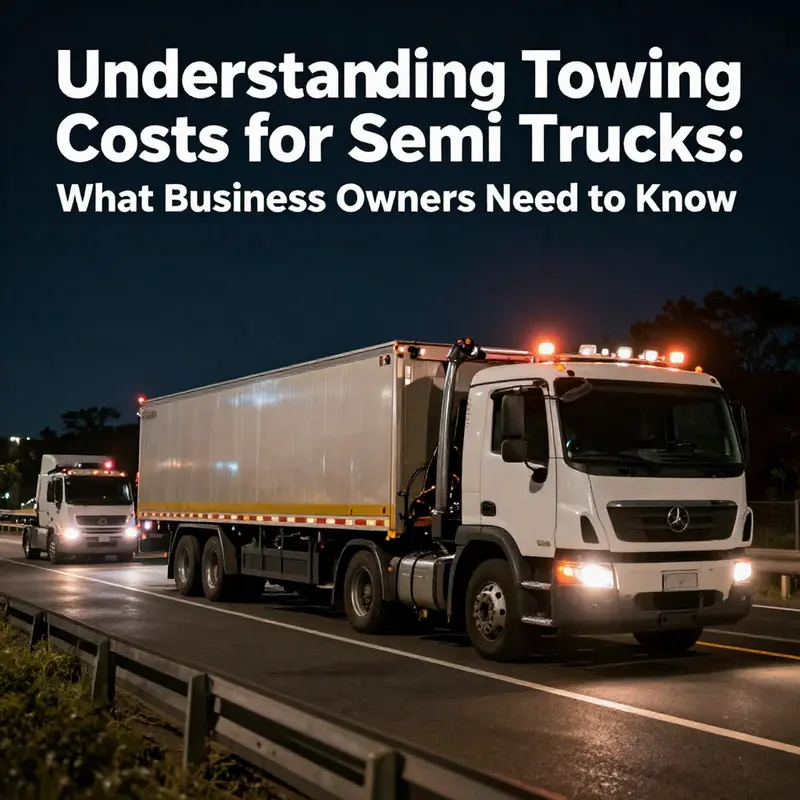
Emergency towing of heavy trucks is complex and costly, and the price reflects the challenge of moving a 50 ton rig rather than a consumer car. A tow is not a single action but a sequence of steps including call out, on site assessment, winching, stabilization, and transport to a safe destination. Distance matters most, with base call out fees often in a few hundred dollars and per mile transport charges typically in the range of several dollars per mile. After hours and in busy urban corridors the costs rise due to labor, traffic management, and prioritization. The weight and type of the vehicle require specialized equipment such as heavy duty wreckers and multi speed winches, which adds to the base price. If cargo is hazardous or if the load is shifting or if the rig is immobilized in an awkward position the operation may require multiple vehicles and additional crew, pushing the bill higher. Transparent estimates ahead of time help fleets avoid sticker shock, so insist on a written breakdown including base call out, per mile charges, any surcharges for urgent service, and any specialty handling. Planning and pre approval with a trusted provider can cushion the financial impact by setting expectations for typical route costs and possible contingencies. Finally regulatory and safety requirements matter because licensed operators with proper equipment reduce the risk of additional penalties and expensive delays after the tow. This chapter emphasizes practical steps to limit surprise costs while preserving safety and service continuity for fleet operations.
Final thoughts
Understanding the costs involved in towing semi trucks—whether through standard procedures or emergencies—is vital for business owners. By grasping the various factors that contribute to these costs, you can make informed decisions that will benefit your business in the long run. Regularly reviewing these insights ensures preparedness for any circumstances that may arise, ultimately supporting your mission to maintain efficient operations.