
Understanding how much a 3/4-ton truck can tow is essential for business owners who rely on such vehicles for hauling equipment, supplies, or trailers. With a towing capacity that typically ranges from 7,500 to 10,000 pounds, these trucks are a versatile solution for light to moderate tasks. However, knowing the specifics of towing capacity, the factors that influence it, and the guidelines provided by manufacturers can help business owners make informed decisions. This article will delve into these areas, providing a comprehensive look at how much a 3/4-ton truck can tow and the variables that impact its performance.
Tow Power Unveiled: How Much a 3/4-Ton Truck Can Really Tow
When you talk about the capabilities of a 3/4-ton truck, you’re really looking at a balance between factory ratings and real-world use. These pickups pull more than lighter cars, but the exact limit depends on configuration and how you load the vehicle. In practice, the typical 3/4-ton pickup handles light to moderate hauling with confidence, such as towing campers, boat trailers, or sizeable utility trailers. The commonly cited range of seven thousand five hundred to ten thousand pounds serves as a practical baseline for many full-size 3/4-ton pickups. This is the band where most owners operate with a well-installed tow package and a trailer whose weight and balance permit predictable handling. The precise number can differ from one model year to the next, and even within the same weight class, depending on options and equipment such as an upgraded hitch, engine cooling, and towing package.
Several factors drive that towing capacity beyond a single number. Engine power and torque are foundational, but they do not stand alone. The transmission’s capacity, the presence of a heavy-duty cooling system, and the strength of the drivetrain all play essential roles. A solidly engineered frame and reliable suspension keep the truck stable under load, while the braking system and wheel setup help manage a heavy trailer’s momentum on grades and during deceleration. Even the rear axle ratio and the availability of four-wheel drive influence how confidently a truck can reach and sustain higher towing loads. A properly configured hitch, weight-distributing hitch, and an integrated trailer brake controller can make the difference between a smooth, predictable pull and a tense, uncertain journey. In other words, you do not simply add trailer weight to a rating; you choreograph a combination of power, cooling, braking, and suspension that supports safe, stable movement.
Beyond theory, practical use cases for a 3/4-ton truck illuminate why these ratings exist. Contractors and outdoor enthusiasts rely on this class to move larger equipment, tow heavy-duty trailers, or transport gear to remote sites where a lighter vehicle would struggle. The appeal lies in a combination of robust torque, substantial payload capacity, and the assurance that a factory-built chassis and drivetrain have been engineered to handle the stress. Yet even with a strong baseline, safety and performance hinge on disciplined loading and maintenance. Keeping the trailer tongue weight within recommended ranges, using a weight-distributing hitch when appropriate, and ensuring the trailer brakes are functional all contribute to a stable pull. Tire condition, correct inflation, and regular cooling system checks become routine responsibilities when towing near the upper end of the capacity.
For anyone planning to tow with a 3/4-ton truck, it is essential to reconcile published ratings with real-world constraints. Factors such as cargo inside the truck, passengers, fuel, and accessory equipment reduce the available capacity for a trailer. Understanding that dynamic interaction between the truck and trailer leads to safer decisions and more reliable performance on longer trips or challenging terrain. If you need practical guidance or hands-on support while towing, professional services exist to assist with roadside concerns, recovery, or on-site advice. For example, you can turn to a trusted roadside partner when the road presents unfamiliar hills or technical difficulties that demand experience and the right equipment. Mike’s Roadside Service offers exposure to such scenarios and can provide timely help in moments of need, reinforcing the idea that towing is as much about preparation and support as it is about raw power.
Ultimately, the central message remains consistent: a 3/4-ton pickup sits in a powerful, versatile niche between lighter work trucks and heavy-duty haulers. Its true capacity rests not on a single label but on a carefully configured system designed to deliver dependable performance across a range of trailers and tasks. The exact number you can tow will hinge on the truck’s specific build, the trailer’s weight distribution, and the conditions in which you operate. Always verify the manufacturer’s official specs for your model and year, and approach towing with the mindset that safe, controlled operation—paired with proper equipment and maintenance—extends both equipment life and peace of mind. For further learning about overarching vehicle safety and towing considerations, see resources from the National Highway Traffic Safety Administration. NHTSA.
Pulling Power Demystified: Real-World Towing with a 3/4-Ton Pickup
When people ask how much a 3/4-ton pickup can tow, the quick answer is often a broad range—roughly 7,500 to 10,000 pounds (3,400–4,500 kg). That spread reflects the class’s purpose: it’s built for light to moderate hauling, not extreme heavy-lift work. In everyday terms, these trucks handle campers, boat trailers, and mid-size utility trailers with confidence, provided you stay within the limits and respect the setup.
Yet the actual towing reliability isn’t just a sticker on the door. The precise capacity depends on several moving parts: the exact model and how it’s configured, the weight you carry inside the cab and in the bed, the engine and transmission pairing, and whether you have a proper heavy-duty hitch and cooling for the trailer. Most manufacturers publish a towing range for the base model, but the full truth emerges only when you account for all variables in your specific build.
Truck configuration and model: two trucks in the same weight class can feel worlds apart. One might have a heavier-duty frame, a higher axle ratio, and a more capable transmission; another might be a lighter configuration designed for daily driving with a modest towing spec. The distance between these configurations matters because torque, gearing, and stability controls all shape how much you can bench-press behind the hitch.
Payload capacity becomes part of the math. The combined load—the trailer plus the vehicle’s passengers and cargo—must respect the Gross Combined Vehicle Weight Rating (GCVWR). If you pack the cab with people and tools, you reduce the available headroom for the towed load. Exceeding GCVWR doesn’t just sag the suspension; it undermines braking, steering feel, and overall control.
Engine and transmission: a robust torque curve and a transmission designed for towing are essential. In practice, a more powerful engine paired with a towing-tuned transmission and a suitable axle ratio provides steadier acceleration and safer hill-climbing performance. The goal isn’t raw horsepower alone but consistent pulling power that doesn’t heat up or shift unexpectedly under load.
Suspension, brakes, and electronic aids: heavy-duty springs or aftermarket components can help the rear end stay planted when a trailer is connected. Braking performance on a tow depends on trailer brakes, the vehicle’s brake system, and sometimes trailer sway control. A towing package—often including enhanced cooling, a stouter hitch, and sway mitigation—can improve both safety and reliability, especially on longer pulls or when negotiating grades.
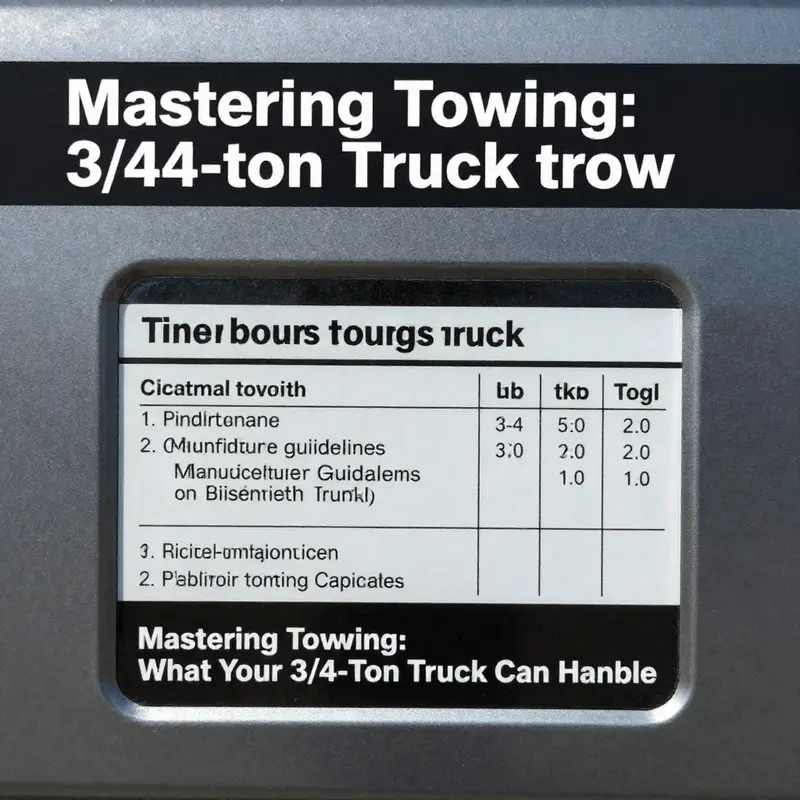
Practical planning matters. For example, a mid-sized travel trailer might hover around 4,000 to 6,000 pounds when loaded; a small boat trailer could sit near 2,500 to 5,000 pounds depending on the craft and gear; a compact utility trailer might be well within the lower end of the range. The key is to add the trailer’s gross weight to the vehicle’s payload and ensure the total stays within the GCVWR. Always check the data plate on the driver’s door jamb for the exact limits configured for your vehicle.
Safety comes from respect for margins. Many drivers use a conservative buffer—keeping actual towed weight at 70–90% of the published maximum, and watching temperature gauges, cooling fan activity, and brake heat on long hills. It isn’t about the bragging rights of exact numbers; it’s about predictable performance and safe stops when you need to pull the trailer to a halt or maneuver in traffic.
Locally, you can explore practical towing guidance with a quick reference to nearby services that help with setup and safety. For example, see towing services in Houston for informed considerations about hitch selection, weight distribution, and tuning for road conditions.
External reference: For an example of official specifications, you can review the manufacturer’s published data here: https://www.ford.com/trucks/f-250-super-duty/specs/.
null
null
Final thoughts
In conclusion, knowing how much a 3/4-ton truck can tow is vital for business owners looking to optimize their hauling needs. With standard towing capacities ranging from 7,500 to 10,000 pounds, understanding the various factors that influence this capacity—such as specific truck models, engine types, and manufacturer guidelines—is essential for ensuring you select the right vehicle and configuration for your needs. This knowledge not only helps in complying with safety standards but also contributes to efficient business operations. Make informed decisions to maximize your truck’s potential.