
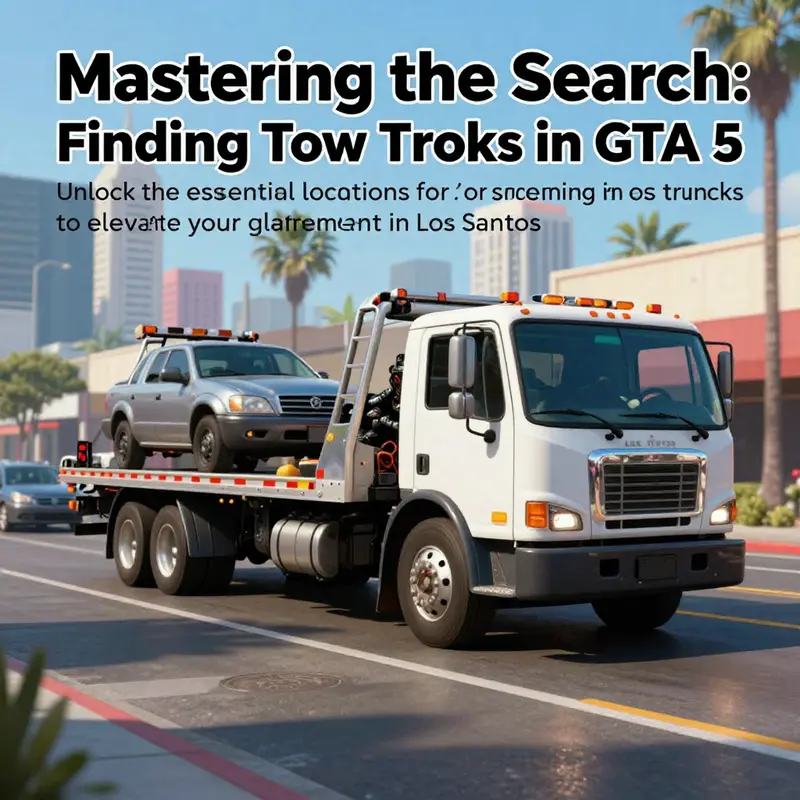
In the bustling streets of Los Santos, players hunting for tow trucks can benefit immensely by knowing the right locations. Businesses, whether they deal with vehicle servicing or emergencies, can leverage these insights to enhance their operational strategies in GTA 5. This guide delves into two key areas: Industrial Zones and Highways alongside Police Stations—both crucial for finding tow trucks. By understanding these locations, players can efficiently manage vehicle recovery efforts, making their gameplay experience smoother and more rewarding.
Industrial Corridors and the Wrench-Wielding Fleet: Finding Tow Trucks Across GTA 5
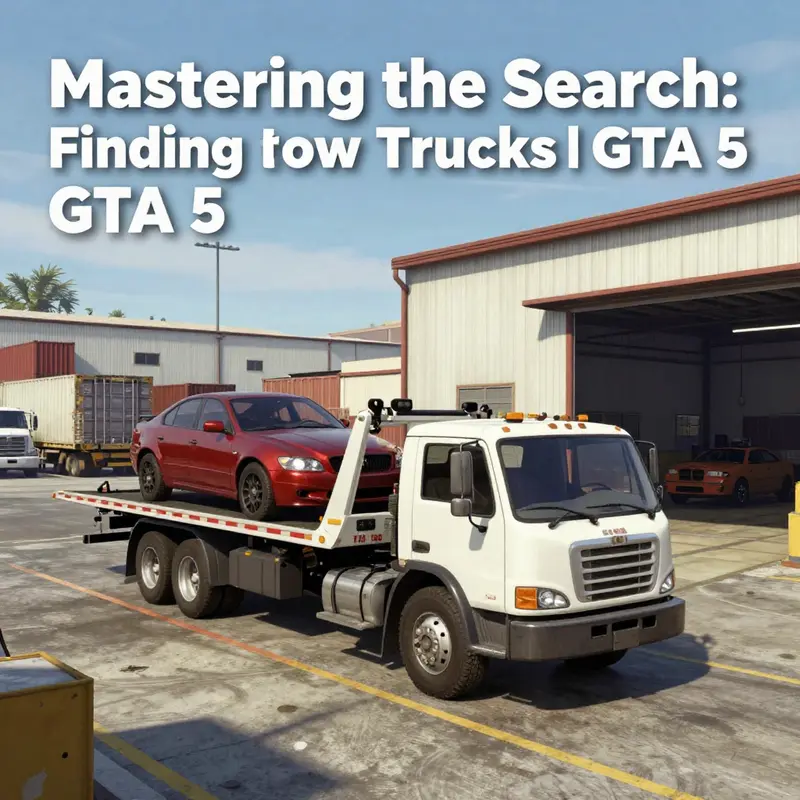
The city of Los Santos hums with the same rhythm as a busy port town: trucks rolling in and out, cranes clanking, drivers barking over radios, and a fleet of service vehicles that keep the gears turning. Among the cast of characters you meet in the traffic-woven lanes, tow trucks hold a special place. They are not simply transportation; they are the mobile links between breakdowns, recoveries, and the steady pulse of commerce that keeps the city—and the players who inhabit it—moving forward. In GTA 5, the places that make tow trucks most legible to the player are the industrial zones. These are the nerve centers of logistics, where cargo moves from warehouses and docks into distribution networks and where the tow trucks arrive, deploy their winches, and quietly remind you that in a world built on wheels, even the recoveries have their own choreography.
The central idea is straightforward: industrial zones concentrate traffic, maintenance, and the kind of roadside incidents that require a tow. The warehouses, freight yards, and factories do not exist in isolation; they form a complex ecosystem that mirrors a real city’s supply chain. Vehicles break down on the approach to a port, a dock, or a loading bay; trucks must be retrieved, repaired, or redirected. Tow trucks, therefore, are most visible where this traffic converges—the gateways to the economic lifeblood of the map. In Los Santos, that convergence point sits in the southern stretches of Cypress Flats, where warehouses crowd the horizon and the soundscape includes droning diesel engines and the clatter of pallets. Here, tow trucks often appear on the main arteries that feed the industrial sector or they lurk near maintenance facilities where disabled haulers are pulled off to be patched up and moved along the chain. The pattern is not random; it follows a logic of throughput, a city-scale micro-economy where time of day is a practical variable. The daylight hours bring the most movement, and with it a higher likelihood that you will see a tow truck wheeling past with a broken-down vehicle in tow or paused at a loading dock where a crane shifts a container into place.
If you walk the map with a keen eye for the logistics silhouette, you start to notice specific clusters that reliably host tow trucks. Cypress Flats stands out as a primary node. The area’s density of warehouses and freight yards creates a perpetual flow of commercial traffic, which in turn invites the presence of tow trucks. They can be found along the broader industrial corridors that thread through the district—on arterial roads that bisect the yards, and in the shadow of large maintenance facilities where the service fleets are kept ready for the next call. You might catch them on the move, heavy-duty chassis vibrating with the cadence of the city, or parked at a gate, ready to slip into service once the next vehicle comes to a halt on the adjacent street.
But Cypress Flats is only part of the story. The Elysian Fields region and the Port of Los Santos amplify the pattern in a way that feels almost cinematic. The port area, characterized by its docks, shipping terminals, and the heavy presence of cargo handling equipment, becomes a natural harbor for tow trucks. They serve a practical function here—managing cargo vehicles, clearing the lanes after an incident, or transporting a stranded truck away from the terminal so that operations can resume with minimal delay. The sea-salted breeze, the chain clang of container hooks, and the steady rhythm of forklifts create a backdrop where tow trucks move with a steady purpose, their presence signaling that even at the edge of the map, the infrastructure of motion must be kept intact.
Downtown Los Santos, while not as relentlessly industrial as Cypress Flats or the port area, still hosts pockets of tow truck activity near freight hubs and large construction sites. The density of activity in the urban core means smaller, more agile tow trucks or smaller-service equivalents may appear intermittently as part of a broader traffic management picture. The downtown scene underscores a simple truth: tow trucks in GTA 5 are not merely the vehicles that appear when a car breaks down; they are a signaling system, a piece of the city’s logistics orchestra that reveals where the city’s flow can slow or accelerate depending on the demands of the day.
Beyond the concrete geography, the hours themselves shape the availability of tow trucks. They are most often observed during the daytime when traffic is heaviest and incidents statistically more likely. The Palomino Freeway and Senora Freeway—two major arteries feeding the industrial belt and the port corridor—become invisible maps that glow with tow truck activity during daylight. If you are intent on encountering a tow truck quickly, moving through these zones in the late morning or early afternoon increases your chances. The same holds true for the entry points to the industrial complex—near the maintenance yards where heavy-duty fleet vehicles are kept ready for assignments, the lots outside police precincts, or the impound lots that function as temporary holding cells for vehicles that have failed a run to the curb and require a recovery operation. The city’s pulse becomes, in effect, the tow truck’s tempo, and reading that tempo gives you a practical advantage whenever you need to observe or acquire one of these working machines.
The search strategy, then, becomes almost a meditation on the city’s geography. Move between Cypress Flats and the Port of Los Santos, tracing the routes that connect docks to distribution centers and then to the arterial highways that carry the weight of commerce. Watch for tow trucks alongside the narrower lanes that feed freight yards or parked near the security gates of maintenance facilities where the fleet is kept, ready to roll at the first sign of a halt in the movement chain. In the daytime, you will catch glimpses of them performing routine recoveries—pulling an overloaded van out of a bad lane, assisting a broken-down hauler that blocked a critical ramp, or returning with a battered vehicle in tow after a minor collision. The big idea is that these trucks are where the logistics of the city become visible, the functional skeleton of Los Santos visible to any player who takes the time to look.
For players who want more than casual observation, there are practical hooks to fast-track access to a tow truck when the game needs it most. In GTA Online, a quick route to a tow operation is available through the mission slate titled Tow Truck, or by using the Pegasus system’s Crate mechanic to summon a vehicle for immediate use. These in-game mechanisms reflect a deliberate design choice: the game recognizes that the tow truck is not just a static asset but a tool for players who want to engage with the city’s mobility in a hands-on way. The ability to spawn a tow truck in a controlled fashion sits within a broader framework of vehicle spawns that reward players for learning the city’s traffic geography and the way different vehicle types populate different districts. This is not merely about possessing a vehicle; it is about understanding the map’s hidden logic and using that knowledge to navigate the city’s dynamic traffic environment with a bit more ease and a sense of purpose.
The research into vehicle spawn patterns, verified by official sources, reinforces this reading of the map. The official Rockstar Games support page on GTA 5 vehicle spawn locations provides the latest and most reliable confirmation of where tow trucks and similar recovery vehicles are likely to appear. This is particularly useful for players seeking real-time confirmation beyond memory or word-of-mouth. The page documents a set of spawn zones and time-of-day patterns that align with the human-scale logistics narrative described above. It is a reminder that the world of Los Santos is meant to feel lived-in and plausible, a city where every truck has a story, even the ones built to lift, pull, and recover other vehicles. For those who want to cross-check locations while they play, keeping an eye on the official page can be a productive way to calibrate expectations against the map’s lived reality.
As a player, you may notice that tow trucks appearing in these zones are not just arbitrarily placed. They carry with them a social and physical sense of the city’s operations. The industrial zones are not only about warehouses and docks; they are about the crews who keep those facilities running. Tow trucks are the visible reminder that the city has a network of responders who act when a breakdown occurs, ensuring that traffic can be evacuated smoothly, that stalled cargo can be re-routed, and that the supply chain remains intact even amid the occasional glitch. The presence of a tow truck signals a small, purposeful intervention in the city’s broader mobility narrative—an operator, a vehicle, a dedicated piece of infrastructure all working together to minimize disruption and maximize throughput.
One practical tip emerges when you want to observe tow trucks without waiting for an accident to happen: look for the times and places where maintenance or security operations occur. Near police stations and garages, tow trucks often stand as part of the routine infrastructure that supports vehicle control and recovery. These are not showpieces; they are service assets designed to keep daily life moving. If you are curious about the mechanics of this system, take a walk or a drive along the edge of the port district or into Cypress Flats during a typical workday, and you will likely see tow trucks either patrolling the edges of the industrial landscape or parked in maintenance compounds awaiting their next call. The city’s rhythm is not dramatic in the sense of flashy cinematic moments; instead, it unfolds as a steady, industrial cadence—the sound of hydraulics, the hum of diesel engines, the careful, almost ritual movements as a recovery unit secures a vehicle and begins the process of getting it off the street and back into the pipeline of traffic.
For readers who want one more touchpoint to tie the in-game phenomenon back to real-world logistics, there is a useful analogue in the real world’s network of roadside assistance and tow services. In the same way that GTA 5’s tow trucks cluster around industrial zones and highway corridors to manage the flow of traffic and keep commerce moving, real-world tow operations rely on location strategy, time-of-day awareness, and proximity to major hubs. The city’s logistics map, digital and analog alike, rewards those who learn to read it with efficiency and a certain confidence. If you want to explore a parallel outside the game, a look at how real-world roadside operations arrange themselves around industrial zones and major arterials can provide a useful frame for understanding GTA 5’s tow truck spawns. For those curious about the real-world side of things, a practical overview can be found through industry resources and service directories that outline how tow fleets are typically deployed in relation to cargo districts and major roadways, offering a tangible sense of the logic mirrored in Los Santos.
In sum, the industrial zones of Los Santos offer the richest, most reliable window into where tow trucks live on the map. Cypress Flats, the Port of Los Santos, and the surrounding freight hubs form the backbone of tow-truck visibility, with the Palomino and Senora Freeways acting as the highways where daytime observation is most fruitful. The experience of watching these vehicles in action reinforces a larger truth about GTA 5: the city’s drama is not only about gunfights and car chases. It is also about the quiet, necessary work that keeps traffic moving, and the tow truck—strong, steady, and efficient—embodies that essential function. Whether you are chasing one for a mission, trying to spawn one for a quick job, or simply observing the city’s logistics in motion, the industrial zones offer the most dependable gateway to understanding where tow trucks live and how they fit into the map’s wider ecosystem.
For players who are curious to verify these patterns directly, the official Rockstar Games support page on GTA 5 vehicle spawn locations provides the latest information on where tow trucks and other service vehicles are likely to appear and how their spawns can vary with updates and daily rhythms. That page stands as a curated, developer-vetted resource that complements the on-map experience with a concrete reference point. It is a useful companion for anyone who wants to align their in-game observations with official guidance, ensuring that the sense of the city they build through play matches the mechanics described by the studio itself. As you explore the industrial districts and plan your next maneuver, keep that official map in your back pocket and let the two sources—the lived map of Los Santos and the documented spawn locations—inform your route and timing.
If you want a quick, real-world touchstone while you’re wandering the digital streets, consider the simple observation that the same kinds of supply-chain forces shape both GTA 5’s layout and the way real world tow fleets operate. The more you learn to read the map’s industrial seams—the warehouses, the docks, the maintenance yards, and the major roadways—the more natural it feels to anticipate a tow truck’s appearance. It becomes less about luck and more about reading the city’s pulse: a beat that quickens in the daylight along the Palomino and Senora corridors, slows near quiet evenings, and shifts subtly with the ebb and flow of industrial activity. In that sense, the tow truck in GTA 5 is a microcosm of urban logistics—a robust, practical tool that reveals the map’s hidden logic and invites players to engage with the city as a living system rather than a static backdrop.
External resource: Rockstar’s official GTA 5 vehicle spawn locations page provides authoritative confirmation on spawns and timing, supporting the patterns discussed here. https://support.rockstargames.com/hc/en-us/articles/360047829171-GTA-5-vehicle-spawn-locations
Internal reference: For a real-world-oriented perspective on roadside services that parallels the game’s logistics framework, see Mikes Roadside Service. Mikes Roadside Service.
Tow Trails on the Freeways: Navigating GTA 5’s Prime Spawn Zones for Tow Trucks
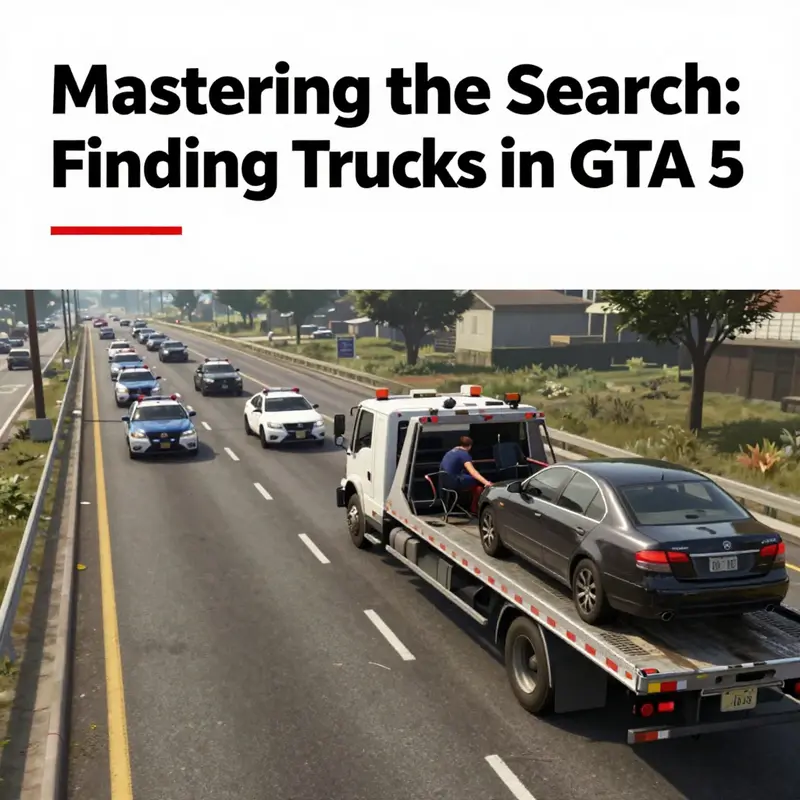
In the sprawling world of GTA 5, the tow truck is more than a utility vehicle; it’s a moving clue to how the city breathes on the edge between order and chaos. Players chase these yellow behemoths not only to perform recoveries or missions but to experience a vehicle that handles differently from the usual fleet. The thrill comes from knowing where the vehicle is likely to appear, how its presence alters a roadside scene, and what the chances are that you’ll spot one as you roll through the urban sprawl or drift along the open highways. The search becomes a mini-odyssey across Los Santos, where the right stretch of road can morph into a reliable gateway to speed, power, and a different kind of maintenance task on four wheels. The chapter ahead threads together the most dependable spawn zones, the rhythm of day and night, and the practical tact of locating a tow truck without chasing a phantom in a digital haze.
Foremost among the spawn hotspots is a corridor that feels almost engineered for predictability: the Sandy Shores Highway, near the San Fierro–Sandy Shores border. This is not just a scenic detour; it is a corridor where tow trucks appear with a steady cadence. The stretch that climbs from the western edge toward Sandy Shores acts like a magnet for these vehicles, and their yellow bodies stand out against the desert scrub and the asphalt glare. What makes this spot appealing is not simply visibility but reliability. Under both daylight and the darker hours, a tow truck is more likely to emerge from the far lane or to roll off a maintenance turnaround than to be hidden behind a spur of traffic. The texture of the road feels lived-in here, as if maintenance crews and responders keep a watchful eye on the line that separates a stalled cruiser from a smooth, lawful drive forward. If you want a fast, powerful vehicle to dominate a mission or to simply traverse the wide desert road with a sense of purpose, this is the zone you scout first.
That said, the Sandy Shores corridor is not the entire map of opportunities. The game’s world is layered with practical positions where tow trucks drift into view, and seasoned players learn to read the city’s traffic as if it were a weather pattern. Near Mission Row Police Station, the dynamics shift. The precinct area—where law-and-order infrastructure clusters—often has tow trucks stationed or seen maneuvering in the surrounding streets and parking lots. It’s a place where vehicles come and go with the cadence of enforcement: a station’s nearby auto shop, a tow yard hidden in a service alley, or a garage fronting a municipal block. The presence here carries a different texture than the Sandy Shores corridor. It’s closer to the dense core of the city, where the police presence is a constant, and the tow option becomes part of a broader routine of incident response and vehicle recovery. While this site offers dependable access, it also carries a greater caution: proximity to law enforcement makes approach-and-claim scenarios feel more urgent and less forgiving should you misjudge a scene.
The outskirts of Vinewood offer another reliable layer to the tow-truck hunt. Vinewood’s edge—where glossy storefronts fade into residential hills and service yards—hosts tow trucks as part of the city’s transportation ecosystem. These vehicles are often seen near repair shops and service lots that cluster along the periphery of the iconic boulevard. The setting is different in tone: less desert sun and more urban glare, with tow trucks slipping into and out of view amid the hum of traffic and the occasional celebrity-styled property. The Vinewood corridor offers a steady stream of opportunities for players who enjoy the narrative texture of a city that never entirely rests. It’s a reminder that tow trucks are not just roadside helpers; they are part of a city’s rhythm, a signal of ongoing movement that threads together industrial pride, dense traffic, and the choreography of vehicle recovery in a capital city that breathes through its streets.
Beyond these anchor points, the larger map retains additional, equally practical locations. Industrial zones near factories, warehouses, and freight yards in Los Santos are prime spots for tow trucks. These areas often place tow trucks along major roads or parked near maintenance facilities, creating pockets of predictability amid the sprawling urban-industrial landscape. The docks and port districts, with their heavy vehicle flow and ongoing logistics activity, form another dependable layer of spawns. It’s here that the same mechanic that makes the highway zone a reliable anchor also reveals itself in a different flavor: a more industrial, utilitarian atmosphere where the tow truck blends into a world of trucks, cranes, containers, and the daily grind of moving goods. For players, these zones are less about cinematic spectacle and more about the reliability of timing, access, and the practical sense of how a tow truck can become a tool for a broader in-game objective.
If the goal is to minimize friction while obtaining a tow truck, there are practical in-game avenues that can speed things up, though they require a willingness to navigate the game’s broader mechanics. In the context of GTA 5’s online framework, there are missions and in-game routines that can deliver a tow truck quickly, providing a direct route to the vehicle for those who want it without the long search. This path isn’t the sole route, but it’s a useful one for players who want to bypass the waiting game and dive straight into a tow-truck task. The beauty of this approach lies in its simplicity: a mission-type trigger or a routine that leverages the game’s systems can drop you into a tow truck without needing to circle every block. It’s a reminder that the game’s design rewards knowing the routes, the triggers, and the moments when the world’s density aligns just right to place a tow truck within reach.
To complement the in-game discovery, the player can turn to the map as a trusted guide. A dedicated, official resource that many players consult provides interactive, real-time updates on spawns and mission triggers. While the map won’t guarantee a tow truck at your exact moment of need, it offers a reliable shorthand for understanding where vehicles tend to appear, how often they appear, and when you might expect a shift in their behavior. The value here is not in predicting with perfect precision, but in gaining the confidence to travel with intention. You learn to anticipate where a tow truck might emerge as you approach a congested corridor, roll through a maintenance yard, or edge along a police station’s perimeter. The map becomes a companion, enhancing your sense of preparedness and turning a casual drive into a purposeful search.
The practical upshot for readers who want to translate this knowledge into action is straightforward. When you plan a session around tow trucks, map out a route that connects the Sandy Shores corridor with Mission Row’s vicinity and an outlying Vinewood edge, then weave in the industrial zones and port districts for good measure. Treat each location as a target, not a guarantee, and adjust your timing according to the city’s day-night cycle. Daylight often brings more traffic, which in turn amplifies the chance of a tow truck gliding into view along a highway or parking outside a maintenance gate. Nighttime reduces visibility but can still yield a tow truck if you position yourself near a maintenance hub or a garage cluster. The pattern is not a strict schedule; it’s a responsive rhythm—one that rewards patience, attention, and a willingness to adapt as the world around you shifts with the hour.
For players who want to connect this exploration to broader real-world parallels, a quick reference can offer a different kind of insight. If you’re curious about the real-world dynamics of towing and roadside assistance, there are practical resources that explore the industry’s rhythms and responsibilities. This can provide a counterpoint to the game’s fictional spawns and remind you how a tow truck operates in the real world—how it is stationed, how it moves through traffic, and how a driver reads the road for opportunities, safety, and efficiency. In the spirit of bridging play with practical knowledge, you can explore a real-world towing resource for a broader understanding of the craft and the tools that tow operators rely on every day.
In sum, the most dependable spawn zone for a tow truck within the game’s landscape remains the Sandy Shores Highway corridor near the San Fierro–Sandy Shores border, where the eye can catch the yellow silhouette rolling into view with dependable regularity. Yet the city’s broader geography offers a tapestry of additional opportunities: Mission Row’s police-adjacent blocks, Vinewood’s outskirts with their service yards, and the industrial veins that feed Los Santos’s economic heartbeat. Together, these zones create a map of practical possibilities rather than a single, guaranteed hotspot. The player who internalizes this geography—who reads the traffic, plans routes, and remains flexible—will find the tow truck not as a random spawn but as a reachable tool that becomes a reliable ally in navigating GTA 5’s expansive urban landscape. For the curious mind, the game’s official resources and community-driven discoveries offer ongoing confirmation that these patterns endure, update, and evolve with each new session.
As you chart your own path through the game’s highways and back streets, you might glimpse the real-world parallels that echo the digital scene—how a tow truck operator reads the road, anticipates needs, and keeps traffic moving in the right direction. If you want a quick reference to a real-world perspective, you can explore a resource that discusses towing in practice at Mikes Towing. This real-world touchstone offers a grounded counterpoint to the game’s stylized world, reminding us that the fundamentals of vehicle recovery—visibility, positioning, timing—translate across both screens and streets. Mikes Towing
For readers seeking up-to-the-minute, official spawn details and mission triggers, the game’s developers maintain a dedicated information hub. This resource provides an interactive map, updates on vehicle spawns, and guidance on mission triggers, offering a crucial layer of texture to the experience of locating a tow truck. While it cannot guarantee a vehicle in every moment, it anchors the search in current data and helps players align their in-game exploration with the world’s ongoing dynamics. In a city that never truly sleeps, this is the kind of map that turns wandering into purposeful motion and turns a roadside hunt into a sequence of deliberate, satisfying finds.
To close the loop on spawns, remember that the interplay between time of day, traffic density, and proximity to service zones shapes your odds. The Sandy Shores Highway remains the anchor—a long, straight stretch where the tow truck can reveal itself with reliable regularity. The other hotspots—Mission Row and Vinewood’s outskirts—add texture and variety, allowing you to experience different driving climates, from the clinical efficiency of a police-adjacent lane to the glossy bustle of a tourist-fueled boulevard. By weaving these zones into a single, thought-out drive, you create a practical map of opportunities that respects both the game’s design and the player’s desire for immersion, speed, and a sense of control over the road. And as you glide between these zones, you’ll sense the city’s heartbeat—a reminder that even in a game world built on high-stakes caper and spectacle, the humble tow truck remains a steady instrument of movement, recovery, and quiet competence.
For official, real-time spawn details and mission triggers, refer to the game’s official resources: https://support.rockstargames.com
Final thoughts
By focusing on Industrial Zones and strategic locations like Highways and Police Stations, players can streamline their vehicle recovery efforts in GTA 5. Understanding these prime areas increases efficiency, allowing businesses within the game to optimize operations and enhance the overall gaming experience. Knowing where to find tow trucks not only assists in gameplay but serves as a critical asset in managing emergencies and vehicle issues.