
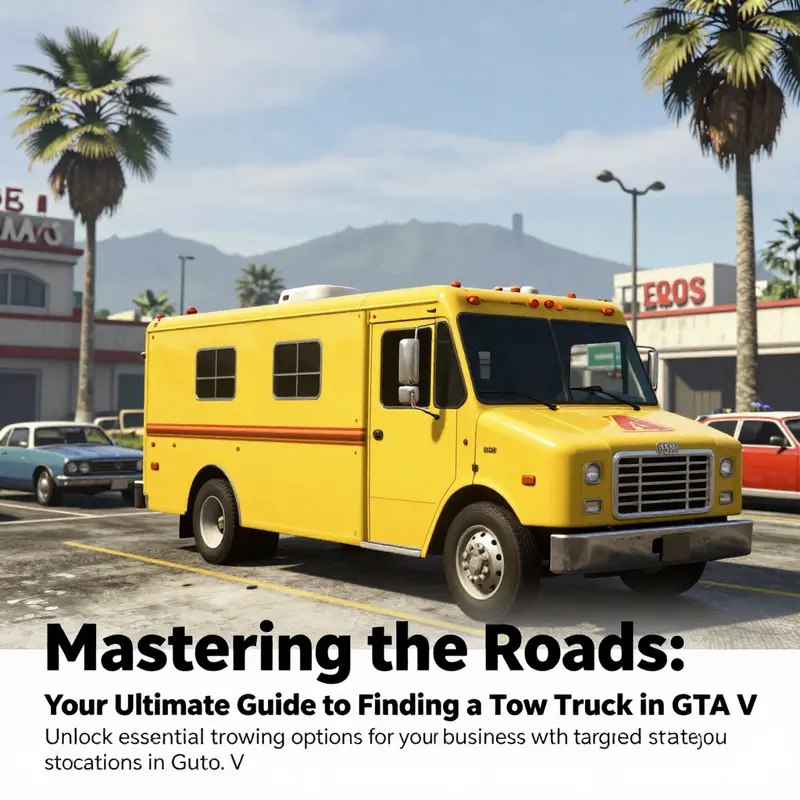
In the vibrant and bustling environment of Los Santos, the ability to access towing services can greatly enhance operational efficiency and business responsiveness. Whether you’re an entrepreneur looking to transport vehicles safely or an avid player aiming to optimize your gameplay strategies, knowing how to find a tow truck in GTA V is critical. This guide explores the most effective methods, including the Tow Truck contract process and alternative locations to ensure you’re always equipped with the right vehicle for your needs. Dive into our chapters to fully understand both the contractual route and various spawn points available in the game, helping you make informed decisions to thrive in this dynamic gaming landscape.
null
null
Tow Lines and Roadways: Uncovering All the Ways to Get a Tow Truck in GTA V
In the sprawling world of GTA V, a tow truck isn’t something you simply stumble upon as a standard vehicle wandering the streets. It’s a tool built into the game’s design, a resource you access through paths that blend mission structures, garage setups, and even the occasional world spawner. The chapter that follows threads those paths into a cohesive, practical picture of how to obtain and use a tow truck, whether you’re chasing a story mission in GTA Online, scavenging for a reliable hauling rig in the open world, or exploring the tiny but telling details that make Los Santos feel alive.
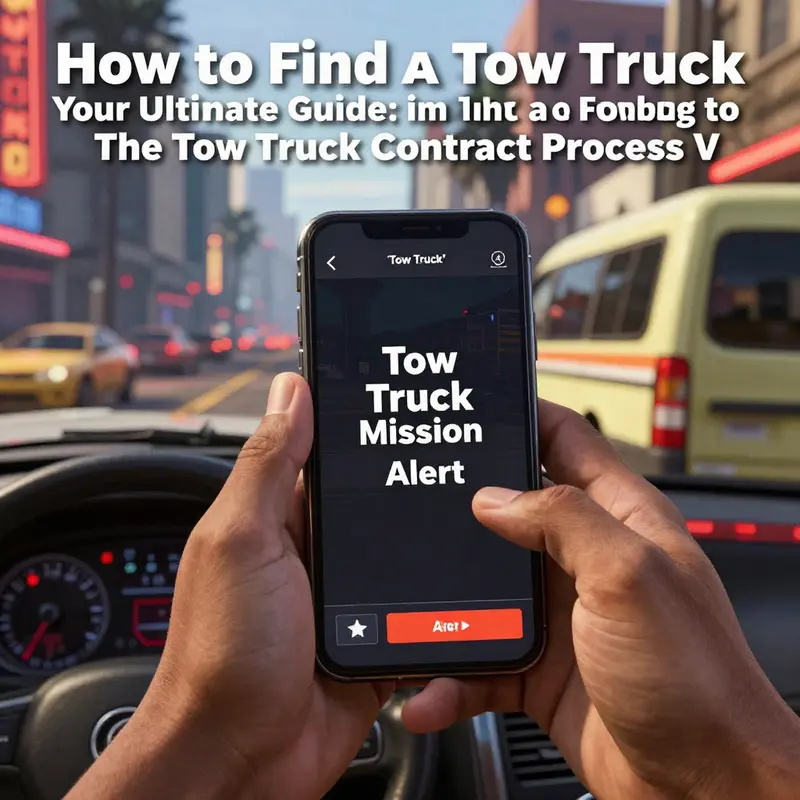
The most consistent way to engage with a tow truck in GTA Online is through the Freight Cargo line of contracts. This is where the game’s logistics logic shows its teeth: a contract-based setup that assigns you a mission with a defined target vehicle, a designated pickup point, and a tow mechanism that makes the process feel purposeful rather than random. To access this, you pull out your in-game phone, navigate to Online, then to Contracts, and finally select Freight Cargo. The mission you want within that bundle is the Tow Truck contract. Once you accept the job, the game spoons out a tow truck to you—either delivered to your personal garage or spawned near a nearby industrial area—and you proceed to the pickup point to retrieve the target vehicle. The choreography is simple on the surface, but it’s built to reward careful planning: a clean route, secure vehicle handling, and a tow setup that keeps the target secure without inviting a runaway freight moment.
This online structure makes the tow truck a tool of strategy as much as a vehicle of convenience. You’re not just chasing a car you can drive away; you’re following a workflow that tests your ability to manage space, timing, and the sometimes unpredictable behavior of AI-controlled targets. And because the mission is structured, you learn to read the map with an eye for the most efficient route to the pickup point, the best approach to attaching the wrecked or stalled vehicle, and how to position your tow rig so you can exit without getting tangled in traffic or pinned by a careless driver. If you haven’t yet fallen into this rhythm, the Tow Truck contract offers a clear, repeatable loop: accept, spawn, drive, attach, haul, and deliver. The satisfaction comes not from the thrill of a chase but from mastering a process that turns a simple vehicle into a reliable service tool within the game world.
Beyond the contract, there are other, more informal avenues for getting behind the wheel of a tow truck. One path is to keep your eyes open for looted or abandonned tow trucks that might appear on the streets, especially in zones dense with garages, repair shops, or industrial activity. In these pockets of the city and countryside, a tow truck can surface as a responsive asset when you need one quickly. It’s not a guaranteed drop, but when it happens, it feels like a reward for scouting the map and understanding where work tends to cluster—near warehouses, ports, or large construction sites where the flow of freight and downtime repair work can seed a tow vehicle into the ecosystem. The random spawns add a layer of realism to the world: you’re not always guaranteed a tow truck, but you can improve your odds by spending more time near industrial corridors and repair ecosystems that breathe with traffic and incidents.
For players who want a more predictable path, there’s the option of purchasing a dedicated towing-capable chassis through the in-game Vehicle Shop’s commercial category. In this mode, you’re choosing a vehicle that has stability and payload suited to hauling and towing tasks. You won’t be chasing a mission target here; you’re building a logistics backbone for freighting or transporting other vehicles. The emphasis is on durability and cargo capacity—qualities that matter when you’re hauling, recovering, or repositioning damaged or valuable cars. The idea is to assemble a practical, workhorse rig that behaves well under load, remains reliable in rough driving conditions, and gives you the confidence to maneuver through tight spaces or hectic traffic with minimal risk to the vehicle itself.
If you veer toward the more experimental end of the hobby, the world of mods opens a different door. Enthusiasts sometimes install modded garages and variants that expand towing mechanics beyond what the base game offers. A mod manager can serve as the hub for these enhancements, and mod pages often describe additional tow truck variants, custom garages, and automated towing scripts. It’s essential to exercise caution here: modding introduces a layer of risk, including potential malware if downloaded from untrusted sources. The best practice is to use trusted mod hubs and read through user reviews and installation notes before integrating anything into your game. The modding path isn’t for everyone, but for those who enjoy tinkering, it can transform the towing experience from a static resource into a dynamic, customizable workflow.
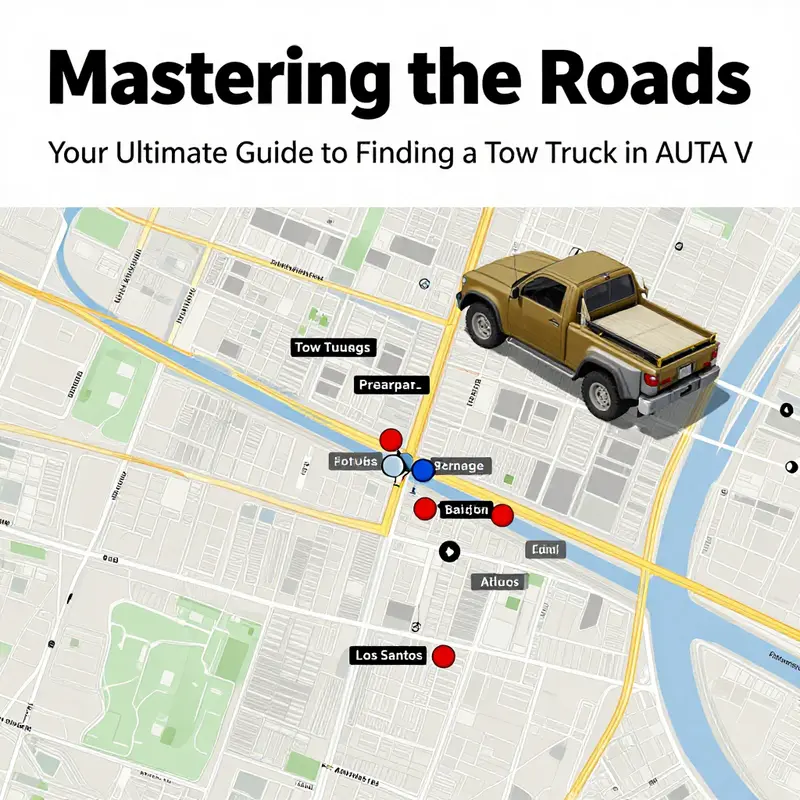
All these routes—the Freight Cargo contract, looting opportunities, direct purchases, and modded additions—are not mutually exclusive. They exist in parallel so that you can approach tow trucking from multiple angles depending on your goals, whether you’re chasing mission income, role-play realism, or technical experimentation. To make sense of where to begin and how to progress, it helps to recognize a couple of anchor points in the GTA V tow-truck landscape. One anchor is a dedicated local garage setup in the game’s world where a modded tow-truck spawn point exists near a major air corridor. This Tow Truck Garage, a feature created around a character with a strong tie to the city’s improvisational spirit, sits in the La Puerta district near the Los Santos International Airport. The garage is not just a showroom; it’s a functional waypoint. You drive your chosen vehicle into the garage and, using a simple input, connect your vehicle to the tow apparatus. From there you can tow damaged cars out of the restricted area or repair them inside the facility. It’s a compact, practical loop that reframes towing as a service operation rather than a single moment of vehicle retrieval. If ownership or retrieval goes unsettled—if the vehicle isn’t paid for—the system can lead to an auction mechanism that shifts the car into a new ownership chain. It’s a small narrative beat, but it adds a layer of consequence and realism to the act of towing within the virtual economy.
The Tow Truck Garage in La Puerta embodies a more permanent, location-based approach to tow trucks. It’s not an ordinary streetspawn, and it’s not the result of a random world event. It’s a designed space where tow trucks become a recurring fixture, available on demand through spatial familiarity and player choice. In contrast, the world’s more organic tow truck appearances—those loitering near a construction site, a port, or a repair yard—depend on chance and the pulse of traffic. These two modes—the crafted, location-based garage and the spontaneous street spawns—work in harmony, giving you both a reliable anchor point and the excitement of occasional, unexpected opportunities.
If you’re curious about the mechanics of the Tow Truck Garage mod or similar enhancements, you’ll find that the modding community often emphasizes two practical principles: clarity of installation and respect for game balance. A good mod guide will walk you through where to place files, how to ensure compatibility with your current game version, and how to avoid inadvertent conflicts with other mods or with the game’s own spawner logic. The caution about malware is not merely cautious—it’s a reminder that tinkering with game files carries real risk, and that trustworthy sources, clear instructions, and a measured approach are essential when expanding the towing toolkit beyond the vanilla experience. Real-world parallels exist here as well. If you ever need a sense of how roadside work is organized in the real world, you can explore how professional tow services structure their operations—dispatch, road recovery, and terminal-based logistics. A practical example from the real world helps ground the game’s fantasy in recognizable workflows, demonstrating that towing is as much about process as it is about pulling a car from the ditch.
For those who want to connect this in-game behavior to a broader, real-world frame of reference, consider a quick look at resources that discuss roadside assistance and towing practices in real life. This is not a direct endorsement, but rather a bridge that helps players appreciate the logic behind the game’s towing mechanics: you plan, you attach, you haul, and you deliver. If you’d like a concise primer on real-world roadside work, you can explore this example of a roadside service to gain a sense of the practical rhythms and professional emphasis that underlie towing work outside the game. Mikes Roadside Service serves as a useful anchor in this regard, offering a real-world glimpse into dispatch, response times, and the kind of reliability players may come to expect from a well-run towing operation.
Within GTA V’s own ecosystem, the balance between competition and cooperation also informs how you approach tow work. When you’re engaging in Freight Cargo missions, you’re entering a competitive space where multiple players may be vying for the same payoff, but you also operate within a shared, persistent city where the consequences of your actions ripple into the world’s economy and the narrative of your character. The randomness of spawns, the availability of dedicated tow setups, and the option to customize or upgrade your tow vehicle all create a sense of progression that mirrors real-world development—start with a contract, grow your fleet, and build a reputation for reliability. In this sense, tow trucks function as more than a simple tool; they become a strategic instrument that shapes how you earn, how you maneuver through crowded streets, and how you perceive the city’s rhythm.
As you move through these avenues, remember that community resources and official guidance can be valuable companions. Rockstar’s support pages and various community hubs offer updates on spawn patterns, mission tuning, and policy changes that affect how tow trucks appear and function in the game’s online environment. Staying connected to these sources helps you anticipate changes and adapt your approach, whether you’re chasing efficiency in a fleet run or simply exploring the city with a tow-truck in tow. The world of GTA V is in constant motion, and tow trucks are a small but revealing lens into how players adapt, optimize, and enjoy the game’s layered systems.
In the end, the question of where to find a tow truck in GTA V isn’t answered by a single door or a lone spawn point. It’s answered by a map of possibilities: the structured, reward-driven path of Freight Cargo contracts; the opportunistic glances at random street spawns near industrial clusters; the planned, garage-based approach that makes a Tow Truck Garage a reliable base of operations; and the flexible, experimental route offered by mods for those who want to push the boundaries of what towing can do in this virtual world. Each path feeds the others, and each path invites you to test your skill in different ways. The result is a towing experience that feels practical, immersive, and rewarding, whether you’re focused on mission income, role-play realism, or creative tinkering.
For a quick, grounded real-world perspective on roadside work and the kinds of tasks that a tow truck handles when things go sideways, you can explore a related resource that discusses dispatch and roadside service in everyday terms. This place offers a useful counterpoint to the game’s more sensational moments and helps keep your in-game strategy anchored in a recognizable, practical framework. If you want a straightforward primer on the world of roadside assistance, you can check out Mikes Roadside Service. This link provides a real-world viewpoint that complements the GTA V experience without distracting from your in-game priorities.
External reference for deeper technical details on the Tow Truck Garage mod and its installation can be found here: https://www.gta5-mods.com/vehicles/tow-truck-garage
Final thoughts
Understanding the various methods to find a tow truck in GTA V empowers players to effectively handle vehicle retrieval tasks and expand their operational capabilities. By delving into the Tow Truck contract process, along with exploring alternative spawn points throughout Los Santos, business owners can ensure their gameplay remains seamless and enjoyable. Whether you’re completing missions or needing vehicles for strategic purposes, these insights make your endeavors more efficient, reinforcing your position in the game. Leverage this knowledge to not just survive, but thrive in the exciting world of GTA V.