
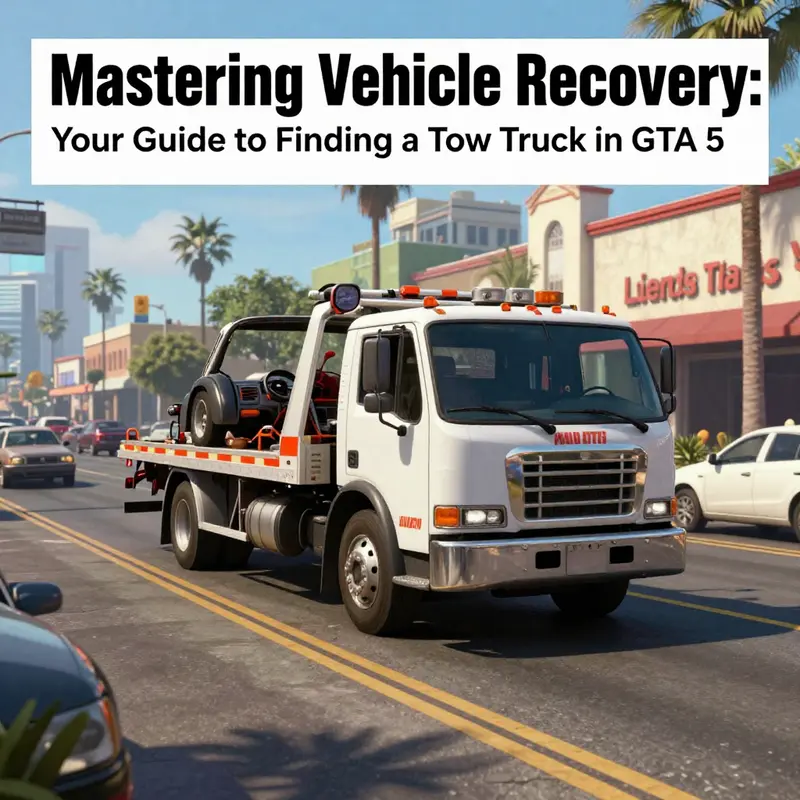
In the bustling world of Grand Theft Auto 5, vehicle recovery can become an essential operation, especially for business owners needing efficiency and reliability. Tow trucks are crucial in many game scenarios, from player-focused missions to community-driven activities. This article will guide you through prime locations to find tow trucks in Los Santos and outline their strategic uses in various missions. As you navigate the game, understanding where to locate these trucks will not only enhance your gameplay but also provide insight into how they can benefit your virtual business ventures.
Tow Trucks in GTA V: Spawn Points, Zones, and Mission Timing
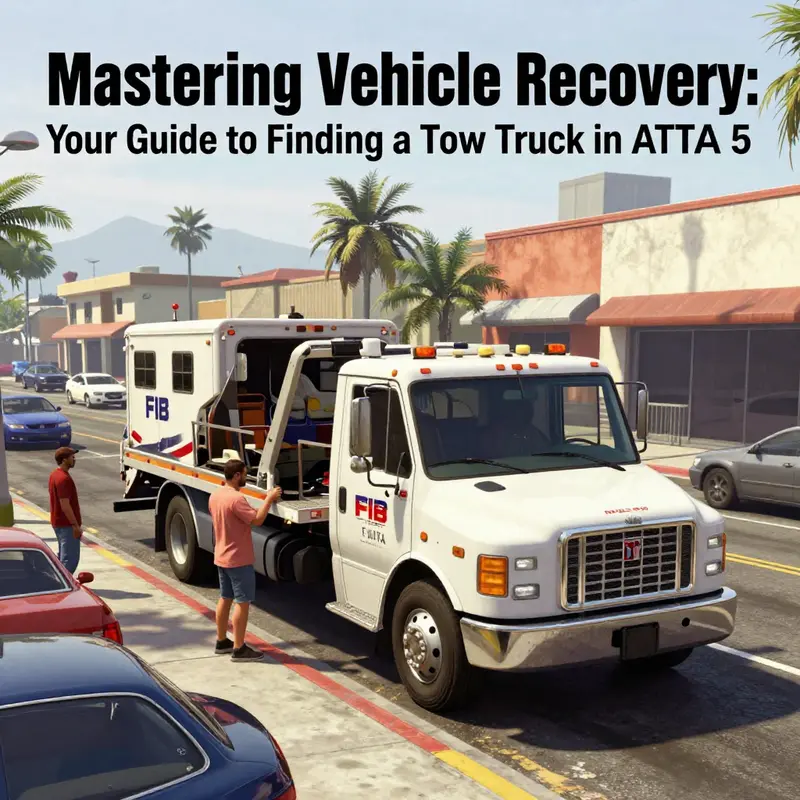
Tow trucks in Grand Theft Auto V are not as ubiquitous as sedans or sports cars, but they appear at predictable anchors that reward patient exploration. Their placement mirrors the game’s logistics: useful where recovery, heavy transport, or mission-driven repositioning makes sense. Unlike everyday cars, tow trucks tend to cluster around mission hubs, industrial zones, and controlled urban spaces. This design lets players anticipate where a Tow Truck may spawn and reduces aimless wandering.
A reliable anchor is the FIB parking lot in downtown Los Santos, near the West Elysian Fields and South Bakersfield area. In missions that require vehicle recovery or repositioning, a Tow Truck may be parked in a designated bay here, presenting a practical asset for quick pull-outs or garage runs. Timing matters: you may need to revisit after a mission checkpoint or during downtime when spawns refresh, rather than waiting for a fixed kiosk to appear.
Beyond the core city, the docks and industrial districts along the port and the San Fierro corridor host Tow Trucks more sporadically but consistently. These areas emphasize the real-world logic that heavy recovery and transport would occur at yards, ramps, and warehouses. When cruising near industrial rows, scan loading bays and side lots for a yellow tow rig parked near the edge of activity.
Missions themselves shape tow-truck availability. In some story setups, the plot assigns a Tow Truck to a garage or storage facility to assist with a move or a staged recovery. The Big Score and Dinner for Seven are often cited examples where the vehicle could appear as part of the mission flow. If you miss a window, other spawns may surface elsewhere, rewarding careful watching of objective markers and mission pacing.
On the highways, Tow Trucks appear along major arteries like the 110 when incidents occur, but these sightings are less predictable and occur more due to dynamic events than fixed spawns. If you spot a cargo trailer or an accident on the shoulder, slow down and validate the opportunity—the tow rig can save you time by removing a wreck that would block a progress path.
In GTA Online, a Tow Truck can be acquired through cargo-related contracts, providing a dedicated asset for transport and recovery. The asset-based approach mirrors the game’s larger loop: invest in tools that unlock reliable capabilities and enable longer, more purposeful runs rather than chance encounters.
Finally, for players seeking external reference, community guides and real-world perspectives help contextualize the mechanic. While in-game spawns are tailored to Los Santos and Blaine County, the idea of a well-placed tow vehicle as a logistical backbone remains consistent across the map. Use the map markers, mission cues, and downtime to grid your tow-truck hunts, and remember: the next tow rig could be closer than you think.
Tow Truck Mastery in GTA 5: From Mission Pulls to Community Tricks
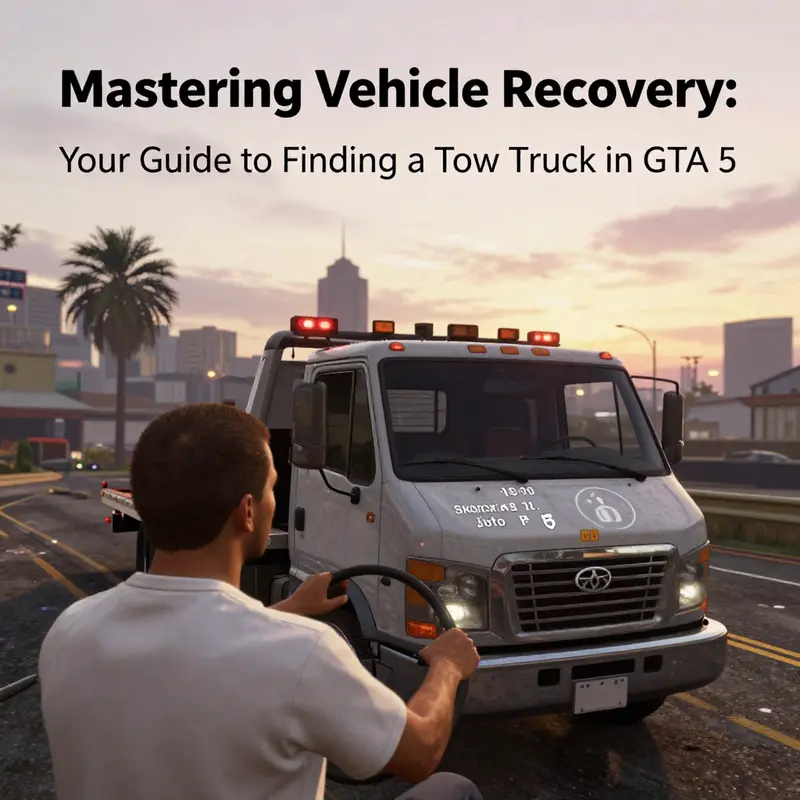
The tow truck in GTA 5 is more than a utility vehicle. It is a character with a specific job to do in a living city, a machine that translates the game’s playful chaos into deft, mission-ready action. When you learn how to wield it well, you unlock a reliable partner for both story tasks and open-world mischief. This chapter traces how the Tow Truck fits into the fabric of Los Santos, where to find it when you need it, and how players, across the community, have learned to bend its unusual mechanics to their advantage. The goal is not just to locate the vehicle but to understand its rhythm: how to hook, haul, and maneuver with confidence, and how to translate that into smoother progression during Tonya’s requests and beyond.
Locations matter, and the game designers pepper tow truck spawns where recovery work naturally happens. The most dependable sighting is in the FIB headquarters parking lot in downtown Los Santos, a palatable proximity to the city’s core and the intersection of West Elysian Fields and South Bakersfield Avenue. This is more than luck; the lot acts as a ready-made staging ground. If you need a tow for a mission objective or to reposition an immobile car quickly, this is one of the first spots to check. The industrial spine of the city also rewards patience. Look around the freight docks near the port, especially along the San Fierro border stretch and the industrial district south of the city. In those zones, NPCs in recovery roles populate the roads and yards, and a Tow Truck can appear when you least expect it, ready to haul a stubborn carriage or a semi to a designated spot. There are also mission-related opportunities that spawn a Tow Truck temporarily at garages or storage facilities during key story beats, so if you are chasing a particular objective you should keep an eye on your map and mission objectives for temporary spawns. Finally, the world is not completely stingy about randomness; on major highways like Interstate 110 and Route 68, you might encounter a Tow Truck at random, often near the sites of accidents or construction where a vehicle recovery crew would normally be operating. The balance of reliability and chance gives players a reason to explore the city while staying prepared for a tow when a car is stuck, immovable, or simply inconveniently placed.
The Tow Truck enters the narrative most memorably through Tonya and her Pulling Favors, a set of Strangers and Freaks missions that ground the vehicle in purpose. It becomes less a toy and more a tool for completing a chain of objectives that hinge on moving other cars to exact locations. In these missions, the utility becomes a storytelling device as much as a gameplay mechanic. You haul cars to precise spots to unlock dialogue, consequences, and further tasks, turning what could feel like a routine chore into a sequence essential to the evolving story. This integration is part of the charm: a vehicle you might overlook in another context becomes a central player in a small, humorous narrative arc. The act of engaging the tow cable is responsive and satisfying. A quick click of the Left Thumbstick activates the tow line, and the attachment process feels tactile enough to reward care. Attaching a car is not simply about grabbing a target; it is about the confidence to secure a hold before you move. The tension of the tow line, the angle of approach, and the careful balance of weight all contribute to a satisfying sense of control. The result is not just a movement of metal; it is a small triumph in a game that thrives on clever, task-based rhythm.
Players often optimize their approach with practical, almost surgical care. Positioning the Tow Truck correctly is essential before the cable goes tight. A steady, slightly angled approach from behind helps ensure a secure connection, reducing the risk of the towed vehicle detaching mid-pull. Sharp turns are a potential pitfall; if you twist abruptly, the towed vehicle can jostle free or flip, interrupting a mission and wasting precious time. Slow, deliberate motion keeps both vehicles aligned and helps you maintain control through corners or uneven pavement. A common piece of wisdom in the community is to treat the tow as a last resort for a stubborn case rather than a reckless quick fix. In practice, that means prioritizing a smooth transfer: line up, connect, then move with a steady, measured pace. Beyond simple transport, the Tow Truck has found a place in the broader sandbox of tricks and stunts discussed in video guides and streams. The ability to clear obstacles or set up a scene for a stunt often surfaces in community chatter, where players share short clips of inventive uses for the tow rig’s pull power and winching dynamics. These discussions reinforce the idea that GTA 5 rewards experimentation with a device that can be both practical and playful. For players looking for a centralized hub of practical tactics and mission-specific advice, a frequently cited resource in the community includes a dedicated towing guide, which can be accessed through a nearby hub of information. For an internal reference and quick tips, some players bookmark a central resource like mikes-towing as a quick refresher on general towing principles, keeping the mental model sharp while you roam the city.
The Tow Truck also translates into a meaningful option for GTA Online players. In the online ecosystem, you can acquire a Tow Truck through contracts in the Cargo category, specifically under Hazardous Materials or Freight Cargo missions. This path is not just about variety; it is about practicality. For players who regularly transport cargo or complete delivery tasks, owning a tow-equipped vehicle makes those jobs more efficient and reliable. The online variant opens up a slightly different strategic layer: you may need to move cars in rapid sequences, navigate a broader map, and coordinate with teammates. The basic mechanic—attaching, hauling, and securing—remains the same, but the scale is larger, and the stakes can be higher when time is of the essence or when you are contributing to a larger objective. As with single-player play, the fundamental skill set involves precision, patience, and a calm, methodical approach to towing the target vehicle.
For those who want a concise reference to verify mechanics and timing, the community keeps a close eye on guides that amalgamate updates and tweaks from patches or changes to spawn behavior. These guides often corroborate the vehicle’s spawn points and the mission contexts in which a Tow Truck is present, making it easier to plan a run that minimizes wandering and maximizes progress. The ongoing discussion around the Tow Truck is a reminder that GTA 5 is as much about how you move as where you move. The vehicle’s role in missions, its quirky physics, and the social aspect of sharing tips all contribute to a richer experience where a simple pull can become a turning point in a mission or a smart shortcut in a long afternoon of play. The IGN guide on Tow Trucks remains a widely used external resource for players seeking an authoritative snapshot of current mechanics and mission integration. External resource: Tow Truck Guide on IGN
Final thoughts
Identifying and utilizing tow trucks in Grand Theft Auto 5 is not just a gameplay enhancement but a strategic advantage for business owners in the game. By knowing where to find these vehicles, you can expedite recovery operations and support your objectives throughout various missions. The integration of these trucks into your gameplay can greatly reduce downtime and increase efficiency, enabling you to focus on the more adventurous aspects of your gaming experience. Keep exploring and leveraging these resources to fully optimize your time in Los Santos.