
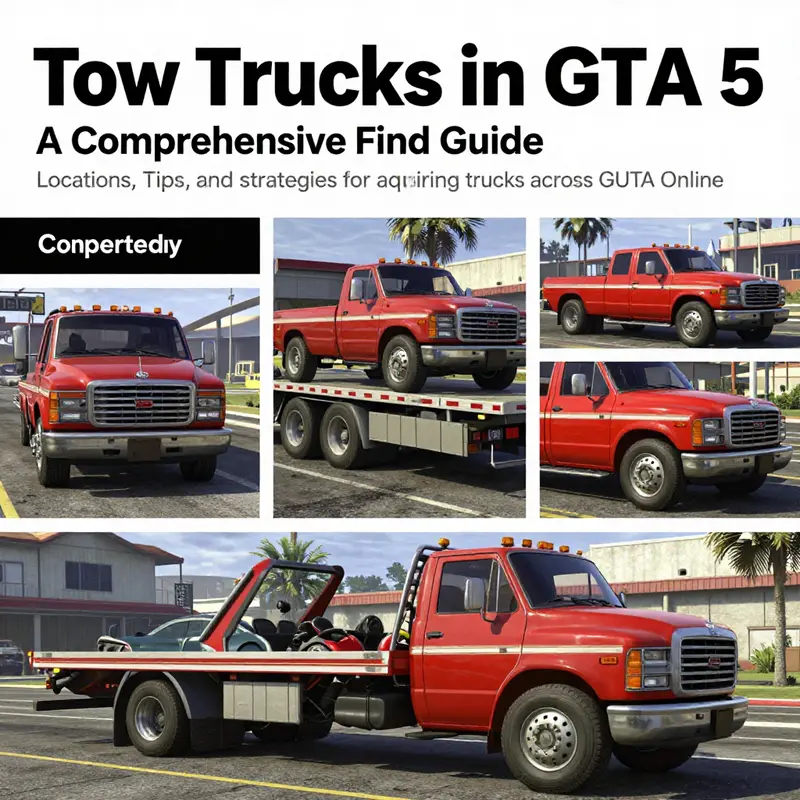
This guide helps you locate tow trucks across GTA Online and the single-player campaign, unlocking versatile options for freight missions, vehicle recovery, and roadside support. By understanding where to find these vehicles, you can optimize your operations, improve mission efficiency, and enhance your overall gameplay experience.
Tow Trucks in GTA Online: Mapping the Freight Hauler Network, Purchases, and Practical Use
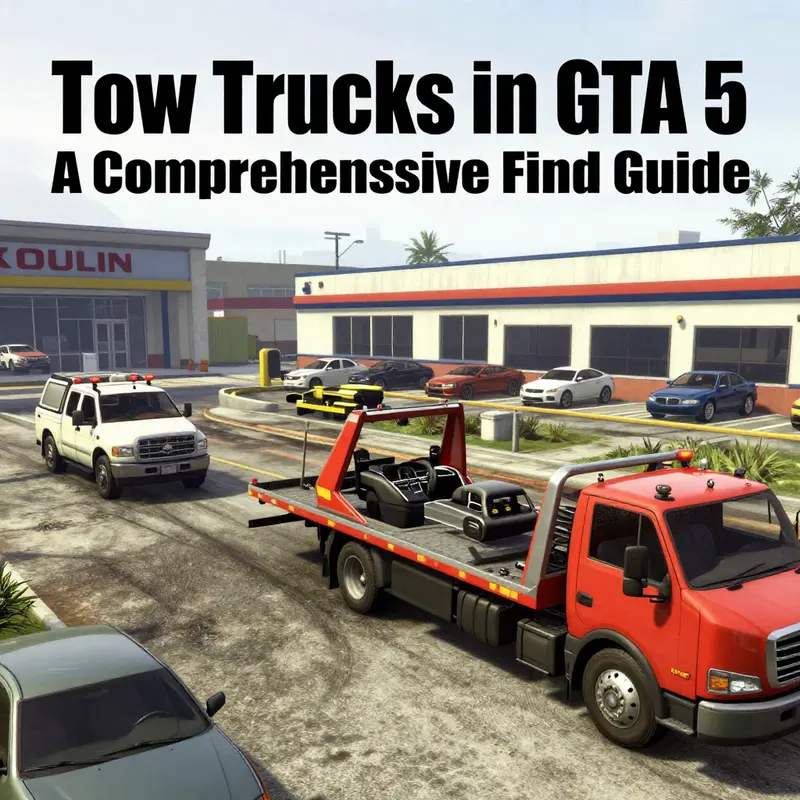
The moment you step into the freighter lanes of Los Santos and its surrounding industrial sprawl in GTA Online, the Tow Truck ceases to be merely a roadside utility and becomes a mobile workhorse. It is not just about pulling a stranded vehicle from a curb; it is about unlocking a reliable work platform for freight missions, heist logistics, and fast, rugged transport across a city that rewards durability and capacity. Tow trucks, sometimes referred to in the game as Mule variants or similar heavy haulers, are scattered through the game world in predictable clusters that shift with updates, but their core purpose remains constant: they give you the leverage to move cargo and reposition assets with a blend of grit and efficiency. To understand where to find them and how to incorporate them into your playstyle, it helps to follow the threads that connect in-game vendors, mission structures, and the occasional live event, all of which weave together a practical, day-to-day rhythm for freight work in GTA Online.
The first thread begins with the option to acquire a Tow Truck directly through the game’s vehicle economy. In GTA Online, the world is laid out so you can approach a tow-hauling solution through sanctioned channels rather than simply “steal it and go.” The major conduits described in the material you provided point to two kinds of access. On one hand, there are vehicle dealers and customization hubs that occasionally stock specialized trucks and recovery vehicles. While Benny’s Original Motor Works is best known for its rotation of high-performance and classic vehicles, the shop’s stock can include support vehicles that complement a freight operations lineup, including occasional tow options when the rotation aligns with a particular update or seasonal event. On the other hand, a more straightforward and persistent source is the towing service ecosystem represented by Savage’s Towing & Recovery, a company-type entity within Los Santos that players can engage with through certain missions or more complex service contracts. This pairing—dealer access and dedicated towing services—creates a practical spectrum for players who want a stable, purchasable tow truck that can be upgraded and used beyond a single mission.
The second thread focuses on how tow trucks appear through the mission framework itself. In the context of Freight Cargo missions, Tow Trucks may be assigned or temporarily loaned to players as part of a contract to transport containers or salvage items. The logic here mirrors real-world practice: a vehicle is allocated for a defined window of time to carry out a cargo objective, and after the objective is complete, you can decide whether to retain the vehicle for ongoing missions or move on to a different asset. This dynamic is valuable because it gives you a temporary yet fully functional platform that you can customize for the job at hand—adding upgraded tires for grip on slick dock surfaces, armor for protection against rough handling during transit, and a stronger engine for the longer hauls that tax your resources. The system rewards a strategic approach: you don’t need to own every freight vehicle to succeed, but owning the right tow truck—paired with a reliable retrieval method—can substantially increase your mission success rate and fleet flexibility.
A third thread that the sources sketch out adds a layer of spatial awareness to your search. Tow Trucks appear near industrial zones, warehouses, and airports—places where cargo operations are most concentrated. These zones create natural funnels for players who want to participate in freight logistics, and they also reflect a practical mapping principle: you can optimize your routes by bookmarking proximity to these hubs. The flight-line activity at airports can also produce transient tow trucks due to maintenance or security operations, so keeping an eye on those perimeters during freight events can yield quick access to a capable vehicle when you need it most. The effect is a map that rewards planning. When you know where the heavy traffic flows are and where vehicle storage hotspots exist, you can orchestrate a sequence of pickups and drop-offs with far less downtime.
Beyond the dealer and freight mission channels, there are opportunities to participate in special events and limited-time activities that can expand your tow-truck portfolio. The subtopic of limited-time activities—whether framed as a “Tow Truck Challenge,” a pilot-themed event, or a mission-based reward stream—acknowledges that Rockstar’s live environment occasionally rewards players with unique vehicles or paint and performance packages that are not routinely available in the standard marketplace. In practice, these events can yield a Mammoth Tow Truck or similar specialized haulers that are tuned for heavy-duty cargo work, and they can be unlocked or earned only through active participation during the event window. Such opportunities are valuable for players who want to diversify their fleet or seek a distinct vehicle identity for their freight operations. If you’re chasing a particular model, the best strategy is to stay current with event calendars, sign up for in-game notifications, and make time to complete the event-specific tasks that lead to a rare or enhanced tow truck.
The practical workflow extends to how you actually store and customize your tow truck once you’ve acquired one. GTA Online’s ecosystem rewards storage discipline; you can place your tow truck in a private garage where you can safeguard it from random destabilizations and, more important, where you can perform aesthetic and mechanical upgrades. The upgrades matter as much as the purchase because a tow truck’s performance—its traction, armor, and engine output—directly translates into mission reliability. Strong tires reduce the risk of flats on dockside asphalt, armor helps absorb impacts when maneuvering in tight industrial lots, and a more capable engine ensures that you can accelerate away from trouble without compromising time on the clock. It is easy to underestimate the cumulative effect of these modifications, but the difference they make across multiple freight runs adds up, turning what could be a tense sprint into a controlled, repeatable operation with predictable outcomes.
For players who want a faster path to a preferred vehicle, the game also supports a defensive convenience called the Vehicle Locker, which helps you store and retrieve your preferred towing assets quickly. If you’re juggling a few different tow trucks for different mission types—one tuned for speed on long hauls, another for heavy cargo and durability—you can swap them in and out without losing momentum. This feature is especially useful if you want to switch between a standard Mule-based setup for routine freight work and a beefier option for high-risk drop-offs near industrial zones. The ability to curate a small, bespoke lineup ensures that your fleet is not just big but smartly aligned with the kind of freight traffic you’re pursuing on any given night in Los Santos.
To keep things grounded in practical play, consider a few best practices that emerge from this network of sources. First, always verify the vehicle’s condition before you embark on a mission. A tow truck that begins a run with compromised tires or weak armor can derail even a straightforward drop-off, costing you time and money. Second, align your purchase or rental choices with the mission profile you anticipate. If you’re heading into a long, cargo-heavy route, a truck with reinforced tires and a robust engine will outperform a lighter, nimbler unit that’s optimized for quick pickups but fails under heavy load. Third, leverage the mission structure to build a routine. If you regularly engage in freight missions, your operational rhythm—where you store the vehicle, how you outfit it, and which hub locations you favor—will cohere into a sustainable cycle that minimizes downtime and maximizes cargo throughput.
A final thread, which ties the in-game experience to a broader sense of practical navigation, concerns the social and community dimensions. The GTA Online map is a living canvas that responds to player behavior. As you or others in your crew spawn tow trucks in response to mission prompts, you can gradually map out a preferred corridor of operations, a mental route that takes you from industrial blocks to warehouse interiors to the seaports where containers often lie in wait. The dynamic is less about chasing a single vehicle and more about orchestrating a dependable, efficient freight pipeline. In this environment, the tow truck is not a luxury item but a crucial tool in a working fleet—capable of moving projects, recovering assets, and enabling the kind of multi-threaded, crew-based logistics that define the most rewarding GTA Online experiences.
As you reflect on the interplay between dealer access, mission integration, event-driven diversification, and storage customization, you begin to see why tow trucks occupy a steady, pragmatic niche in the GTA Online landscape. They are heavy, reliable, and adaptable—an ideal platform for the freight play that many players gravitate toward as they seek to optimize resource management across the city’s sprawling map. The real value, however, lies in understanding how these factors come together to create a coherent workflow rather than chasing a single, perfect vehicle. When you approach tow trucks with a plan—where to source them, how to deploy them, and how to maintain them across multiple runs—you gain a level of operational clarity that makes freight work feel less like a random, high-stakes gamble and more like a repeatable, well-practiced craft.
For readers looking to anchor these ideas in a concrete path, a simple approach works well: identify a primary dealer or mission-based source where you can reliably acquire a tow truck, select a version suited to your typical cargo runs, and then set up your private garage with a dedicated storage and upgrade schedule. From there, map a few dependable hubs—industrial zones and warehouses—so you can quickly locate a tow truck when a freight run comes up. If you combine this with participation in periodic events to broaden your fleet, you’ll find a balanced, resilient freight operation that serves as a steady backbone for your GTA Online career.
Internal link note: for a practical, real-world reference on towing services that can complement your understanding of hands-on vehicle handling in the real world as you think about vehicle performance and recovery scenarios, you can explore this resource: Mikes Towing.
External resource for further context: for official, up-to-date vehicle listings and broad guidance from the game’s publisher, see GTA Online’s vehicle hub: https://www.rockstargames.com/gtaonline.
Tracking the Heavy Hauler: Key Locations for Tow Trucks in GTA V’s Single-Player Campaign
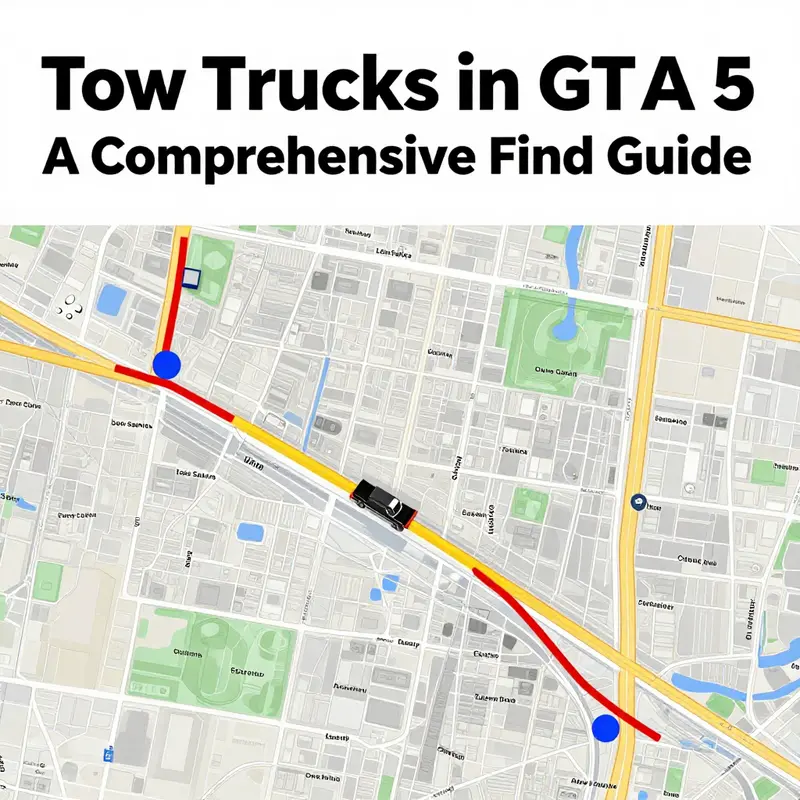
Tracking the heavy hauler in GTA V’s single-player is not about chasing a single spawn, but about understanding how the game seeds recovery opportunities into its open world. Tow trucks appear in several predictable pockets, especially near places where vehicles break down, get towed, or are part of a mission that requires movement of cargo from one place to another. The thrill is not in the crash itself but in the choreography of the response: a sturdy truck arrives, its hoist or wheel-lift engaged, and the work proceeds with a quiet confidence that mirrors real life on the highway. You learn to read the landscape as a map of potential helper vehicles, waiting to be claimed when the moment calls for steady, careful handling rather than speed alone.
Across the city and its hinterlands, there are three kinds of anchor points that consistently offer a tow truck as a working tool rather than a prop. One anchor sits behind the airport’s maintenance area, a zone where mechanics keep ground support equipment in working order and where a tow truck will sometimes be found idling, ready to lift a grounded aircraft tug, a damaged van, or a crate-laden transport. The second anchor is in the rural belt of Crimson County, where repair shops and long, quiet back roads create a network of service lanes. When you drive through these roads, the world feels lived-in, and you notice the occasional tow truck tucked near a garage, listening for the next call. The third anchor is near high-traffic urban nodes, such as the western districts around La Puerta, where commercial activity draws a steady stream of service vehicles. A tow truck may sit by a car wash or in the service yard, its equipment gleaming under the sun as a reminder that even in a big city, there are times when a single truck can shift the balance of a scene.
These anchor points are not exact spawns every time, but with a little patience you can pattern your explorations. Start by scanning the map for industrial zones and maintenance bays; these locations host fleets, trailers, and a handful of heavy trucks that are more likely to double as tow trucks when the moment demands. The map’s little icons help you narrow down the candidates, but the feel of the real world comes from the wait—the quiet expectancy as you approach a yard where the door hums open and a tow truck appears, ready to hook a vehicle and slide it toward safety or storage. When you know where to look, you can transition from wandering to purposeful search, recognizing that the game rewards observation as much as speed.
When you locate a tow truck, take a moment to study its condition. Like any real-world recovery vehicle, its reliability depends on maintenance. In the context of the game, this translates into watching for a consistent engine note, solid responses when you press the buttons to lift, and a stable frame that doesn’t creak or squeak as you begin to move heavy cargo. The temptation to jump straight into action is strong, especially when a mission’s timer is ticking, but a quick quality check can save you from a risky misstep later. If the truck feels off—unusual wobble, delayed response, or a muted engine—you may want to abandon it in favor of another anchor or wait for the next spawn. Better a slower start than a failed run that ends with a reload and lost progress.
In practice, you will combine travel with observation. Approach the anchor areas by car, motorcycle, or even on foot if you’re already in the area for a different objective. Use a circuit that sweeps the well-traveled corridors of the city and its outskirts, paying attention to where vehicles gather at the end of a shift or where a maintenance gate stands open in the afternoon light. If you see a tow truck parked in a service bay or near a repair shop, you know you have found a candidate to accompany you on freight missions or cargo moves. The analogy to real-world roadside recovery is apt here: the right vehicle in the right place at the right time matters as much as speed itself. For a sense of how these recovery operations translate outside the game, consider Mikes Roadside Service. This real-world reference helps readers connect the game’s mechanics to practical principles of dispatch, safety, and effective vehicle handling. Mikes Roadside Service.
Beyond the anchor spots, a few tips sharpen your chances. First, keep an eye on the weather and the hour. Daytime traffic can hide multiple tow trucks in plain sight as shops open and unload their fleets, while a night setting can reduce visibility but increase the chance that a tow truck is waiting in a quieter cul-de-sac. A light drizzle or fog shapes driving patterns in the game and can influence when and where service vehicles idle. Second, listen for the mission prompts. If a freight task triggers a notification from the in-game assistant or a radio prompt, that script often nudges you toward a nearby yard or a service lane where a tow truck is ready to be engaged. Third, consider the terrain. On steep inclines or narrow corridors, a heavy tow truck handles differently; you must plan your approach, choose a safe path, and ensure you have room to maneuver behind the target vehicle. These practical considerations will not magically create a tow truck where none exists, but they do maximize your probability of turning a chance encounter into a dependable tool.
One more point worth highlighting is the relationship between the vehicle and its cargo. If you are moving a fragile container or a delicate item, you want the tow truck with a stable platform and a reliable winch. If you are just repositioning a vehicle or clearing the way for traffic, the emphasis shifts toward nimble steering and precise alignment to attach and detach without collision. In any case, it helps to approach a tow truck with a plan: identify a safe route to the destination, pre-scout the streets for obstacles, and pace your movements so you are not rushing through intersections while trying to attach the load. The mindset matters as much as the hardware. A patient, methodical approach yields better outcomes rather than a frantic sprint through the city with no regard for safety or timing.
Interacting with the SP world’s systems, you might also encounter moments when a tow truck seems to appear as part of a longer mission arc. The design is not random; it is anchored by the same rulebook that governs car chases, heists, and cargo deliveries. When a vehicle is summoned for a job, the surrounding area often holds the reason—the blueprint of the mission reveals the likely origin and destination. Tracking those cues helps you anticipate where to find a tow truck rather than relying purely on chance. The balance between exploration and the occasional prompt keeps the experience cohesive and rewarding, rewarding careful attention to the world-building as much as to the act of driving.
Finally, as you move through the game’s landscape in search of tow trucks, remember that the exercise is about more than just obtaining a vehicle. It is about engaging with the world’s rhythm—the interplay of spaces, prompts, and opportunities that allow one vehicle to become the instrument of efficiency in a busy street scene. This is not only about completing a mission; it is about training your eye to notice the subtle signals that hint at a useful tool waiting to be claimed. When you internalize those signals, the search itself becomes part of the fun, a quiet puzzle you solve while the world continues to move around you.
External resources can provide broader guidance and up-to-date tips for players who want to maximize their efficiency. For a well-regarded overview, see the detailed guide on finding tow trucks in single-player campaigns. It covers map coordinates, trigger conditions, and practical tricks that complement this overview: https://www.gamerevolution.com/guides/finding-tow-trucks-in-single-player-campaigns
Final thoughts
By knowing where to find tow trucks in GTA 5, you can streamline freight missions and roadside assistance, enhancing both efficiency and enjoyment in the game.