
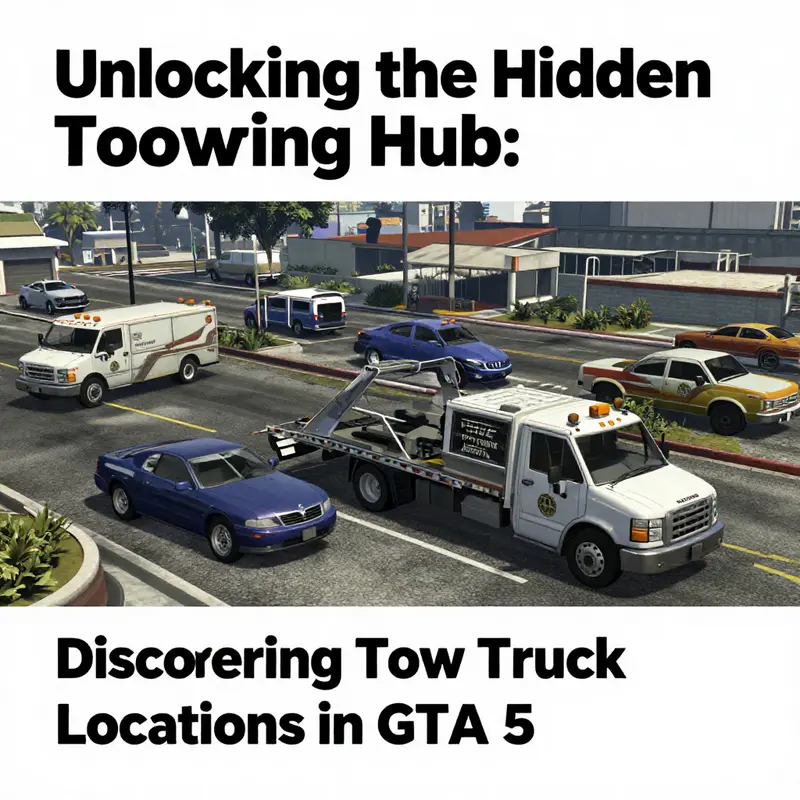
Understanding the locations of tow trucks in Grand Theft Auto V is crucial for business owners who wish to leverage the game’s mechanics for their ventures. This article delves into the primary locations where tow trucks can be found, including special hubs like the Tow Truck Garage in La Puerta, and how these vehicles can be utilized effectively in gameplay. Additionally, we will explore the role tow trucks play in various game missions, highlighting their importance and integration into the game’s mechanics, providing unique insights for players and business owners alike.
Tow Trucks in GTA V: Tracing the Rescue Rigs Across Los Santos
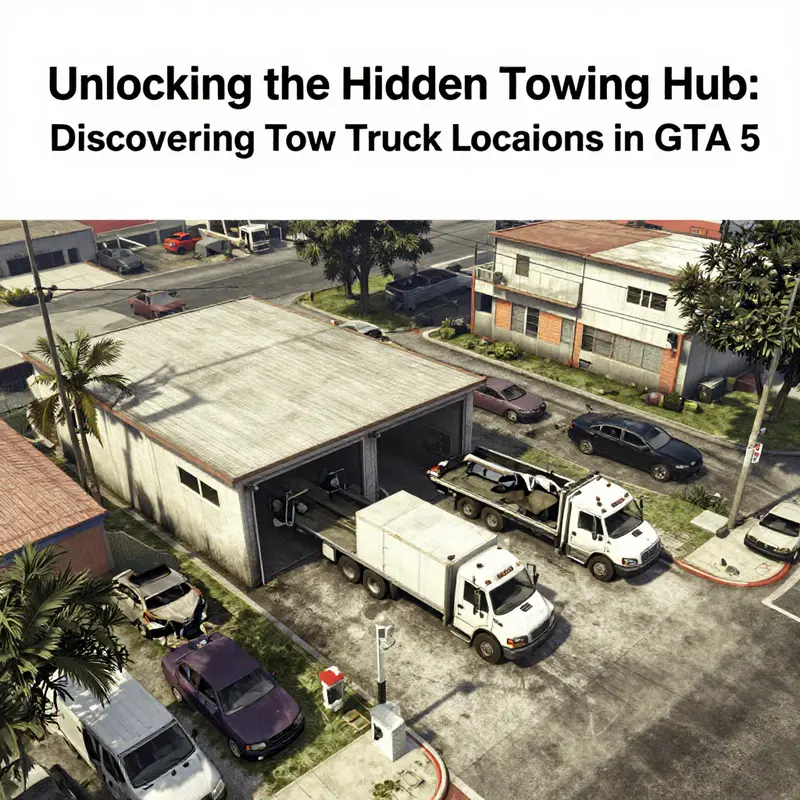
Tow trucks in Grand Theft Auto V are more than just utility vehicles tucked away in garages; they are integral threads in the fabric of Los Santos’ urban drama. They appear when you need to clear wreckage after a high-speed crash, when missions hinge on securing a tow for a heist, and even as wanderers of the city, spawning in zones where traffic and chaos collide. Their presence adds texture to the world, a reminder that beneath the gloss of chrome and neon there are practical machines designed to rescue, recover, and sometimes complicate the lives of the protagonists. The most well-known origin point for a tow rig is a dedicated garage in the La Puerta district, not far from the busy approaches to Los Santos International Airport. This Tow Truck Garage is operated by Trevor Philips, a character whose unpredictable energy intersects with the often mechanical logic of towing work. The garage functions as a hub where you can take hold of a tow truck, drive out to the wrecked cars you’ve caused or encountered and determine what to do next—repair them, use them for a mission, or leave them outside for a potential auction of abandoned vehicles. It’s a tangible anchor in the game’s ecosystem, a place where the act of towing becomes a game mechanic in its own right rather than a mere backdrop to the action. To connect a tow truck to a vehicle, players press the right direction on the D-pad (or use the corresponding button on their controller). That simple input opens up a chain of possibilities, turning what could be a mundane task into a controlled interaction. A tow in GTA V isn’t just about transport; it’s a way to manipulate the urban landscape, to reposition the wreckage of a night’s mayhem, and to navigate the moral gray area in which the game often operates. In that sense, the garage in La Puerta is more than a location—it is a narrative instrument, a point at which the player’s choices about salvaging, selling, or simply moving debris become part of the story you’re shaping in Los Santos.
Beyond the definitive garage, tow trucks show up across the city in a more organic way. They appear as rolling pieces of utility in traffic-heavy corridors, particularly around highways where accidents are more likely and where time and efficiency matter. The randomness of these spawns mirrors the randomness of the city itself; you may encounter a tow truck while cruising a boulevard, or you might drift past an industrial zone where a dock or a towing company has left a truck idling or ready for a quick assignment. The unpredictability is part of the charm: you learn to read the city’s rhythms, to anticipate where a tow might appear, and to recognize that your best bets aren’t just fixed points on a map but also moments of serendipity that can influence a mission or a casual romp through the streets.
If you’re specifically chasing the tow truck for a mission, the FIB Lot near downtown is a consistently reliable touchpoint. This facility doubles as a hub for FIB operations, and tow trucks are frequently stationed or spawned in proximity to the lot for mission clarity and access. A quick route to the FIB Lot often involves a hill shortcut that opens onto the freeway, a path that lets players slip into the heart of the city and emerge onto a grid where a tow vehicle might be waiting. The FIB Lot isn’t just a staging ground; it’s a practical reminder that the city’s power brokers and the game’s law-enforcement-adjacent operations sometimes intersect with the same mobility assets you’ll rely on for more lighthearted tasks. For players pursuing the pre-Heist arc or any mission in which a tow truck functions as a tool or obstacle, the FIB Lot is the logical starting point. The practical routine—find the tow truck, secure it, and maneuver it into position—becomes a quiet choreography that mirrors the broader tempo of the game’s missions and side activities.
However, it would be a mistake to assume that tow trucks are confined to these predictable hubs. The city is designed to surprise, and tow trucks can appear in a range of locations—industrial zones, empty parking lots, or the yards of towing companies that dot the map. Each appearance carries its own texture: a celebratory sense of discovery when you stumble upon a truck in an unlikely place, or a strategic worry when you realize a tow might be blocking your path during a crucial moment. The variability invites players to think about towing not as a scripted event but as a dynamic aspect of Los Santos’ constantly shifting surface—the roadways and back alleys that twist and turn as you chase, collide, or cooperate with other characters and factions.
For those who seek a deeper dive into the mechanics surrounding the Tow Truck mission, there is a canon path laid out in fan-guided guides and official walkthroughs. The mission itself—the one often framed as a pre-Heist set piece—requires you to secure a tow truck, fulfill specific objectives, and navigate the kind of timing and precision that make GTA V’s missions feel like cinematic choreography. The guide community and walkthroughs emphasize not just the steps, but the pacing and timing—the way you approach an objective with the right vehicle, the way you synchronize your actions with other characters, and the way you balance risk and reward as you push toward the mission’s finish. The practical takeaway is that tow trucks in GTA V are not mere props; they are functional, narratively meaningful machines that can alter the flow of a mission, the state of the map, and your personal approach to the game’s many narratives.
If you’d like to explore this topic through a real-world lens, you can examine a practical reference that aligns with the feel of roadside service and vehicle recovery. mikes-roadside-service offers a window into the everyday realities of towing work, a useful counterpoint to the game’s stylized chaos. You can visit that page here: https://mikes1towing.com/mikes-roadside-service/.
In sum, locating tow trucks in GTA V is less about memorizing a fixed set of coordinates and more about tuning into the city’s currents. The La Puerta Tow Truck Garage gives you a reliable base and a reason to engage with the tow mechanic; the FIB Lot anchors your pursuit in the downtown core; and the broader city holds a tapestry of spawn points that reward patience, exploration, and the willingness to adjust your route on the fly. The ritual of towing—hooking up a vehicle, lifting it, driving to a repair shop or to the edge of a mission’s demand—becomes one of the game’s quiet pleasure moments, a reminder that even in a world of mayhem, there are tools designed to restore order, transport debris away from the scene, and sometimes, to alter the story’s direction in small, meaningful ways. For players chasing every possible route and every possible outcome, the knowledge of where tow trucks can appear transforms a casual drive into a deliberate, strategic exploration of Los Santos’ mechanical underbelly. And as new patches and community challenges continue to evolve GTA V’s world, the locations and uses of tow trucks may shift, but the core appeal remains: these rugged, working vehicles are a bridge between the chaos above and the order you create below the surface of the city’s streets.
External resource for deeper mission-strategy context and gold medal guidance can be found here: https://www.ign.com/wikis/gta-5/Tow_Truck
Tow the Line: How GTA V’s Tow Trucks Drive Missions, Mechanics, and Mayhem
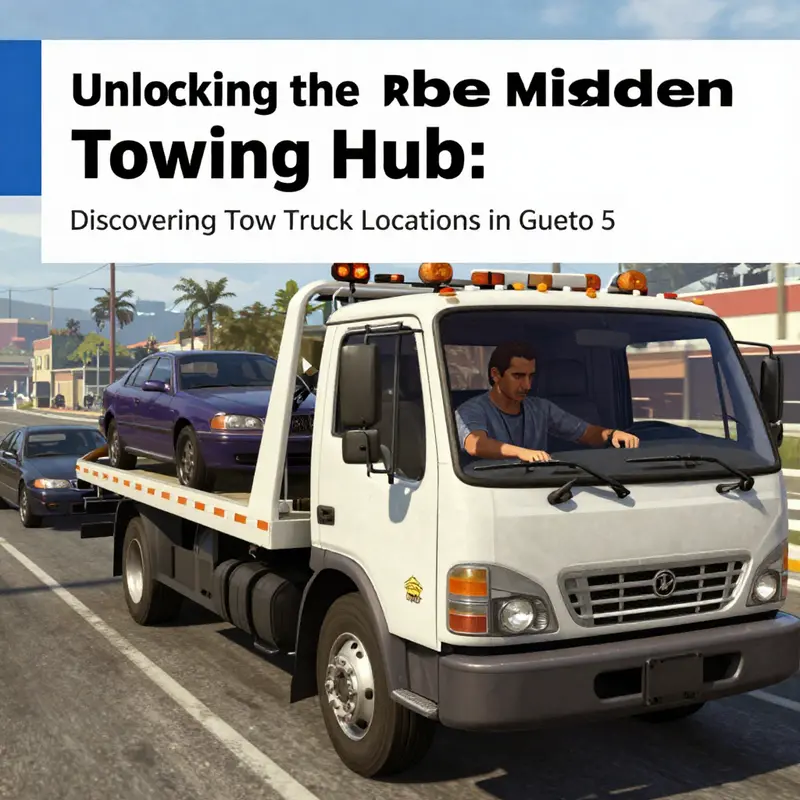
In Grand Theft Auto V, tow trucks are more than utility vehicles tucked away in a corner of the city map. They are structural threads in the fabric of Los Santos, weaving through story missions, random encounters, and the player’s sandbox ambitions. The most visible hub for this work is the Tow Truck Garage in the La Puerta district near the Los Santos International Airport. This locale isn’t just a backdrop; it frames a working world where a tow truck can be a tool, a weapon, and a key to progression. Operated in the game’s narrative by Trevor Philips, the garage functions as a focal point for gathering, deploying, and managing towed vehicles. From here, players can drive out in a tow truck to collect wrecked or disabled cars, then decide the vehicle’s fate—repair it for personal use, store it back at the garage, or leave it outside to be auctioned if the owner doesn’t reclaim it. The system echoes a rough-edged realism: vehicles break down, lanes clog, and logistics matter in a city that never truly sleeps.
To connect a tow truck to a target vehicle, players use a precise control sequence—pressing the right direction on the D-pad or the corresponding controller button. This action anchors the tow hook, aligns the truck with the cargo, and begins the careful ballet of towing. Mastery here isn’t just about getting from A to B; it’s about maintaining control when weight and momentum complicate the maneuver. The towing mechanic requires patience: you must position with care, engage at the right moment, and then execute a steady pull that won’t tear the vehicle loose or collide with oncoming traffic. Those who learn to thread this needle unlock a layer of gameplay where movement becomes a strategic operation rather than a simple drive.
Beyond the garage and the mechanic of hooking a car, tow trucks appear across the city with a certain opportunistic randomness. They become part of Los Santos’s rhythm—sudden appearances at accident scenes, congested highways, and busy intersections where a wreck or a block of stalled traffic needs a swift clearing. This distribution isn’t arbitrary texture; it reinforces the city’s sense of scale and consequence. A tow truck can change the speed and direction of a pursuit, alter the layout of a roadblock, or simply create space for a daring maneuver. It is no accident that one of the pre-Heist missions centers on employing a tow truck to move a stolen vehicle from one location to another. In that mission, the vehicle’s function as a tool—not just a ride—comes to the fore, forcing players to think about timing, stealth, and evasion as much as speed.
The mission in focus—often highlighted in comprehensive walkthroughs—emphasizes the tow truck as a procedural instrument. It is designed to test the player’s ability to maintain control while under pressure, to choose routes that minimize damage, and to deliver cargo while staying under the radar. In practical terms, this means balancing speed with caution, avoiding police attention, and ensuring the cargo remains intact until delivery. The way the game frames these tasks shows Rockstar’s intention: a tow truck isn’t just a conveyance; it’s a mission-critical asset whose performance can determine success or failure in a given scenario. For players looking to deepen their understanding of these objectives, community guides illuminate the optimal approach and the Gold Medal requirements tied to the execution.
But the tow truck’s value extends far beyond any single mission. In everyday open-world play, the vehicle becomes a versatile tool for managing the city’s debris and disorder. It allows players to relocate abandoned or damaged cars that block roads, clear obstacles that obstruct long-range plans, or retrieve vehicles needed for side activities that require a specific set of wheels. The towing capability also invites strategic choices about criminal improvisation. In a purist sense, it’s a reflection of a modern urban ecosystem where every asset can be repurposed, moved, and repurposed again as the story grows darker or more chaotic.
The gameplay mechanics themselves deserve a closer look. Towing relies on accurate positioning and controlled handling. The player’s success hinges on aligning the hook with the target car, securing it, and maintaining a steady pull. The physics engine in GTA V rewards smoothness: abrupt pulls can damage the cargo, while too-slow maneuvers risk police exposure or traffic conflicts. Speed control becomes a balance between efficiency and precision. In missions that demand stealth, the player must temper acceleration to prevent drawing attention or triggering alarms. When speed is crucial, quick repositioning, a clean hook, and a clean delivery become the trio that defines mastery. Those aiming for Gold Medal objectives frequently discover that the difference between success and failure is not mere speed but the discipline to execute the tow with minimal impact on the vehicle and minimal visibility to onlookers.
Rockstar’s design philosophy shines through in how tow trucks are embedded in the city’s narrative ecology. They are not cosmetic props but functional tools that enable a wide range of activities—from simple road maintenance in the player’s world to the more elaborate, planful sequences required by heist-related missions. The integration of towing into the broader gameplay loop adds texture to the open world, making Los Santos feel like a living, functioning metropolis rather than a static backdrop for gunfights and pursuits. This fidelity to a believable urban infrastructure—where tow services, road maintenance, and vehicle recovery coexist with high-speed chases and sprawling set-pieces—helps elevate the game’s immersion and gives players a meaningful choice about how to approach obstacles and opportunities alike.
For players who want to connect the virtual to the real, the mechanics of towing in GTA V can feel surprisingly intuitive when compared to real-world operations. The idea of a tow truck as a mobile workspace—an instrument that moves damaged or confiscated vehicles to potential repair, resale, or storage—parallels the real world’s logistics. In real-life contexts, the practical considerations are similar: securing a load, following proper angles, and maintaining control under varying road conditions. A useful real-world reference can be found in practical guides to tow operations, which discuss the importance of positioning, load security, and safe handling—topics that mirror the careful, deliberate actions taken in the game’s towing sequences. For readers who want to explore this connection further, a dedicated resource on real-world tow operations offers a grounded perspective that complements the virtual mechanics of GTA V. Tow trucks in Houston examines how professional tow teams approach these tasks in practice, enriching the sense of authenticity players experience when they tow cars in Los Santos.
As players traverse Los Santos’s network of roads, alleys, and industrial corridors, the tow truck emerges as a character in its own right—the kind of vehicle whose utility is driven by the player’s choices. It can be a silent partner in a clever escape, a methodical workhorse supporting a longer plan, or a catalyst that creates a new opening when the map feels too crowded or too predictable. In that light, the tow truck is not merely a means to an end but a core component of the game’s dynamic systems. It embodies the tension between control and chaos that defines GTA V: the more precisely you pull and place, the more options open up for pursuit, evasion, or strategic rearrangement of the city’s tempo.
For readers seeking a deeper dive into mission-specific tactics and the nuances of Gold Medal performance, the external resource linked in this chapter offers a comprehensive guide to the Tow Truck mission and its requirements. It complements the in-game experience by presenting structured strategies that help players maximize efficiency and minimize risk during important cargo deliveries. See the detailed walkthrough and strategy notes at the external guide cited below. In the end, the tow truck’s reputation in GTA V rests on more than its mechanical function; it is the instrument through which players sculpt pace, space, and possibility within Los Santos. The vehicle’s presence reminds us that even in a world of guns and thrills, careful handling, timing, and planning are what truly move the story forward.
External resource: https://www.ign.com/wikis/grand-theft-auto-v/Tow_Truck
Final thoughts
Tow trucks are not just vehicles in GTA V; they represent critical gameplay mechanics and strategic opportunities for business owners operating within this virtual realm. By understanding the key locations and roles of tow trucks, players can make informed decisions that enhance their gaming experiences. Remain aware of the strategic benefits that these vehicles offer, not just for missions but also as a part of Los Santos’s vibrant vehicle ecosystem.