
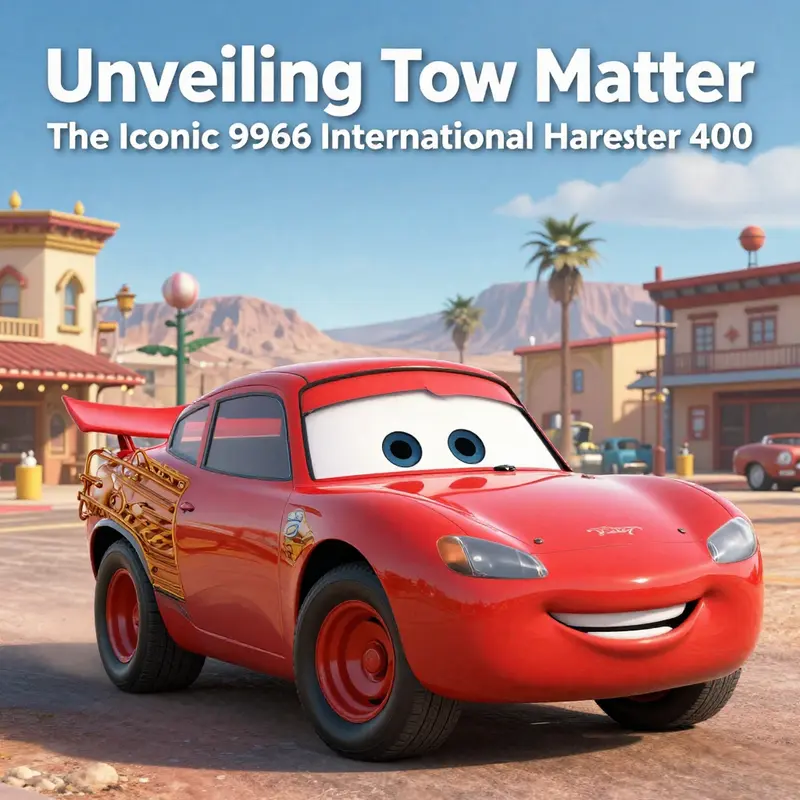
Amidst the colorful characters of the Disney•Pixar Cars franchise, Tow Mater stands out as an endearing symbol of friendship and humor. Yet, what truck is Tow Mater? He embodies the 1956 International Harvester 400, a model that combines vintage charm with practical design, making it an enduring favorite. This article navigates through the unique features and design aspects of this classic truck, examines Tow Mater’s cultural significance, and explores the various collectibles and merchandise inspired by this beloved character. By delving into each facet, we uncover not only the identity of Tow Mater but also the broader impact this character has within the franchise and beyond.
Bridging Eras: How a 1956 International Harvester S-112 Shaped Tow Mater’s Tow-Tough Identity

Tow Mater may look like a comic relief character, a rusty friend with a heart of steel, but his silhouette and vocation draw a straight line back to real-world service trucks of the mid-twentieth century. The character’s vibe rests on a design heritage that valued reliability over romance, endurance over elegance. Among the trucks that most clearly echo his spirit is the 1956 International Harvester S-112 1/2-Ton Pickup. IH’s S-112 was built in an era when American roads were expanding and the job of the tow truck, trade truck, and farm helper began to converge in a single, rugged tool. In the Cars film world, Mater’s essential job is to keep traffic moving and to offer a steady hand when a vehicle is stranded. The parallel is not a precise match of parts, but a shared commitment to functionality, fortitude, and a friendly, unassuming presence.
Design-wise, the S-112 sports a boxy, utilitarian profile that speaks of practicality. Its lines are straightforward, with flat panels and a cab that prioritizes visibility and serviceability over sculpted aerodynamics. That boxiness translates visually into Mater’s broad, almost cartoonish stance on wheels—the way he fills the frame with a solid, dependable mass. The distinctive front grille, large and commanding, announces that this is a vehicle built to work as hard as it looks. Behind the grille, an inline-six engine offered reliable performance, a suitable match for the carrying capacity and the towing tasks the truck was built to handle. The chassis was reinforced to bear heavy loads, allowing it to handle daily duties on a farm, on a ranch, or in a local repair yard. In short, the S-112 embodied a philosophy of readiness: a vehicle that could rise to any challenge and do so without fanfare. These traits gave Mater a practical ease on the screen, letting him pivot between duties with a calm confidence that audiences instantly trust.
Tow Mater embodies the same ethos, though in a world that anthropomorphizes machinery into a friend with a misfit smile. The real-world truck that inspired him gives us a lens to read his character more clearly. The S-112’s durability is mirrored in Mater’s tireless willingness to back up a car in trouble, his stubborn but endearing reliability, and the way he accepts a task with a cheerful if gravelly reply. The physical cues matter as well: a boxy silhouette, a broad stance, and a practical chassis that emphasizes function over fashion—all of which help translate Mater’s simple, sturdy energy into the on-screen persona that fans adore. The cultural footprint of the S-112 in postwar America—where workaday vehicles were celebrated for their serviceability—also shadows how Mater has become a symbol of dependable friendship in the Cars saga. This alignment helps explain why Mater’s humor never undermines his credibility; audiences feel safe with him because the vehicle he represents stands up to the same tests.
Toward a broader view of the design’s lasting influence, such cross-pollination between a historical design and a modern animated hero underscores a larger truth: characters can inherit a vehicle’s essence even when the two live in different times. The S-112, though not a tow truck by the strictest definition, carries an implied capability—an ability to pull, to salvage, to support—exactly the kind of duty Mater performs every time a roadblock appears. The broader cultural significance of this alignment is to remind audiences that beloved fictional figures often hinge on tangible design cues. The heavy-duty look, the workman’s color palette, and the straightforward, unpretentious stance all contribute to Mater’s enduring appeal. Fans who trace Mater back to the S-112 not only see a lineage of practical design; they glimpse a philosophy of resilience. The vehicle’s heritage adds depth to the character, turning a children’s film moment into a doorway for appreciating mid-century engineering and its lasting imprint on popular imagination. That continuity invites viewers to imagine how future generations will borrow from that same well of straightforward engineering and friendly resilience.
For readers who want a thread from fantasy to everyday practice, the idea of a tow service as a craft rather than a single function can be illuminating. A modern towing operation blends technique with patience, and the remembered solidity of a truck like the S-112 becomes a touchstone. If you’re curious about how real-world roadside assistance leans on the same principles of durability and reliability that Mater embodies on screen, consider looking into practical resources on the ground where drivers meet the unexpected. For a concise overview of how towing services function in practice, you can explore this resource: Mikes Roadside Service. It helps connect the rusted charm of Mater with the day-to-day realities of helping a neighbor in need. The takeaway is that a tow service is a study in coordination, where assemblies, timing, and temperament must fuse to lift a moment from trouble into relief.
Meanwhile, scholars and fans alike often turn to automotive history as a way to trace the cultural currents that shape popular media. The 1956 IH S-112 is a touchpoint in a broader story about how mid-century industrial design fostered a sense of trust and capability that endures in modern storytelling. To deepen the historical perspective beyond the fictional frame, an in-depth feature about this pickup offers a closer look at its specifications and its place in a family’s memory: https://www.collectibleautomobile.com/1956-international-harvester-s-112-1-2-ton-pickup-a-familys-jewel/
The Real Rig Behind Tow Mater: Tracing the 1951 IH L-Series Tow Truck That Shaped Pixar’s Beloved Tow Mater
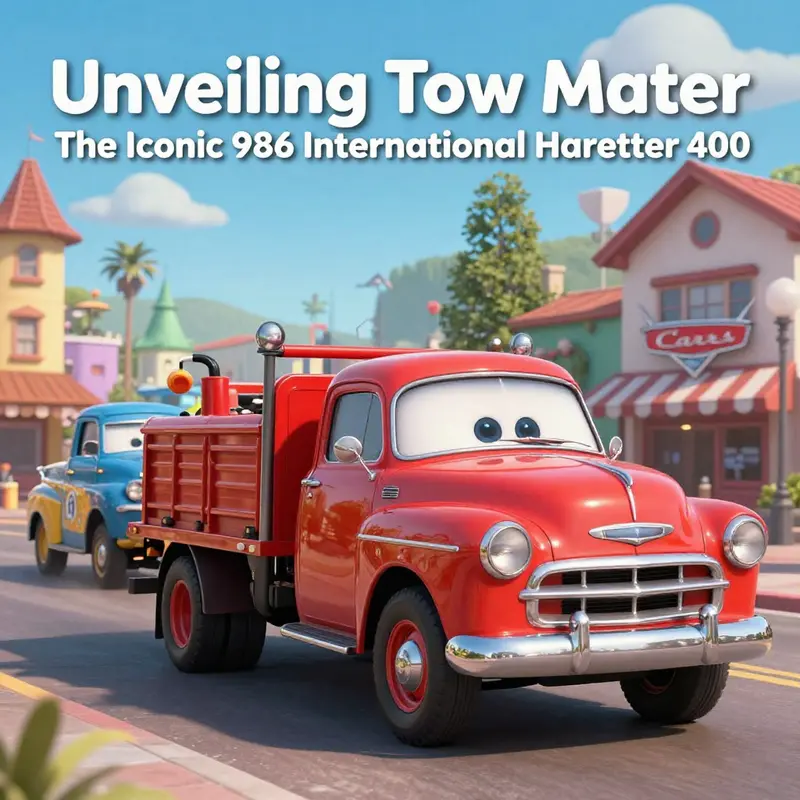
Tow Mater is not merely a running gag in a kid’s movie; he is a bridge between a fictional world and a very real one. When fans ask which truck Tow Mater is, the best answer points to a specific borrowing from automotive history. In the Cars films, Mater’s silhouette and mechanical quirks align with a 1951 International Harvester L-Series cab-over-engine tow truck. This isn’t a random aesthetic; it is a deliberate homage that anchors a cartoon character in a lineage of practical, hard-working machines. The cab-over layout, with its compact footprint and tall grille, gives Mater a distinctive profile that reads clearly on screen, even when the road is buzzing with other cars. Designers wanted a vehicle that looked capable of hauling, clanking, and enduring long hours on the road, but also one that could be warmed by personality. Mater’s yellow body and the bold, retro lettering along the side are not just stylistic choices; they signal a specific era, a particular brand of American manufacturing, and a shared memory of the open highway where a tow truck earns trust before it earns a name.\n\nThe choice to ground Mater in a 1951 IH L-Series tow truck is more than a nod to vintage styling. It reflects a broader film-making impulse to fuse character with credible engineering. The L-Series cab-over, especially the L-170 variant, offered a short wheelbase and an upright stance that could squeeze into narrow backstreets yet still haul another vehicle away from a roadside crisis. On screen, that translates into a vehicle that looks sturdy enough to bear the weight of a world-saving misadventure while still reading as approachable and friendly. The designers then layered Mater with the personality cues audiences expect from a beloved sidekick: a slightly plucky air, a touch of clowning, and a heart that proves steady under pressure. The result is a vehicle that feels both historical and alive, a tangible touchstone for viewers who can imagine the truck’s whirr and rattle as it navigates a town full of larger-than-life personalities.\n\nCulturally, Tow Mater has evolved into more than a character in a movie. He functions as a symbol of the romance of mid-century work culture—an era when tools, vehicles, and people all spoke in a shared language of practicality and grit. Mater’s humor—noisy, exuberant, and unfailingly loyal—translates into a sense of community. He welcomes strangers, fixes problems with a mix of stubborn ingenuity and friendly bravado, and reminds audiences that trust often comes with a steady hand and a ready repair bill. This humane heart is what elevates Mater from a simple prop to a community icon. People who grew up around classic trucks recognize the cadence of the old engines and the sturdy, unapologetic design language that the L-Series embodies. The character’s enduring popularity has rippled outward into fan art, themed attractions, and a cultural fondness for vintage industrial design, turning a fictional tow rig into a touchstone for a broader affection of the era.\n\nBeyond the screen, there is a practical thread that fans often pursue: a curiosity about the exact model that inspired Mater. Automotive guides and historical registries converge on the same conclusion—that the character is rooted in the 1951 IH L-Series tow truck. The L-Series represents a period when American manufacturers prioritized robustness and serviceability, a philosophy that resonates with Mater’s persona: dependable, unpretentious, and ready to lend a helping hand no matter what. This cross-pollination—between cinematic storytelling and historical design—explains why Mater remains compelling today. He is not merely a cartoon figure; he is a reminder of a time when a tow truck could be both workhorse and character, a machine that carried stories as readily as cars. For readers curious about how such a precise model came to be linked with a modern animated hero, automotive literature offers a comprehensive portrait of the truck that inspired Mater, bridging a silver screen myth with a tangible piece of industrial history.\n\nIf you want a sense of how real-world tow rigs influence storytelling and the way designers translate that into film and subsequent fan communities, consider exploring more about the practical side of tow trucks in Houston and nearby regions. This practical connection helps explain why a character like Mater remains so credible and endearing long after the credits roll. For readers seeking a fuller range of insights, a detailed automotive guide confirms the model as the 1951 International Harvester L-Series Tow Truck, underscoring the deliberate fidelity that the filmmakers brought to this enduring character. External sources illuminate the history and design choices that let Mater stand as a bridge between mid-century engineering and modern storytelling.\n\nExternal resource: https://www.caranddriver.com/features/what-car-is-tow-mater-a-complete-guide-to-the-pixar-character\n\nInternal note: To explore how real-world tow rigs inform storytelling in local contexts, see this overview on tow trucks in Houston.
Mater’s 1950s Charm: Tracing the Tow Truck Identity That Hooked Pop Culture
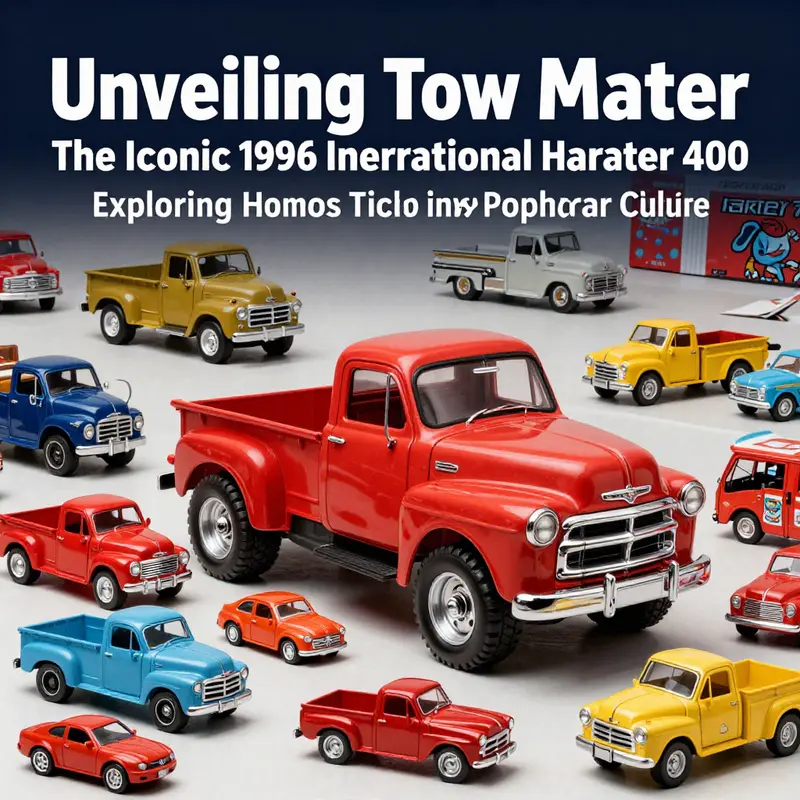
Towards the start of any conversation about Tow Mater, the question often rises with a playful tone: what truck is Tow Mater, exactly? The straightforward answer in the Cars universe is a deliberate blend rather than a precise match to any single real-world model. Mater is depicted as a 1950s-style tow truck, a fictionalized “Mater” model that echoes the era’s design language while remaining unmistakably cartoonish. His silhouette—an extended, curved frame, a compact cab, and a vivid, sunlit yellow paint job with red trim—reads as a tribute to mid-century American towing heritage without binding him to a specific make or year. The effect is a design that feels both nostalgic and fresh, rooted in a time when American roads were defined by bold, generous shapes and bold color schemes, yet flexible enough to belong to a world of talking cars and anthropomorphic personalities. In this sense, Mater’s truck identity is less about replication and more about storytelling through form. The character’s name, painted proudly along the side, seals the sense that he is not a museum piece but a living, joking part of Radiator Springs’ everyday life.
That imaginary gleam matters because it gives Mater a universal appeal. He channels a bygone era of American road culture—the long wheelbase, the heavy-duty frame, the practical charm of a machine built for work and willed to companionship. Pixar’s designers avoided pinning him to a single real brand to preserve that universal accessibility. The result is a design that fans instantly recognize as “Mater,” yet which also invites curiosity about the broader family of vintage tow trucks it evokes. It’s this balance—between homage and originality—that has helped Mater become more than a character. He becomes a touchstone for a wider cultural conversation about how a vehicle, even a fictional one, can carry personality, humor, and resilience across generations.
As a result, Mater has become a robust engine for collectibles and merchandise that extends far beyond film scenes. Across the market, enthusiasts can find a spectrum of items that celebrate his distinctive look and friendly persona. Die-cast models, with their scale precision and sturdy detailing, are a staple for fans who want a tangible reminder of Radiator Springs’ chief wrecker. Alongside these are action figures and display pieces that capture Mater’s signature grin and his endearing clumsiness. Then there are broader lifestyle and décor items—apparel, posters, and home accents—that translate Mater’s warmth into everyday objects. Even small accessories, like keychains and luggage tags, carry the same yellow glow and red trim that define his outward character. The thread binding all these pieces is not just nostalgia; it’s a shared memory of a character who embodies loyalty, humor, and a readiness to lend a tow or a listening ear when a friend is in need.
What makes Mater’s merchandise story especially enduring is how it straddles family-friendly appeal and collector ambition. The character remains central to the Cars mythos, but the merchandise ecosystem allows fans to curate a personal archive of moments and relationships from the films. The voice—delivered by a well-loved comedian—adds another layer of resonance, transforming Mater from a screen companion into a familiar figure who can spark laughter and comfort in many settings. This combination—distinctive visual design, a warm personality, and a well-developed merchandising pipeline—explains why Mater is a recurring fixture in both pop culture discussions and classroom conversations about design, storytelling, and nostalgia. The imaginative leap from a playful tow truck to a living cultural artifact is precisely the kind of success story that helps a fictional object transcend its origin and inhabit a broader cultural geography.
For readers who want to explore the broader consumer ecosystem without losing sight of the character’s essence, a practical starting point is to engage with nearby and online communities that specialize in automotive collectibles and pop-culture nostalgia. These spaces often offer insights into how scale, finish, and packaging influence the way a character like Mater is perceived in the real world. They also provide a window into how fans balance display-worthy pieces with affordable, everyday items. If you’re curious about tangible connections to local service networks that align with Mater’s tow roots, you can explore a nearby tow-truck-focused resource at tow-truck-houston. This kind of local outreach can illuminate how the practical world of towing intersects with the playful world of Mater, revealing how a beloved movie character resonates with enthusiasts in everyday life.
Ultimately, the Mater identity—this bright, vintage-tinted tow truck—serves as a lens for understanding how design, memory, and merchandising converge. He represents a particular moment in automotive history while also existing as a flexible emblem of friendship and reliability in popular culture. The merchandise that springs from his image keeps the character accessible to new audiences and long-time fans alike, inviting each generation to discover or rediscover the sense that a tow truck can be more than a tool; it can be a companion, a joke, and a story all at once. For those seeking official references and authentic displays of Mater-inspired memorabilia, the broader catalog of authorized channels offers an organized, curated pathway to understand how a fictional vehicle can become a lasting collectible that travels from the silver screen to living rooms and beyond. External resources can provide reliable guidelines on authenticity and provenance, ensuring that the Mater you welcome into your collection remains aligned with the character’s warm, adventurous spirit, just as it appeared on the big screen. See the official store for curated references and authentic memorabilia related to the Cars universe: https://www.disneystore.com.
Final thoughts
Tow Mater, the charming tow truck from the Cars franchise, is indeed a representation of the classic 1956 International Harvester 400. His character not only provides comic relief but also encapsulates themes of loyalty and friendship, making him an invaluable part of the series’ charm. The unique design of the International Harvester not only sets Tow Mater apart but also resonates with fans through collectibles that celebrate his legacy. By understanding what truck is Tow Mater, we appreciate not just a model but a beloved icon that continues to inspire after many years. As business owners, recognizing the cultural significance of such icons can lead to enhanced brand connections and customer engagement.