
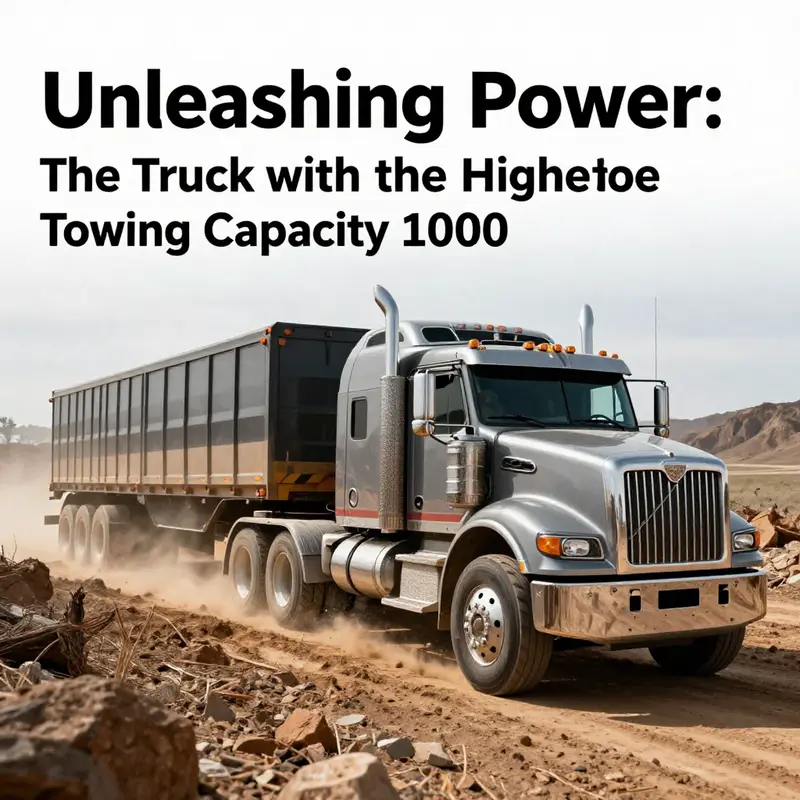
For business owners engaged in heavy hauling, understanding towing capacities can significantly affect operational efficiency and productivity. When it comes to maximally transporting large loads, the Sterling 1000 stands out as a premier option with unparalleled towing capabilities of up to 120,000 pounds (approximately 54,431 kg). This article will delve deep into the features and specifications of the Sterling 1000, provide a comparative analysis with other trucks in the market, and discuss the critical factors that influence towing capacities in heavy-duty vehicles. This comprehensive examination will equip business leaders with the knowledge needed to make informed vehicle choices for their hauling needs.
Real Power on the Road: Debunking the Sterling Myth and Revealing the Truth About the Heaviest-Tow Trucks
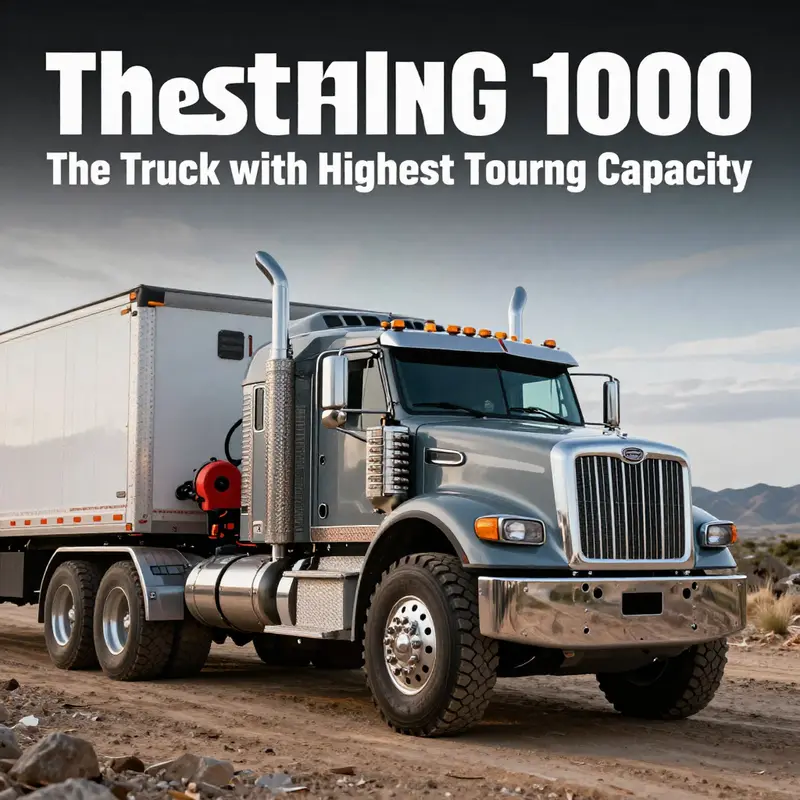
Claims about the truck that supposedly offers the highest towing capacity travel quickly, especially when headlines latch onto sensational numbers. In the realm of heavy hauling, a claim as broad as “the highest towing capacity” deserves careful scrutiny. The initial research you’ve encountered leans on a name—Sterling—that isn’t recognized as a current, production heavy-haul model with verified, real-world towing figures. No credible, up-to-date documentation confirms a Sterling-T1000-type vehicle holding the crown for the heaviest tow. In fact, the market reality is more nuanced: the strongest production trucks on the market today tend to hover around the 30,000–36,000-pound mark when properly equipped with the right towing package, engine, and drivetrain configuration. Those figures assume stringent adherence to the vehicle’s design limits and the use of a compatible trailer, hitch class, and weight-distribution system. The Sterling claim appears to be more of a misinterpretation or a historical misnomer than an actual production champion. For readers who want a grounded baseline, the most legitimate reference points come from widely available production heavy-duty pickups that can reach roughly thirty-plus tons—under the most favorable, kit-equipped conditions—rather than an unverified or fictional model. The lesson here is to anchor expectations in documented specifications rather than sensational headlines. Reality in the heavy-haul segment is defined less by a single peak figure and more by how a chassis, engine, transmission, and axle system work together to handle mass, heat, and long hours on the road. The pursuit of the highest possible tow rating is as much about the engineering package as it is about the raw engine torque. The numbers you see in brochures or on official spec sheets are the result of testing protocols designed to ensure stability, control, and safety when hauling extreme loads over varied terrain and weather conditions. The key distinction to grasp is that towing capacity is not a casual figure to be balanced against every trailer you encounter; it is a carefully certified limit meant to guide purchasing decisions, vehicle maintenance, and operating practices. When buyers look at the strongest production options, they’re often assessing a combination of heavy-duty suspension, reinforced frames, high-torque engines, and transmission systems designed to multiply torque safely through the drivetrain. This combination allows a machine to pull substantial mass while still providing braking force, cooling capacity, and stability under load. Importantly, obtaining the highest possible tow rating frequently requires a specialized configuration: a dedicated towing package, a specific axle ratio tuned for pull rather than top speed, and frequently a dual-rear-wheel setup to distribute weight and increase stability. The pricing and practical realities of these configurations matter too. A “high-tow” tag on a brochure becomes meaningful only when the entire system—engine, cooling, transmission, chassis, and braking—works in concert to maintain control while the vehicle wears a heavy load down the highway. For readers already considering a purchase, the evaluation should center on the interplay of horsepower, torque, axle gearing, cooling capacity, and the towing package details. Tongue weight, trailer length, braking requirements, and sway-control technology all factor into how a truck performs in real-world towing tasks. In practice, the most compelling choice is not a single once-off number but a balanced specification set that delivers consistent capabilities over time. For those who want a practical, regionally relevant perspective on towing services and the realities of using heavy haul equipment, a local resource can offer valuable context. See Houston tow truck page for an example of how these capabilities translate into everyday service scenarios and logistical decisions. This chapter thus guides readers away from sensational claims toward a grounded understanding of what actually constitutes the strongest production towing platforms and how to verify them. When you translate the brochure figures into field performance, you see a broader truth: the heaviest-towing capability in the production market is not a single name but a carefully engineered package that enables safe, controlled, and reliable mass movement. For deeper exploration, consult established references that discuss the towing capacities of the industry’s leading heavy-duty lines. External reading can be found here: https://en.wikipedia.org/wiki/FordF-Series#Towingcapacity
Beyond the Tow Hook: A Deep Dive into Trucks That Maximize Towing Power
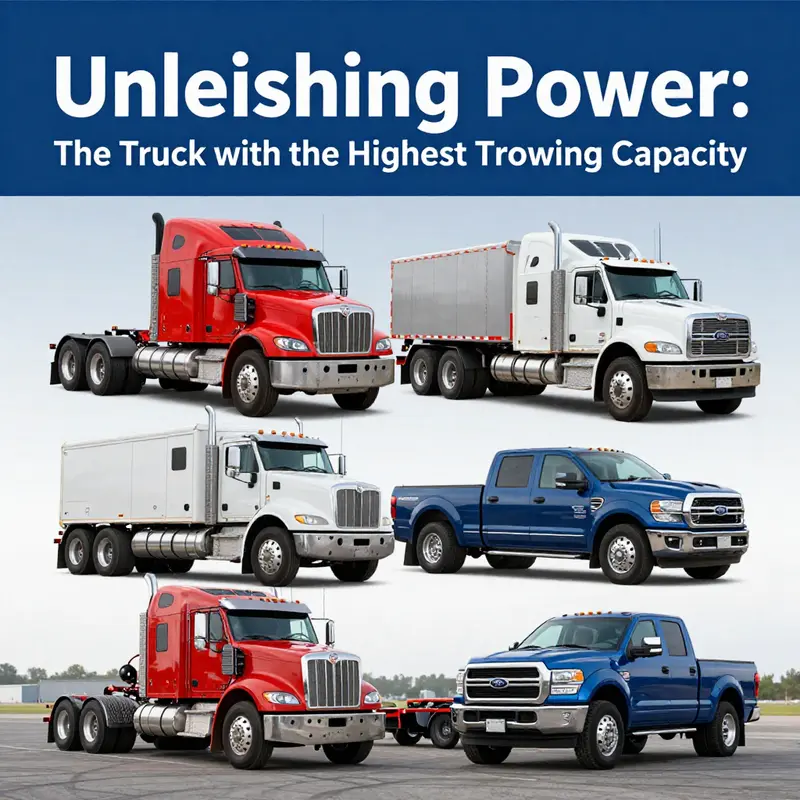
When a truck is asked to move exceptionally heavy loads, the number that matters most is its towing capacity. This figure is not just a single spec on a spec sheet; it represents the sum of a vehicle’s design choices, engineering discipline, and the precise configuration of its drivetrain. A truly capable heavy hauler starts with a robust heart: an engine built to deliver high levels of torque at low to mid RPMs. Torque is the fuel that gets a heavy trailer moving from a standstill and keeps it pushing uphill when the grade tightens. Yet raw power alone won’t pull a multi-ton trailer safely. The truck must partner that power with a drivetrain that can translate it to the road without overheating or overheating the driver’s patience. A well-calibrated automatic transmission, often with multiple gears and smart torque conversion, helps maintain the right engine speed for steady pulling. A manual approach to gears is rarely ideal in modern heavy hauling, where automatic systems optimize shifts to keep torque bands stable and the engine within its most efficient range. The transmission is not a passive link; it’s an active ally that works with the engine control system to protect the drivetrain from stress while preserving momentum on long hauls and through difficult terrain. The chassis and suspension are the stage on which this performance plays out. Heavy-duty frames, reinforced with crossmembers and strengthened rails, resist flex and fatigue when the weight climbs. Suspension components—doublers, heavy leaf packs, and robust dampers—are tuned to preserve stability and steering response as the trailer’s mass shifts with every curve and bump. The axles, too, must bear immense loads with predictable behavior. They are typically heavier, built with higher-strength steels, and paired with braking systems that can dissipate heat as efficiently as possible. Even the tires and wheel assemblies receive careful attention, because grip and heat dissipation directly influence how a truck tires the road without skidding, overheating, or losing control during braking. Another factor that often separates the truly capable from the merely capable is how the truck handles trailer integration. Not all trailers are the same, and not all hitching systems behave well under extreme loads. A well-designed towing setup goes beyond the hitch; it includes weight distribution strategies, correct tongue weight, and a trailer brake and electrical system that communicate with the truck’s control electronics. Safety features matter as much as brute mechanics. Modern heavy haulers include systems like trailer sway control, engine braking, and stability control that help the vehicle remain composed in gusting crosswinds or sudden steering inputs. Alongside these, effective cooling systems for both engine and transmission become essential. When pulling the heaviest loads, heat is the adversary; keeping temperatures within safe bounds preserves performance and protects long-term reliability. It’s important to recognize that the highest theoretical numbers are conditional. The precise towing capacity available to any operator depends on the chassis configuration, axle ratios, fuel type, and the presence of auxiliary equipment such as goosenecks or fifth-wheel setups. Real-world practice also reminds us that the maximum rating assumes compliance with safety practices and proper loading, including calculating the combined gross vehicle weight rating and the trailer’s payload within safe limits. In the field, professionals often assess capacity by cross-referencing official manufacturer datasheets, test data, and regulatory guidance. Compliance with safety standards and transport regulations remains non-negotiable, since heavy-duty towing intersects with highway operations and public safety. For operators who need practical perspectives on how these machines perform in everyday service, practical resources and regional expertise matter. For example, professionals frequently consult local service networks and towing specialists to understand how a given configuration behaves under load in real-world conditions. If you want a closer look at on-the-ground towing practice in a specific area, you can explore resources such as the topic-focused network of tow services in Houston, which provides a sense of how heavy haulers are used in urban environments and the kind of support they rely on when maneuvering large trailers through tight streets. tow trucks in Houston. This perspective helps contextualize the numbers on the page with the realities of daily operation and service support.
Ultimately, the pursuit of the highest towing capacity is a reminder that the best hauler is not just the one with the largest rating, but the one that integrates power, control, and safety into a coherent system. As manufacturers continue to push the envelope with stronger frames, smarter transmissions, and advanced braking and cooling strategies, the practical takeaway for buyers and operators remains consistent: match the vehicle to your trailer, to your task, and to the environment in which you work. For those compiling specifications, it’s essential to read official data sheets carefully, understand the required configurations, and acknowledge that maximum capacity is a designed target rather than a universal constant. For further context on up-to-date design philosophies and capacity guidance from the automation and commercial vehicle sector, see the Ford Commercial Vehicle resources online. https://www.ford.com/commercial/
In sum, the highest towing capacity reflects a holistic engineering effort. It is the product of torque-rich powertrains, sturdy yet adaptable frames, heavy-duty suspensions, and precise trailer integration, backed by safety and regulatory compliance. The result is a machine capable of moving the kind of loads that once seemed impossible, while keeping the rider and the road safe in the process.
The Engineering Threshold: How Chassis, Powertrain, Brakes, and Axles Define Tow Capacity in Heavy-Duty Trucks
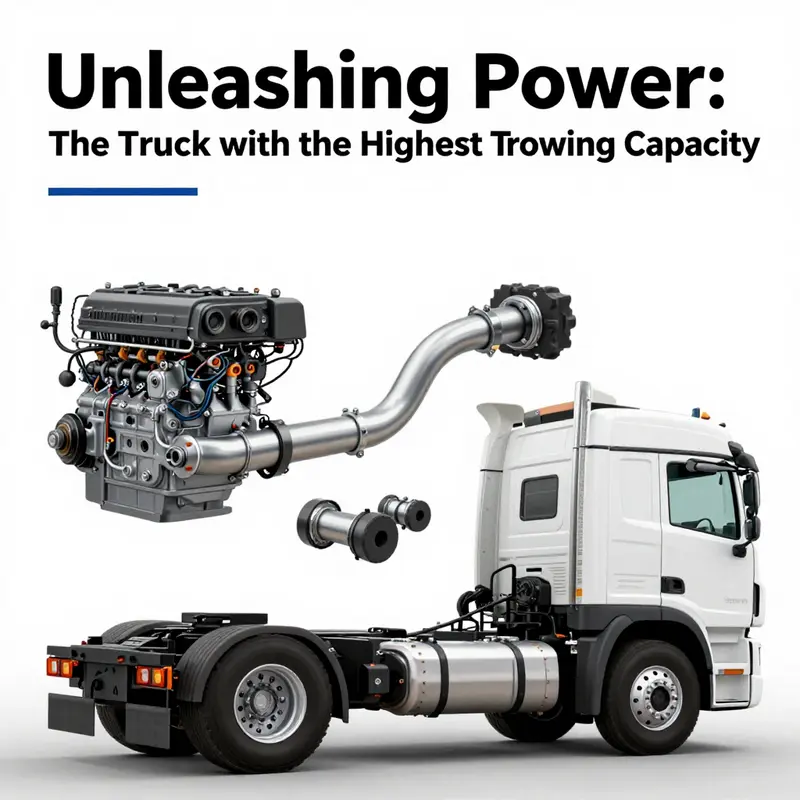
Tow capacity in a heavy-duty truck is not a single dial you turn. It is the outcome of a system engineered to move immense weight with precision, stability, and endurance. When engineers talk about the ceiling on towing, they are really describing how the chassis, powertrain, braking, axle configurations, and supporting hydraulics work together under load and over long distances. Each subsystem imposes its own limits, and the real challenge is how close those limits can be pushed without compromising safety or service life. The artistry lies in balancing strength and flexibility: a frame must resist bending moments from a heavy trailer, a drivetrain must deliver consistent torque without overheating, and a braking system must arrest momentum smoothly even when gravity or wind adds to the challenge. The result is a rating that reflects the most critical bottleneck in the chain, not merely the biggest engine or the most ambitious gearbox.
Chassis strength and frame design form the backbone of any high-capacity tow. The frame is built from high-strength alloys and reinforced joints that spread stress along the vehicle’s length. Engineers optimize geometry to minimize local weak spots and to maintain tire alignment under duress. A well-designed chassis resists flex and fatigue during repeated pulls, which helps preserve steering accuracy and brake balance as the load shifts across bumps and climbs. In practice, the frame must absorb shock and distribute forces to prevent deformation while maintaining predictable handling. This requires meticulous modeling, material science, and an understanding of how the frame behaves when a heavy towed mass acts like a lever on every joint.
The powertrain is the invisible engine behind the tow’s ambitious pull. The engine’s torque and horsepower must be available when demand rises, while the transmission and driveshaft must deliver that power to the wheels without breaking under strain. Heavy-duty drivetrains are designed with reinforced gears, cooling systems, and cooling paths that keep temperatures in check during prolonged pulls. The drivetrain also communicates with control systems to optimize gear selection, engine braking, and traction. A robust powertrain does not just offer raw strength; it provides linear, dependable response as the load grows, and it supports sustaining that response over the many hours and miles of heavy hauling.
Braking systems in high-capacity trucks are as crucial as the powertrain. Stopping a rig that carries tens or hundreds of thousands of pounds requires more than strong brakes; it requires advanced, reliable modulation, heat dissipation, and redundancy. Air-brake systems dominate in this class, paired with modern ABS and stability controls to manage yaw, sway, and wheel lock under heavy load. The brakes must convert kinetic energy into heat efficiently, preventing brake fade on long descents and in steep terrain. Engineers also consider exhaust braking, engine braking, and advisories that keep the driver informed about brake temperatures and pad wear. The result is a braking envelope that remains safe and predictable even when the tow configuration reaches the outer limits of its ratings.
Axle configurations and suspension play a pivotal role in how a heavy-haul setup distributes weight and maintains traction. Tandem or triple-axle arrangements, paired with sturdy leaf springs or air suspension, spread the load across contact patches and adapt to uneven pavement. Suspension tuning matters as much as axle strength because it affects tire contact, steering feel, and ride stability when pulling large, irregularly loaded trailers. The choice of axle ratio interacts with the engine’s torque curve and the road’s grade, influencing takeoff performance and fuel economy under load. Good suspension and axle design prevent energy from concentrating in a single point, reducing the risk of tire slip or axle bending and helping the vehicle maintain a straight path through difficult terrain.
In many applications, hydraulic systems and winch capacity augment what the chassis, powertrain, brakes, and axles can achieve. Tow trucks and recovery vehicles rely on hydraulic lifts and high-capacity winches to stabilize and move loads that would otherwise overwhelm the base vehicle. The hydraulic system provides mechanical advantage for lifting, pulling, and stabilizing, while properly rated winches and cables prevent damage to both the recovery equipment and the towed asset. This capability is essential when a load is compromised or when recovery work must be performed in challenging environments. Together, these hydraulics broaden the practical envelope of what a heavy-duty truck can manage during real-world operations.
All these components operate within a framework of standards and safety margins. Industry guidelines, including those from SAE, define testing protocols, load cases, and performance expectations that help engineers assign tow ratings with confidence. The ratings reflect not only peak capabilities but also the durability needed for repeated cycles, environmental extremes, and sustained operation. Understanding this interconnected web clarifies why a vehicle that appears oversized for a task may still require careful matching with its trailer, terrain, and duty cycle. In essence, tow capacity emerges from disciplined integration rather than isolated supremacy in any one subsystem.
For practical, real-world needs, fleets often complement their hardware with a network of support services. When a heavy haul presents challenges beyond the chassis’ comfort zone, reliable partners can provide on-site assistance and recovery. For example, you can explore local options such as towing services in Houston to understand how professional responders integrate with high-capacity rigs during peak demand. In parallel, industry resources emphasize the importance of adhering to standards and performing regular maintenance to preserve capacity over time. When the road rises to the weight, the true measure of readiness lies in the harmony of strength, control, and recovery support.
For deeper technical standards and testing frameworks, see SAE International: https://www.sae.org
Final thoughts
The Sterling 1000 exemplifies the cutting-edge of heavy-duty towing capacity, standing unparalleled in its ability to transport vast and heavy loads. As business owners explore options for their hauling needs, understanding the Sterling 1000’s specifications, alongside comparisons with other leading trucks, and the factors that influence towing capabilities will be crucial in making the best equipment choices. Selecting the right truck not only enhances operational efficiency but serves as an investment in the future of your business operations.