
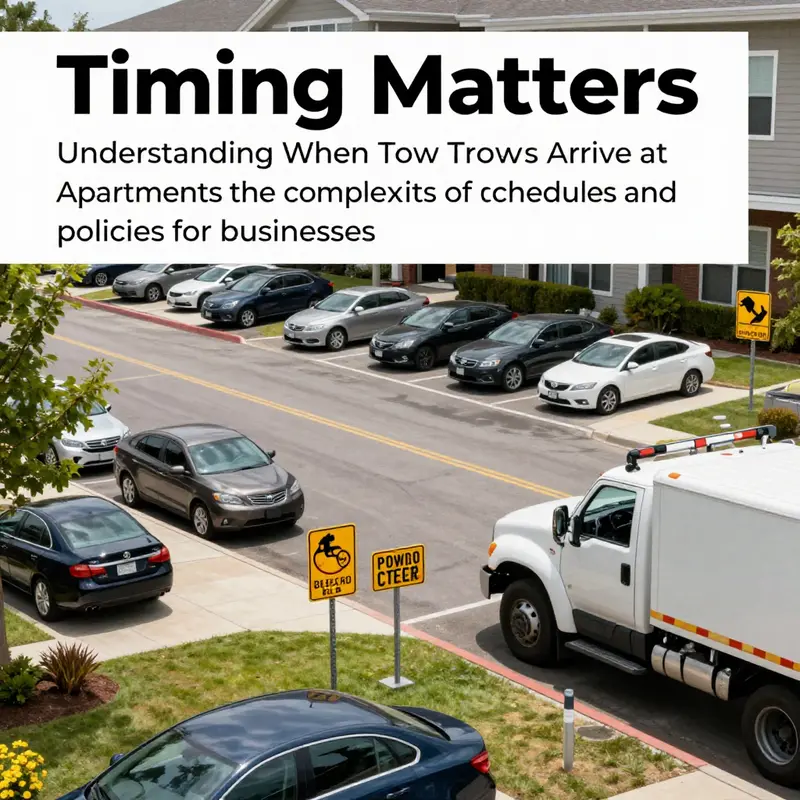
For business owners managing apartment complexes, understanding when tow trucks arrive is crucial for maintaining order and tenant satisfaction. The timing of towing can significantly affect property management, as regulations and policies vary widely. Whether dealing with illegal parking or coordinating emergencies, it’s essential to grasp factors influencing when and why tow trucks come to apartments. This article will outline key scheduling details in the first chapter, followed by an exploration of the regulatory landscape governing these operations in the second. By gaining a comprehensive understanding, property managers can better facilitate residents’ needs and uphold community standards.
The Real Clock of Apartment Towing: How Dispatch, Policies, and Location Shape When Tow Trucks Arrive
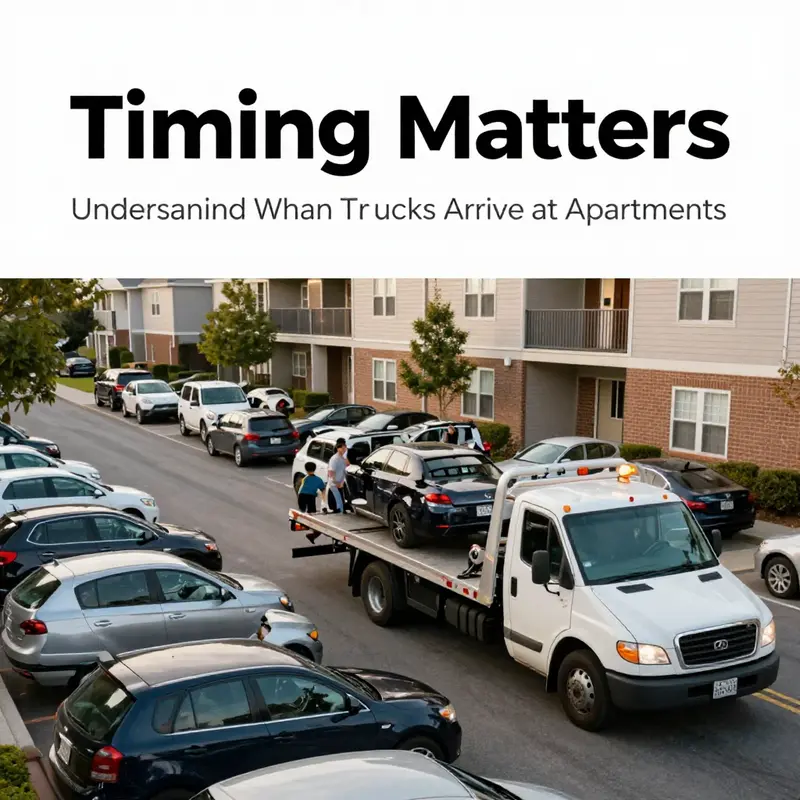
When a car sits in a place it shouldn’t at an apartment complex, the clock begins ticking for the residents, the managers, and the towing crew. The question of when a tow truck will actually arrive is seldom a single fixed hour. It is a mosaic built from the reason for the tow, the rules laid down by the property, the quirks of local law, and the simple arithmetic of where the service provider is parked and how many jobs queue up ahead of yours. In many cases, residents experience a window rather than a precise minute: a window that stretches from the moment a call is placed to the arrival of a wrecker at the curb. Yet that window is not the same in every place. It shifts with the severity of the situation, the structure of the property’s contracts, and the rhythms of the local towing market. Understanding this clock requires stepping into the everyday mechanics of how apartment towing works and what shapes the pace of dispatch in the moment of need.
For starters, the basic cadence often hinges on the reason a vehicle is being targeted for removal. If a car is illegally parked, abandoned, or blocking essential access—think a vehicle stranded in a fire lane, blocking drive aisles, or obstructing a guest entry—towing companies may respond quickly, sometimes within a few hours of the report. In contrast, emergency tow services tied to breakdowns or accidents may be dispatched at any hour, including nights and weekends, because the priority is immediate safety and mobility. In other words, not all tow calls are created equal in the eyes of a dispatcher. The nature of the problem can compress or extend the wait time in ways that feel almost procedural to those waiting behind the wheel or on the sidewalk.
This variability is then sculpted by the property itself. Apartment communities and HOAs often operate under specific parking rules and a structured chain of command for towing. A complex may have a posted towing policy that designates which violations trigger a tow and when management will consider initiating it. Some properties schedule towing during particular windows to minimize disruption to residents and visitors, while others rely on the moment a violation is observed or reported to the on-site staff. The precise timing is not purely a matter of the tow company’s capacity; it is also a product of how the management prioritizes traffic flow, safety, and liability. Consider a scenario where a gate or security post needs to be alerted and a notice posted, or where an internal pre-approval process with a preferred vendor must be followed. In such cases, even a relatively straightforward call can take longer because it traverses several administrative steps before a tow truck is dispatched.
Local regulations add another layer of timing. Cities often regulate when towing can occur, especially on residential streets, to protect residents from sudden removals and to give drivers some predictable notice. Rules may require clear signage, documented warnings, or a minimum notice period before a tow, or they may impose restrictions on nighttime towing in certain zones. The result is that the same kind of violation might trigger different response times depending on the jurisdiction and the street where the car is parked. A quick call to the on-site manager will often reveal what local ordinances apply in a given neighborhood and how the property interprets them inside its own rules. In some cities, this patchwork of rules means that a tow could be scheduled for the following day unless an urgent safety issue is present.
If you are a resident who has seen the tow truck approach, you may notice that factors beyond intention and policy begin to matter. The weather, road conditions, and traffic can all compress or extend the actual drive time. Urban cores with dense traffic patterns naturally experience quicker dispatch to a higher-priority call, but the travel time between the tow yard and the apartment building might be longer than you expect if roads are congested or if there is a water main break or construction nearby. Conversely, in rural or less densely populated areas, the absence of nearby licensed tow companies can create longer waits even for urgent calls. It is not just about the number of trucks available; it is also about how far the nearest responding unit is and how many calls that particular company is juggling at that moment.
A critical but sometimes overlooked factor is the relationship between the property management company or HOA and the towing vendor. Many apartment complexes operate with a contracted, pre-vetted towing vendor list. These pre-approved providers are often prioritized for faster dispatch because they have standing authorization to respond to violations without looping through multiple layers of consent. The concept is simple: familiar, trusted service providers know the campus layout, know which lots are monitored, and know the rules that residents themselves may not have memorized. This arrangement reduces the friction that can delay a response time. It can also create a sense of predictability, especially for residents who have learned which vendor tends to respond more quickly in their specific community. When a tow is part of a broader property policy, the vendor’s familiarity with the site can translate into a shorter trip from call to arrival, even if the actual motive for the tow remains unchanged: the vehicle is in violation and must be removed to restore access or safety.
The arrival window, then, sits at the intersection of policy and practice. In many urban apartment settings, a call for a standard violation might yield a tow within 30 to 60 minutes, provided the vendor is not operating at maximum capacity elsewhere. In the hottest markets, where demand can spike and trucks may be redirected to the most critical problems, the ETA can dip under 30 minutes for the most urgent cases. In rural or low-density areas, where fewer tow providers exist in the immediate vicinity, residents may observe a longer wait, sometimes stretching toward an hour or more. These numbers are not mere estimates; they are snapshots of how closely a community’s operational design aligns with the realities of vehicle removal in a given terrain.
If there is a fear of being caught off guard by a tow, the best practice for residents is to understand where the policy lives and how it is supposed to unfold. The first point of contact is usually the on-site management office. A competent manager can give a resident a realistic ETA, confirm whether the vehicle in question is under a formal tow order, and explain what steps will occur next. In practice, this means the resident provides the license plate, a description of the vehicle, and the exact location where the car is parked. The management office can then coordinate with their approved towing service and provide a documented timeline, including expected arrival and a contact number for the driver. When this coordination works smoothly, it reduces the uncertainty that often accompanies a tow and gives residents a clearer sense of what is happening and when.
Those who face a non-emergency situation, such as a parking violation or an unauthorized vehicle, should be aware that scheduling may be delayed until the next business day unless urgent action is required. The logic here is not punitive; it stems from a balance between enforcing rules and maintaining reasonable use of resources. If someone’s car is blocking a driveway, a handicap access point, or a critical service entry, urgent action becomes necessary, and the clock can accelerate accordingly. But if a car merely occupies a space without causing direct harm or obstructing access, the management may opt for a staged approach, dispatching the tow at the earliest practical moment that aligns with daily operations. In either case, residents should communicate openly with management and ask for the rationale behind timing decisions. Transparency helps residents understand that the clock is not arbitrary but aligned with policy, safety, and the practical realities of the building’s ecosystem.
For residents who want to gain a sense of the local framework beyond their own property, official resources can provide more formal guidance on how towing works in residential areas. A relevant and authoritative source is the City of Los Angeles Department of Transportation (LADOT), which outlines towing regulations, response protocols, and contact information for licensed towing companies operating in the city. This external reference is not a substitute for the apartment’s own policies, but it offers a broader lens on how local authorities view towing in residential zones and what rules govern the dispatch process in a city context. This is especially useful for renters or new residents who are still learning the lay of the land and want to understand the rules that apply to the streets surrounding their building.
In the end, the question of when a tow truck arrives is less about a single constant than about a choreography of factors that align, or misalign, in any given moment. The timing is shaped by why the tow is being performed, what the property has authorized, the local laws that govern the act, and the realities of where the tow company is at the moment the call comes in. Residents who learn to navigate this choreography—by knowing the policy, keeping lines of communication open with management, and understanding the practicalities of their area—can approach a tow situation with clarity instead of anxiety. When a driver reaches the curb, there is a precise, on-the-ground logic at work: the ticket, the truck, and the space all come together to restore order, safety, and access to the community’s parking ecosystem.
For those curious about how a specific service provider might discuss or present this process in their own operations, there are avenues to explore examples of roadside assistance and towing approaches that illuminate how dispatch works in practice. For readers who want a concrete entry point into the broader ecosystem while keeping the content anchored in the apartment setting, a resource such as Mikes Roadside Service can offer practical context about how local providers frame response times and service expectations. See Mikes Roadside Service for a representative snapshot of how a familiar emergency response provider communicates about rapid dispatch and on-site arrival. This kind of context helps translate policy and timing into the lived experience of residents who suddenly find themselves waiting beside a tow truck in the lot.
For readers seeking a broader, policy-focused frame, it is worth noting that timing is not only a matter of vendor speed. It is also a matter of lawful and policy-driven boundaries. The interplay between emergency needs, parking enforcement, and the logistics of securing a tow can be delicate. When a car is cleared for removal, the process is governed not just by street law but by the contract that binds the property to its approved service partner. Residents who take the time to understand this connection—how a pre-approved vendor list can accelerate dispatch while still adhering to safety and access priorities—are better prepared to respond when the moment arrives. The arrival of a tow truck is, ultimately, the culmination of a chain of decisions, confirmations, and operational steps that all occur within the property’s own management framework and the city’s regulatory perimeter. It is a practical reminder that behind every rolled-up window shade and every tow truck’s horn lies a structured system designed to preserve safety, access, and order in a shared living space.
External resources can complement the lived experience described here. For official guidance on how and when tow trucks are dispatched in residential zones, consult the City of Los Angeles Department of Transportation. The LADOT site provides up-to-date guidance on towing regulations, response protocols, and contact information for licensed towing companies operating in the city. This resource can be particularly helpful for residents who want to understand the broader regulatory landscape and ensure their expectations align with municipal policy. Visit https://www.lacity.org/transportation to explore these guidelines and to access current contact information for licensed providers operating in the city. In the end, the delivery of a tow is not a mystery but a designed process, shaped by rules, contracts, and the practical realities of moving a vehicle from one legal space to another while keeping the community safe and accessible.
The clock may vary, but the logic remains the same: an efficient, well-communicated, and policy-aligned response reduces confusion and friction when someone’s car belongs in a different place. By recognizing the layers of decision-making—from the reason for the tow to the property’s contract with a vendor, and up to the city’s regulatory framework—residents can navigate these moments with greater calm and clarity. The arrival of a tow truck, then, is less a random event and more the visible tip of an iceberg of planning, policy, and practice that supports orderly parking, safety, and predictable management in apartment living.
When Do Tow Trucks Arrive at Apartments? Decoding Timelines, Rules, and Real-World Practices
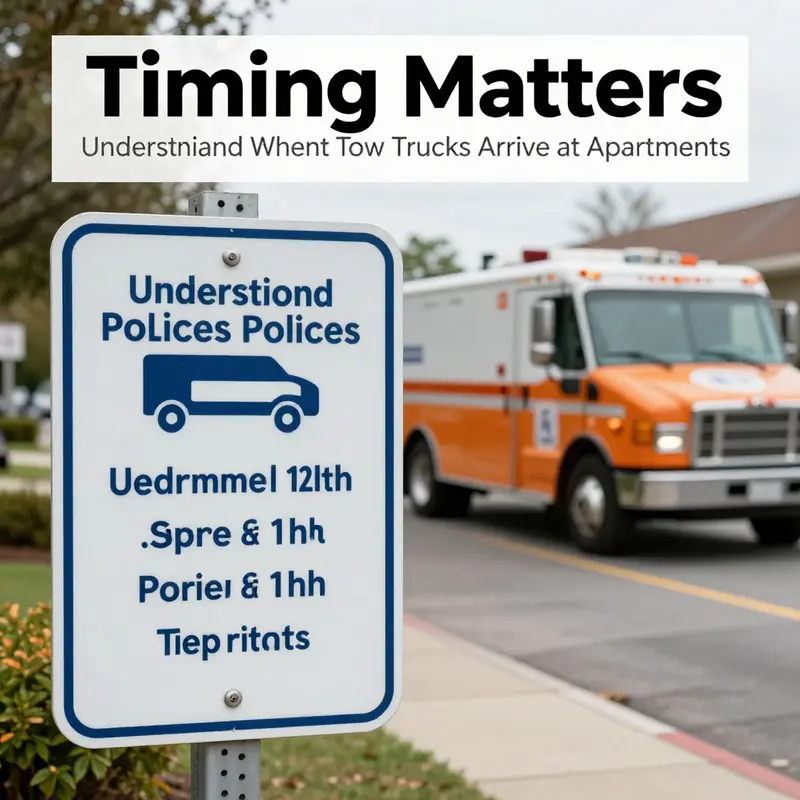
Neighbors often assume tow trucks run on a strict clock, arriving at apartment lots like clockwork for every violation. In truth, the timing is a mosaic shaped by urgency, policy, and law, not a single universal schedule. The clock matters, but so do the reason for the tow, the rules of the property, and the jurisdiction in which the building sits. This chapter unfolds that mosaic, tracing how dispatch decisions are made, why arrival times can swing from minutes to hours, and what residents can do to understand and navigate the process without getting caught in a gray area between safety and inconvenience. The story begins with urgency. When a vehicle is involved in an accident, breaks down in a critical area, or blocks access for emergency responders, a tow may be dispatched within minutes of the report. In these moments, responders treat the situation as time-sensitive and act accordingly, sometimes arriving in a matter of minutes, sometimes within an hour or so, depending on location, weather, traffic, and the availability of a wrecker in the vicinity. The goal is simple in those moments: restore safe access and reduce risk as quickly as possible. Yet even within emergencies, the clock is not the sole driver. The dispatch system still relies on the standard operating procedures of the towing company, which may include prioritizing calls from a central dispatch hub, routing the nearest available unit, and coordinating with on-site staff or security. The result is a rapid response that is highly situational rather than universally bound to a fixed hour. The next layer, however, introduces a more predictable rhythm. When a vehicle is towed for a parking violation—such as blocking a fire hydrant, parking in a reserved space, or infringing on restricted zones—the timing tends to align more closely with business hours. In many apartment communities, these routine towing actions are scheduled or conducted during the day, typically within the common window of 8:00 AM to 6:00 PM, Monday through Friday. This alignment with business hours is not a universal rule, but it reflects a practical balance: it allows on-site staff to monitor and enforce rules, gives residents a chance to move a vehicle without feeling blindsided, and minimizes disruption to other residents who might be disturbed by a tow in the middle of the night. The policy, however, is not a blanket guarantee. Some jurisdictions allow property managers or their designated towing partners to proceed outside traditional hours if a violation is ongoing, if a vehicle is repeatedly re-parked in a restricted zone, or if a hazard arises that requires immediate action. In such cases, the line between routine enforcement and urgent action blurs, and the clock becomes more flexible. The third layer centers on local regulations. Municipalities often regulate when towing may occur, especially on public streets that service apartment complexes or shared parking lots. In some cities, late-night towing is restricted to protect residents from disruptive noise, while other areas permit towing outside standard hours if a safety hazard is present. These rules create a safety net for residents but also add a level of complexity for property managers who must navigate both enforcement needs and legal boundaries. Residents who want precision must consult not only their lease or HOA rules but also the municipal codes that apply to their address. The way these rules are communicated and enforced often shapes the actual experience of a tow. In many communities, private-property towing depends heavily on the management’s policy. Some apartment communities establish a grace period after a violation—often 24 to 48 hours—before towing is initiated. The idea behind a grace period is straightforward: it avoids immediate, potentially punitive actions for a first-time or transitional parking misstep, while still preserving access and safety. Other communities opt for more proactive enforcement, towing vehicles after a shorter window or even immediately if the violation is deemed ongoing. The exact timing is dictated by the property’s contract with the towing company, the presence of posted signage, and the pace at which managers or security staff can document the violation and communicate with the dispatcher. Signage plays a surprisingly important role in how an arrival time unfolds. Clear, well-placed signs that outline prohibited zones, reserved spaces, and the consequences of violations empower residents to avoid missteps. They also provide a documented basis for enforcement, which can influence waiting periods and the speed at which a tow is authorized. For tenants, these signs are not just warnings; they are a map of expected behavior and a reference point for when a tow is likely or unlikely. The practical reality is that no two apartment complexes are exactly alike. A property with a robust on-site management presence may respond quickly to a violation during daylight hours, using a predictable cadence and a posted policy that tenants can learn and follow. Another property in a different city or under a different HOA may adopt a more conservative approach, relying on longer grace periods and different scheduling strategies. In either case, the timing of a tow is as much a function of internal policy as it is of external regulation. To navigate this landscape, residents should not rely on assumptions. The best approach is proactive: read the lease, review the HOA or property guidelines, and locate the posted towing policy on the property grounds or in the resident portal. If questions arise, contact the management office or the on-site security team for precise guidance. This is not just about avoiding fines; it is about understanding the framework that governs when a vehicle can be towed and how the process unfolds in real life. Because the details matter, it helps to know where to look and who to ask. A helpful step is to ask for a copy of the policy that applies to your building or complex, or at least a summary of the key rules and typical response times for common violations. When a resident understands the expected cadence, they can plan to avoid potential issues. If a car is in a restricted zone, the resident can move it within the grace period or, if possible, reposition it to a legal space before enforcement steps commence. The on-site staff can also provide practical tips, such as whether tow-out notices are posted in advance or if there is a window during which parking can be rearranged before a tow occurs. For renters who may need more concrete assurance, a direct conversation with the property manager can yield a timeline tailored to that property. These conversations can be especially valuable in buildings with heavy turnover or with a mixed-use environment where emergency access or fire lanes require prompt clearance. It is in these moments that the lines between policy and practice become clearer. The dispatcher’s role, the property’s rules, and the local regulations all converge to produce a timing pattern that residents will notice over time. The arrival time for a tow on private property is rarely a fixed hour; it tends to be an interval that shifts with the specifics of the case. In some instances, a tow may occur within hours of a violation being observed, particularly if the area is busy, the vehicle remains in a restricted zone, and the management team has sign-off to act. In other cases, especially in smaller properties with fewer enforcement staff, there may be a longer window as staff document the violation, relay details to the dispatcher, and wait for the unit to become available. The human element should not be overlooked. Tow operators, property managers, and security staff are balancing several demands at once: keeping traffic flowing, ensuring safety, honoring resident rights, and complying with regulations. Each call is unique, and the clock reflects that uniqueness rather than a universal timetable. For residents seeking clarity, one practical approach is to treat towing as a process rather than a single event. Start by understanding the policy, monitor posted notices, and keep track of the times when staff often handle violations. If a car is moved after a warning but before a tow is ordered, that moment can save a resident from towing fees and additional disruptions. The broader pattern also underscores a broader principle: timing is part policy, part process, and part chance. Even in a well-run property, external factors such as weather, traffic, or a particularly busy dispatcher can alter arrival times. For this reason, the most reliable path to understanding is direct communication with the property management team and, when needed, the towing provider. Residents should also be mindful of their rights and responsibilities. In many places, signage and notices must meet minimum standards before a tow can occur, and residents may have avenues to dispute a tow that they believe to be unfair or improper. The best safeguard against surprise is education: know the policy, know the contacts, and know where to find the rules when a concern arises. For those curious about how other communities handle timing, a good rule of thumb is to expect a broad range. Emergencies can compress the timeline dramatically, reducing the wait to minutes or an hour. Routine violations tend to fall into a daylight cadence, often within the 8:00 AM to 6:00 PM window, with possible exceptions based on city rules or the severity of the violation. Late-night activity, when permitted by local law and policy, may occur for urgent hazards but is less common and often requires explicit authorization. It is also worth noting that the way to get the most reliable information is to consult the sources closest to the situation: the apartment’s management office, the on-site security team, and the local towing company that serves the property. The experience you gain from living in a particular building will teach you where the most predictable patterns lie and how to interpret any deviations from them. For readers who want a practical anchor, consider a simple, guiding question: what is the policy for this property, and what time window does that policy specify for potential enforcement? This question, asked with the property’s actual policy in hand, yields the most actionable insight for tenants and visitors alike. And while the timing may feel murky at first, it becomes clearer with attention to the property’s rules, the jurisdiction’s regulations, and the dispatcher’s workflow. In the end, the time a tow truck arrives at an apartment is not a single hour on the clock but a convergence of policy, need, and law. Residents who engage with the system—by reading their lease, clarifying the rules with the management office, and staying aware of posted signage—stand a better chance of avoiding unexpected tows and of understanding why a particular move occurs at a given moment. If you’re curious how a particular property’s approach to timing fits into the larger ecosystem of towing, you can explore the practical side of private-property enforcement through resources that emphasize how the process works in real life. For a broader view on towing and emergency services, see AAA’s overview of towing practices and safety considerations. AAA Towing and Emergency Services.
Internal link for related context: mikes-towing
Final thoughts
Understanding when tow trucks come to apartments not only aids in compliance with local regulations but enhances overall tenant satisfaction. By recognizing the intricacies of towing schedules and the policies that underlie them, property owners can better manage parking issues and maintain a smooth operation within their communities. Prioritizing communication and clear guidelines can alleviate tensions and foster a supportive environment for residents. Embracing these practices will ensure that your property remains well-managed and responsive to the needs of its residents.