
Navigating the challenges of vehicle management in Houston can be overwhelming for business owners. One essential service that can significantly impact your operations is towing. Whether dealing with vehicle breakdowns, accidents, or simply relocating equipment, understanding the local towing landscape is crucial. This article will explore top-rated towing services in Houston, showcasing their offerings, reliability, and customer satisfaction levels in the first chapter. The second chapter will delve into customer reviews and experiences, providing unique insights into the effectiveness of these services. By comprehensively examining both the service providers and real-world feedback, we aim to equip you with the necessary tools to make informed decisions regarding towing services that align with your business needs.
null
null
Steering Through Houston: Customer Voices and the Realities of Towing Service in a Busy City
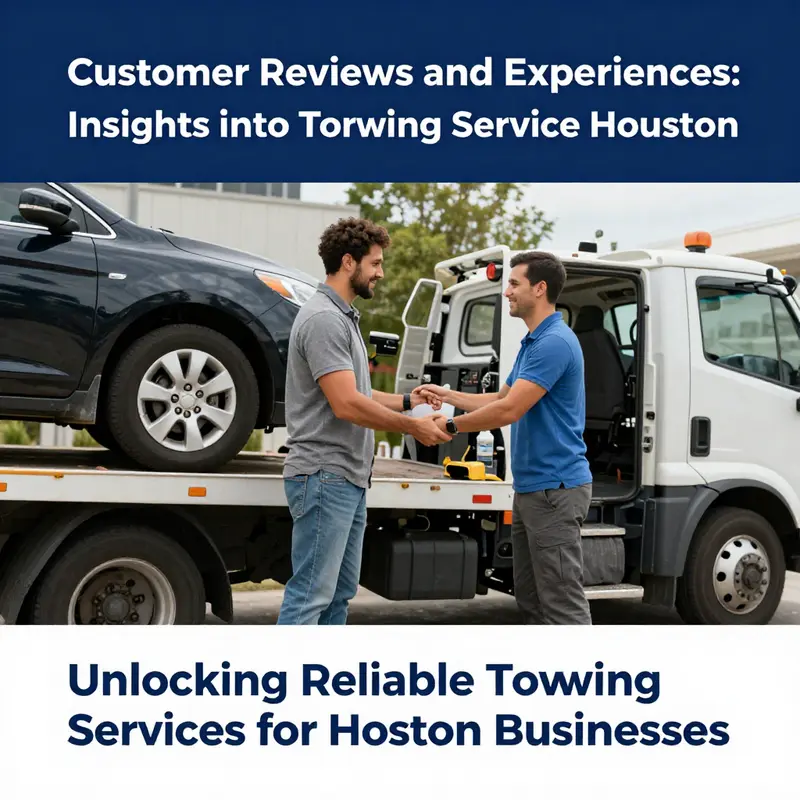
When a vehicle is stranded on a Houston street, the moment becomes less about the car and more about trust. The city’s vast network of highways, stalled lanes, and dense urban neighborhoods creates a demanding backdrop for any towing operation. In this chapter, we look through the lens of customer experiences to understand what really matters when you need a tow in Houston. The sources we have access to sketch a picture of a service landscape that blends urgent logistics with human interactions. While the available data about specific customer reviews for certain providers is sparse in some areas, a broader reading of the ecosystem reveals patterns that can help drivers, fleet operators, and residents navigate the unpredictable moments that towing services encounter every day.
Houston is a city that moves at a pace few places can match. Traffic congestion, weather, and the sheer size of the metropolis mean that the distance between a stranded driver and a reliable tow is a critical, time-sensitive gap. In surveys of the local towing landscape, three names often surface in discussions of reliability, availability, and professionalism. These companies are frequently highlighted for their 24/7 readiness, their ability to handle a range of scenarios—from accident towing to roadside assistance—and their willingness to engage with customers in a straightforward, respectful manner. What these conversations point to is not simply the speed of a tow truck, but the choreography of dispatch, driver conduct, vehicle handling, and post-service communication that shapes a customer’s overall impression.
Yet the data we can point to directly about customer sentiment, especially for specific services in Houston, is uneven. There is a notable scarcity of customer reviews that directly document experiences with a particular “Towing Service Houston” provider in a way that is universally shareable or easily aggregable. In other words, the most concrete customer feedback available in the present data set tends to come from employee perspectives or from broader discussions about towing practices rather than clean, itemized consumer testimonials about a single Houston towing operation. This gap does not diminish the importance of customer voices; rather, it indicates where drivers and managers should look for useful signals when they seek to improve service quality or when a resident considers which provider to call in a moment of need.
The absence of a uniform set of customer reviews for a single “Towing Service Houston” designation does not render the broader experiences with Houston’s towing ecosystem useless. On the contrary, it invites a careful reading of what makes a tow experience meaningful to a customer when stress is high and time is short. A recurring theme in the available material is that a successful tow hinges on more than equipment and speed. It rests on the ability to communicate clearly, to demonstrate competence in handling a wide range of vehicle types, and to maintain composure in challenging traffic conditions. Houston’s drivers, especially those who contend with the city’s notorious bridges, freeway interchanges, and downtown blocks, have to negotiate not only mechanical task and physical safety but also the emotional moment of being stranded in an unfamiliar place or in a hurry to meet a deadline.
To understand how a customer might evaluate a tow, consider the moments before, during, and after the pickup. Before pickup, a dispatcher’s transparency about estimated arrival times and pricing establishes a baseline of trust. When a tow starts, the driver’s handling of the vehicle—whether it’s a compact sedan, a high-end luxury car, or a heavy-duty pickup—reaches beyond mere hook-up technique. It includes the driver’s attention to safety, the use of appropriate equipment, and adherence to safety standards that prevent additional damage. After service, the clarity and accessibility of follow-up information—receipts, documentation, and guidance about next steps if the vehicle needs further services—often determine whether a customer would rate the experience positively and whether they would recommend the provider to others.
From the perspective of the Houston market, customer sentiment also reflects a broader appreciation for 24/7 availability. The city’s day-to-day rhythms are not constrained to daylight hours; emergencies can occur at night, on weekends, or during heavy rain. In such moments, a towing provider’s responsiveness becomes less a luxury and more a lifeline. A sense of reassurance can arise from a driver who arrives promptly, communicates clearly, and exercises professional restraint even when the situation is tense. This is especially true in traffic-dense corridors where congestion can extend waiting periods and complicate the maneuvering of a tow truck. In that context, the skill of a driver, the reliability of a dispatch system, and the willingness of a company to stand behind its quoted ETA contribute directly to how a customer remembers the service.
One nuanced insight that emerges from the existing discussions is the importance of the driver’s behavior in the encounter. The human element—politeness, calmness under pressure, and a sense of accountability for both the customer and the vehicle—often shapes the lasting impression more than the mechanics of the tow itself. Positive anecdotes frequently describe drivers who explained the process, offered reassurances, and ensured that the vehicle was secured properly before transport. These stories are powerful because they reassure a customer who is likely anxious about the damage that may have occurred, the cost of the service, or the possibility that the vehicle could be left in a vulnerable spot while arrangements are made.
On the other hand, the negative feedback that does exist in related conversations commonly centers on a few familiar themes: uncertainty about pricing, unclear ETA updates, and occasions when the service failed to communicate changes or delays. In Houston’s fast-moving traffic environment, a misalignment between expectation and reality can intensify frustration. Drivers who feel repeatedly left in the dark about a late arrival or an unexpected upcharge are likely to voice dissatisfaction, even if the actual towing work is performed competently. In this sense, pricing transparency and proactive communication are almost as critical as the physical act of towing itself. A company’s willingness to explain charges up front, provide a straightforward invoice, and document the service with photos or notes can convert a potentially sour experience into a trusted interaction, or at least reduce the sting of the unavoidable expenses that accompany emergency roadside services.
An additional layer to consider is the broader public review landscape beyond direct customer testimonials. Platforms that aggregate experiences, such as Google Reviews and BBB listings, serve as touchpoints for someone researching “towing in Houston” before making a decision. For readers who want to understand how a driver assessing a local company might approach the question, these platforms often reveal a spectrum of experiences, from overwhelmingly positive to disappointingly mixed. They also illuminate patterns about what customers value most: speed, safety, price transparency, and the practicalities of handling the vehicle during transport. While not all reviews are equally reliable, a careful synthesis of multiple sources can provide a more robust sense of what a towing service in Houston can deliver when every second counts.
In echoing these insights, it’s worth recalling how market intelligence for local services is often assembled by looking at both employee perspectives and customer outcomes. A recent employee view from a driver in Houston highlights one of the city’s enduring operational truths: the traffic. The comment that the hardest part of the job is navigating Houston traffic rings true for anyone who has watched a tow truck edge through an exit ramp, weave around a stalled car, or manage a delicate lift while other cars stream past at high speeds. The same account of teamwork—“all workers work together to accomplish our objective”—speaks to a culture that prioritizes collective problem-solving. In a high-stakes service like towing, where the ship can be steered off course by a single miscommunication or a slight delay, a cooperative, well-managed crew becomes a critical asset.
The field-wise takeaway for readers who want to form a grounded view of Houston’s towing scene is to consider reviews as components of a broader picture. Customer experiences are shaped by the combination of dispatch efficiency, driver expertise, vehicle handling, pricing clarity, and post-service follow-through. In practice, this means looking for signals across multiple touchpoints: how quickly a dispatcher answers a call, whether the ETA is updated as conditions change, whether the driver takes the time to explain what will be done, and how well the final documentation matches the service that was performed. The chapters that succeed in translating these signals into actionable guidance for readers will be those that avoid overgeneralization and instead acknowledge the situational nature of roadside emergencies. A tow in a quiet suburban street at three in the afternoon may feel quite different from a tow on a rain-soaked freeway at midnight.
To guide readers who are seeking practical takeaways without promising infallible outcomes, consider this composite approach to evaluating a towing service in Houston. First, prioritize dispatch responsiveness. If a company cannot acknowledge a call within a few minutes or cannot provide a reasonable ETA, it is a red flag no matter how skilled the driver might be. Second, assess how the driver communicates. Are you informed about the process, the anticipated costs, and the steps if something unexpected occurs? Third, observe the handling of the vehicle. A professional operator will secure the vehicle carefully, protect the surroundings, and adhere to safety protocols for loading and transport. Fourth, examine pricing transparency. A reputable company will offer an upfront estimate or quote, explain any deviations, and provide clear documentation after service. Fifth, reflect on the follow-up. Do you receive confirmation, a receipt, and an opportunity to review the service? Although no single incident will check all these boxes perfectly, a consistent pattern across multiple interactions is a strong predictor of reliability.
The internal data this chapter relies on underscores a crucial practical point for drivers: when you’re stranded, you are often deciding in real time. The more a towing provider can minimize the cognitive load on you, the more likely you are to feel satisfied, even in less-than-ideal circumstances. A provider who communicates with calm clarity, who listens to the customer’s concerns, and who takes steps to prevent compounding problems—like misplacing a vehicle or misplacing parts—can transform a distressing moment into a manageable one. In Houston’s environment, that transformation is not merely a courtesy; it is a determinant of safety and efficiency for everyone on the road.
For readers who want to explore a local example of the practical, experience-driven side of Houston towing, a robust local resource that discusses towing in the area can be helpful. The linked page provides a concise overview of services and how residents perceive them in practice: Towing in Houston. This reference is not a definitive consumer review, but it offers a contextual snapshot of how a Houston-area towing provider presents itself and positions the value it claims to deliver. It also illustrates how a local operator frames the service in terms of reliability, safety, and responsiveness—elements that consistently rise to the top in customer discussions, even when the specific experiences vary from one call to the next.
Looking outward, it is also prudent to acknowledge the role of external review platforms in shaping expectations. Even when a single provider’s customer feedback is limited, the broader ecosystem helps drivers choose wisely and companies refine their practices. A well-rounded approach to gathering insights includes reading multiple reviews, noting recurring themes, and considering the source’s context and potential biases. The most credible customer voices tend to emerge when reviews cover a sequence of interactions: the initial contact, the dispatch, the on-site service, and the post-service follow-up. In Houston’s busy urban environment, a strong performance across this sequence can make a meaningful difference to a driver who may not have time to supervise every step of the tow but still wants to feel that their car is in capable hands.
Ultimately, the value of customer feedback in shaping the towing landscape in Houston lies in its ability to illuminate what truly matters: speed without sacrificing safety, clarity without insistence, and accountability without hostility. Consumers who prioritize these attributes will find companies that align with their expectations, and those companies will be more likely to earn repeat calls and word-of-mouth recommendations. For service providers, the lesson is equally clear. The city’s complexity—the traffic, the layout of the roadways, the weather patterns, and the variety of vehicles on the road—demands a holistic approach to customer care. It is not enough to deliver a fast tow if it leaves the customer with a puzzling bill or an uneasy sense that the driver did not explain the process. The better path is to integrate technical excellence with transparent communication, which ultimately yields a more trusted relationship between the driver and the person who depends on the service during a vulnerable moment.
In closing, the Houston towing experience, as it currently stands in the available data, is a blend of logistical mastery and human connection. The city’s motorists deserve a service that is quick, safe, and transparent, and the providers that consistently bring these elements together are the ones most likely to garner positive word-of-mouth, reliable reviews, and ongoing business. The absence of a single, comprehensive customer review dataset for every provider should not be interpreted as a lack of insight; rather, it invites readers to synthesize a broader set of indicators then apply them to their specific situation. If you ever find yourself in need of a tow in Houston, let the following approach guide you: check dispatcher responsiveness, seek a clear plan for the tow, assess the on-site professional conduct, and review the post-service documentation. In doing so, you’ll navigate the street with a little more confidence and a lot more clarity about what to expect from a local towing partner.
External resource: https://www.yelp.com
Final thoughts
Understanding the landscape of towing services in Houston is invaluable for business owners. With a variety of reputable companies like EJ Towing And Recovery, Select Towing, and A Tow Truck available, you can be confident in finding a reliable partner for all your towing needs. Coupled with insights from customer experiences, you’re now equipped to choose the right towing service that not only safeguards your vehicles but also enhances your operational efficiency. Prioritizing a dependable towing service will allow you to mitigate downtimes, enhance safety on the roads, and ultimately support your mission to keep your business thriving.