
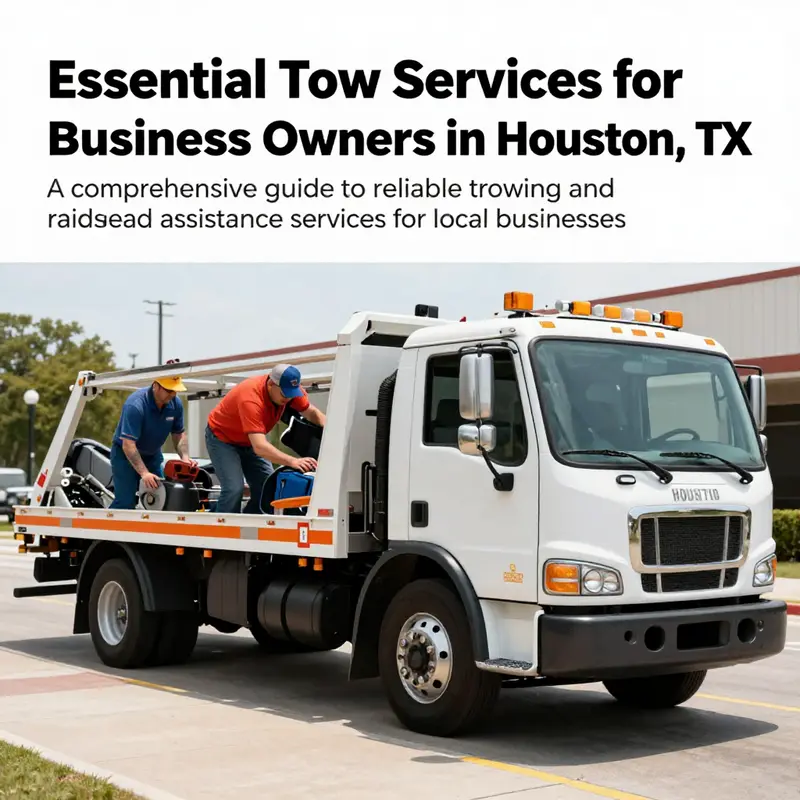
For business owners in Houston, TX, ensuring the reliability and efficiency of your operations often hinges on having dependable support systems in place. Whether it’s transporting vehicles after breakdowns or ensuring road safety for employees on the move, knowing the best tow service providers can mitigate potential disruptions. This guide will explore the standout tow services available in Houston, emphasizing their unique offerings and strengths, and also discuss the importance of emergency roadside assistance, equipping you with the knowledge to keep your business running smoothly in any situation.
Tow Lines and Houston Nights: A Practical Guide to Finding Reliable Towing in Houston, TX
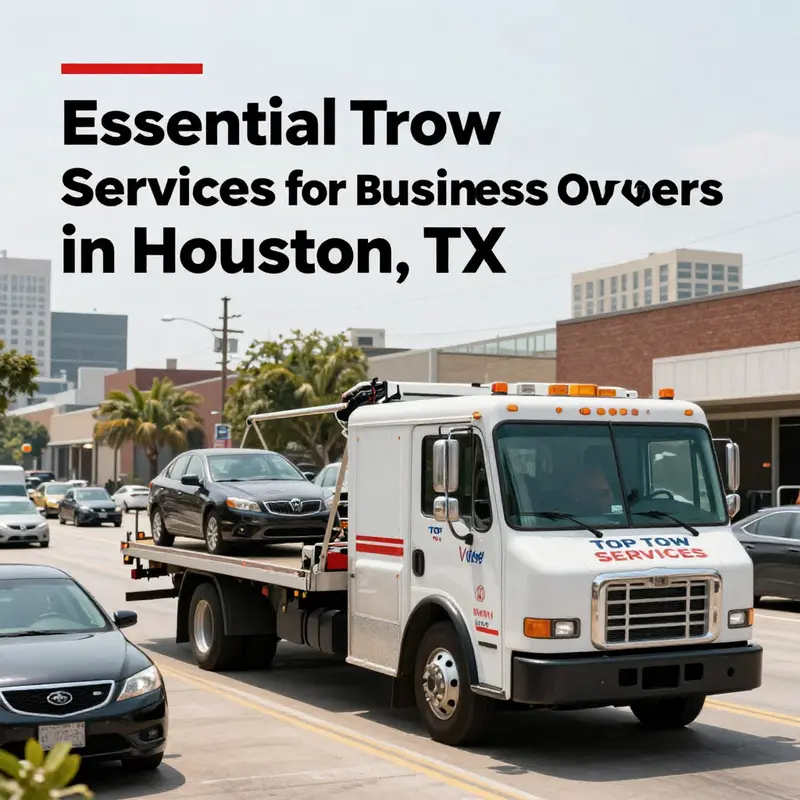
Houston moves at a relentless pace, a city where highways braid into the skyline and weather can turn a routine commute into a test of patience. In such a landscape, a dependable tow service is not a luxury; it is a lifeline. The moment a vehicle stalls on a hot curb, or a rainstorm turns a fender-bender into a roadside tangle, the choice you make about who answers the call can ripple outward in minutes and hours. The goal of this chapter is not to parade a roster of brands but to offer a reader-centered framework for understanding what reliable towing in Houston entails, how to recognize it when you see it, and how to prepare so a distressing moment becomes something you can navigate with clarity and minimal disruption to your day.
In practice, a robust Houston tow service operates as a two-tier system: emergency response and on-site support. The emergency side is the immediate response—dispatch times, arrival windows, and the ability to reach you in traffic, under poor lighting, or in adverse weather. The on-site side is more nuanced. It includes not only the act of hauling a vehicle but also the broader set of roadside services that often accompany a tow: jump-starts, fuel delivery for the stranded driver, lockout assistance, and, when feasible, quick tire changes or minor on-scene repairs. The objective in both tiers is to reduce risk, protect the vehicle from further damage, and deliver options that align with the owner’s priorities—whether that means getting the car to a preferred shop, to a dealership, or to a location where a family member can assist.
What makes a Houston tow service reliable hinges on several interlocking factors. First, the logistics. In this city, where traffic can slow a mile-long queue to a crawl and congestion is a constant background noise, dispatch accuracy and real-time location tracking are essential. The fastest responders are the ones that minimize the time between your initial call and their arrival by using efficient routing and well-maintained fleets that can pivot around incidents rather than getting stuck behind them. Second, the equipment. The choice between a flatbed, which is safer for low-clearance cars and higher-end vehicles, and a wheel-lift or traditional tow depends on the scenario. The best responders come prepared with versatile equipment, including wheel restraints, portable winches, and the protection you need for the undercarriage and paint. Third, the crews themselves. A professional operator is not just a driver; they are trained technicians who can assess the situation, communicate clearly about the options, and execute with care. Training, certification, and a calm, methodical approach under stress translate into fewer secondary damages and a smoother handoff to a repair shop. Fourth, safety and transparency. A dependable service will explain pricing upfront, disclose any fees for longer dispatch, mileages, or storage, and provide receipts that itemize the work performed. In Houston, where the scale of operations can be large but the stakes are intimately personal, this clarity matters more than a glossy claim of speed.
To maximize the odds of a positive outcome, drivers should also think ahead. Before trouble strikes, program a few essentials into your phone: the number of a reputable, 24/7 responder, the exact location of your vehicle, and a preferred method for the tow. If you belong to a membership program that includes roadside assistance, understand the terms and whether the service will cover your particular breakdown or require additional payments. It is not unusual to encounter a provider that can offer immediate assistance but requires a separate call to authorize the tow or to confirm coverage. In such moments, questions become a shield against miscommunication. Ask about the minimum fees, the rate per mile, whether the tow includes onboard stabilization or any on-site service, and what happens if the driver arrives and your vehicle cannot be moved due to a hazard or a blocked lane. A straightforward dialogue like this reduces anxiety, yields a transparent estimate, and sets expectations for what comes next.
In Houston’s landscape, the role of online reputation and local credibility should not be underestimated. The city’s drivers often rely on quick online checks to gauge which responders are trustworthy, available, and equipped to handle their needs. A 2026 Yelp list highlighted a local operator for its rapid response and professional handling, underscoring what many motorists already sense on the ground: in a time of stress, the difference between frustration and relief is often narrowed to the competence of the person who arrives and the care they take with your car. While it is wise to consult reviews, it is even wiser to triangulate that feedback with your own firsthand criteria—response times, equipment readiness, and the ability to explain the process with empathy and precision. In practice, you want a responder who can articulate a plan within minutes of your call and who follows through in a way that feels orderly rather than reactive.
The practical upshot is that Houston drivers should cultivate a mindset of preparedness and discernment. When you call for help, you are not just asking for a tow; you are requesting a careful, professional service that respects your time, your vehicle, and your circumstances. A reliable service will be prompt, respectful, and clear about what it will do, how long it will take, and what it will cost. They will be able to handle a range of situations—from a simple fuel delivery in the heat to the delicate recovery of a car that has slid into a ditch during a monsoon. They will also recognize when to escalate to more advanced services, such as storage, immobilization, or recovery operations in tricky urban or suburban environments. The goal is to minimize risk and to ensure that, even if the situation is far from ideal, you can regain control with as little disruption as possible.
Communication, too, matters as much as the technical know-how. The best responders keep you informed every step of the way. They will confirm your location, describe the approach they intend to take, and communicate any changes that may affect the timeline. If a delay is anticipated due to heavy traffic or an unexpected incident, you deserve a candid update, not radio silence. Likewise, the pickup and drop-off process should be straightforward. If your vehicle is not being hauled to a location you authorize, you should be told why, and you should be offered a written estimate for any additional charges. In a city where the roads are often congested and the weather can turn quickly, a service that foresees and communicates potential complications will keep you from becoming a casualty of the situation’s chaos.
A note on accessibility and inclusivity: Houston’s diverse communities require tow services that speak clearly across language barriers and logistical hurdles. A quality provider will strive to accommodate language needs, provide accessible pricing information, and coordinate with you in ways that you find easiest—whether by phone, text, or app-based updates. The most enduring relationships with clients in this field are built on trust earned through consistent reliability, careful handling of the vehicle, and a willingness to go the extra mile when it matters most. You want a partner, not just a vendor, and the right partner will show up with a plan that respects both your urgency and your vehicle’s value.
For readers who seek a tangible example of how these principles translate into action, consider exploring a local operator’s online hub to understand how it positions itself for Houston’s needs. A practical route is to review a dedicated Houston towing page that provides clear, actionable information, reflects a commitment to safety, and showcases the kind of transparent pricing and service breadth that can ease a stressful moment. Such pages illustrate how an operation communicates its capabilities, dispatch processes, and service options, thereby helping a driver quickly assess fit during a crisis. In that spirit, you can learn more about how a Houston-based towing page frames its services by visiting this resource: towing company Houston page. This link offers an example of how a local operator presents its approach, and it can serve as a benchmark as you compare other responders in the area.
As you move through the decision, remember that your aim is not to chase the fastest arrival alone but to secure an experience that aligns with your vehicle and your circumstances. A good tow service will respect your priorities, offer practical options, and execute with professional care from the first ring to the moment your car settles at its destination. In Houston, where the combination of dense traffic, long commutes, and seasonal weather can turn a minor hiccup into a major disruption, the value of a thoughtful, well-supported roadside partner becomes clear. This is not a one-off purchase; it is a reliability experiment you conduct every time you roll out with your family, your business, or your own daily routines. The best outcomes come from choosing a responder who can deliver on their promises under pressure, explain the process with calm clarity, and stay with you until you are back on your way.
Finally, the human element remains central. Behind every tow is a technician who understands that their work is about more than moving a vehicle from point A to point B. It is about reducing fear, preserving safety, and restoring momentum in a city that never stops. When you encounter a roadside emergency, the right response can transform a moment of stress into a restoration of control. In the broader arc of Houston’s transportation landscape, the choice of a towing partner is a decision that echoes beyond the immediate needs, shaping how drivers perceive safety and reliability on the city’s sprawling network of streets. With the right framework, drivers can navigate the uncertainties of a breakdown with confidence, knowing they have a dependable ally nearby—one who arrives swiftly, works carefully, and communicates openly.
External perspective: for readers seeking a sense of customer experience in the local tow market, the Yelp reviews for a well-regarded Houston operator offer insights into what to expect in practice. See the review page here: https://www.yelp.com/biz/ej-towing-and-recovery-houston. This external resource complements the guidance in this chapter by highlighting real-world feedback from people who faced the very situations described above. It serves as a reminder that beyond specifications and promises, the actual service experience matters most when it counts the most.
Emergency Roadside Assistance in Houston TX: Navigating Fast, Trusted Help on the City’s Roads
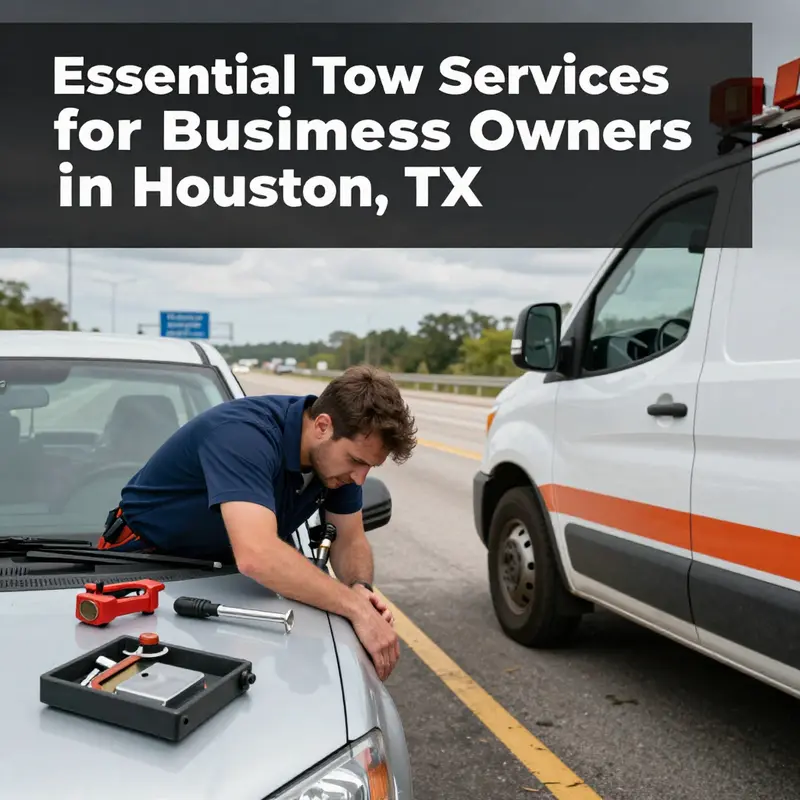
The moment a car coughs and the needle on the fuel gauge tilts toward empty, the city of Houston can seem to shrink to a few square miles of stalled movement and bright streetlights. Yet even in the midst of this sprawling urban web, a reliable lifeline exists for drivers who find themselves stranded beside a busy highway, a rain-slicked boulevard, or a dimly lit side street at night. Emergency roadside assistance in Houston is more than a promise; it is a network built from a mix of national programs, local operators, insurer-backed services, and independent tow crews that understand this city’s tempo. The core of this service is simple in concept but complex in practice: a dispatcher coordinates a mobile team, a tow truck, or a flatbed, and a technician arrives to relieve the hold of a stalled vehicle so the driver can get back on the road as quickly as possible. When the clock is ticking, the strength of this ecosystem lies not in a single actor but in how well the city’s options interlock to cover the metropolitan region from the far western suburbs to the Gulf shores and bays beyond Pearland and Clear Lake.
To the human being in distress, the universe of options may feel overwhelming. In Houston, emergency roadside support spans a spectrum that includes broad-based organizations, locally stationed fleets, and insurer-provided assistance. Some providers emphasize 24/7 availability as a core service feature, ensuring that help is reachable at any hour, during holidays, or in the dead of night when the city’s pulse does not slow. Others lean on a broader service menu that may extend to minor auto repairs, battery replacement, or tire service at the roadside, rather than simply moving the vehicle to a shop. In practice, this means a caller can request a jump start for a dead battery, a tire change for a flat, or a winch-out if a car is stuck in mud or on a soft shoulder. The common thread across these varied offerings is reliability: an expectation that a qualified professional will arrive, assess the situation, and explain the available options clearly before any work begins.
Houston’s geography adds layers of complexity to the experience. The city stretches far across toward the west and north, while its urban core concentrates in the downtown and Midtown corridors. Widespread traffic patterns shift with the time of day, and weather conditions can transform a routine breakdown into an urgent rescue mission. In summer heat, tires can blister and mechanical components can overheat; in heavy rain, visibility shrinks and slick surfaces complicate the decision to drive or wait for assistance. Responders in this environment emphasize rapid dispatch, but they also acknowledge the value of situational judgment. A tow to a nearby shop may be appropriate, yet in some cases a mobile repair at the roadside can be a faster fix if the problem is something like a battery, fuel delivery, or a single electrical fault. The aim is simple: restore mobility with minimum risk to the driver and passengers, and minimize further delays on a network already strained by the city’s volume.
What makes Houston’s emergency roadside network function as a cohesive system is how providers balance speed, scope, and service variety. A national or regional program can cast a wide net, enabling responders to reach a caller quickly even outside the city center. Local operators, by contrast, often have better knowledge of street layouts, side streets, and the quirks of neighborhood access points. Insurance-backed roadside assistance sits at an interesting intersection, offering value in some policies by covering the cost of towing to a preferred repair facility or by providing direct dispatch as part of the policy benefits. Independent tow and repair outfits fill the gaps that larger fleets cannot cover with the same agility. Taken together, these components form a safety net that is both predictable in its availability and adaptable to the particularities of Houston roads: the flooded lane during a tropical downpour, the restless traffic of I-45 at rush hour, or a quiet crescent in the early morning hours when a mechanical fault appears in a moment of solitude.
The spectrum of services available on the roadside is broad, and drivers are wise to understand what each option typically includes. A representative roadside operation in a major metro like Houston will usually offer flatbed towing for transmission-sensitive vehicles or cars with low ground clearance, alongside traditional wrecker service for more rugged needs. Jump-starts address a common catalyst for stranded vehicles when a battery has failed in the heat, while lockouts provide access when keys are misplaced or locked inside the vehicle. Winch outs are reserved for obstacles like ditchings or soft shoulders where a vehicle’s tires might sink into the terrain. Beyond pure towing, some providers maintain partnerships with auto repair shops, enabling on-site diagnostic checks or minor repair work, and sometimes offering a discount on towing if the vehicle is brought to their facility for service. The practical impact of these arrangements is clear: when a driver requests help, the dispatcher can tailor the response to the actual problem, not just a generic “tow this car.” This flexibility matters, because the quickest path to resolution in many roadside emergencies is not always to remove the vehicle from the scene but to fix the underlying issue where possible.
In this operating environment, communication with the driver is crucial. The dispatcher explains what kind of equipment will be sent, how long the wait might be, and what documents or information the driver should have ready. The driver, in turn, provides the location with enough precision to guide the responding unit to a safe pickup point and describes any hazards that might complicate the approach, such as high-speed traffic, limited shoulder space, or ongoing weather conditions. The interaction is a small but essential theatrical moment—the point at which planning meets reality. It becomes a two-way exchange of information that shapes the outcome: a vehicle towed to safety, a tire replaced on the curb, a jump-start completed before a more inconvenient failure occurs, or simply a courtesy call to update the driver’s timeline while they wait for a tow. The efficiency of this exchange depends on the quality of the initial information and the trust the driver places in the dispatcher’s expertise.
For drivers who are visiting Houston or who spend a lot of time on the road across the metropolitan area, the value of a well-curated network becomes even more apparent. A practical step is to consider the potential benefits of a membership or pre-arranged plan that aligns with your typical driving scenarios. Some programs offer benefits that include waivers of certain fees, priority dispatching, or reduced rates for repeated towing scenarios within the same policy period. Others may provide a more general safety net that ensures a quick response regardless of the time of day or the day of the week. Of course, dependence on any single provider carries risk if coverage gaps occur, such as moments when a particular service area is temporarily understaffed or when a driver is far from the nearest available unit. Therefore, drivers are encouraged to have a plan that includes more than one option, much like carrying a spare tire and an emergency kit in the trunk. This layered approach reduces the chance of a single point of failure and preserves mobility in the event of multiple incidents in a single trip.
The search for dependable roadside help in Houston benefits from a combination of practical checklists and real-world feedback. In the digital age, real-time reviews and ratings published by fellow drivers on mapping services can provide a candid snapshot of a provider’s reliability, responsiveness, and professionalism. A quick search for “Tow Truck Houston TX” on a popular map service often surfaces several nearby options, with estimated arrival times, distance, and user reviews that reflect recent experiences. While no single review should dictate a choice, a pattern of consistently positive reports—regarding punctuality, courteous service, and transparent pricing—can be a reliable signal. It is wise to verify 24/7 availability with any provider you are considering and to confirm whether you need membership, prepay arrangements, or any special authorization before a tow can be issued. In practice, the best approach is to keep a short list of trusted options and to review their current status during long trips or after weather events when demand for roadside assistance typically spikes.
For drivers who want a touchpoint with a known local operator, a convenient option to consider is to use a trusted local service that has built a reputation for reliability within the downtown and near-downtown corridor. Local operators often provide a blend of quick response times and flexible service options that feel tailored to the city’s rhythms. If you are stranded near the central business district, or in the adjacent neighborhoods that shoulder the historic core, having a familiar local team ready to respond can translate to greater confidence during a tense moment. It is this sense of local reliability—cities know their own roads and people—that can make the difference between a long, anxious wait and a prompt return to the road. And when you want to support a trusted neighborhood business, you can pair this familiarity with the broader resources of a larger network, ensuring that you have breadth of coverage and depth of service when you need it most. The practical takeaway is straightforward: assess both large networks and locally rooted operators, and then build a plan that leverages strength from both sides of the spectrum.
When the moment arrives to choose a specific sender of help, many drivers find it helpful to be guided by clear, concise information rather than opaque promises. A well-managed dispatch line will request only essential details at first—your exact location, the nature of the problem, and any safety concerns—then provide a transparent ETA and an outline of the next steps. If the problem is something a roadside technician can address on site, the dispatcher will outline whether a mobile repair can fix the issue or if a tow to a shop is inevitable. If the repair shop is within a partner network, the driver may also be told about potential discounts or the prospect of a smoother handoff to the shop. Such transparency is not merely good business practice; it is an essential trust-building exercise in a situation where time, safety, and comfort are critical. As Houston drivers become more accustomed to relying on this resource, the quality of their experience tends to rise when the providers maintain clear communication, arrive with properly equipped vehicles, and handle the scene with professionalism and respect for everyone involved.
For those seeking a highly localized option anchored in the region’s specific service culture, consider exploring resources that showcase the best-rated roadside teams in the area. One accessible way to connect with reliable local operators is to visit a page dedicated to regional roadside services, where you can read about the kinds of services offered, the geographic coverage, and any alignment with nearby repair facilities. This approach helps you differentiate between a generic “towing service” and a robust, multi-faceted operation that can handle everything from deferred maintenance to urgent emergency repairs. It also creates an opportunity to form a practical, long-term relationship with a trusted provider who can be called upon again with confidence on future trips or during nightly drives along the city’s various corridors. When you are preparing for a road trip, it is wise to pre-save contact details and to verify what each provider covers under different circumstances, such as weather events, peak travel times, or special routes.
If you want a concrete touchpoint to explore a locally focused safety-minded option, you can refer to this resource: Mikes Roadside Service, which offers a snapshot of how a dedicated local operator positions itself within Houston’s emergency roadside ecosystem. This page provides a ground-level view of what a driver can expect when calling for help in the city and nearby suburbs, including the kinds of services typically available and the practical habits that set a reputable service apart from a rushed or cursory response. It is not a replacement for broader research, but it can complement it by giving you a real-world example of how a local team handles the first contact, the dispatch process, and the driver’s experience in the moments after a breakdown. In an environment where every minute counts, having a direct line to a trusted local partner can be invaluable, especially for residents who want quick, predictable outcomes and a relationship built on reliability.
As you prepare for the road ahead in Houston, remember that emergency roadside assistance is about more than a rescue at the roadside. It is about access to swift, qualified help that can minimize risk, reduce downtime, and preserve calm during stressful moments. It is about the interplay between national networks and local expertise, insurer programs and independent operators, all working in concert to bring a sense of security to drivers on a city that never truly rests. It is also about practical planning: saving a few trusted numbers, understanding what kinds of services you might need in an ordinary breakdown, and recognizing when to ask for a tow, a jump, or a roadside repair. This is how Houston’s road users can navigate the city’s broad and busy landscape with greater peace of mind, knowing that when trouble arises, help is not far away and the path back to the road is clear.
For readers who want a broader sense of consumer sentiment and real-world experiences across the Houston roadside scene, Yelp’s directory offers a useful lens. It aggregates verified customer voices, helping drivers weigh factors such as response time, worker professionalism, and transparent pricing in current conditions. While no single review should dictate a choice, a consistent pattern of positive feedback can guide you toward dependable partners who sustain high standards even when demand spikes after a major storm or during late-night hours. Consider browsing the directory as part of your ongoing preparation for road travel in Houston, and use the insights you gather to inform your decisions about who to call when the next emergency strikes. Finally, always remember to keep essential contact details readily accessible—preferably synced to your phone’s emergency or car-related contacts—so that, in the moment of need, you can stay focused on safety while the dispatcher and technician take the helm of the situation. The city’s road network can be unforgiving, but with a clear plan, trustworthy partners, and the right information, a breakdown becomes a controllable event rather than a source of lasting disruption.
External resource for consumer insights: https://www.yelp.com/search?finddesc=Roadside+Assistance&findloc=Houston%2C+TX
Final thoughts
With a reliable tow service and emergency roadside assistance on your side, business owners in Houston can focus on growth rather than disruptions. The right partners can provide not only immediate support in times of trouble but also contribute to overall operational efficiency. By understanding the top options available, you empower your business to navigate challenges effectively, ensuring that both staff and assets are secure on the road.