
Understanding the nuances of tipping tow truck drivers is essential for business owners who may find themselves in need of roadside assistance. The decision to tip can depend on factors such as service quality, local customs, and payment methods involved. In this exploration, we will delve into how each of these elements influences the tipping culture surrounding tow truck drivers, providing insights that empower you to make informed decisions the next time you require towing services.
To Tip or Not to Tip: Reading Service, Standards, and Local Etiquette When Tow Truck Drivers Arrive
When your car stalls on the shoulder or slides onto a dramatic roadside scene, the sight of a tow truck rolling up can feel like a measure of relief. The driver steps out, assesses the situation, and quotes a price or explains the next steps. In that moment, a question often rises with the engine light and the chill of the wind: should I tip? The short, practical answer is nuanced. Tipping tow truck drivers is not a universal expectation, and the professional fee you’ve already agreed to often covers the core service. Yet a discretionary tip—small, thoughtful, and appropriate to the moment—can reflect genuine appreciation for help that goes beyond a basic pull or tow. The decision hinges on local norms, the driver’s conduct, and the broader context of your roadside emergency. Rather than treating tipping like a universal mandate, it helps to approach it as a discretionary gesture that honors service quality while respecting the business policies of the towing company and the logistics of the moment.
The towing industry tends to price its work in a straightforward way. Fees are usually determined by distance, vehicle type, and the complexity of the job, sometimes with regulations or published rate tables guiding price. Because those fees are set in advance or posted by the company, they aren’t typically tied directly to a tip. In many regions, tipping isn’t expected, and drivers are compensated through standard wages or fees. This clarity matters. If a tip is offered but not expected, the gesture can still be meaningful, but it should always be clearly voluntary and not read as a demand or pressure to give extra money. In some places, tipping may even complicate records for the company, especially if policies discourage or restrict gratuities. To avoid any awkwardness, it’s wise to ask about tipping policies if time allows, or to carry out tipping in a quiet, private moment after the driver has completed the job.
There are, however, moments when a tip feels appropriate. Exceptional service can extend beyond the mechanical task of winching a vehicle or loading it onto a flatbed. If the driver speaks calmly during a stressful breakdown, stays patient in poor weather, offers practical safety advice, or goes out of their way to avoid additional risk to your car, your belongings, or your own safety, a small token of appreciation can be a reasonable acknowledgment. A typical discretionary range tends to be modest—often $5 to $10, and up to $20 in cases where the service was unusually careful, the driver provided extra time without complaint, or the conditions were unexpectedly challenging. It’s not a universal rule, but many customers feel that careful, considerate handling deserves a little extra recognition. The key is to keep the gesture appropriate for the moment and the scale of the service provided. If you’re contemplating a tip, consider whether the amount feels proportional to the effort and to the outcome—safely transporting your vehicle, reducing your stress, and arriving with a clear plan for the next steps—noting that a tip is not a payment for basic competence but a sign of appreciation for going above and beyond.
Cash remains the most straightforward method for a tip in roadside situations. Cash is quick, discreet, and easy to track for a one-off gesture. It can also feel less conspicuous when the billing happens on the spot. That said, many towing companies operate with systems that accommodate card payments for the service. If you choose to tip, doing so in cash—if feasible—helps you avoid any confusion about tip inclusion in the invoice. Still, the presence of a policy that discourages tipping means you should refrain from insisting or pressing for a tip, no matter how grateful you feel. The safest approach is to check the company’s policy ahead of time, or, if time permits, ask the driver politely about tipping conventions before completing the transaction. A moment of courtesy in asking can prevent misinterpretation and maintain a respectful dynamic between you and the driver.
Given these nuances, many experts suggest a practical alternative to tipping as a default: focus on ensuring you’re using a reputable, licensed towing service. Choosing a company with clear pricing, good reviews, and proper licensing reduces the sense that tipping is a compensation mechanism for subpar service. When service quality is high, a positive online review, a note of thanks to the company, or a direct compliment to the driver can carry meaningful value without creating ambiguous expectations around gratuities. A public compliment helps the business recognize excellence and can be more durable than a one-time cash gesture, particularly if the driver’s name and the date of service are included in the note.
The boundaries around tipping can also shift with local customs. In some regions, tipping may be more common or more expected, especially if roadside support is frequent and trusted within the community. In other places, tipping may be unusual or discouraged by company policy. If you find yourself in an area where tipping is more customary, you might feel comfortable with a modest amount—again, reflective of the service’s quality and the conditions under which it was delivered. Yet even in regions with higher tipping norms, it remains essential to verify the specific firm’s stance on gratuities. Policies vary from one company to another, and a tip that crosses a line with management or conflicts with a policy can create unnecessary tension in what should be a straightforward interaction.
For readers seeking a frame of reference beyond personal judgment, guidance from recognized organizations can help illuminate best practices. While the practical scene on the curb is local and situational, industry guidelines emphasize using credible, transparent services and treating tipping as a discretionary, non-obligatory act. If you want to deepen your understanding of standard practices and customer expectations, you can explore broader guidelines from national industry bodies. These resources can offer a broader sense of norms while acknowledging that local customs still drive the moment-to-moment decision at the roadside. As you plan ahead, a quick review of the local company policies or a call to customer service can prevent awkward moments when seconds matter.
If you’re reading this chapter as you navigate your next roadside incident, you might consider a practical balance. Decide in advance whether you will tip and, if so, what amount would feel fitting for a moment when the driver has demonstrated calm, competence, and clear safety awareness. If you decide against tipping, you can still show appreciation in other ways: a sincere verbal thanks, a written commendation to the company, or posting a thoughtful online review. Publicly acknowledging the driver’s professionalism and the company’s responsiveness reinforces positive behavior and helps others make informed choices when they need help on the road. Even more importantly, it reinforces a culture where paying for a service does not obligate a gratuity and where courtesy and professional courtesy are recognized as distinct forms of value.
As you reflect on the etiquette of tipping, consider a tangible anchor for your future decisions: a simple, responsible approach to payment and appreciation. If you want to explore a local reference that aligns with many readers’ experiences and expectations, you can check out a regional service page for a broader sense of pricing structures and service norms: towing service in Houston.
Ultimately, tipping tow truck drivers is a personal choice grounded in the quality of service, the policies of the company, and the norms of your locale. It is not a guaranteed part of the transaction, and it should never be expected as a reward for merely performing the basic job. The most reliable course is to ensure you’re dealing with a reputable company, to consider a tip only if the service was notably helpful under challenging circumstances, and to choose non-monetary recognition such as a positive review when appropriate. In this way, you support professional standards and honor the hard work of a driver who arrives in a stressful moment to help you regain control of a difficult situation.
External resource: For broader industry guidance, see the American Automobile Association’s guidelines and resources at https://www.aaa.com/.
Should You Tip Tow Truck Drivers? Reading Local Customs and the Practical Truth About Gratitude on the Road
When you’re stranded on the side of a highway or navigating a parking lot in a storm, the last thing you want to wrestle with is tipping etiquette. Yet the question of whether to tip tow truck drivers surfaces in many conversations, and the answer isn’t as straightforward as it is for, say, a restaurant bill. The core reality is simple: tipping tow truck drivers is not a universal expectation. The service typically comes with a set fee, and the driver’s compensation is built into that arrangement. Still, the human moment matters. The driver may calm a tense scene, secure your vehicle in tricky circumstances, or go the extra mile to help you get back on the road quickly. In those moments, a small gesture of appreciation can feel right. Understanding local customs and the practical logic behind tipping helps you decide with confidence, without falling into assumptions that aren’t grounded in your specific situation.
From a broader perspective, tow services are a professional, regulated trade. The work involves skilled driving, careful vehicle handling, and the use of heavy equipment in potentially hazardous conditions. Fees are designed to cover labor, equipment, fuel, insurance, and the risk that comes with roadside recovery. Because the charge is anchored in a regulated service rather than a discretionary act, tipping is not routinely expected. This stance aligns with industry guidance and consumer resources that emphasize the transaction as a completed service with a clear price. The result is a practical baseline: tipping is optional, not obligatory, and most drivers do not rely on tips to make ends meet. It’s a frame that helps prevent pressure in an already stressful moment and clarifies where generosity fits into the equation.
Yet life on the road isn’t a uniform experience. Local norms matter, and they can tilt the decision toward a small gratuity in certain places or under specific circumstances. If a driver stays calm under pressure during a brutal storm, negotiates a complex traffic situation with patience, or assists an elderly passenger with extra care, a tip may feel like a natural acknowledgment. In some regions, a modest tip is more common than others, and the amount tends to reflect the level of extra effort. If you’re documenting your own tipping philosophy, you might think in terms of a baseline and then adjust upward only when the service stands out. A common range suggested by many travelers and local discourse is small but meaningful, typically around five to ten dollars, with higher amounts reserved for genuinely standout service. When distant or regional norms differ, a quick call to the dispatcher or the company’s policy page can spare confusion and miscommunication.
For many people, the preferred method of paying the tip mirrors the payment method for the service itself. If you’re paying in cash, a tip can be a straightforward, tangible expression of appreciation. If the transaction is processed by a card or through an app, you can often add a tip to the total or offer it directly at the moment of service completion. The important caveat is to avoid creating awkwardness by tipping more than you can comfortably spare or tipping with a sense of obligation. A tip should feel like a voluntary thank-you, not a financial snag that leaves you short in a moment you still need to manage other expenses. If you’re uncertain about policy, it’s reasonable to ask the dispatcher or consult the company’s website in advance. Many reputable towing companies publish tipping policies, clarifying that gratuities are not expected and that charges cover the service provided.
In practical terms, the decision framework becomes simpler once you anchor it to two questions: Was the driver’s service ordinary or extraordinary? Do local norms in the area you’re in lean toward tipping in those cases? If the answer to both questions is “no” or “unclear,” the default position is to decline a tip without guilt. If the service included special attention—guiding you through a stressful situation, offering human warmth in a moment of fear, or taking extra steps to safeguard your property—then a small gratuity can be appropriate. The proposed amount often remains modest: five to ten dollars for run-of-the-mill cases, with a stretch toward twenty dollars if the help was unusually thoughtful or went well beyond what is expected. In regions with a culture of tipping for exceptional service, some people feel comfortable extending the gratuity to ten or even twenty dollars when warranted. The key is to calibrate the amount to the level of help received and your own financial comfort in the moment, rather than to pressure or social expectation.
One practical approach that aligns with industry norms is to verify tipping policies before the service, especially if you’re coordinating through a roadside assistance program or a local shop. The practice of reading company policies is not about policing generosity; it’s a quick, respectful way to align expectations. If the policy states that tipping isn’t required, you can still tip if you want to acknowledge outstanding service, but you won’t feel compelled to do so. If policies are silent, your best guide is to assess the service’s impact on your situation. In other words, tips should reflect genuine appreciation rather than a social obligation. This approach keeps you from paying more than you intended and helps the driver receive a gratuity that feels earned rather than expected.
For readers who want a concrete sense of local context, it can be helpful to look at regional resources or talk through the situation with the person arranging the service. In large metropolitan areas with high activity and variable weather, there may be a broader tolerance for modest tipping as a form of polite recognition. In other areas, the emphasis remains on the service fee with tipping reserved for extraordinary assistance. If you’re curious about local practices in a specific city, you can explore broader discussions or nearby local services like towing services in Houston to get a sense of how drivers and customers in that market perceive gratuities and what counts as “exceptional” care.
Ultimately, the decision to tip rests on three pillars: the service you received, the local norms where you are, and your own comfort with giving a gratuity. When you choose to tip, a short, sincere expression of thanks—accompanied by a discreet, appropriate amount—can brighten a difficult moment without turning the encounter into a negotiation. If ever you feel hesitant, remember that most drivers understand that tips are a personal choice and not a professional requirement. The focus remains on safety, efficiency, and clear communication, with gratitude expressed in a way that respects both the driver’s professional role and your own financial boundaries.
For those looking for authoritative guidance beyond personal judgment, industry sources consistently emphasize that tipping is not a standard expectation in towing. The professional relationship is defined by a fee-for-service model, with the gratuity being a discretionary gesture rather than an obligation. This framing helps ensure that anyone needing helps feel respected and supported, no matter where they are or what time it is. If you want further reading on how towing services operate and what to expect, you can consult official tips that outline what to anticipate during a tow and what customers should know about the service landscape. For a broader context on best practices when dealing with towing services, see the following external resource: AAA – Towing Tips & What to Expect.
Digital Tipping on the Road: Tow Truck Etiquette and Generosity
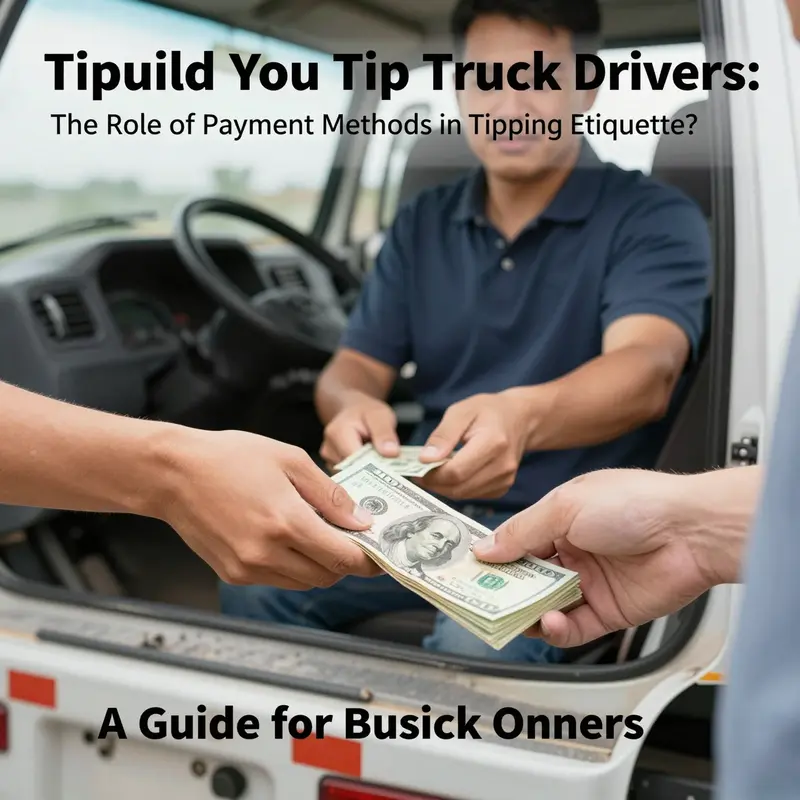
Tow services operate at the intersection of emergency need and service quality. Tipping is often discretionary, not required, and local norms vary. Many regions do not expect a tip, and company policies may discourage tipping in some situations. Yet digital tipping prompts and mobile payments are increasingly common, making it easier to acknowledge a job well done. The way you pay—cash, card, or mobile wallet—can influence how drivers perceive appreciation and how they prioritize their work in high-pressure moments. This chapter offers a framework rather than a rule: consider service quality, context, and local norms, and respond with gratitude rather than obligation.\n\nPractical guidance: Cash tips are straightforward and tangible, while digital tips offer a traceable record for both driver and company. If the driver arrives promptly, communicates clearly, and handles the vehicle with care, a modest tip in the range of a recommended amount can express appreciation. If service is routine or delayed, the tip should be smaller or optional. When in doubt, ask politely about tipping policy or follow the dispatcher’s guidance.\n\nContext matters. In higher-stress scenarios—late at night, in poor weather, or in tight spaces—a larger tip can feel appropriate to recognize extra effort. In calmer, routine pickups, a smaller gesture or a simple thank-you may suffice. Be mindful of local norms and the provider’s stated policies; a quick check can prevent awkward moments.\n\nIn all cases, tipping remains discretionary. The point is to acknowledge skill, safety, and service quality, not to create a contractual obligation. The rise of digital tipping tools reflects broader shifts in the service economy, but good tipping practice still comes down to respect, fairness, and clear communication.
Final thoughts
Understanding the decision to tip tow truck drivers requires careful consideration of service quality, local customs, and payment methods. While not always expected, a thoughtful gesture can foster goodwill and express appreciation for exceptional service. By being informed, business owners can navigate these interactions with confidence, contributing positively to the local service industry and reinforcing the value of outstanding customer care.