
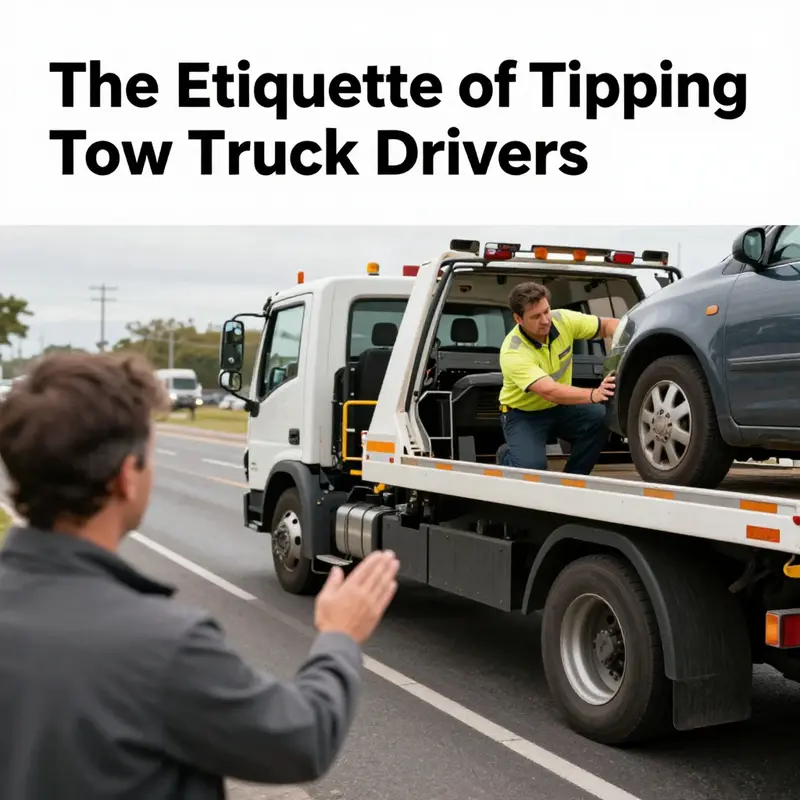
When your vehicle encounters trouble on the road, tow truck drivers are often the unsung heroes of the situation. They not only assist in emergencies but also provide a vital service under stressful conditions. As a business owner, understanding the etiquette of tipping these professionals is important in fostering goodwill within your community and acknowledging the hard work they do. The following chapters will delve into why tipping tow truck drivers is considered respectful and how various factors influence the decision to do so, ultimately equipping you to make informed choices in your own experiences.
When Help Arrives on the Road: The Subtle Power of Tipping Tow Truck Drivers
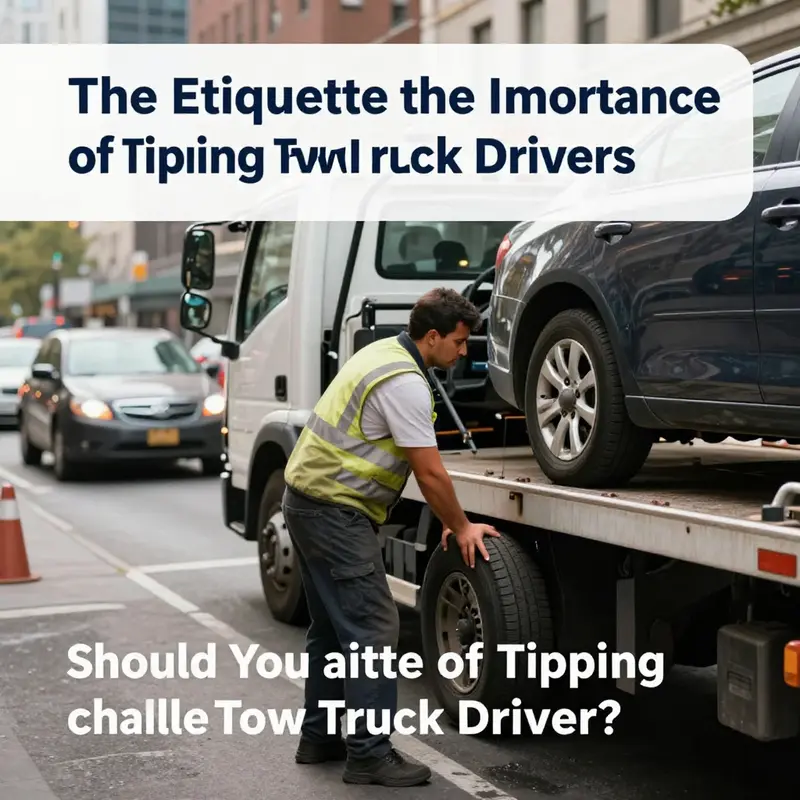
A tow is almost never a simple transaction. It is a moment when your plans derail, your vehicle becomes less reliable, and you suddenly depend on strangers who arrive in unmarked trucks and uniformed certainty. In those moments, the tow truck driver is more than a technician with a hook and a winch. They become a mobile lifeline, navigating your most stressful hours with practical skill, restraint, and a steady hand. Tipping, then, becomes not a force of obligation but a quiet acknowledgment of service that rises above the basic fee. It is a gesture that recognizes the physical labor, the risk, and the emotional toll that comes with hauling a car through bad weather, late at night, or down unfamiliar roads. It is also a signal of gratitude that can soften the rough edges of a challenging day and support workers who rely on pay structures that do not always reflect the true weight of their work.
The mechanics of tipping tow truck drivers are simple in theory and nuanced in practice. In many places, tipping is not a universal expectation, and the base fee charged by a towing company covers the service. The driver is often paid by the job rather than by an hourly wage, which means that the income is not always stable or commensurate with the effort, the risk, or the stress involved. Yet in several real-world scenarios, a tip can feel like a meaningful, proportionate response to the quality of service received. When a driver arrives quickly during a snowstorm, remains calm under pressure, and communicates clearly about the plan for moving your vehicle, the appreciation you show can reinforce a professional standard that benefits both customers and workers alike.
Consider the numbers that often guide tipping decisions. A common rule of thumb is to tip between 10 and 20 percent of the total tow fee, or a flat amount in the range of 10 to 20 dollars. For a tow that costs 150 dollars, that translates to a tip of roughly 15 to 30 dollars. These figures are not rigid laws; they are flexible guidelines designed to reflect the level of service, the difficulty of the job, and the conditions under which the driver worked. If the tow involves a long distance, a complex recovery, or difficult terrain, a larger tip can be appropriate as a visible sign of appreciation for the extra effort. If the driver goes above and beyond—perhaps they retrieve personal items from a vehicle, secure the car safely in a lot, or provide additional roadside assistance—then a higher tip is not simply warranted; it is a natural extension of the service ethic that governs professional towing work.
The reality of towing work adds nuance to every tipping decision. Tow truck drivers frequently face hazardous environments: slick roads, blind corners, high traffic, and sometimes hostile weather. They work at odd hours, often in the dark, with little time to decompress between calls. The job demands physical stamina, technical acumen, and a calm, respectful demeanor under stress. In many cases, they are called to assist during emergencies, which amplifies the pressure and the stakes of doing the job well. A tip in such moments does more than reward a good job; it reinforces the social contract between service providers and customers who recognize the challenges of the work and the skill required to manage them safely.
Tipping is not a universal expectation, and there are legitimate situations where it may feel inappropriate or unnecessary. Some companies incorporate towing fees that are presumed to cover the service, and the driver may be bound by company policies about accepting tips. In other cases, the driver might be paid a fixed amount and may not be in a financial position to rely on tips as part of their earnings. The key distinction is not whether tipping is mandatory, but whether the service you received warranted an extra gesture of gratitude. When a driver shows up promptly, explains the process clearly, handles your vehicle with care, and remains courteous even in a tense moment, that is precisely the kind of service that tipping complements rather than compensates the core duty.
An important dimension to consider is the method of tipping. Cash remains the most straightforward option because it directly completes the transaction and ensures the driver receives the tip immediately. If you are paying by card, many drivers can process tips through the same payment method, but it is prudent to ask discreetly whether that option is available and whether there are any processing fees or company policies to consider. The gesture itself matters more than the exact method, but the simplicity and immediacy of cash can be appreciated when time is short and the driver has other calls lined up after yours. In the end, the act of tipping is less about the amount and more about the signal—an ethical nod to the effort, the professionalism, and the narrowing of a stressful moment into a cooperative, constructive outcome.
Service quality matters as much as the cost. If the driver arrives quickly, communicates what they will do, and follows through with careful handling of your vehicle, a tip communicates that you recognize competence and reliability. If the driver provides additional roadside help—such as locating a lockout key, helping secure loose parts, or retrieving personal items after a tow—these extras can justify a higher tip. Conversely, if the service is delayed without communication, or if the driver is inattentive, unsympathetic, or careless, tipping is still a personal choice. You may choose to adjust the amount downward or forego a tip altogether when the service fails to meet reasonable standards. The underlying principle remains simple: tipping should reflect the quality of service you received and your assessment of the driver’s professionalism under pressure.
In the broader ecosystem of roadside assistance, tipping tow truck drivers also intersects with the ethics of fair compensation and career sustainability. Workers in this field often juggle irregular schedules, physically demanding tasks, and the unpredictability of weather and traffic. The base fees charged by towing companies do not always translate into a living wage for drivers, especially in regions with intense competition and fluctuating demand. A small tip can be a meaningful acknowledgment that the work deserves recognition beyond what the company pays. It can be a practical way for customers to express gratitude for the human effort behind the service, and it can contribute to a more dignified standard of living for those who keep roads moving in times of distress. The exchange becomes a moment of mutual respect: the customer affirms the driver’s skill and humanity, and the driver feels seen for the care and professionalism they bring to a difficult situation.
These reflections on tipping also invite a practical, almost civic, perspective. A tow is a service that touches almost everyone at some point—an unfortunate breakdown on a busy highway or a winter night when a car slides into a ditch. The way we respond to such moments speaks to our broader attitudes about service work. Tipping, when offered thoughtfully, reinforces a culture of reciprocity. It supports a social norm where skilled, essential workers are valued not only by the institutions that employ them but by the people they help when it matters most. It is a small, direct contribution to the dignity of work in a sector that often operates under pressure and time constraints.
If you are seeking a concrete anchor for your tipping decision, consider the context of your tow. A same-day or emergency service, where the driver navigates unsafe road conditions and arrives with a respectful, can-do approach, is a prime candidate for a larger tip. A routine tow in mild conditions with a straightforward recovery might call for a standard tip in the lower range of the guidelines. Regardless of the exact amount, the spirit of the gesture matters more than the precise figure. It is a personal expression of gratitude for someone who has helped you regain control of a difficult situation, and who has often done so with a steady calm that prevents the moment from escalating into chaos.
For readers seeking additional perspectives and practical examples, a growing body of guidance emphasizes that tipping should be discretionary and context-driven. The guiding principle is to assess the level of service and the conditions under which the driver performed. If a driver demonstrates efficiency, clarity, and care—especially in inclement weather or high-stress scenarios—a tip is entirely reasonable. If the service falls short of expectations, the tipping decision may reflect that as well, or you may opt not to tip as a critique of the performance rather than as a general rule about tipping. This nuanced approach aligns with mainstream guidance that tipping is a sign of appreciation rather than a mandate, and it respects regional and company-specific practices that may influence tipping norms. Ultimately, tipping should feel right to you in the moment, grounded in fairness and gratitude rather than in obligation.
The decision to tip is also a decision about how you frame your interaction with service personnel. A brief, respectful conversation before or after the tow can set a positive tone. A simple thank you, paired with a cash tip or a card prompt, reinforces a professional exchange rather than an awkward, transactional moment. A well-timed tip can also help establish goodwill in a future incident. If you ever need a tow again, the same service provider may carry with it the memory of your courteous gesture, which can influence subsequent interactions in a constructive way. Beyond the singular experience, tipping contributes to a chain of goodwill that can improve customer service standards across the industry by rewarding consistent excellence and discouraging casual neglect. In this way, a tip is not just a personal preference; it becomes a small investment in better service for everyone who uses roadside assistance.
In weaving all these threads together, the essential takeaway is clear: tipping tow truck drivers is a discretionary practice shaped by the quality of service, the conditions of the work, and your own financial judgment. There is no one-size-fits-all rule. The most responsible approach is to evaluate the moment with honesty and empathy. If the driver has worked hard to ensure your safety, if they have navigated hazardous conditions with competence, or if they have gone above and beyond the call of duty, a tip in the standard range or higher is a reasonable expression of appreciation. If the service is routine in easy conditions or not up to the expectations, you may choose to forgo a tip or adjust the amount accordingly. Either way, the tipping conversation remains a human one—between you and the person who has just helped you regain control of a stressful moment.
For readers who want additional context on tipping etiquette and roadside assistance, there is guidance that can help you navigate these moments with clarity. Mikes Roadside Service offers practical perspectives on the broader landscape of roadside help and how to approach tipping in a way that is fair to both customers and workers. You can explore their resources at Mikes Roadside Service, which provides a sense of how tipping considerations fit into a practical, everyday approach to getting help on the road. Mikes Roadside Service.
As you weigh your options in an emergency, remember that tipping is about values as much as it is about dollars. It reflects a respect for the skill it takes to move a heavy, potentially hazardous asset from one place to another. It acknowledges the emotional labor of guiding a frightened driver and a stressed passenger through a moment of uncertainty. And it reinforces the idea that essential service workers deserve recognition for the essential work they perform, often under challenging conditions. If you are ever unsure, a quick calculation can help you decide: take the total tow fee, apply a modest percentage or a flat amount, and let the rest of the moment guide your final decision. A tip may be small, but its impact can be meaningful—the difference between a stressed encounter and a constructive one that ends with both parties feeling respected and heard.
External resource: https://www.aaa.com/autorepair/articles/should-you-tip-a-tow-truck-driver
Beyond the Fee: Reading When a Tow Truck Driver Deserves a Tip
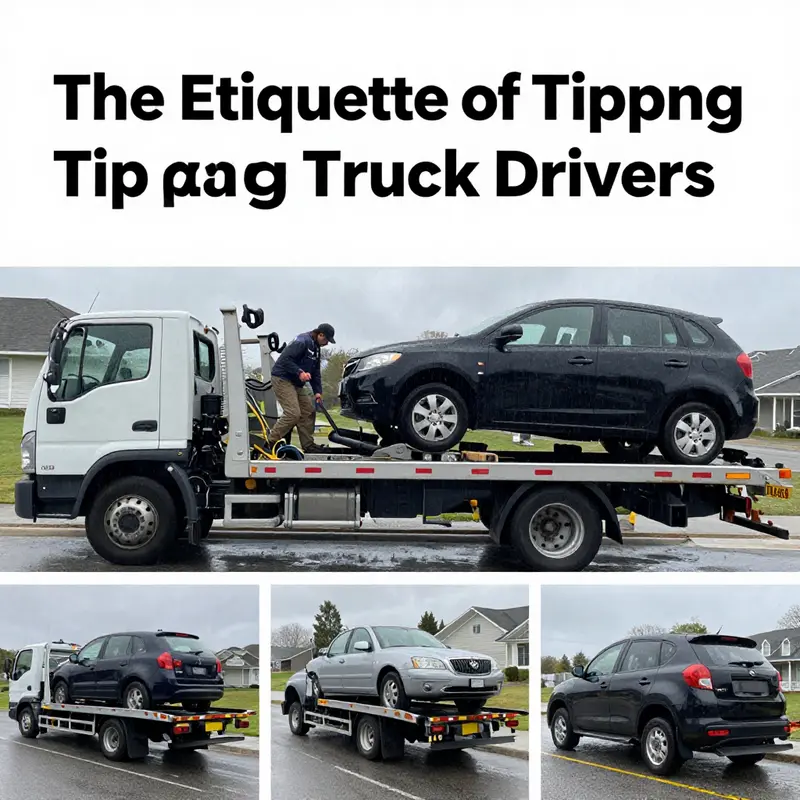
When you call for a tow, the transaction often feels straightforward: you pay the fee, the driver retreats with your vehicle, and you move on. But the experience behind that one bill can vary a lot. Tow truck drivers operate under pressure, facing weather, traffic, and the unpredictable hazards that come with roadside emergencies. They don’t just haul a car; they often orchestrate a careful, technical process, from securing the vehicle with straps and winches to navigating tight spaces and avoiding further damage. In many cases, the base rate charged by a towing company reflects only the minimum effort. A tip, then, becomes a voluntary gesture that helps acknowledge the extra miles you’ve covered together that day—the miles traveled in bad weather, the extra minutes spent communicating with you on a crowded highway, the careful handling of your car in a precarious spot. Tipping isn’t a universal rule, but it is a meaningful response to service that goes beyond the ordinary.
What shapes a tipping decision, then? Several factors converge in the moment you hand over payment, and they stretch beyond the bow of the receipt. First, the quality of service. If a driver communicates clearly, explains steps, and treats your vehicle with care, that courtesy itself can justify a gratuity. When a tow arrives promptly, the driver checks in with you about safety, helps you understand what to expect, and sustains calm throughout a challenging scene, the gesture of a tip becomes a natural extension of the positive exchange. In a situation where the driver calmly navigates through heavy traffic, rain slick streets, or a tight driveway, the effort involved is tangible. The act of guiding a heavy machine into position, especially when visibility is poor or the street is constrained, requires not just strength but precision and judgment. In those moments, a tip is a concise way to say, “I noticed your skill and your focus.” It’s not a mandate, but it is a human acknowledgment that the service enhanced safety for you and others around you.
The level of difficulty also bears on whether a tip feels appropriate. If the tow involves a vehicle stuck in an awkward location—such as a steep incline, a narrow alley, or a slope where controlled movement is essential—the worker’s risk increases. A longer tow, a difficult retrieval, or a complex recovery can demand extra time, careful coordination with you, and sometimes additional handwork to prevent damage to the car or surroundings. In these circumstances, a tip in the range of ten to fifteen percent, or a flat twenty-dollar note in regions with lower living costs, can reflect the extra effort. It’s not a rigid formula, but it provides a practical gauge in a moment where the driver’s ability and persistence are clear. The idea is simple: if the job takes more time, more skill, or more risk than a straightforward tow in flat terrain, a little more gratuity acknowledges that added investment.
Company policy can complicate the question. Some larger or franchise operations discourage tipping, either due to corporate policy or to standardize compensation structures. Others may actively encourage tips, especially when the driver is an independent contractor, owner-operator, or a sole proprietor who depends on gratuities to supplement a lower base pay. Confronting a no-tipping policy at the point of service can feel awkward, but you’ll often find that the driver’s professionalism remains consistent regardless of policy. In such cases, the value you place on their work can still be demonstrated through non-monetary appreciation, such as a kind word, a quick public review, or a direct acknowledgment to the company after the service. Knowing the policy in advance—and observing it in the moment—helps you respond with tact and clarity, preserving a respectful dynamic between you and the worker.
Regional norms also shape how people think about tipping a tow truck driver. In some areas, tipping for an emergency service is common and expected, even routine, especially when the driver has gone beyond the call of duty. In others, tipping is less customary, and gratitude is expressed through straightforward thanks or a professional, smooth transaction. The best approach is to calibrate based on what you observe on the ground: the driver’s demeanor, the complexity of the job, and the usual practices in your city or state. If you’re unsure, a modest tip coupled with a sincere expression of appreciation can signal your recognition without creating discomfort or awkwardness. And in many communities, the expectation is less about the percentage of the bill and more about the clarity and kindness of the interaction you leave behind.
The driver’s employment status is another piece of the puzzle. Independent operators, who own their trucks and run their own service, often feel more comfortable with gratuities, much like food-truck vendors or freelance tradespeople. They may rely on tips as a meaningful portion of their income, particularly during slow periods or off-season. In contrast, drivers employed by a larger company may receive a steadier wage, but they also shoulder the operational costs and risks associated with hazardous roadside work. Tipping in such contexts still makes sense when you’ve encountered exceptional service, but the decision can feel more nuanced if the driver explicitly tells you that tips aren’t expected. Even when rules vary, the spirit of tipping—as a gesture of appreciation for specialized, demanding, and sometimes dangerous labor—remains a helpful touchstone across employment structures.
To translate these factors into practical guidance, consider a scenario you might encounter on a winter night: a vehicle skidded and ended up off the road, blocking a lane. The tow truck arrives, the driver assesses the scene, and with a careful, methodical approach, begins the process of attachment and retrieval. The air is cold, the windshield wipers squeak in the gusts, and every movement feels amplified by the weather. The driver communicates every step, explaining where the tow will begin, what precautions they will take to avoid damage, and how long it might take. In that moment, the effort isn’t just physical; it’s situational awareness, risk management, and a steady hand. If the bill comes to around a modest amount, a tip of ten to twenty percent might feel like a fair reflection of the extra complexity. If, however, the driver not only clears the obstruction but also offers guidance—checking the vehicle’s readiness for a safe ride, suggesting a reliable nearby repair option, or assisting with quick roadside tasks like securing loose items—the tip may justifiably be higher as a reward for the extra service.
The decision to tip also intersects with the practical realities of your own circumstances. A tow is seldom a planned event; it often arrives at a moment when time is scarce, stress is high, and the horizon of options feels narrow. In those moments, a tip can serve as a small but tangible sign of mutual respect. It communicates that you value professional skill, calm demeanor, and the effort to make a difficult situation safer and more efficient. A good rule of thumb is to think in terms of a range rather than a fixed amount. If the tow is simple and fast, a modest gesture, such as a few dollars or a small percentage, can convey thanks without overemphasizing the monetary aspect. If the service is thorough and particularly helpful—such as offering extra safety checks, helping you decide between repair and replacement, or providing guidance for future preventative steps—the gratuity should reflect that additional value; you may move closer to twenty percent or to a higher flat amount.
In coupling policy with practice, many people find it useful to consider how they would evaluate the experience if they were in the driver’s shoes. Imagine arriving at a scene under pressure, with a timetable shrinking and a family waiting in a car. Your focus would be on safety, efficiency, and clear communication, with a professional tone that respects your own urgency while reducing confusion. When you reflect on that perspective, tipping becomes a concrete way to acknowledge the extra effort and the care that helps bring you through a tense moment with less stress. It is not a moral obligation, but a practical courtesy that recognizes the human element behind the mechanical task. And while your tipping choice is deeply personal, it is often less about the exact numbers and more about the intention behind the gesture: a sign that you noticed the work and you appreciate the way it was done.
For readers seeking a clearer sense of local expectations, it can be helpful to consult resources from nearby providers who describe how they approach service and client relationships. For example, local guidance on the nature of towing work and service expectations can be found through regional operators who lay out their service ethos and pricing philosophies. A linked resource on towing service in Houston offers a practical glimpse into how a professional in that market communicates with clients, manages expectations, and handles the realities of city driving and urban retrieval. Reading such pages can give you a sense of norms in your own area, which, in turn, informs how you tailor your tipping approach to reflect regional practice while maintaining your own standards of courtesy. See towing service in Houston for a concrete example of how a local operation frames its engagement with customers and the value it places on a thoughtful tip when warranted.
Beyond numbers and rules, tipping remains a compassionate, human response to service that carries real weight for the workers who keep people moving in moments of failure or urgency. A tip is not just currency; it’s a signal that the encounter mattered. It reinforces the idea that essential labor—like towing, which often prevents further damage and enables quick relief—deserves recognition. It reinforces a cycle of goodwill: drivers know their efforts are valued; customers feel seen and respected; the community gradually learns to support those who perform physically demanding, high-stakes work under challenging conditions. In many ways, the tipping choice mirrors broader questions about how we value skilled labor in everyday life. It invites us to consider not just the price of a service, but the quality and character of the work that makes that service possible. And it invites a level of mindfulness about what we say with our money in moments when emotions run high and time runs short.
The decision to tip, ultimately, rests on a balance of several strands: service quality, the complexity of the job, company policy, regional norms, and the worker’s own employment arrangement. Each of these elements contributes to a holistic sense of whether a tip is appropriate and, if so, how generous it should be. The guidance is flexible by design because roadside situations unfold with varying degrees of challenge and risk. The aim is not to impose a rigid code but to offer a framework that helps you respond with fairness and respect. When you have made a choice that aligns with the reality of the service you received, you can walk away with a sense of gratitude that extends beyond the receipt. You have contributed to a system that recognizes the value of specialized, physically demanding work and the people who perform it when others are frightened, pressed for time, or unsure of what comes next.
As you navigate the quiet arithmetic of tipping in these moments, keep in mind that an extra gesture of appreciation can take many forms beyond cash. A quick, sincere thank-you note or a brief positive review can help an independent operator grow their clientele and sustain their business, especially during lean periods. If you choose to tip, do so thoughtfully and discreetly, ensuring you don’t interfere with the driver’s work or impede safety procedures. If a driver declines a tip, respect the choice and consider expressing gratitude in another small but meaningful way, such as offering a verbal compliment or sharing a positive message with the company afterward. Your approach should preserve the dignity of the interaction, support the worker, and reflect your own sense of fairness in a high-stress moment.
In sum, tipping a tow truck driver is not a universal expectation, but it is a practical and humane response to a job that blends heavy physical labor, technical skill, and pressure-filled decision-making. The decision to tip should be guided by the quality of service, the difficulty of the task, the policy of the company, the norms of your region, and the driver’s employment arrangement. When these factors point toward appreciation, a tip communicates respect for the expertise and courage that go into keeping roads safer and people moving again. It remains, at its best, a concise act of solidarity with workers who shoulder risk for the sake of others. For those seeking a broader perspective on tipping etiquette in related mobile-service contexts, a thoughtful external discussion sheds additional light on how ownership structure and perceived service level influence tipping behavior: https://www.seriouseats.com/should-you-tip-at-food-trucks-the-etiquette-no-one-talks-about. This broader lens helps situate tipping as part of a wider conversation about fair compensation, agency, and considerate conduct in everyday emergencies.
Final thoughts
The decision to tip a tow truck driver is not merely a matter of obligation, but an opportunity to express gratitude for their hard work and dedication. By acknowledging the challenges they face and the level of service they provide, you foster positive relationships within the community and demonstrate that you value the essential services they deliver. As business owners, leading by example in this etiquette can create a culture of appreciation and respect that resonates throughout our professional and personal interactions.