
Understanding the practice of tipping in the towing industry is essential for business owners who rely on these services. Tow truck drivers often operate under challenging conditions and provide valuable assistance during emergencies. This guide will explore the culture of tipping within the towing industry, offer insights into how much you should tip, and discuss when it’s most appropriate to offer a gratuity. By the end, you’ll have a comprehensive understanding of why tipping can enhance service quality and bolster your business relationships.
Beyond the Service Fee: The Culture, Care, and Calculus of Tipping Tow Truck Drivers
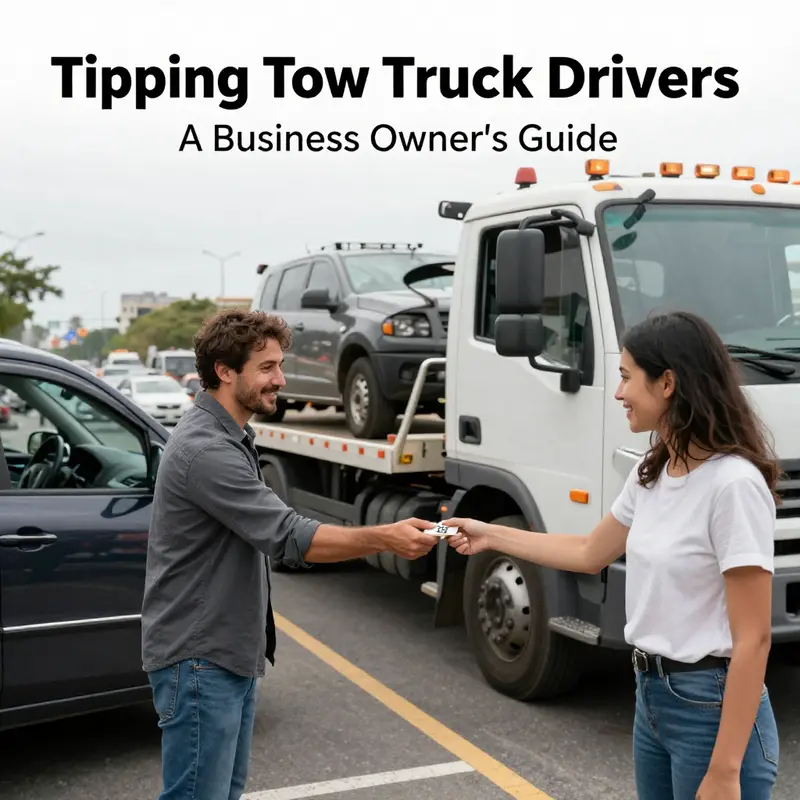
When your car is towed you are likely stressed, unsure about costs, and suddenly dependent on a person you may never meet again; in that moment the gesture of tipping becomes a small but meaningful signal that you value the driver’s skill, safety, and courtesy. Tipping is not a universal obligation, but it is widely appreciated and often expected in the towing world, especially when the driver arrives quickly, handles your vehicle with care, or assists with extra tasks like retrieving items from the car. Practices vary by region and by company policy, and the same city can show clear differences from one outfit to another. In many places customers tip between ten and fifteen percent of the tow fee, with higher amounts for more complex jobs such as extracting a vehicle from a tight space, dealing with hazardous conditions, or managing a multi-stop scenario. For simpler tasks, five to ten dollars is typical, and some people round up to a round number to avoid awkwardness. The essential idea is that tips acknowledge effort, competence, and professionalism, not just the speed of arrival. The driver’s income often relies on the gratuity, particularly if the driver is an independent contractor or works for a company that does not offer high base wages or benefits. The culture of tipping in towing mirrors the broader service economy: tips recognize quality work and customer satisfaction, especially when the environment is dangerous, noisy, or cold, and the driver still maintains calm and clear communication. However, not every company wants or accepts tips; some policies discourage gratuities for legal or insurance reasons, while others welcome them openly; the best course is to check the company’s stance ahead of time or simply ask politely when the service is complete. A visible tip jar on the dashboard, a prompt on a payment device, or a straightforward question from the driver can all signal that gratuities are welcome, but silence should not be read as an insult. The conditions in which tow work happens can amplify the gesture. Arriving on a busy highway in heavy rain, negotiating with a driver who must maneuver a vehicle into a recoverable spot, or simply dealing with a frightened or stressed motorist—all of these factors shape how a tip is perceived and how much is appropriate. A driver who communicates clearly, explains the process, protects your vehicle from additional damage, and even helps retrieve items like a purse or phone from the wreckage has earned more than just a fee; they have earned acknowledgement for a job well done. When thinking about the amount, many people adopt a proportional approach: if the job is straightforward, a modest tip of five to ten dollars is reasonable; if the job is more complicated or the driver goes beyond what was expected, ten to twenty dollars or a higher percentage of the tow fee is fair. Beyond numbers, the act of tipping is about compatibility between your experience and your gratitude. It is acceptable to base your decision on your level of satisfaction with the service and the driver’s demeanor, professionalism, and safety practices. If you are uncertain, you can discreetly ask the driver about gratuities or look for company guidance before the service begins, and then respond accordingly once the vehicle is secured and you are ready to move forward. For readers seeking a practical frame of reference about roadside services and how to interpret rates and expectations, consider visiting Mike’s Roadside Service, which sheds light on the real-world considerations drivers face on the road. To further understand tipping norms and the economic rationale behind them in tow work, readers may consult external perspectives such as the analysis published by The New York Times titled Why You Should Tip a Tow Truck Driver: https://www.nytimes.com/2023/05/17/business/tow-truck-driver-tipping.html.
Fair Tips on the Road: Financial Considerations for Tipping a Tow Truck Driver
Tow trucks are a quiet frontline when a car breaks down or you are stranded on the side of a highway. The driver you meet is more than a person with a crane and a winch; they are a liaison between your safety and the direction of your day. In that moment, money becomes a practical signal of appreciation for service under pressure. The question of how much to tip a tow truck driver is seldom about a fixed rule and more about a fair acknowledgment of effort, skill, and circumstance. Financial considerations here differ from a restaurant or delivery setting because tow work is often paid by a fixed job fee rather than an hourly wage. Many drivers rely on tips to supplement income, especially when they show up quickly in an emergency, manage a difficult vehicle retrieval, or brave conditions that test both equipment and nerves. In that sense, tipping is less a courtesy and more a social contract that respects the realities of the job.
A common guideline you will hear in customer etiquette circles suggests tipping roughly 10% to 20% of the total tow cost when the service is prompt, professional, and efficient. If the fee for the tow is $150, a tip in the range of $15 to $30 feels proportional to the value delivered. When the service path includes extra challenges—such as a long-distance tow, a tricky hook in bad weather, or a complex recovery—the outreach of the driver deserves a larger nod, potentially nudging the tip toward 20%. Conversely, for a straightforward, short-distance tow with minimal effort, many customers still observe a modest gesture, such as $5 to $10. Those smaller tips carry weight too, signaling gratitude without creating awkwardness in an emergency setting where you may be short on cash. The bottom line is this: tip what you can, and tip what feels right given the level of service.
It helps to keep tipping in perspective as part of the overall cost of roadside assistance. Unlike a restaurant bill or a courier delivery, tipping is not always built into the price. Some companies may not promote gratuity, and a few operators even discourage it in their policies. The practical response to that policy reality is twofold: ask the dispatcher or the driver if tipping is welcomed, and be prepared to proceed with or without a tip depending on what is allowed. If tipping is not allowed, you can still show appreciation through other channels, such as leaving a positive review, recommending the driver to friends, or sharing your experience with the company. Sometimes a single kind word, spread online, can contribute to a driver’s reputation and future opportunities.
In the heat of an emergency or a high-stress scene, the decision to tip can hinge on the level of service you receive. Consider how the driver handled your vehicle, protected your safety in traffic, and took extra steps to secure loose items or assist with documentation needed for the tow. A driver who arrives promptly, communicates clearly about what they can do, and handles your vehicle with care earns a different kind of value than one who rushes and cuts corners. If you’re unsure about the tipping etiquette on a given call, you can take a moment to assess the service quality first. When appropriate, a direct tip is the most effective way to convey gratitude, especially if the driver has been working under physically demanding conditions for hours on end. For readers evaluating options in real life, you might explore a partner you trust by visiting Mike’s Roadside Service, which outlines services and contact details on their site: Mike’s Roadside Service. This link can provide context on what a reputable roadside team can offer and how they present pricing and service standards.
Even if you suspect tipping isn’t customary in a particular area, a courteous gesture can still make a tangible difference. Cash is often the simplest form of thanks, given directly to the driver when the work is complete. If you don’t have cash handy, see if the company accepts cards or digital transfers, or consider a written note of appreciation left with the driver or the dispatch team. It’s also wise to ask about tipping policies when you book a service, either on the phone or online, to avoid any on-the-spot awkwardness. In some cases, the tipping policy may be clearly posted in the tow truck cab or on the company’s payment interface, while in others you’ll rely on the driver’s guidance.
From a broader perspective, tipping is part of a network that sustains the human element in roadside assistance. The stress of hours on the road, the risk of hazardous weather, and the physical labor of lifting and winching a vehicle are not fully captured by a fixed fee. Recognizing this with a fair tip is one step toward equitable compensation for people who routinely place others’ safety ahead of their own comfort. When the call wraps up, you may feel the relief of being back on your route, but the driver leaves with a sense of acknowledgment that can affect their day and, by extension, their ability to help the next person in need.
For further guidance on tipping practices related to emergency services and roadside assistance, you can refer to this comprehensive resource from the U.S. Department of Transportation: https://www.transportation.gov
Situational Awareness in the Towing Moment: When and How Much to Tip a Tow Truck Driver
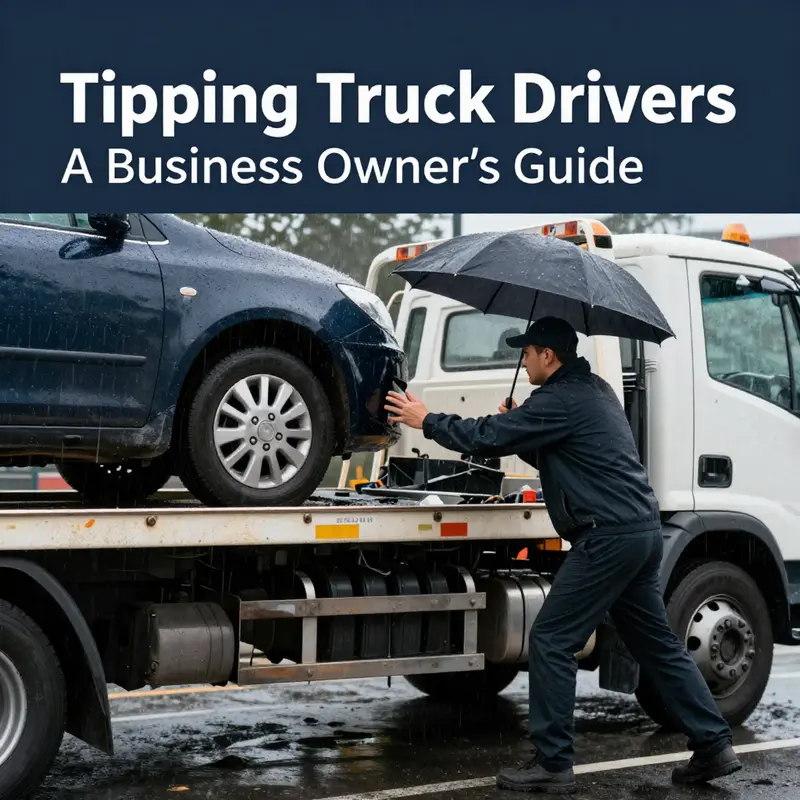
When you’re stranded on a highway shoulder or stalled in a quiet cul-de-sac, the moment you encounter a tow truck driver can feel as decisive as the tow itself. The question of tipping is less about a fixed rule and more about situational awareness—the ability to read the scene, understand the effort involved, and respond with courtesy that matches the work being performed. Tow truck operators labor under demanding conditions. They arrive after long shifts, negotiate busy traffic, and work in weather that tests both body and equipment. Their income often relies on service fees rather than predictable hourly wages, so gratuity can play a meaningful role in recognizing the risk and the labor they invest to get you back on the road. Industry guidance generally supports tipping as a courteous practice when the driver has delivered solid service, especially in emergencies, when they handle your vehicle with care, or when they go beyond what is asked—like retrieving items from a car, coordinating with dispatch, or offering practical safety advice on the roadside. A typical guideline suggests tipping around ten to fifteen percent of the tow fee, with smaller gestures in the five to ten dollar range for more routine, straightforward assistance. Still, tipping remains voluntary, and the real barometer is the driver’s demonstrated effort and the context of the moment. If a driver is punctual, calm under pressure, and respectful of your property, a tip can feel like a natural acknowledgment rather than an obligation.
The core of situational awareness here is simple: read the scene and respond in a way that matches the level of service and the degree of difficulty. If the tow involves navigating a damaged vehicle from a busy lane, or if the driver must improvise solutions in tight spaces, the extra effort merits consideration. When the service arrives late at night, after nine o’clock, the costs associated with higher risk, reduced visibility, and extended duty hours already weigh on the equation. In those moments, a modest gratuity can serve as public acknowledgment of the extra risk and the added strain on the driver. Yet even in such cases, cultural sensitivity matters. Tipping norms vary widely by region, and what feels natural in one place can feel out of place in another. The best approach is to balance generosity with awareness of local customs and the specific situation at hand.
A practical way to navigate these tensions is to observe the cues the driver provides. A visible tip jar or a direct, courteous invitation to tip can indicate that gratuity is welcome. However, in contexts where tipping is less common, especially in certain regions or cultures, you may find it more appropriate to express gratitude through words and a respectful demeanor rather than cash. In such cases, offering a sincere thanks and confirming that you appreciate the driver’s care can carry as much goodwill as a small tip. The overarching principle remains the same: tips are a voluntary signal of appreciation for service that eased a stressful moment and safeguarded your vehicle and safety. If you decide to tip, do so discreetly and at an appropriate moment—preferably after the driver has explained the plan, ensured your safety, and completed the tow or roadside assistance without further delay.
This nuanced approach to tipping is not merely about personal generosity. It also reflects a broader standard in roadside service that values humane and respectful conduct. To place this in a broader, real-world frame, consider the example of Mike’s Roadside Service, whose approach to prompt response and careful handling echoes the values that tip etiquette seeks to reinforce. In the context of this chapter, the link below provides a concrete illustration of how a roadside professional organization frames service, reliability, and customer interaction in everyday practice: Mike’s Roadside Service.
Beyond borders, travelers often confront different tipping climates. In some parts of the world, and particularly in certain regions, tipping for roadside assistance is not a customary practice, and gratuity may be welcome only under specific circumstances or not at all. When you are navigating unfamiliar norms, the safest strategy is to err on the side of courtesy without imposing expectations. If you are unsure whether tipping is appropriate, a straightforward question to the driver or dispatcher can open a respectful dialogue about local etiquette. A brief expression of gratitude, delivered with politeness and clarity, can bridge cultural differences without creating awkwardness or misinterpretation. And when the service is delivered with professionalism under challenging conditions—late hours, heavy traffic, or hazardous scenes—the gesture of thanks, whether monetary or verbal, aligns with the broader ethic of mutual respect that underpins dependable roadside assistance.
For readers seeking cultural context outside the immediate scene, a broader reference on tipping practices in different regions can be informative. A well-regarded resource offers guidance on tipping norms in the Chinese mainland, where practices can differ markedly from Western expectations. This contextual guide underscores the importance of local norms and the value of expressing gratitude in culturally appropriate ways, rather than assuming a universal customary practice. External readers may consult the following resource for a broader cultural frame: https://www.cathaypacific.com/content/dam/cathaypacific/travel-tips/tipping-in-china.pdf. The takeaway is not to rigidly apply one standard, but to read the room, honor the driver’s effort, and tailor your response to the setting with sensitivity and respect.
In the end, situational awareness when deciding whether and how much to tip a tow truck driver boils down to two questions: Was the service timely, careful, and protective of my property under challenging conditions? And did the driver go beyond what was expected to ease my situation? If the answer is yes, a gesture of appreciation—whether a tip, a word of thanks, or both—resonates far beyond a single transaction. It affirms the human element at the heart of roadside assistance and reinforces the standard of care that keeps people and vehicles moving, even when the road is rough and the clock is ticking.
Final thoughts
Tipping tow truck drivers not only reflects appreciation for their hard work but also fosters a better working relationship between your business and the towing service. Understanding the culture of tipping, knowing the right amounts, and evaluating the context of service can make a significant impact on the quality of assistance you receive. As business owners, adopting this practice can enhance your reputation and ensure you receive prompt and care-driven responses in future towing situations. Your contributions truly make a difference.