
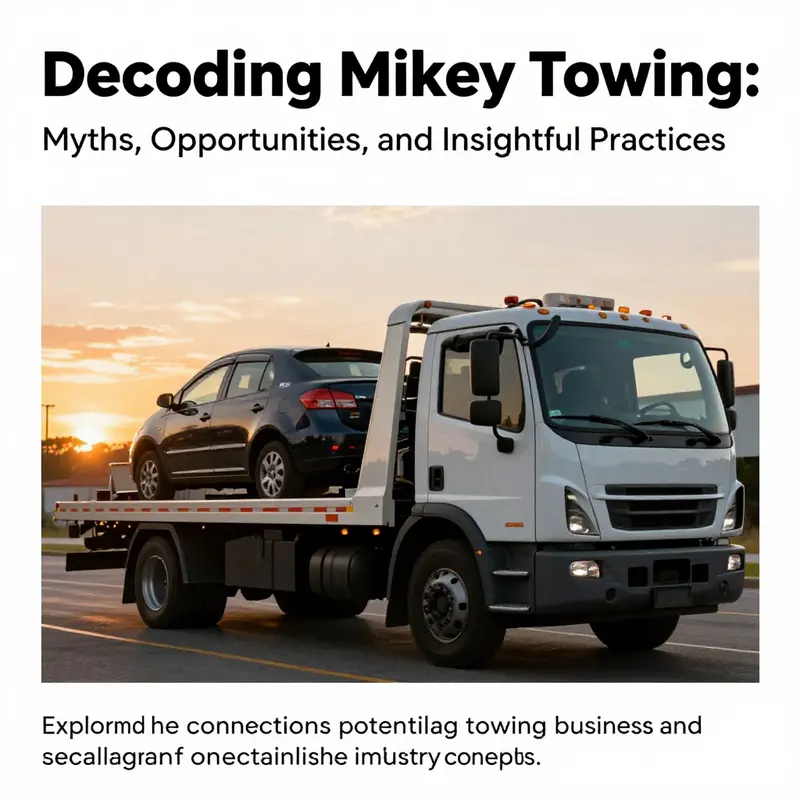
Navigating the world of towing services can often lead to confusion, particularly when names and concepts intertwine. This article delves into the ambiguous identity of ‘Mikey Towing,’ examining its possible connections with Mikey February, its potential as a local business entity, and the broader towing industry concepts that could impact its operations. Each chapter provides a deeper understanding, clarifying the topic for business owners interested in or associated with the towing sector.
Mikey Towing: Untangling the Confusion with Mikey February on the Open Road
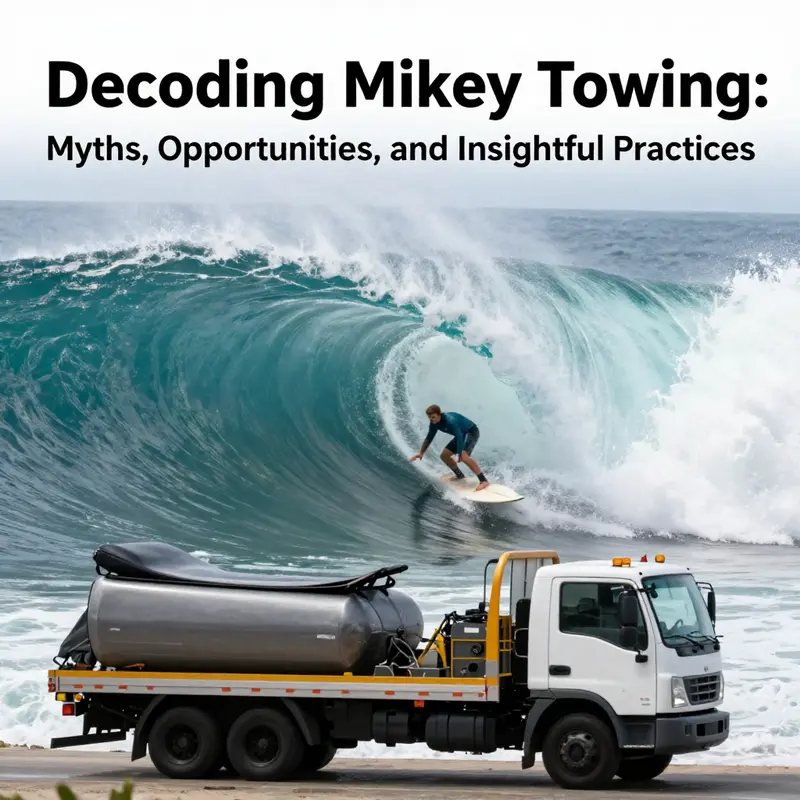
Names travel faster than services, especially on the highway of information that stretches across local search results, social feeds, and rumor-filled forums. This chapter follows a quiet, stubborn ambiguity: a towing name that may or may not exist in a verifiable form, tangled with a famous surfer’s nickname and an array of online chatter. When a reader searches for Mikey Towing, they are not simply locating a truck and a driver; they are wading into a web where branding, rumor, and mistaken identity braid themselves into a single perception. The absence of authoritative records about Mikey Towing does not prove the absence of the company. It simply exposes how modern visibility works. A business can be real and active in a neighborhood, yet vanish from the pages of widely recognized registries or mainstream media. In such cases, what customers encounter first is not a verified profile but a constellation of references: a phone number in a local ad, a social-media post, a scattered review, or a name that looks plausible but cannot be traced to a regulatory footprint. The result is a provisional trust, built from proximity and inference rather than from official documentation. This is not merely a trivia problem. In the practical world of roadside assistance, a driver who needs help wants certainty, not confusion. The gap between a name that sounds genuine and the reality behind it can become a hazard when a caller chooses a provider based on the allure of a brand rather than on proven credentials. The density of online listings compounds the issue. A single name can appear in multiple cities, each with its own number, its own hours, and its own standards. The human brain tends to fill gaps with plausible stories. That psychological shortcut helps explain why a rumor about a towing service named Mikey can outpace the slow, methodical process of verification. In the background of this confusion, there are other threads worth noticing. One thread concerns the broader ecosystem of specialized towing services in major metropolitan areas. If a local business bears the name Mikey Towing, it competes within the same space as a host of other roadside providers, some large and highly visible, others small and neighborhood-based. The reality on the ground often hinges on a few simple factors: prompt response times, transparent pricing, trained operators, and proof of licensing where required. Those factors are not glamorous, but they are the quiet backbone of reliability. Another thread runs through the surfing and extreme-sports world, where names and nicknames can travel far beyond their original contexts. The phrase Mikey February appears in research material as a notable figure associated with big-wave surfing and Red Bull-backed events, a world of awe-inspiring talent and media coverage. The connection to Mikey Towing, if it exists, is more a product of narrative resonance than of any overt alignment. The idea that a towing company could share a name or a brand gesture with an athlete who embodies speed, risk, and the edge of control invites a curious, almost mythic interpretation. It is in this tension—between a practical service and a layered cultural metaphor—that readers should approach any claim about Mikey Towing. The absence of a clear, verifiable link invites skepticism, but it also invites a deeper look at how information is produced and consumed. Research results show several possible explanations for the observed ambiguity. The first is name confusion: Mikey Towing might be a misremembered or misreported reference to another business with a similar name or to a generic towing service in a nearby area. The second is misattribution: a unrelated event or person could be conflated with a towing business due to a coincidental overlap of names or a misheard street address. A third possibility is a fragmented information landscape, where a local operator exists but remains off major databases and thus invisible to readers who start with a broad search. In any case, the practical takeaway for readers is clear. When verifying a towing provider, rely on more than a name. Check physical addresses, licensing where applicable, and visible proof of service such as dispatch logs, fleet information, and verified customer feedback tied to a real business entity. For those who want to explore how local towing services present themselves online, there is a relevant case in the city landscape where a specific provider presents a consolidated, searchable profile. The Houston area, for instance, has a network of operators that communicate through a mix of websites, local listings, and reviews. If readers want a concrete example of how a local towing business slots into the fabric of a city like Houston, they can explore a dedicated listing that aggregates service details and locations. This resource helps illustrate how the market values clarity, consistency, and accountability, even as naive name associations proliferate in search results. towing-company-houston serves as a reminder that the most trustworthy information surfaces when a provider’s identity is consistent across channels and verifiable through licensing, insurance, and direct contact. The broader lesson extends beyond any single name. In a world where branding can outrun verification, consumers should cultivate a habit of cross-checking details, asking for written estimates, and favoring operators who can demonstrate a track record of reliable service. If confusion arises from a name like Mikey Towing, the best response is not to guess but to verify, to ask pointed questions about response times, service areas, and proof of credentials. In that light, the topic moves from an enigmatic entity into a practical practice: how to protect oneself on the roadside by demanding clarity and accountability from the first phone call to the arrival of the tow truck. The search landscape itself reflects a modern truth: reliability is earned through transparency, not through the charm of a catchy name. As readers continue to navigate similar name ambiguities in other domains, the call to action remains the same—seek verifiable, up-to-date information and prioritize operators who reveal their credentials and procedures openly. For a broader cultural angle on how names travel and collide with media narratives, see the case study of the 1992 film Mikey, which remains a touchstone for discussing how popular culture can seed misperceptions about real-world entities. More background on that film can be found at https://www.imdb.com/title/tt0105768/.
Mikey Towing in the Local Landscape: Potential Identity, Regulation, and Community Service in the Towing World
Mikey Towing in the Local Landscape: Potential Identity, Regulation, and Community Service in the Towing World
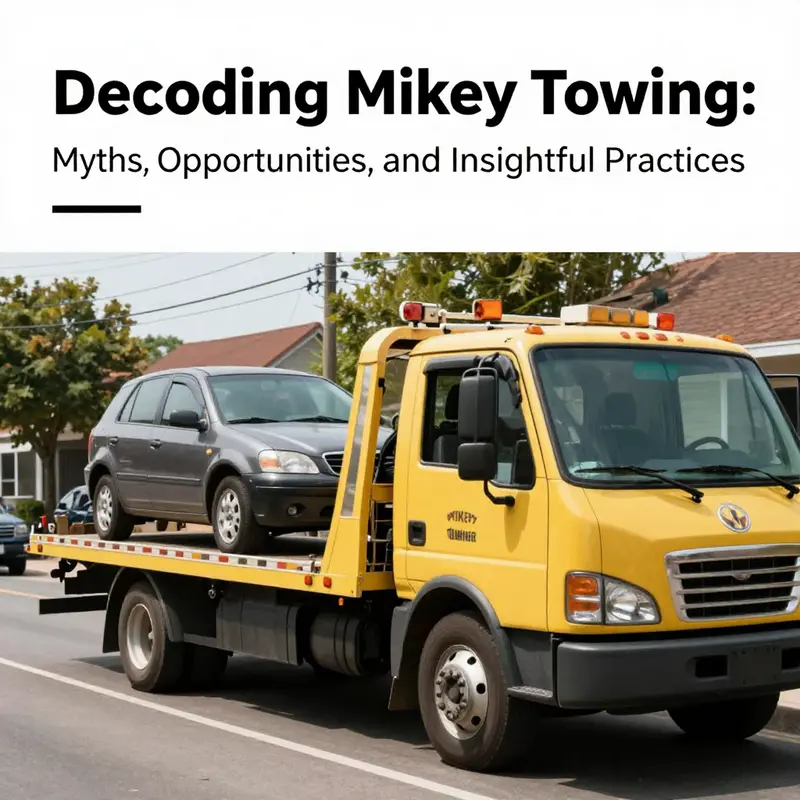
A hypothetical Mikey Towing invites us to look beyond a name and into the lived reality of a small roadside business. The idea is simple: a neighborly service that helps strangers in moments of car trouble. Yet the path from a casual brand idea to a dependable, legal operation is paved with practical decisions, not slogans. The chapter that follows treats Mikey Towing as a lens on the broader ecosystem of local towing—how a new entrant negotiates trust, regulatory requirements, equipment needs, and the emotional weight of a customer who has just learned their day has suddenly changed. In doing so, the narrative stays grounded in the friction and immediacy of roadside assistance rather than in glossy fantasies about enterprise speed or overnight success.
Current research suggests there is no verifiable Mikey Towing entity registered in Pennsylvania, where a small business would be expected to appear in public records. The closest documented reference is Mike’s Towing, a registered entity with limited publicly accessible operational details. This discrepancy matters not as a matter of trivia but as a practical alert: anyone considering a local towing brand under a similar name should begin with thorough due diligence. A careful start includes checking state registries, confirming that a chosen name does not create confusion with an existing entity, and building a plan that foregrounds service quality, safety, and transparent communication over mere branding prowess. In this sense, Mikey Towing becomes less about a nickname and more about a disciplined process of legitimacy, credibility, and community accountability.
Identity for a towing business is not a decorative element. It is a commitment that must translate into every encounter with a stalled driver, a blocked lane, or a sudden engine failure. A local operator contemplating the Mikey Towing name would wrestle with how it sounds to someone who needs help now and how it feels when the dispatcher calls with an ETA. The imagined brand would require more than a clever sign; it would demand a written policy on response times, a transparent pricing framework, and visible credentials—proof of insurance, licensing, and proper training. These are not optional extras; they are the baseline for earning trust when the traveler is anxious, the road is loud, and time is measured in minutes. Without this visible structure, even the friendliest face on a tow truck risks being dismissed as a rumor rather than a reliable partner.
Operational reality carries the weight of a practical timetable. A plausible Mikey Towing would need a dependable fleet, seasoned drivers, and a dispatcher system that can translate a caller’s urgency into a precise plan of action. In addition to insurance and local permits, there must be a clear operational handbook—how to position a tow vehicle on a shoulder, how to secure a vehicle without causing further damage, and how to document the incident for claims or storage arrangements. The discipline of maintenance and the clarity of invoicing are often the quiet gatekeepers of trust. A courteous, punctual driver who presents the required paperwork on arrival communicates much more than a single message; they convey consistency, accountability, and a promise that the customer’s trouble is being handled with competence.
Brand development in a crowded roadside market also demands that Mikey Towing demonstrate credibility through concrete, repeatable actions. It is not enough to be visible; a local operator must show up where it matters—on the road, in the office, on the phone—with reliability. The balance between neighborly warmth and professional rigor becomes the brand’s most effective storytelling. In practice, this means focusing on a few key promises: a clearly defined service area, predictable response times, and a straightforward explanation of charges. When pricing is fair and communication is proactive, a name becomes a footnote in a driver’s memory instead of a rumor in a chat thread. The goal is not to outshine every other provider in advertising but to outshine them in delivery.
The social architecture around a towing business matters as much as the mechanical one. Networking with nearby repair shops, dealerships, and insurance networks can produce a steady stream of referrals and reduce the fragility of cash flow. In exchange, the operator offers dependable, safe, and timely service that staff and partners can rely on. For Mikey Towing, this translates into building a reputation that can weather competitive pressure and occasional misfires. A well-run startup should pilot a cautious expansion—start with a responsible service radius, then broaden as capacity and reputation grow. Transparency in pricing and the avoidance of surprise charges help avoid erosion of trust that often proves harder to repair than a broken axle.
From a customer’s perspective, the most persuasive signal is consistency. A hypothetical Mikey Towing that follows through on its promises—arrives when expected, handles vehicles with care, and communicates clearly about what happens next—creates a durable memory. This does not rely on dramatic gestures but on the stubborn, repeatable excellence that makes a neighbor feel seen and helped rather than “just another caller.” The stakes are highest when someone is stranded at night or in a high-traffic corridor, but the same formula applies in daytime city blocks or quiet suburban streets. If a brand name becomes associated with calm competence, the word spreads through trust, not through paid placement or flashy slogans.
Even when the name Mikey Towing exists only as a hypothetical, the exercise reveals a practical blueprint for any aspiring local towing outfit. It highlights how ownership of the entire customer journey—from first contact to the final moment of service—matters more than any single marketing tactic. The lesson is not about a single brand’s fate but about the conditions that enable a small business to endure. A neighborly service, delivered with discipline, becomes more than a response to an emergency; it becomes part of the fabric of a community. For those seeking a glimpse of how a local operator communicates its readiness and expectations in everyday terms, consider the practical roadside service page that embodies dependable, on-demand assistance: mikes-roadside-service.
External resource: https://www.paservicecenter.pa.gov/CorpSearch/CorpSearch.aspx
Tow Lines and Name Lines: Decoding Towing Concepts in the Absence of a Clear Mikey Towing Identity
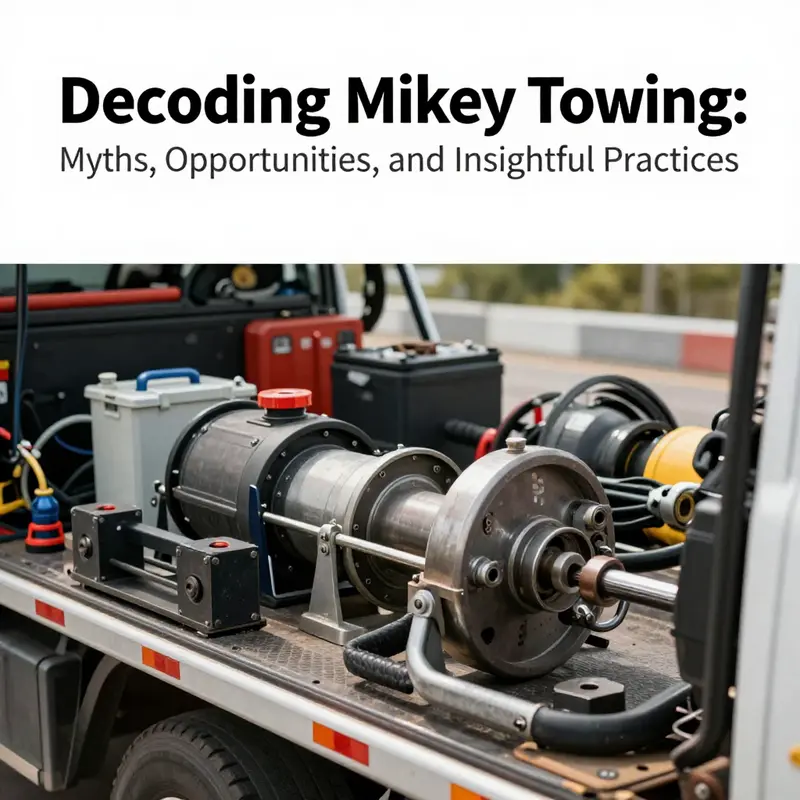
In the cluttered space where vehicle recovery, roadside assistance, and industrial towing intersect, a name like Mikey Towing can complicate readers’ plans more than it clarifies them. The absence of authoritative data about a specific entity bearing that label invites a broader look at what towing actually comprises. This chapter uses Mikey Towing as a case study to illuminate core concepts, standards, and technologies that shape every tow, from a routine roadside pull to a complex industrial maneuver. The result is a practical map of towing that helps readers evaluate any service with an eye for safety, capability, and credibility, rather than relying on a brand alone.
Safety and compliance are the first pillars. Towing operations, whether on a bustling highway or a quiet private lot, demand rigorous adherence to standards designed to protect drivers, rescuers, and bystanders. The general principles are universal: secure loads, balanced weight distribution, clear signaling, properly rated equipment, and trained personnel who can anticipate unintended loads or snatch-back forces. Even in a hypothetical scenario with ambiguous branding, those fundamentals hold. When regulations vary by jurisdiction, the driving question becomes not merely what can be done, but what must be done to minimize risk under real conditions. A notable example from policy work shows how swiftly the industry context can evolve: a provincial safety framework established tight timelines for response, mandating rapid mobilization by rescue units and introducing a supervisory mechanism to ensure consistent performance. Such developments underscore a simple truth: towing safety is as much about process as it is about equipment. The most robust winches, hooks, and cables count for little if responders cannot react quickly, coordinate with other services, or verify that every transfer of a vehicle is traceable and accountable.
Equipment design and performance lie next in the chain. Modern towing frames, winches, and caster configurations are judged not only by their rated capacity but by their adaptability to different scenarios. A well-rounded towing system must support daily commutes, commercial services, and emergency recoveries with equal competence. That means frames that resist fatigue, sensors that monitor tension and angle, and harness systems that distribute forces evenly. The goal is to maintain control even when the vehicle is off its wheels or perched on an unstable surface. In practice, operators balance rugged resilience with maneuverability, because narrow alleys, parking structures, and roadside debris demand precise handling. The interplay between material choice, geometry, and finish can determine whether a tow is completed safely in minutes or stretched into a longer, riskier operation. In short, design choices ripple through every phase of a tow, influencing speed, safety, and the likelihood of secondary damage to the vehicle or its surroundings.
Technology and simulation bring a modern edge to these age-old tasks. Research into specialized towing—such as that used in challenging environments like arctic or iceberg conditions—has yielded valuable approaches to force management and acceleration control. Even if the immediate context seems far from a typical highway breakdown, the underlying idea remains: simulate contact, leverage, and restraint before applying them in the field. Different towing devices—ranging from floating components to submerged lines—demonstrate how best to manage buoyancy, drag, and line tension. While the physics may appear abstract, the practical upshot is tangible: simulations help crews refine techniques, plan safer routes, and anticipate potential failure modes. Operators can rehearse a recovery in a controlled setting, reducing surprises when real weights begin to move. Across these developments, the common thread is a respect for friction, inertia, and leverage. A tiny miscalculation at the moment of lift can amplify into a costly, dangerous moment on the shoulder of a busy road.
For readers aiming to translate theory into practice, the key is transparency about capabilities. When customers or partners seek a towing service, they should look for clear disclosures about licensing, training, equipment standards, and maintenance schedules. In a landscape where information about specific brands or providers can be scarce or opaque, reference to established procedures and verifiable credentials becomes a proxy for trust. This is where practical resources—such as a general roadside service information page—play a helpful role. The idea is not to anchor trust in a name, but to ensure that the service can demonstrate readiness, compliance, and responsible operation. If you encounter a label or nickname that lacks verifiable data, take it as a cue to dig deeper, request documentation, and compare with known industry practices.
Within this framework, a discreet but meaningful touchpoint appears in everyday decision making: online guidance about what to expect from roadside assistance. For readers exploring the topic, a concise, easy-to-navigate reference page can offer expectations about response times, safety checks, and the sequence of actions that follow a tow. To illustrate the path from inquiry to confidence, consider consulting a roadside service page like the one found here: https://mikes1towing.com/mikes-roadside-service/. This link provides a practical example of how a service might present its capabilities, scheduling, and safety commitments in a straightforward format. It is not a guarantee of quality by itself, but it models how credible providers communicate with customers and how readers can compare options without relying solely on branding or hype.
Even as readers gain comfort with general towing concepts, the broader takeaway remains relevant for any operator looking to craft a credible, safety-centered practice. The absence of definitive information about a particular label does not erase the core truth about towing: the performance of a tow is the sum of design, training, procedure, and judgment. Each link in the chain matters—from the strength of the hitch and the resilience of the winch to the clarity of the operator’s instructions and the speed of the response. Operators who invest in standardized procedures, rigorous equipment testing, and continuous training create a dependable baseline that can be measured and improved over time. Readers who understand this can evaluate services more effectively, even when specific brands are not transparent or when a name cannot be verified. The values of safety, accountability, and technical competence remain universal guides.
For those who want to widen their view beyond the immediate context, it helps to explore external perspectives on towing standards and applications. A broader resource can illuminate how diverse settings—commercial fleets, emergency responders, and private drivers—adapt the same physical principles to different constraints. The field continually tests and refines its practices, balancing speed with caution, and efficiency with protection of property. This cross-pollination is what advances the craft, ensuring that every new technique or device serves a clear safety purpose and a measurable improvement in outcomes. For further reading on standards and applications that inform towing practice, see the external resource linked here: https://www.graceholden.com/understanding-towing-food-cart-standards-properties-and-applications/.
Final thoughts
The exploration of ‘Mikey Towing’ reveals insights not only about a possible towing business but also reflects broader connections within the industry. Understanding potential confusions—like those with Mikey February—alongside recognizing the importance of local services and towing concepts empowers business owners in their decision-making and operations. Aspiring towing professionals should seize the opportunity to clarify their branding, educate themselves on the industry, and contribute positively to their communities with valuable services.