
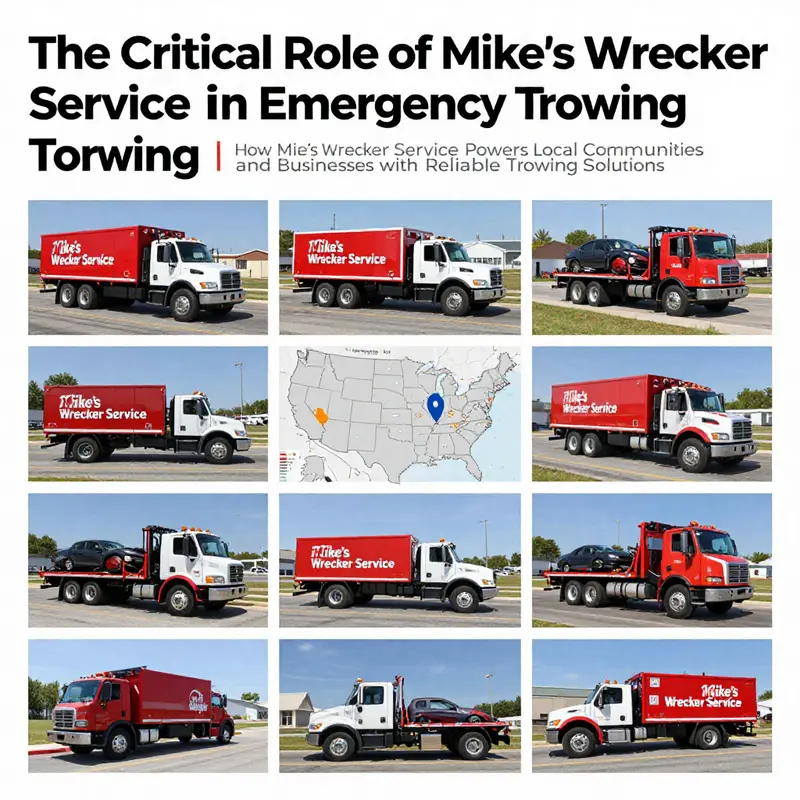
The significance of reliable towing services extends beyond mere vehicle recovery; it encompasses the safety and efficiency of businesses relying on uninterrupted operations. Mike’s Wrecker Service, with its multiple branches across the United States, provides essential towing and roadside assistance day or night. This article explores their comprehensive emergency towing services and how they positively impact local communities, ensuring that business owners can operate with peace of mind knowing help is available whenever needed. Delving into the specifics of their services and community engagement will elucidate their central role in enhancing safety and reliability for both businesses and residents.
Emergency Towing in Motion: The Unseen Backbone of Mike’s Wrecker Service
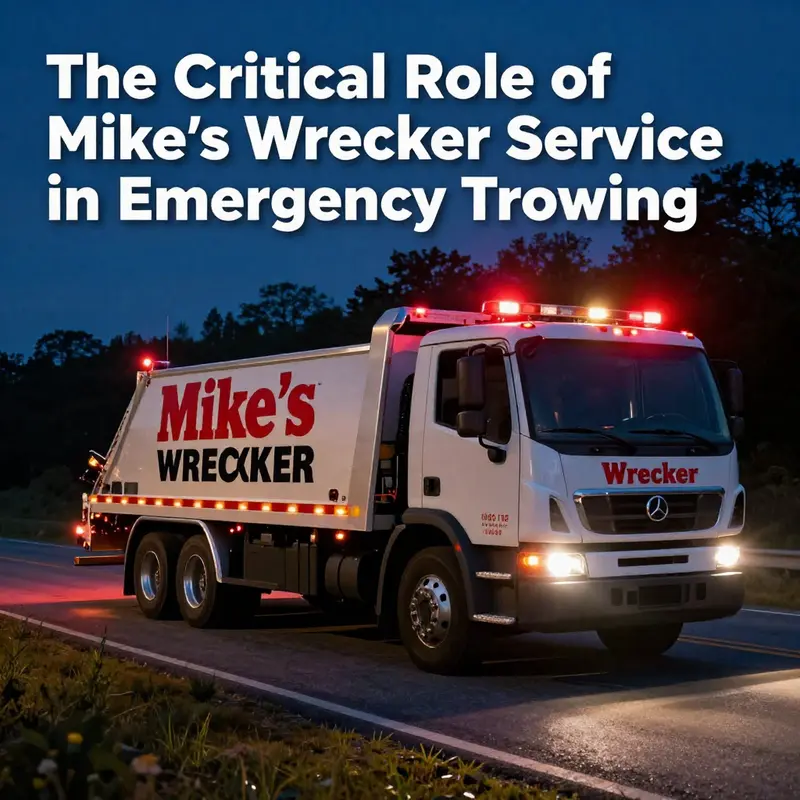
On a stretch of road where every minute matters, the difference between a long wait and a swift resolve often comes down to a team that moves with purpose under pressure. Mike’s Wrecker Service operates as a nationwide network, built to answer calls at any hour and in any weather. When a vehicle breaks down, is involved in an accident, or simply blocks a lane, a dispatcher taps into a coordinated web of trained crews who know how to translate urgency into action. The essence of emergency towing is not just the physical act of hauling a car from the shoulder; it is the orchestration of safety, timing, and reliability. Across multiple locations, the service lines are kept open around the clock, ensuring that a driver stranded at night or a family stranded during a storm can count on solid, predictable help. The goal is not only to move a vehicle but to restore momentum, reduce risk, and minimize the disruption that follows a roadside incident. In that sense, the emergency towing capability becomes the quiet backbone of a broader commitment to community mobility and trust.
The Manhattan, Kansas branch anchors this network with a clear local presence. Located at 161 McDowell Creek Rd, Manhattan, KS 66502, this office embodies the principle that twenty four seven access translates into real-world relief. A call at three in the morning for a tire blowout, a mechanical failure on a busy highway, or a sudden vehicle immobilization in town is answered with speed and clarity. The crews are trained to assess a situation quickly, determine the safest and most efficient course of action, and mobilize the appropriate equipment. The objective in every dispatch is to connect the driver with a seamless path to safety and onward travel, whether that means towing to a nearby repair shop, delivering the vehicle to a dealership for diagnostic work, or moving it to a designated location chosen by the car owner. In a community that rotates through commuters, students, travelers, and service workers, that level of readiness makes a tangible difference when time is short and the road ahead is uncertain.
Not every emergency involves a light vehicle; some calls require heavy-duty capability, off-road recovery, or specialized winching to extract a vehicle from ditches, medians, or culverts. The Bremond, Texas branch responds at any hour from its 512 S Commerce St location, extending the same 24/7 promise to a regional population that depends on steady access to transport and repair options. The service profile here emphasizes reliability for a broader range of towing scenarios, including heavier loads and complex recoveries that demand careful planning and precise execution. By keeping the lines open around the clock, the Bremond team demonstrates how local roots can support a wider network, ensuring that a single incident no longer becomes a prolonged ordeal for residents and travelers alike. The immediacy of response matters, but so does the accuracy of the operation—the right tow truck, the correct attachment points, and a route that respects safety and property.
Further north, the Saginaw, Michigan branch extends the same 24/7 accessibility to a midwestern urban setting. From 2522 Hess Ave, Saginaw, MI 48601, the operation centers itself on quick response times and dependable towing to repair shops, dealerships, or any designated destination that suits the vehicle owner. The emphasis on customer satisfaction is not a gloss but an operational standard—trained technicians, a steady supply of properly equipped trucks, and a communication flow that keeps the owner informed from the first call through the final handoff. In a region where weather can turn suddenly and traffic patterns shift with the workday, such reliability reduces the anxiety surrounding a breakdown and accelerates the path back to normal routines. The Saginaw team, like the others, treats each incident as a unique scenario requiring both skilled judgment and the discipline to follow established safety protocols.
In Griffin, Georgia, Mike’s Service Center and Wrecker Service, Inc. adds another facet to the network: comprehensive automotive services alongside towing. Situated at 235 E Taylor St, Griffin, GA 30223, this branch is identified by its formal business profile, including a dedicated business identification number. The combination of full-service repair options and towing capacity means a vehicle can move from breakdown to diagnosis to repair within a connected ecosystem. For owners who value a single point of contact for both emergency transport and routine maintenance, Griffin represents a model of how an emergency response operation can gracefully integrate with ongoing automotive care. The presence of a robust, near constant capability at this location signals a commitment to continuity—the idea that help should be not only immediate but also sustainable within the broader life of a vehicle.
Across these branches, the common thread is a fleet that blends speed with safety. The crews operate with modern towing technology and a range of vehicles designed to handle light cars, trucks, and heavier loads with equal professionalism. The emphasis on safety extends beyond the act of loading and unloading; it informs how the team assesses a scene, secures the vehicle, protects other road users, and coordinates with ambulances or police when needed. Each tow, whether it ends at a repair shop on the edge of town or at a dealership for further evaluation, is treated as a careful operation that respects the value of the vehicle and the convenience of its owner. The method is straightforward but powerful: respond quickly, confirm the owner’s preferred destination, and execute with attention to detail that minimizes risk and maximizes efficiency. The network’s success rests on the small decisions that accumulate during a tow—the choice of attachment points, the sequencing of steps, and the pace that avoids further damage while moving the vehicle to safety.
What binds these moments together is not just the speed of response but a philosophy of service that centers the driver experience. The dispatchers who coordinate between the branches are trained to read road realities—the time of day, weather conditions, and local traffic quirks that can affect travel times. The crews bring not only mechanical knowledge but a calm, methodical approach that reduces stress for the person who has pulled over to the shoulder in an unfamiliar place. In this sense, emergency towing becomes more than a service offered; it becomes a dependable rhythm that keeps communities moving through the unpredictability of life on the road. For readers curious about the broader scope of Mike’s Wrecker Service, a dedicated overview exists that details the emergency towing capabilities and how pricing aligns with these critical, around-the-clock operations. You can learn more about the service at the official page dedicated to emergency towing: mikes-wrecker-service.
The chapter closes with a sense of continuity. Each branch operates within a framework that prioritizes rapid arrival, safe handling, and clear communication from the first phone call to the moment the vehicle reaches its final destination. In this network, the role of emergency towing is not to be flashy or dramatic but to be consistently reliable. It is the quiet assurance that, when the road turns uncertain, help is already en route and ready to restore momentum for people who depend on mobility to keep their lives moving forward. For those looking to explore more about how emergency towing strategies fit into the broader landscape of roadside assistance, there is a wealth of information available from industry resources. External context can be found at https://www.mikeswreckerservice.com/emergency-towing.
Tow Roads and Community Ties: The Real-World Impact of Mike’s Wrecker Service on Local Life
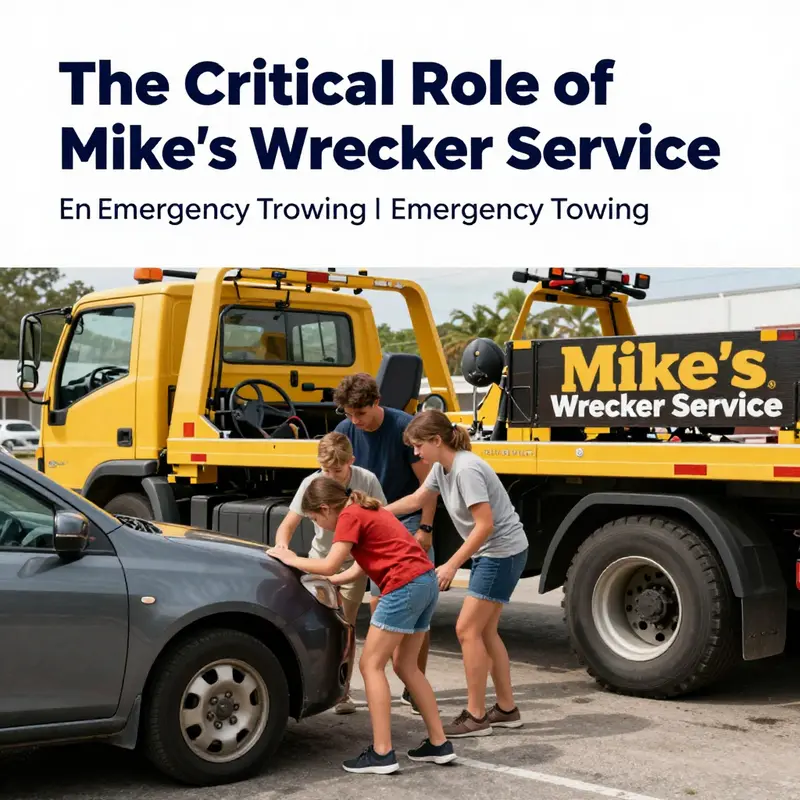
Across the country, Mike’s Wrecker Service threads itself into the daily routines of countless communities, not just as an emergency response outfit but as a dependable neighbor that shows up when stress is high and time is short. The Williamsburg, Virginia chapter offers a usable lens on how a network of branches translates rapid response, fair pricing, and professional care into tangible improvements in local life. What unfolds in this narrative is a pattern that is not merely technical but deeply human: when a driver faces a breakdown or a lockout, the moment the dispatch comes through and a well-maintained truck arrives with calm guidance becomes a small but meaningful anchor in a moment of vulnerability. The commitment to 24/7 availability across locations ensures that such anchors are not a rarity but a standard, a promise kept across road conditions, weather, and traffic pressures. In Williamsburg and the broader network that includes branches in Manhattan, Bremond, Saginaw, and Griffin, this promise shapes behavior, expectations, and even local conversations about safety and mobility.
The practical reality behind this promise is the cadence of the operation: prompt arrivals, careful handling of vehicles, and transparent communication that helps people regain footing without spiraling into greater expense or delay. In Williamsburg, the reported experience of arriving within minutes to unlock a vehicle is more than a glowing anecdote. It is a repeatable, dependable service pattern that anchors trust. When a car door is locked or a key misplaced, the relief that follows a rapid unlock is not just about convenience; it is about regaining access to essential routines—getting to work, fetching a child from school, or meeting an appointment that could determine a family’s plans for the day. And because the same standard of service extends to other locations, people who travel between states can anticipate a consistent level of care, no matter which branch answers the call. The network’s reach matters because road incidents rarely fit neatly into a single neighborhood; they travel with the traveler, weaving a thread of continuity from one town to the next.
Affordability sits beside speed as a core driver of impact. In many communities, the stress produced by a vehicle breakdown is compounded by uncertain costs. Williamsburg residents report pricing that honors the household budget, which makes the difference between a minor setback and a moment that derails an entire week. When people know a service will show up quickly and charge fairly, they are more likely to seek timely help rather than delaying assistance out of fear of a hefty bill. This combination of speed and fairness has a broader economic effect: it helps people stay connected to jobs, school, and social obligations, and it preserves the functioning of small businesses that depend on reliable transportation. That is not a sales pitch; it is a practical outcome of keeping the service accessible when time and money are scarce.
Safety is the other linchpin in the chain. A vehicle left stranded on a shoulder or in a travel lane creates a hazard for nearby motorists and for responders who must operate in a moving environment. The Williamsburg story frames speed as a public-safety measure. The crews bring not only towing capacity but a disciplined approach to on-scene safety: clear lighting, careful wheel-and-axle handling, and communication that orients drivers about what will happen next. The safety benefits extend beyond the immediate scene. When a driver quickly regains mobility, there is less time spent idling on the roadside, reducing congestion and the potential for secondary incidents. The crews themselves benefit from modern equipment and training that emphasize secure procedures, which in turn sustains reliability across the network. Modern towing technology supports this reliability, enabling operations to adapt to a variety of vehicle types while maintaining the same commitment to safety, speed, and accountability.
Trust in the local service is reinforced not only by numbers but by people’s voices online. A consistent thread in Williamsburg’s reception of Mike’s Wrecker Service is the credibility that comes from customer reviews. A community’s willingness to share a positive experience shapes how others perceive the operator before they even call. That trust matters because a towing or recovery call is often a person’s first contact with a service provider in a moment of urgency. It is here that the network’s reach and the branch-specific strengths play a crucial role. The Williamsburg experience resonates with the broader pattern across the company: a dependable presence that can be counted on when weather changes, when traffic surges, or when a simple errand becomes an unexpected ordeal. The online profile at mikes-wrecker offers a concise snapshot of how the outfit frames its mission and its everyday practice.
This blend of rapid response, fair pricing, and safety-conscious conduct has tangible echoes in local economies as well. When a vehicle stalls, a driver’s next steps often depend on how quickly help arrives and at what cost. A dependable service reduces the downtime that might otherwise ripple across a family’s finances or a small business’s delivery schedule. Vehicle recovery and roadside assistance become a part of a city’s infrastructure, not an exception to normal life. For dispatch teams, this means maintaining efficient routes, coordinating with local garages, and ensuring that a tow or unlock does not become an extended ordeal that drains energy and resources. For drivers and customers, it translates into a humane, practical form of service that respects time, money, and personal circumstances. The network’s cross-location alignment—Manhattan, Bremond, Saginaw, Griffin, and beyond—keeps this shared standard intact, even as each city contends with its own traffic patterns, climate nuances, and road layouts. In Griffin, for example, the combination of automotive services and towing illustrates how a single provider can meet broader mobility needs while preserving the core values of responsiveness and care.
Ultimately, the story is less about a fleet of tow trucks than about how a community redefines what reliable assistance looks like in everyday life. It is about the quiet confidence that the next call will be answered, that the next mile will be traveled with safety in mind, and that a fair price will not become an obstacle to getting back on the road. It is about the sense that when you are stranded, you are not alone—and that a dedicated team stands ready to help you move forward. As local drivers, families, and small business owners weave these experiences into their routines, the effect compounds. The network’s consistent gravity—speed, safety, affordability—turns a once disruptive event into a manageable moment and, in doing so, reinforces the social fabric that keeps communities resilient and connected. External resource: https://www.yelp.com/biz/mikes-towing-recovery-williamsburg
Final thoughts
Mike’s Wrecker Service not only excels in providing reliable emergency towing solutions but also establishes itself as a vital community partner. Their unwavering commitment to 24/7 availability ensures that both individuals and businesses can rely on their expertise in times of need. As we have explored, the combination of advanced towing technology, prompt response times, and community engagement strengthens local ties and enhances overall safety. Business owners can trust Mike’s Wrecker Service to safeguard their operations, ultimately contributing to a safer, more resilient environment for everyone.