
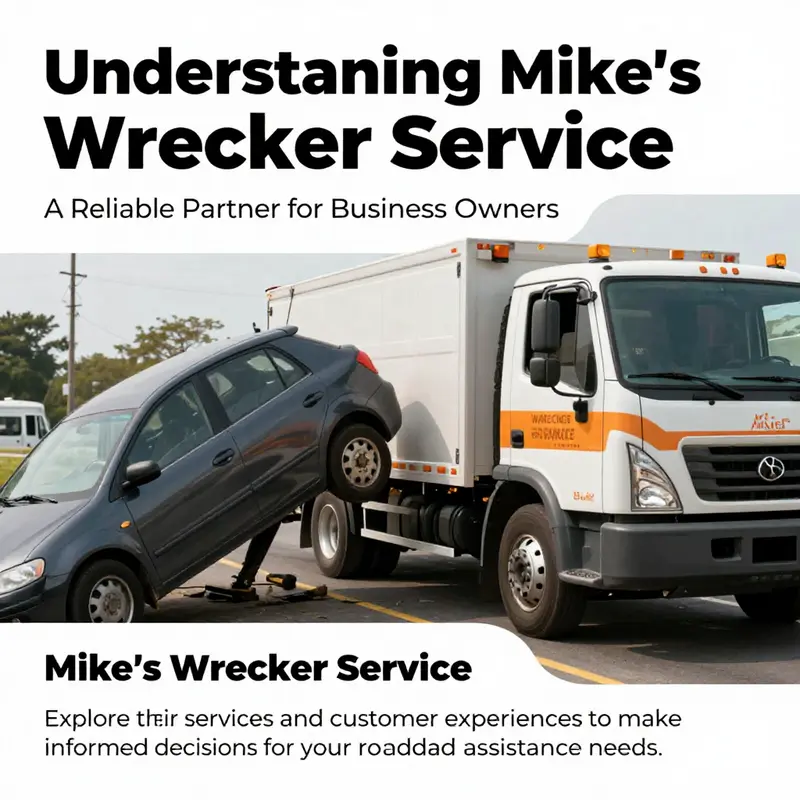
For business owners, ensuring the continuity of operations often hinges on reliable partners who can assist in emergencies. Mike’s Wrecker Service stands out in the towing and roadside assistance industry as a dependable option. Offering everything from vehicle towing to emergency lockout assistance, their services cater specifically to the unique needs of commercial clients. In the chapters that follow, we will dive into the comprehensive range of services they offer and examine actual customer experiences and reviews to better understand how Mike’s Wrecker Service can support your business during unforeseen challenges.
Moving Through the Moment: How a Local Wrecker Service Keeps Roads Safe and Businesses Moving
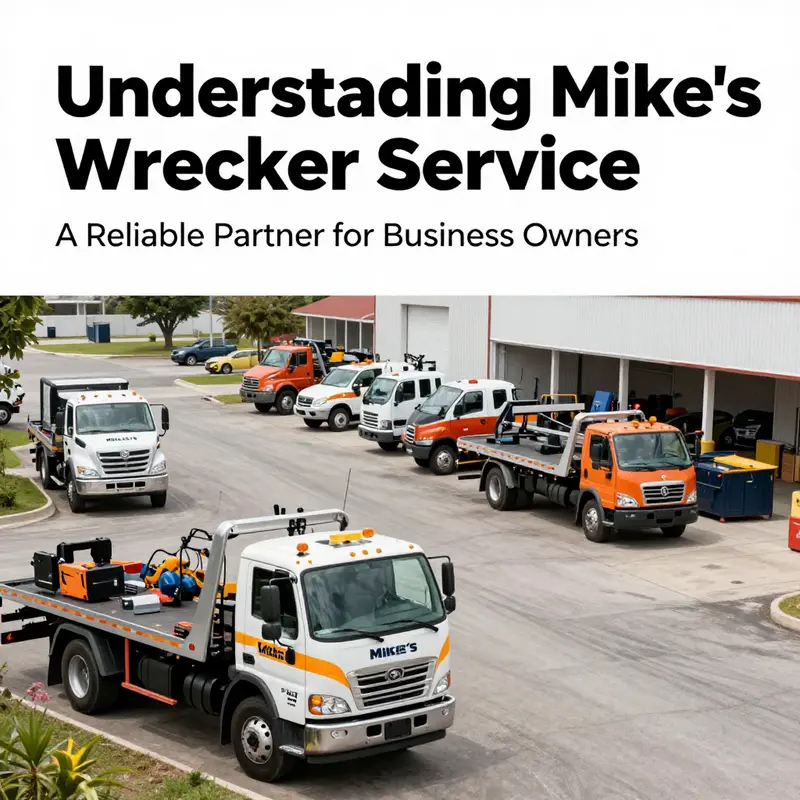
On busy interchanges, quiet suburban streets, and every shoulder that hosts a stalled vehicle, a local wrecker service operates like a quiet force of reliability. It is the kind of essential service that pedestrians rarely notice until they need it most. In markets where a single breakdown can ripple into missed appointments, late deliveries, or unsafe waits in traffic, a dependable towing and roadside partner becomes more than a convenience. It becomes a strategic asset for individuals and a critical component of fleet operations for small businesses. The work happens behind the scenes, with a blend of rapid dispatch, trained technicians, and carefully managed logistics that together keep the wheels of everyday life turning. The core promise is simple but demanding: when a driver is stranded, there should be a clear path to safety, a plan to resume movement, and a sense that help is just a phone call away, day or night. That promise is the heartbeat of Mike’s Wrecker Service, a name that has become synonymous with local mobility in communities that rely on timely, professional assistance.
To understand the breadth of what a local wrecker service does is to appreciate the orchestration behind a single, potentially life-disrupting moment. The most visible component is emergency towing, a service that covers vehicles that have broken down in place or sustained damage in an accident. The purpose of emergency towing is not merely to remove a car from a dangerous spot; it is to transport it to a repair facility, while protecting the occupants, other road users, and the vehicle itself. Towing requires not just horsepower and heavy equipment, but a nuanced understanding of weight distribution, tire wear, and road conditions. A professional operator reads the scene, assesses the safest approach, and communicates with the driver about what will happen next. The goal is to minimize additional risk while ensuring the vehicle arrives where it can be properly inspected and repaired. This level of care is particularly important on highways or in adverse weather, where delays can compound hazards.
Interwoven with the more dramatic moments of transport is the steady, round-the-clock infrastructure of roadside assistance. The 24/7 model is not about a single heroic rescue; it is about consistent reliability. When a battery fails to deliver a spark, the crew steps in with a jump-start, testing not only the immediate symptom of a dead battery but the broader health of the electrical system. A tire change, performed by an experienced technician, is not merely a quick swap of rubber; it is an assessment of the spare’s condition, the integrity of the lug nuts, and the tire’s compatibility with the vehicle’s dynamics. If fuel is exhausted, the delivery service becomes a lifeline, restoring enough gasoline or diesel to reach a nearby station or a repair facility. In a world where a simple lockout can turn a private moment into a public inconvenience, lockout assistance is delivered with an emphasis on safety, discretion, and rapid access to the vehicle. And the more modest, often underappreciated, capability—minor mechanical troubleshooting—serves as a bridge between a roadside hiccup and a full repair, offering quick diagnostics and practical steps that can spare a driver from an unnecessary tow when a small adjustment suffices.
The variety of services expands further when fleets enter the picture. For businesses, the challenges of mobility are not episodic; they are recurring. Fleet management solutions bring a coordinated framework to the rhythm of daily operations. Scheduled towing aligns with maintenance calendars, helping to reduce downtime and extend the life of company assets. Maintenance coordination means that repair intervals can be planned, parts can be sourced with efficiency, and the disruption to service levels minimized. A dedicated account management structure provides a single point of contact for fleet leaders, simplifying communication and ensuring that service levels are met with consistency. In practical terms, this means a business can rely on predictable response times, transparent billing, and a partner who understands the pressures of on-time delivery and customer service demands. The relationship between a wrecker service and a business is not purely transactional; it is a workflow partnership designed to keep operations resilient in the face of unpredictable events.
The narrative of a local wrecker service also unfolds in the realm of safety and professionalism. Every dispatch, every assessment of the scene, and every engagement with a stranded driver rests on a framework of safety protocols. Technicians are trained not only to perform the necessary tasks but to do so in a way that protects themselves and the people around them. This includes traffic management on busy roadways, secure loading procedures for vehicles, and careful adherence to state and local regulations governing towing and roadside work. Crafting a dependable service footprint requires a combination of equipment readiness, ongoing training, and a responsive dispatch system that can prioritize calls based on severity and location. In communities where road networks connect workplaces, schools, shops, and residences, the impact of robust roadside support goes beyond the moment of aid; it reinforces a culture of reliability that drivers can count on when plans go awry.
The human element in this story is as important as the machinery and schedules. Behind every call is a dispatcher who translates a snapshot of a problem into a plan of action, a driver who navigates traffic and weather with calm efficiency, and a customer service ethos that seeks to minimize stress for the person in distress. The best operators listen for clues—whether a car has started to overheat, whether the engine stall was sudden or gradual, whether the vehicle is on a shoulder or in a lane with continuing traffic. They communicate clearly about what can be done immediately and what may require a staged approach. This is not a world of dramatic, cinematic rescue; it is the pragmatic choreography of care, safety, and speed that makes the difference between a driver who feels stranded and a driver who feels supported.
From a broader perspective, the service model reflects the evolving needs of local markets. In regions where traffic patterns shift with the seasons, where the weather can swing from mild to severe within hours, a wrecker service must be prepared for a spectrum of scenarios. The equipment mix—tow trucks capable of versatile loads, jump-start packs, fuel delivery rigs, and mobile tools for on-site diagnostics—becomes crucial. The logistics of dispatch must balance demand across twenty-four hours, weekends, and holidays, ensuring that no call goes unanswered and that response times are minimized. The better the operational discipline, the more a service can reduce the time a vehicle spends off the road, which in turn preserves the productivity of individuals and the reliability of local commerce. The ripple effects of dependable roadside support extend into neighborhoods, where families, commuters, and small businesses depend on the predictable availability of help when the unexpected occurs.
A closer look at the practicalities reveals how such services translate into everyday value. When a driver experiences a breakdown, the first moments matter. A well-timed jump-start can revive a car’s electrical system enough to reach a safe location for a permanent fix. A timely tire change can get a vehicle back on the road, avoiding the necessity of an overnight stay in a garage lot or a risky roadside wait. Fuel delivery, sometimes a modest quantity, can mean the difference between a driver arriving for an urgent appointment and losing business opportunities to delays. Lockout assistance is about dignity and efficiency, preserving the driver’s day while respecting the vehicle’s property. Even the minor mechanical troubleshooting carries significant value when it resolves issues that could escalate into more expensive repairs or longer downtime. In aggregate, these service components form a cohesive fabric that supports both personal resilience and organizational continuity.
For readers exploring the landscape of local towing and roadside support, it helps to see how a typical service package is assembled and delivered. A practical entry point is to examine the core offering through a concise overview of the kind of coverage provided, how dispatch works, and what a typical response window looks like in a regional market. The page that outlines these components can offer a helpful snapshot of expectations, while still leaving space for the nuanced realities of each call. To gain a sense of the practical scope and to see how a well-structured roadside operation communicates with clients, consider visiting the dedicated service overview page. mikes-roadside-service
In sum, the value of a local wrecker service lies not only in moving vehicles from point A to point B but in preserving safety, reducing downtime, and sustaining the flow of everyday life. It is a service that blends technical skill, logistical acumen, and a human-centric approach to help when plans unravel on a busy road. The best providers approach each call with a calm sense of purpose: to restore mobility with speed, to protect people and property, and to deliver dependability that the community can bank on when the unplanned happens. The result is more than a tow or a temporary fix. It is a restored sense of control for drivers and a dependable ally for local businesses that depend on steady, predictable transportation to meet their commitments. When the clock is ticking and every minute matters, a capable wrecker service stands ready to answer the road’s call with competence, care, and clarity.
External resource: For a broader perspective on how professional towing services coordinate with fleets and clients, see Mike’s Wrecker Service Services at https://www.mikeswreckerservice.com/services.
Listening to the Road: How a Local Towing Partner Builds Trust Through Experience, Reviews, and a Family-Driven Culture
When a driver’s car breaks down or a roadside emergency appears on a quiet night, the people who answer the call matter as much as the equipment they bring. In the world of local towing and roadside assistance, nothing is more critical than the quality of the human connection that unfolds from dispatch to arrival. The client experience in these moments is rarely about grand promises; it is about reliability, respectful communication, and the quiet competence that comes with decades of handling the unpredictable. In regions where a small fleet serves as the lifeline between stranded motorists and their day-to-day commitments, the reputation of a single provider can influence a community as surely as the road signs that guide them. This chapter examines how a local towing partner cultivates trust through demonstrated capability, social proof, and a culture that seeped into customer interactions from the top down to the shop floor. It is not simply about moving a car from point A to point B; it is about orchestrating a humane and efficient rescue that restores momentum and reduces stress for drivers who do not have the luxury of time to spare.
From the first call to the moment the vehicle is secured, every touchpoint—how the dispatcher frames an ETA, the demeanor of the arriving crew, and the transparency of the pricing—contributes to a narrative that customers carry with them long after the tow is complete. In practice, what emerges is a service ethos grounded in practical competence and a respect for the caller’s predicament. A recent voice among many customers highlights how a single team member can recalibrate an entire experience: a staffer named Brian, praised on a prominent review platform for professional conduct, respectful communication, and arriving faster than the initial quote suggested. This set of attributes—professionalism, courtesy, and speed—might seem straightforward, but in the high-stress context of roadside incidents they translate into tangible relief. When a responder arrives with clear instructions, brief safety guidance, and a steady, confident pace, it becomes easier for a driver to breathe, assess options, and decide on the next steps without feeling rushed or pressured. Such moments of calm under pressure can reinforce trust in the provider even when the problem is not yet resolved.
The thread connecting these positive experiences to lasting impressions is not only the single act of helping a wheel out of a bind, but the consistency behind it. A culture that treats staff like family often yields behavior that feels unexpectedly personal to customers. An Indeed profile that depicts the workplace as a family-like environment hints at a deeper truth: when employees feel valued, they are more likely to extend that consideration to customers. This is not mere sentiment; it is a practical driver of service quality. People who are treated well are more attentive, more diligent, and more inclined to go the extra mile. In an industry where cycles of calls can be long and days physically taxing, that internal morale translates into external outcomes—careful handling of a vehicle, careful communication with the owner, and a willingness to stay on the line with a driver who needs reassurance as the situation unfolds. The idea of a family atmosphere, therefore, should not be dismissed as a soft cultural label. It often reflects a structured approach to staff development, cross-training, and a shared sense of responsibility to the community that relies on them for safer roads and quicker recoveries.
Yet, not every review paints a perfect picture, and it would be irresponsible to pretend that flawless service exists in every circumstance. A conflicting report mentions poor customer service at an affiliated location of a discount tire partner. It is essential to parse such feedback carefully: the critique appears to reference an affiliated retail channel rather than the core towing service itself. In a landscape where partnerships multiply and branding can blur boundaries, customers sometimes conflate experiences across multiple touchpoints. The towing component, when examined in isolation, seems to hold up well in the available feedback. The recurring threads emphasize promptness, respectful communication, and a willingness to explain what is happening and why—elements that reduce confusion during an already tense event. When the service is performed with speed that exceeds initial quotes and with courtesy that acknowledges the drivers’ stress, the overall impression tends to tilt toward satisfaction. This distinction matters for readers who want to understand what to expect and for operators who seek to measure performance beyond a single anecdote.
The broader pattern in these reviews speaks to a simple but powerful truth: in roadside work, trust is earned through a small but steady set of behaviors that accumulate into reputation. The dispatcher’s tone sets expectations and can ease anxiety before the crew ever arrives. Once on site, the team’s conduct—secure stowage of gear, careful hook and strap handling, and a calm, explanatory dialogue about the steps ahead—translates into a sense of control for the vehicle owner. Customers repeatedly emphasize not only the outcome but the process: how the crew communicates ETA adjustments, how proactively they inform about possible delays, and how fairly pricing is discussed after the service is completed. In these micro-interactions, the provider demonstrates accountability and transparency. The net result is a customer who feels seen, heard, and respected at a moment when most people feel least in control.
The local focus appears to magnify these effects. When a provider operates within a regional ecosystem, crews gain intimate knowledge of road patterns, common trouble spots, and the particular concerns of drivers in that area. They become adept at anticipating issues—whether a certain stretch of highway tends to see a higher demand on Friday evenings or whether winter weather typically requires additional precautions during a roadside assist. This regional literacy helps keep ETA promises credible and improves the overall cycle time from call to vehicle release. It also strengthens the provider’s ability to coordinate with partner networks for coverage in busy corridors or during peak seasonal demand. The result is a service that feels not only fast but smartly tuned to the local environment. In a landscape where customers repeatedly describe frustration with vague estimates and opaque billing, this combination of speed, clarity, and locality can turn a potentially negative experience into a positive reference point for future needs.
To readers weighing choices about whom to call in a roadside crisis, these patterns matter because they translate into reliability in the most practical sense. The best providers build a quiet consistency into their operations: they honor appointment windows, communicate respectfully even when the news is not ideal, and protect drivers’ property with careful handling. The positive Yelp observations, including the recognition of individual teammates who exemplify these qualities, suggest that the strongest reputational signals come from day-to-day interactions rather than from grand marketing claims. It is a reminder that in a service business rooted in physical labor and time-sensitive response, credibility is a function of repeated, predictable behavior under stress.
For readers who want to explore the scope of services and the geographic footprint behind such experiences, the official page of the local partner offers a direct view of capabilities and service areas. It provides a practical reference point for those seeking to understand what the company can offer in their neighborhood—a foundation for customers to gauge whether a given provider can meet their needs. For a direct look at service scope and regional focus, see the official page mikes-wrecker. This link serves as a compact summary of where the company operates, the kinds of assistance it can render, and how it frames its role within the broader ecosystem of roadside help. The page acts as a bridge between the qualitative experiences described by customers and the concrete, measurable reach of the company’s field operations.
While reviews illuminate the positive threads of service, they also remind us of the importance of discernment. Not every negative report reflects the core offering, and readers should consider the source, the context, and whether the issue pertains to an affiliated partner rather than the primary team delivering the towing component. In light of this, readers can approach the topic with a balanced lens, acknowledging that strong performance in the main service line often correlates with professional standards across related partnerships. When the experience aligns with customer expectations—courtesy, timeliness, clarity, and care—the resulting confidence tends to reinforce continued use and recommendations within the local driving community. In contrast, isolated complaints about an affiliated retailer should be interpreted within the broader picture rather than treated as a verdict on the core service.
External resources can further illuminate how we interpret customer feedback in this domain. For those who want to compare what customers say across platforms, the Yelp page delivers a concentrated snapshot of sentiment and specific anecdotes that recipients often find relatable on the road. External resource: https://www.yelp.com/biz/mikes-wrecker-service-huntsville
Final thoughts
In conclusion, Mike’s Wrecker Service serves as an invaluable ally for business owners facing vehicle emergencies. Their extensive range of services ensures that businesses can stay operational without undue delays, while their focus on customer satisfaction and positive reviews speaks volumes about their reliability. It’s essential for any business owner to establish relationships with trusted services like Mike’s Wrecker Service, which can provide timely responses and effective assistance in critical situations.