
Understanding the intricacies of business registration is crucial for entrepreneurs and business owners. MIKES TOWING LLC may not currently exist in state databases, but the varying registration statuses and geographical distribution of similar entities holds significant insights. This exploration aims to illuminate the importance of accurately identifying business names, status implications, and regional factors influencing the towing industry. Each chapter will contribute to a comprehensive understanding of MIKES TOWING and its related entities, equipping business owners with the knowledge to navigate their environments effectively.
Tracing MIKES TOWING LLC: Registration Trails Across States and the Identity Puzzle in Towing
When researchers set out to map a name like MIKES TOWING LLC across the United States, they quickly discover that branding can outpace formal records. Public registries do not yield a single, definitive match for the exact string MIKES TOWING LLC in every state, yet several closely related entities share the lineage of the name. The pattern is familiar in the towing industry, where local operators often adopt similar monikers that echo family, ownership, or service focus long after a formal corporate form has changed. This is not merely a trivia exercise; it matters for customers seeking reliable service, for regulators ensuring proper corporate oversight, and for researchers tracing business continuity across state lines. In Florida, for instance, one entry appears as MIKES TOWING, INC., listed as inactive since the early days of corporate tracking. The Florida record, dated March 30, 1981, places a real office address in Plantation, yet its current activity status raises questions about ongoing operations that could be confused with a currently active local outfit. Across the mountain states, other variations appear. In West Virginia, the registry shows a distinct entity named MIKES TOWING LLC, with a corporate number and an active posture, while neighboring states report their own versions of similarly named entities. In Pennsylvania, MIKES TOWING is listed with its own registration details, separate from the West Virginia filing, underscoring how state borders create parallel lines of business under a common name umbrella. The result is a landscape where the same brand thread appears in multiple jurisdictions, yet the legal form and operational footprint may differ markedly from one state to the next. The West Virginia entry is particularly instructive. It names MIKES TOWING LLC with corporate number 329121 and an active status, though the available field for the registration date is not specified. The principal office is recorded as 342 VIP Dr, Mason Town, WV 26542, and the entity type is clearly listed as a Limited Liability Company. The industry or business purpose, however, is not detailed in the basic listing. This level of specificity matters because a customer or auditor comparing records would want to confirm not only that the entity exists, but that it is the same legal creature offering services under that name. Given that records are time-sensitive and that public databases periodically refresh, the official status should be confirmed directly through the West Virginia Secretary of State s registry. The nuance here is important: a listing may indicate an active LLC, but the most current status can be a moving target as filings, dissolutions, or name changes occur. For anyone evaluating a potential service provider or conducting due diligence, the WV SOS registry is the authoritative source to consult. A quick glance at the WV listing can prompt a deeper check into the precise nature of the business, any operating licenses, and the current address of record. Readers may also want to compare the WV footprint with other similarly named entities in neighboring states to understand whether branding overlaps have produced a shared reputation or a misalignment in consumer expectations. In this vein, a related footprint often surfaces in industry sites and promotional pages that carry the same fragment of the name. For a broader sense of how such brand fragments appear in practice, explore the Mikes Towing page linked in this chapter s internal references, which illustrates how a brand identity can persist across platforms while the corporate form and registration status evolve over time. You can visit that page here: https://mikes1towing.com/mikes-towing/. The lesson is straightforward: branding can outlive a single corporate registration, but due diligence remains essential when customers or researchers rely on those names for reliable contact, service scope, and legal accountability. In short, the MIKES TOWING LLC question is less about a singular, fixed record and more about understanding how similar names proliferate in state registries, how the LLC designation compounds with local operator details, and how investigators should verify current status with the proper official channels. For anyone assembling a clear picture, the next step is straightforward: cross-check the West Virginia listing against the state registry and compare notes with Pennsylvania and Florida records to establish whether these entries represent separate entities, affiliate relationships, or simply name echoes in the market. Official records can be verified through the West Virginia Secretary of State s business registry, and researchers should always consult the primary source to confirm current status and address details. External registry insights can be found here: https://wvsos.gov/business
Between Names and Numbers: Reading the Active and Inactive Status of MIKES TOWING Entities
To understand the true business behind the name ‘MIKES TOWING LLC,’ one must walk through the public registries where states record who exists, in what form, and whether they are still in business. Names can overlap, entities can shift status, and assignments such as LLC or INC can confuse even careful shoppers of roadside help. The data compiled from three states shows a pattern: one active, one inactive, and one active but with sparse detail. This constellation matters not only for researchers but for customers who hire towing services, as the registered status signals legal structure, continuity, and accountability.
In Pennsylvania, the record for MIKES TOWING identifies an active entity. The business appears with the corporation number 597451, registered in Pennsylvania, and the status remains active as of December 2021. The registry does not indicate dissolution, though it does not guarantee ongoing day-to-day operations without further checks. Pennsylvania’s database provides a clear signal that, at least on paper, this MIKES TOWING is a living entity. In contrast, the Florida listing for MIKES TOWING, INC. tells a different story. Incorporated on March 30, 1981, the Florida company is currently listed as inactive. The recent update to January 2023 confirms the business is not operational under this name, despite the long past formation date and a registered office at 825 Orchid Dr, Plantation. And then there is West Virginia, where MIKES TOWING is marked as active in the state database. The record presents a business number—411596—and a physical address at 2915 Brickyard Rd, Princeton. Yet the documentation does not always publish formation dates or a complete corporate history, leaving a gap that requires cross-checking beyond the secretary of state’s record. Taken together, these entries illustrate a landscape where the same spoken name can refer to entities with different legal personalities and life cycles.
The presence or absence of LLC language matters. The term LLC denotes a specific legal form that carries particular implications for liability and governance. The Pennsylvania entry, categorized as a corporation, points to one kind of legal identity. The Florida listing uses INC., indicating a different corporate form. The West Virginia entry, labeled simply as MIKES TOWING, does not reveal whether it is an LLC, an incorporated entity, or another structure in the public record snippet provided. For consumers, this matters because whether a business is structured as an LLC or as a corporation affects issues from personal liability to the way contracts and insurance claims are handled. It also influences the public credibility of the company, because the presence of a current, properly registered entity provides a formal path to dispute resolution, licensing compliance, and accountability.
What should a careful prospective client do when they are assessing a towing service that bears this name? Start with due diligence that matches the claim of service with the registry reality. Check the state registrar where the business is registered and look for current status, registered address, and the entity type. If you find multiple similarly named entities, note their different statuses and addresses, and ask the provider to clarify which one represents their operation, licensing, and insurance. Verifying the entity helps ensure that the roadside assistance you rely on carries legitimate business credentials and an enforceable framework for service standards. To illustrate how real-world branding intersects with registry data, you can explore a service’s online presence, such as the Mikes Towing Wichita Falls page, which offers a consumer-facing snapshot distinct from the formal registry entry: Mikes Towing Wichita Falls page.
For official corroboration beyond the brand’s site, consult the state database relevant to your interest area. Each jurisdiction maintains its own record, and the status can change with filings, dissolutions, or re-registrations. A reliable starting point is Pennsylvania’s Department of State database, which hosts the active record described above, alongside other corporate histories that illuminate how entities evolve. A direct portal is available for official verification, and you can use it to compare the entity name, number, and status: https://www.pasos.gov. This step helps ensure you are engaging with a company that remains accountable under current law, not with a historical relic of a different corporate form.
In short, the overlap of a common name with divergent statuses across states is a reminder of why registry checks remain essential. The record of MIKES TOWING shows a present Pennsylvania entity, an inactive Florida company, and an active West Virginia presence. Each status has different implications for liability, licensing, and the ability to resolve disputes. For anyone evaluating service providers, the path to trust runs through official records, cross-state verification, and a careful reading of what each entity’s legal form actually signifies. This is not merely an academic exercise; it is a practical safeguard for customers who rely on timely, professional, and reliable road-side help. For official verification, consult the Pennsylvania Department of State database at https://www.pasos.gov.
Roadway Footprints: Tracing the Regional Reach of Mikes Towing Across States
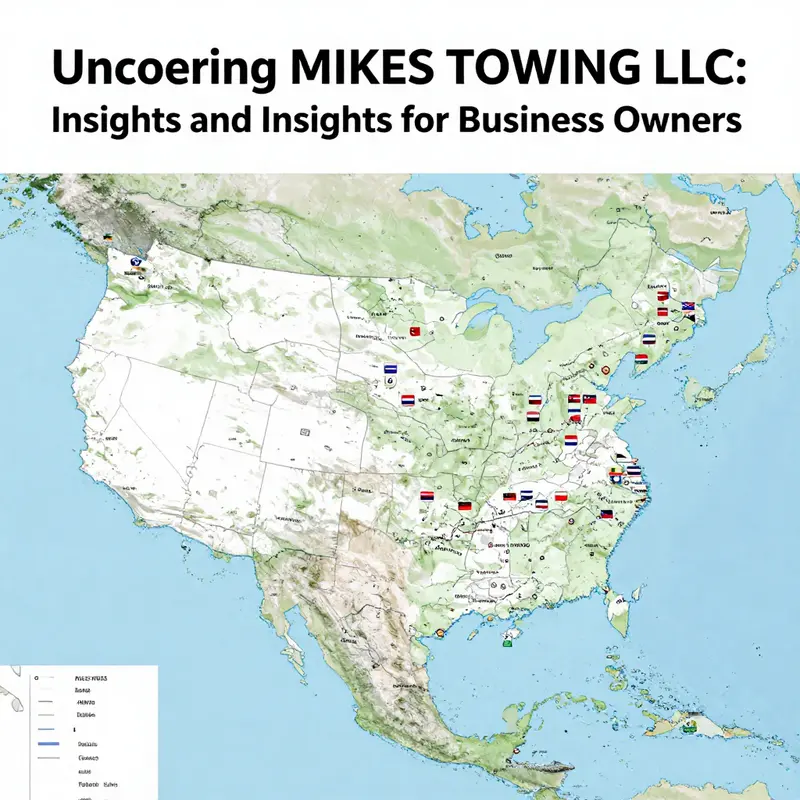
Across the map, the name Mikes Towing circulates in the margins of logistics and road safety, a cluster of entities that share similar branding yet vary in legal form and geographic footprint. Public registries show there is no direct match for a company precisely named “MIKES TOWING LLC,” but the record trail does reveal several similarly named operations that hint at a broader regional presence. In Florida, a MIKES TOWING, INC. appeared in the early 1980s and is listed as inactive today, a reminder that corporate life cycles can outgrow familiar branding. In West Virginia, a MIKES TOWING operation remains active, with a registered address in Princeton and a business number that signals continued activity. Pennsylvania also shows an active MIKES TOWING entry, indicating the name’s persistence in the Northeast. Taken together, these snapshots suggest a brand proxy rather than a single, unified LLC, highlighting the need to verify the exact corporate form when researching a towing business that shares a common name across states. This caution is more than clerical; it frames how the market perceives reliability, regulatory compliance, and the capacity to fulfill service commitments across regions.
The geographical distribution that emerges from these and related records aligns with a strategic pattern seen in heavy-travel corridors: clusters form where population density, major highways, and industrial activity intersect. The Mikes branding appears most pronounced in states with high freight volumes and robust road networks. Texas exemplifies this reach with multiple points of operation in major metros such as Dallas, Houston, and San Antonio, where traffic conditions, incident frequency, and demand for rapid assistance create a persistent need for responders who can mobilize quickly. California offers a parallel density in dense urban cores—Los Angeles, San Diego, and Sacramento—where the sheer scale of traffic and the complexity of road conditions make timely recovery services essential. Florida presents another axis of activity, spreading along coastal and tourist corridors that attract seasonal spikes in demand, from Miami and Orlando to Tampa and beyond. Illinois, anchored by Chicago’s status as a large logistics node, reinforces the cross-state flow of commerce and the value of a regional network capable of supporting fleets that span the Midwest.
This distribution mirrors broader industry dynamics that tie market penetration to how well a provider can map response time to customer needs. Regions with congested interstates, major trucking routes, and a concentration of automotive activity reward operators who maintain a ready fleet and a flexible dispatch model. The clustering also reflects the practical realities of roadside recovery, where proximity to insurers, repair shops, and roadside assistance networks reduces downtime and accelerates service levels. Yet for researchers and potential customers, the pattern also underscores the importance of confirming the exact entity behind the name and understanding whether a local unit operates as an independent franchise, a branch, or a stand-alone business under a shared brand banner. To see where they operate and how their network behaves on the ground, consult the official locations page, which offers a snapshot of regional coverage and service points: Mikes Towing. Beyond the map, the story of Mikes Towing across states invites deeper questions about how branding, regulation, and logistics converge on American roads.
External reference to reflect on regional mapping strategies can be found at the external resource summarizing similar footprints: Mikes Towing Locations. https://www.mikestowing.com/locations
Final thoughts
Understanding the registration, status, and geographical dynamics of towing companies like MIKES TOWING LLC is essential for business owners seeking to operate or engage with similar businesses. The intricacies of status—whether active or inactive—along with the varied geographical presence can greatly affect operational decisions. For entrepreneurs in the towing industry, being informed about these factors will empower them to navigate their respective landscapes and make strategic decisions for their businesses.