
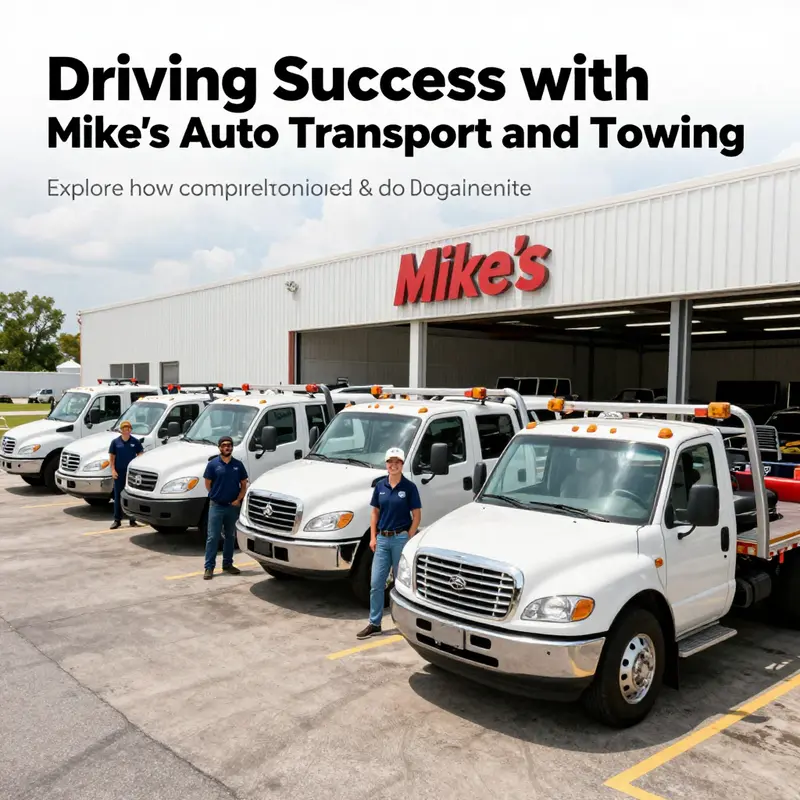
Mike’s Auto Transport and Towing operates at the intersection of reliability and community engagement, making it an invaluable asset for business owners in the automotive sector. This article delves into three core aspects of Mike’s operations: the excellence in service it offers, the extensive operational reach it maintains across various states, and the significant community impact inherent in its business model. Each chapter will illuminate how these factors contribute to not only the company’s success but also to enhancing the professional landscape for other businesses in the automotive field.
Rising to the Call: Service Excellence Across Mike’s Auto Transport and Towing’s Regional Network
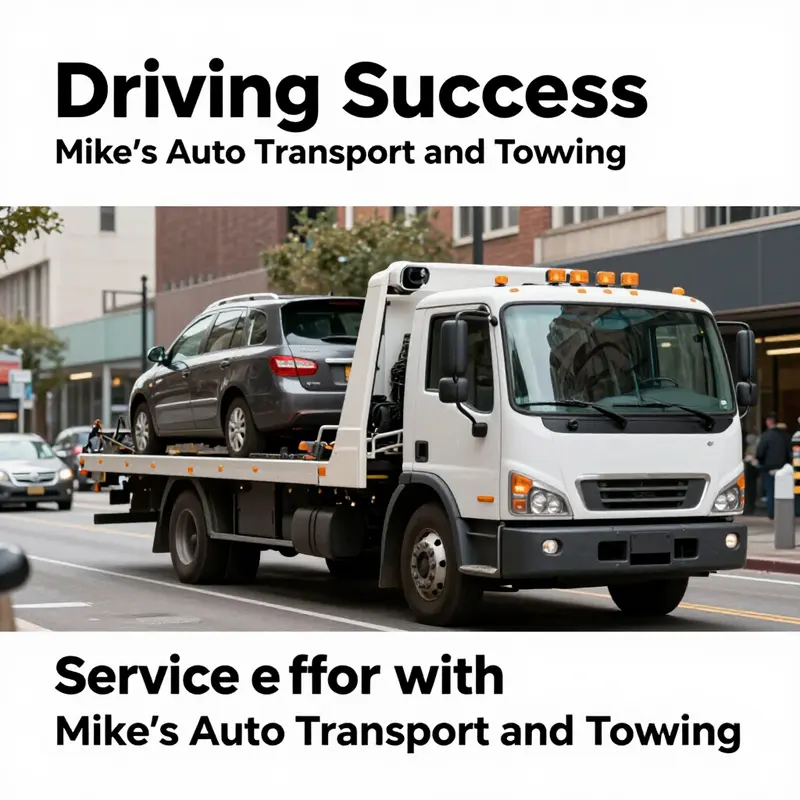
Across the sprawling logistics landscape of motorists and travelers, service excellence is the engine that keeps people moving when the road throws its curveballs. In the case of Mike’s Auto Transport & Towing, that engine hums through a structurally diverse yet tightly aligned network. The company has carved a recognizable niche in the DFW Metro Area by offering more than quick dispatch and a tow rig; it presents a posture of readiness, reliability, and care that has become a signature of the brand in the eyes of customers who need help at the worst possible moments. Their 24/7 availability is a practical commitment that translates into real-time support, precise communication, and a sense of steadiness when panic is nearby. When a vehicle stalls, or a driver faces a roadside emergency, the expectation is that assistance will arrive promptly and handled with competence. Mike’s Auto Transport & Towing meets and often exceeds that expectation by weaving service capabilities into every contact point—from the first phone call to the moment the vehicle is safely in a tow or on the road again.\n\nThe operational philosophy rests on a simple, human idea: being there when it matters most. This idea is evident in the company’s regional footprint, with a branch in Ponder, Texas, poised to serve the local community with steady hours that emphasize round-the-clock availability. In practice, this means a dispatcher who understands that a broken-down car at 2 a.m. shares the same urgency as a routine transport inquiry at noon. The Ponder branch embodies a quiet perseverance, with a local presence that reinforces trust. The commitment is reinforced by the broader regional network—each branch contributing to a coherent service continuum. In Windsor, Connecticut, the company has sustained a history dating back to 1990 through Mike’s Auto & Towing, Inc., a testament to enduring customer relationships and a willingness to adapt to the evolving needs of vehicle owners. Although Windsor operates within a different service emphasis, the throughline remains: reliability, competence, and a readiness to mobilize when a vehicle needs professional attention.\n\nThis cross-regional perspective matters because it highlights how a single service ethos travels across varied landscapes and regulatory environments. A mishap in Texas might involve a different set of logistical considerations than a routine repair in New England, yet the core expectation does not change: a reputable provider will respond with speed, clarity, and professional care. The Mishawaka, Indiana operation—Mike’s Auto Salvage and Towing, LLC—adds another facet to the narrative. Here, the emphasis shifts toward salvage and towing, an area where safety, proper handling, and environmental responsibility intersect with customer service. The inclusion of salvage capabilities within the broader brand family illustrates a complete approach to vehicle disruptions. It acknowledges that an accident can create downstream needs—salvage disposition, recovery planning, and timely communications with insurers and owners—that require trust and competence just as much as a simple tow.\n\nEven as there is growth across regions, the company’s service DNA remains anchored in a practical, empathetic approach. A customer testimonial about a representative named Martin captures this spirit in a single vignette. The praise highlights a prompt response, but it goes further by describing how Martin followed up after arrival and then accompanied the motorist to a gas station to ensure the vehicle would start again. That level of personal care—staying with the customer through a fragile moment, ensuring a safe path forward—resonates because it transforms a difficult experience into a manageable one. It is not mere mechanics at work; it is a continuity of service that communicates to customers that they are seen, that their safety is the priority, and that the company will stay engaged until they are back on the road under their own power.\n\nThe narrative of service excellence also intertwines with accessibility and transparency. The organization publicly shares real-time updates and service details through its online resources, including a MapQuest entry that consolidates user experiences, service scope, and regional reach. This transparency complements the tactile assurances of a phone call or a roadside visit. For drivers who depend on timely information and predictable timelines, the ability to corroborate a service window, a dispatch ETA, or a transport plan before the first mile is critical. The MapQuest reference, while external, reinforces the broader principle that trustworthy service networks rely on consistent information channels as part of a seamless customer experience.\n\nThe chapter’s focus on service excellence would be incomplete without acknowledging how the company positions its roadside capabilities as more than a response unit. The service taxonomy—towing, roadside assistance, transport, and salvage—reflects a holistic understanding of what people need when a vehicle is compromised. A driver stranded on a shoulder may not know whether to seek a tow, a jump, a fuel delivery, or a temporary fix. By offering a broad, well-coordinated set of options, Mike’s Auto Transport & Towing reduces decision fatigue for anxious customers. It also enables a smoother handoff to whichever branch is best suited to the situation. This flexibility—without sacrificing speed or quality—speaks to a mature operational design that recognizes the diverse realities of today’s drivers and fleets.\n\nThere is a broader industry lesson embedded in the regional story. When a transport and towing organization can maintain 24/7 readiness across multiple states and service the most common user scenarios with competence, it builds trust that extends beyond one urgent moment. Trust, once established, becomes a relational asset: a customer feels confident recommending the service to friends, family, or colleagues who might face similar situations. The result is not only repeat business but also a reputation for reliability that can weather market fluctuations, regulatory changes, and seasonal demand spikes. In an era where rapid-response services compete with automation and outsourced call centers, the human touch—the willingness to walk with a customer through a difficult stop on the journey—remains a differentiator.\n\nFor readers who want to explore a more detailed account of the service landscape and to see how the company publicly frames its offerings, the internal pathway to roadside responsiveness is often illustrated in the company’s own content ecosystem. A targeted resource, such as the dedicated roadside service page, demonstrates how the brand describes its capabilities in terms that everyday motorists can understand. The page is not just a catalog of services; it is a narrative about readiness, support, and practical problem-solving at moments when time is scarce and stakes are high. This kind of content strategy—focused, transparent, and customer-centric—complements the physical deployments of tow trucks and service vans with a reputation built on clear communication and dependable presence.\n\nIn this sense, the chapter on service excellence becomes a study of how a regional network maintains coherence while accommodating local realities. The Ponder branch’s 24-hour schedule, the Windsor establishment’s long-standing service presence, and Mishawaka’s salvage specialization together form a live demonstration of how a multi-regional provider can stay aligned with core values while remaining adaptable. The narrative emphasizes that service excellence is not built in a single act but through a sequence of reliable engagements, each reinforcing the others and collectively shaping a durable, customer-centered brand experience. As customers navigate the uncertain moments on the road, they rely on the quiet confidence that comes from consistent, compassionate, and capable support—an attribute that Mike’s Auto Transport & Towing appears to cultivate across its expanding footprint.\n\nExternal resource: https://www.mapquest.com/yelp/mikes-auto-transport-and-towing-ponder-tx\n\nInternal reference for further reading: Mike’s Roadside Service
Beyond City Limits: The Expanding Operational Reach of Mike’s Auto Transport and Towing
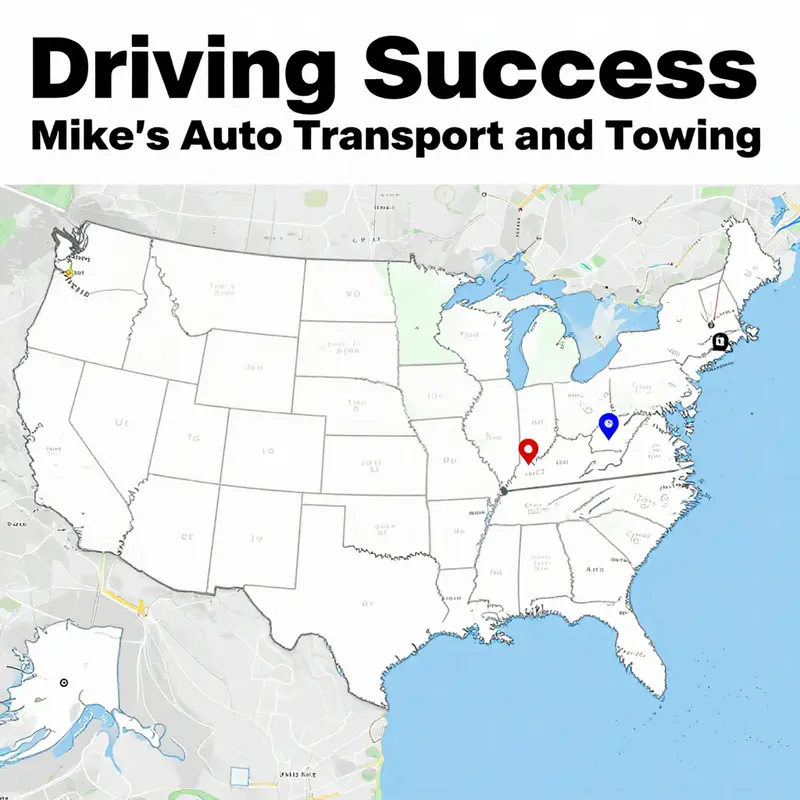
Operational reach means more than miles parked on a map. For a service that moves people and their possessions from one place to another, reach is the ability to respond quickly, to anticipate needs, and to keep commitments even when the clock insists otherwise. In the world of auto transport and towing, a networked footprint translates into faster recoveries, fewer delays, and greater confidence for drivers, car owners, and fleet operators who depend on a calm, capable partner when a breakdown or a move becomes urgent.
Mike’s Auto Transport & Towing situates its primary hub in Ponder, Texas, at 2308 Seaborn Rd, Ste 200. The 24-hour operation that anchors this location is not merely a time statement; it is a promise embedded in service logistics. A round-the-clock schedule means dispatch can mobilize within minutes to a stranded vehicle on a rural road, a stalled roadside repair, or a late-night jump-start. This constant availability reduces the stress that accompanies emergencies and reduces secondary costs such as extended wait times, salvage, or the risk of worsening conditions on the roadside.
Beyond the immediate Ponder area, the company’s regional footprint is reflected in its signals of a broader capability. The Windsor, Connecticut branch, operating as Mike’s Auto & Towing, Inc., demonstrates a tie to a different climate and road network. Established in 1990, this location shows a longstanding commitment to comprehensive automotive services. The Windsor address anchors a presence in New England, revealing an approach that blends towing with ongoing maintenance and repair work. The paired emphasis on transport and service readiness across regions means that the organization can coordinate across a spectrum of needs—from rapid roadside assistance to scheduled transport and repair work. While the specifics of cross-border scheduling are not laid out in the materials, the existence of multiple active locations signals a capability to mobilize fleets and parts across miles when required.
The landscape of the company also includes other chapters of activity, each contributing a piece to the overall reach. In Mishawaka, Indiana, Mike’s Auto Salvage and Towing, LLC is described as active, with a focus on vehicle salvage and towing. This indicates how the network supports not just immediate transport, but also recovery and recycling operations that respond to accidents or breakdowns with environmentally aware processes. And while the Orem, Utah, firm—Mike’s Transport & Towing—has expired, its former presence is a reminder that the market for mobile, round-the-clock service often evolves, consolidates, or migrates assets toward stronger, more sustainable platforms. The fleet, the dispatch routes, and the training programs tend to coalesce around the strongest geographic nodes, producing a resilient service ecosystem rather than a single, isolated business.
What does that mean for a customer seeking help today or planning a future move? It means the company can tailor service commitments to the situation. If a vehicle needs immediate towing or roadside rescue in Ponder or nearby communities, the 24/7 access reduces the time to response. If a highway courier must move a car weekend or weekday, the network’s coordination means a higher probability that the transporter will be available when needed, rather than encountering a local shortage of trucks or drivers. The possibility of long-distance service exists but requires direct confirmation. Given the dispersed presence of affiliates, customers seeking interstate transport should call the number for direct confirmation of service areas and capabilities. In practice, this approach translates into fewer surprises, clearer pricing, and a smoother handoff between a local unit and a regional dispatcher who understands the route, the vehicle type, and any required permits.
From a consumer perspective, the value of operational reach also lies in predictability. A 24-hour door-to-door response is a reassurance during a late-night breakdown, an engine seizure, or a sudden tire problem. It is equally valuable when planning moves, whether that means transporting a classic car to a show, relocating a fleet of vehicles for a dealership, or returning a borrowed vehicle to its owner after a rental period ends. The underlying thread is not merely the number of staffed hours, but the reliability that comes from a network designed to withstand demand spikes, weather disruptions, and the ordinary ebbs of daily life. The dispatch ethos—prioritizing quick mobilization, transparent communication, and careful handling—becomes the backbone of a service that customers can count on, regardless of the hour or the mile.
To make the reach tangible, one might imagine a chain of operational centers where a call to the main dispatch triggers a rapid assessment of needs, vehicle type, location, and lane constraints. The Ponder hub acts as a central node with a fleet ready for on-the-ground tasks, while the Windsor operation supplies back-up capacity, equipment, and service lines that complement local knowledge with regional mileage. The Mishawaka salvage and towing operation adds a dimension of recovery expertise that broadens the range of services in the same continuum. When a customer considers long-haul routes, the team can orchestrate moves with attention to permitted routes, carrier requirements, and the timing of pickups and drop-offs, drawing on a ledger of experience accrued across states.
For the curious reader or a potential client seeking more detail on the local-to-regional spectrum, a quick visit to the resource about this 24/7 ethic is available at Roadside Service. It provides practical reassurance about the kinds of tasks that can be expected during a typical emergency: winch-outs, jump-starts, tire changes, fuel delivery, or lockout assistance, all within the same dependable framework of rapid response and professional handling. This emphasis on a bundled set of services—towing, roadside assistance, and salvage operations—illustrates a holistic model rather than a narrow focus on one niche.
Operational reach, in short, is the sum of speed, capacity, geographic spread, and the ability to coordinate across a broad network. It is the practical difference between promising to be available and delivering on that promise when the road turns unpredictable. For residents and business operators in and around Ponder, the 24-hour branch remains a cornerstone, ready to meet sudden needs and to enable smoother transitions in the event of moves or emergencies. The rest of the network supports that core capability by offering back-up resources, specialized services, and regional familiarity that moves with the traffic and weather patterns that characterize the broader region. In this sense, the reach is not merely a line on a map; it is a living system that grows through consistent service quality, open communication, and a willingness to respond without hesitation when a customer calls.
The broader implications for customers who plan ahead are meaningful. When arranging long-distance transport, check whether a given pickup aligns with the network’s active routes and schedules. Confirm whether the service areas include the destination states and whether any licensing or regulatory requirements must be observed. The main dispatch number—(940) 281-3736—serves as an access point for this clarification, providing a direct lane to confirm coverage, rates, and expectations. With that clarity, customers can commit to timelines, prepare documents, and anticipate potential contingencies. A well-coordinated chain of services also reduces the likelihood of miscommunication, a common fault in urgent moves, and helps ensure that the vehicle is handled with appropriate care at every step.
For readers seeking a quick reference point that ties to the wider network, the resources outlined here point to a coherent system designed to support both immediate needs and planned operations. In addition to the Ponder hub, the Windsor, Mishawaka, and the now-labeled legacy presence in Orem, Utah, illustrate how a regional footprint translates into practical advantages. The network is not merely a marketing claim but a real, operational capability that translates into faster response times, smoother handoffs, and a more predictable experience for customers navigating breakdowns, relocations, or salvage needs. While the exact service radii may fluctuate with fleet conditions and weather, the overall logic remains consistent: invest in core hours, support a networked dispatch, and keep the customer informed every step of the way.
External reference: For a broader sense of the organization’s local footprint and service posture, see the Google Maps listing that captures the Ponder location and its surrounding area. https://www.google.com/maps/place/Mike’s+Auto+Transport+%26+Towing/@33.249369,-98.176718,15z/data=!4m2!3m1!1s0x865a1f3d1e6b4c3d:0x4b3b29b5d8c65f9a?hl=en&gl=US
End note: The networked reach described here reflects a service philosophy as much as a corporate arrangement. It matters when you need help at 2 a.m. or when you must move a fleet across state lines. It matters when you want confidence that a partner will show up, respect the vehicle, and complete the job with efficiency. In that sense, operational reach is a practical, experience-driven measure of reliability that underpins Mike’s Auto Transport & Towing as a credible choice for both immediate assistance and strategic planning.
Tow Lines that Build Communities: The Social Impact of Mike’s Auto Transport and Towing
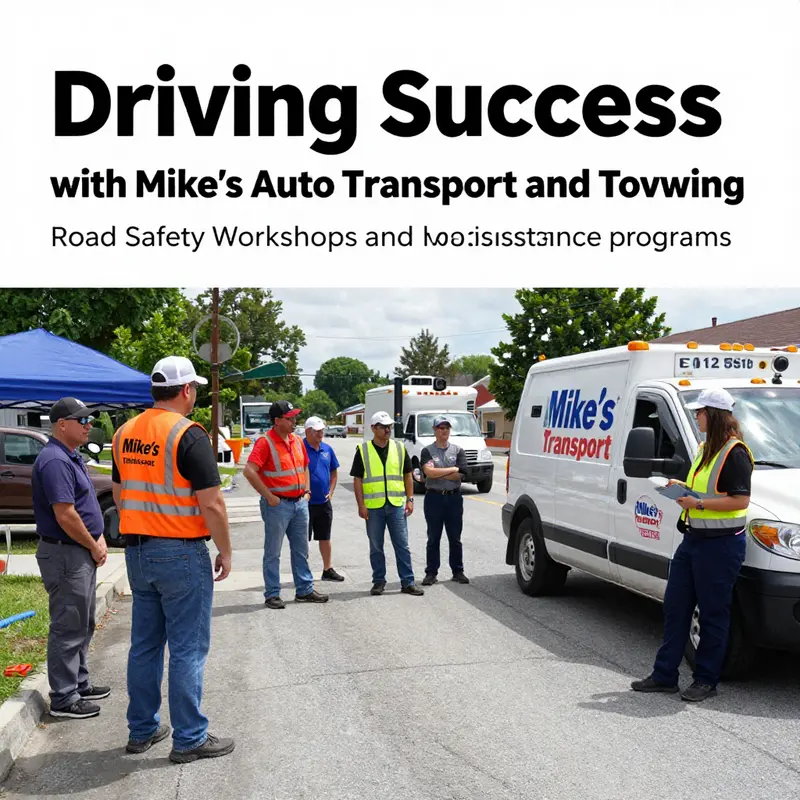
When a town faces a moment of vehicle trouble, the ripples often stretch far beyond a single breakdown. In the broader narrative of Mike’s Auto Transport and Towing, that ripple becomes a measurable yes in a community’s daily rhythm. This chapter follows the thread of a company whose reach extends across regions and whose reputation rests on steady reliability, swift responses, and accessible pricing. While the brand touches many landscapes—from the 24/7 service ethos in Ponder, Texas, to the family-owned repair versatility in Windsor, Connecticut, and the salvage-focused work in Mishawaka, Indiana—the Williamsburg chapter offers a focused lens on how such services shape ordinary lives by turning potential disruption into a manageable event. In the end, the story is less about a tow and more about how dependable mobility supports work, care, and community trust. It is a portrait of how a transportation and towing provider becomes woven into the social fabric of a place, one rescued moment at a time.
In Williamsburg, the impact is most vividly captured in the cadence of a customer experience that begins with an anxious call and ends with regained momentum. A Yelp review serves as a concise snapshot of this dynamic: a stranded driver who found help rapidly—arriving in under twenty minutes—and the situation quickly defused. That level of responsiveness matters greatly in a small city where daily routines hinge on reliable transport, and where a single delay can cascade into missed appointments, late shifts, or fragile plans with family. The speed of assistance translates directly into less time lost from work, fewer missed opportunities, and a restoration of normal activity sooner than a person might dare hope. In practical terms, a fast tow or unlock service reduces the invisible cost of distress—the mental strain of being stuck and the logistical headaches that follow. When a provider can combine speed with accuracy, it creates a buffer against the friction that daily life inevitably throws at drivers, students, and small business owners.
But speed alone does not define the value. The same Williamsburg experience underscored affordability, another pillar of trust in the community. The service in question was praised for cost-effectiveness, with savings of roughly fifty dollars compared with other estimates. In communities where budgets are tight and emergencies are rarely predictable, such savings can be the deciding factor between a person choosing to address a problem immediately or postponing it until a more convenient—or more expensive—time. The combination of promptness and prudent pricing reframes breakdowns as manageable interruptions rather than overwhelming crises. It fosters a sense of reliability that extends beyond individual incidents to shape expectations about what a local provider can and should offer. People come to see value not only in the service received but in the transparency and fairness of the pricing that accompanies it. That perception, in turn, nourishes a reputation that travels by word of mouth, social media, and the everyday conversations that define community life.
The Williamsburg case sits within a larger map of Mike’s Auto Transport and Towing’s regional footprint. Across the United States, the firm demonstrates a pattern of strategic presence and operational flexibility. In Ponder, Texas, the local branch is open around the clock, a clear signal of a service model oriented toward continuous availability. This 24-hour presence is not merely a marketing badge but a practical commitment to meet people wherever and whenever trouble arises. The Windsor, Connecticut location, established in the early 1990s, points to longevity and breadth in the automotive repair sector, highlighting the company’s ability to diversify its offerings while maintaining a core focus on mobility. The Mishawaka, Indiana operation—active in salvage and towing—speaks to a broader ecosystem of service that includes recovery and recycling, contributing to the regional economy through specialized capabilities. Even the now-expired Orem, Utah entity serves as a cautionary note about the challenges of maintaining a network that scales with demand, underscoring the importance of prudent expansion and regulatory alignment. Taken together, these threads sketch a picture of a company that is not only moving vehicles but is also moving a community toward greater resilience. The integrated approach—covering emergency response, standard towing, repair support, and salvage—creates a safety net that communities can rely on in moments of vulnerability.
For residents and visitors in Williamsburg, the practical implications of this integrated approach are clear. When a vehicle fails in unfamiliar terrain or during a tight schedule, the guarantee that help is on the way can transform a potentially crippling situation into a manageable one. The availability of timely unlock services, for example, reduces the risk of drive-time cancellations and keeps errands, classes, and jobs on track. The cost-conscious dimension adds another layer of reassurance. People are more likely to seek help when it’s financially predictable and fair, which encourages quicker decision-making and reduces the hesitation that can accompany more expensive, uncertain options. Over time, consistent affordability and reliability breed trust, a currency that expands beyond a single transaction to inform how community members perceive and interact with the broader economic ecosystem that supports mobility and service work.
The social dimension of Mike’s Auto Transport and Towing also emerges in the informal networks by which communities share information about service quality. Consumer experiences recounted on platforms like Yelp carry weight because they reflect real, unfiltered outcomes. The Williamsburg example—fast arrival, successful resolution, and a favorable cost comparison—creates a narrative that neighbors, coworkers, and students can reference when they need similar help. It becomes part of the local knowledge base about who to call, what to expect, and how a plan for contingencies can be executed with minimal disruption. In a sense, each positive encounter acts as an accelerator for community confidence, encouraging more people to rely on timely assistance when something goes wrong and to advocate for the same level of service to others who face similar moments of vulnerability. This cycle reinforces a local culture of mutual reliance where mobility is not a luxury but a shared infrastructure that supports daily life.
From a broader perspective, the chapter’s Williamsburg vignette fits into a wider conversation about what it means for a transportation and towing provider to act as a civic asset. When a company commits to 24/7 availability in one region, it signals a philosophy of service that values people over wait times and profits over peaks. The same philosophy can extend to the roadways, parking lots, and neighborhoods where the work happens. It manifests in the quiet professionalism of drivers who respond quickly, assess situations accurately, and communicate clearly about timing and expectations. It shows up in the logistics that keep fleets moving and in the compliance practices that ensure safety for both operators and customers. It matters when a business can pair a compassionate approach with a practical one—treating a breakdown less as a personal inconvenience and more as a reasonable problem with a straightforward solution. That is the essence of community impact: the ability to translate a routine service into a dependable anchor in the daily lives of many, across different contexts and regions.
For readers who want to delve deeper into the breadth of these services in a practical sense, a closer look at roadside offerings can be illuminating. See the overview of broad roadside support here: Mike’s Roadside Service. This internal reference helps illustrate how the company frames timely assistance as a core value, not merely as an emergency option. While the Williamsburg example highlights a specific customer experience, the underlying pattern of rapid response and fair pricing resonates across the brand’s footprint, reinforcing the idea that mobility should be accessible to all, regardless of time or place. The chapter thus connects a single city story to a larger narrative about how a regional transport and towing enterprise builds trust, supports local economies, and sustains communities through the everyday practice of keeping people moving.
External reference for further context on customer experiences and perceived value in similar settings can be found on Yelp. A representative snapshot from the Williamsburg area captures the balance of speed, affordability, and reliability that underpins the community impact described here: https://www.yelp.com/biz/mikes-towing-recovery-williamsburg. This external resource complements the chapter’s internal examples by offering a real-world corroboration of how prompt help and fair pricing translate into lasting impressions and ongoing recommendations within a local market.
Final thoughts
In summary, Mike’s Auto Transport and Towing stands out as a premier provider in the auto transport and towing industries, characterized by its commitment to service excellence, extensive operational reach, and significant community impact. Business owners can draw inspiration from its model, understanding that solid service delivery and community engagement form the bedrock of sustained success in the automotive sector. By investing in reliable, quality services and fostering connections with the communities they serve, businesses can position themselves for long-term growth and enhanced relevance in their respective markets.