
Michael’s Towing caters to diverse needs within the towing industry by offering a range of services that enhance operational efficiency and customer satisfaction. This article provides an in-depth exploration of Michael’s Towing, Inc. as a domestic profit corporation based in Michigan, alongside an overview of Michael’s Towing & Recovery Service in Virginia. By delving into these entities and their service operations, business owners seeking reliable towing solutions will glean essential insights into the importance of dependable towing services in their operations.
Tracing Michael’s Towing, Inc.: A Michigan Registration in Focus
Michael’s Towing, Inc. sits at the intersection of public records and roadside reality. In Michigan’s corporate registry, it appears as a domestic profit corporation with a designation that signals an intent to operate for profit within the state. The corporate number assigned to it, 800475935, acts as a unique key in a ledger that tracks filings, status, and accountability. The designation perpetual suggests endurance and continuity, signaling an expectation that the business will persist through changing conditions. Yet the public profile offers only a sketch—a framework rather than a full portrait of services, fleet, or local impact. The record resembles a map with certain roads highlighted while surrounding terrain remains uncharted.
A close reading of the formal details reveals a practical anchor: the registered agent. Michael Yamin is listed as the agent, with an address of 14267 Knox, Warren, Michigan. The agent’s role is procedural and legal by design, serving as the point of contact for service of process and official communications on behalf of the corporation. This arrangement shapes how the business would respond to legal actions, regulatory inquiries, or notices of compliance. The agent’s residence-based address hints at the people-centered thread common to many locally rooted towing businesses. In times of dispute or regulatory change, the agent is the conduit between the state and the corporate entity, a line of accountability that appears in filings and records.
The public record does not disclose operational details such as services, fleet, or customers. The name Michael’s Towing, Inc. evokes a core specialty: towing and roadside assistance. But the absence of a detailed operating profile leaves room for readers to consider how a small towing outfit is organized—covering dispatch, maintenance, insurance, licensing, and staff. The designation perpetual signals a long horizon, but it does not reveal day-to-day practices, training standards, or safety protocols that shape service delivery in snow, traffic, or storm.
Readers should note that other similarly named entities exist in the United States. For example, Michael’s Towing & Recovery Service operates in Fredericksburg, Virginia, with its own address and hours. This distinction matters for clarity and due diligence, underscoring that a name does not guarantee a single corporate identity across jurisdictions. In this chapter, the focus remains on the Michigan registration and what it reveals about a local business’s formal status, governance, and points of contact. A related reference point that sometimes appears in casual inquiries is a local resource page such as mikes-towing-related content, which provides a sense of how towing outfits position themselves online. See the linked resource: mikes-towing.
For readers seeking verification, the Michigan Secretary of State’s EntitySearch is the authoritative source for real-time data on Michael’s Towing, Inc. and any changes to its status, agent, or registered address. This diligence matters for researchers, journalists, and customers who expect clarity when arranging emergency services. External corroboration helps ensure conclusions about a company’s legitimacy rest on official, traceable evidence. In short, the concrete details—corporate number, perpetual status, and registered agent—function as signposts guiding deeper questions about service quality, insurance, and reliability. A formal reference can be found via the Michigan SOS EntitySearch at the official site.
Tow Lines and Timelines: The Operational Core of Michael’s Towing & Recovery Service in Fredericksburg
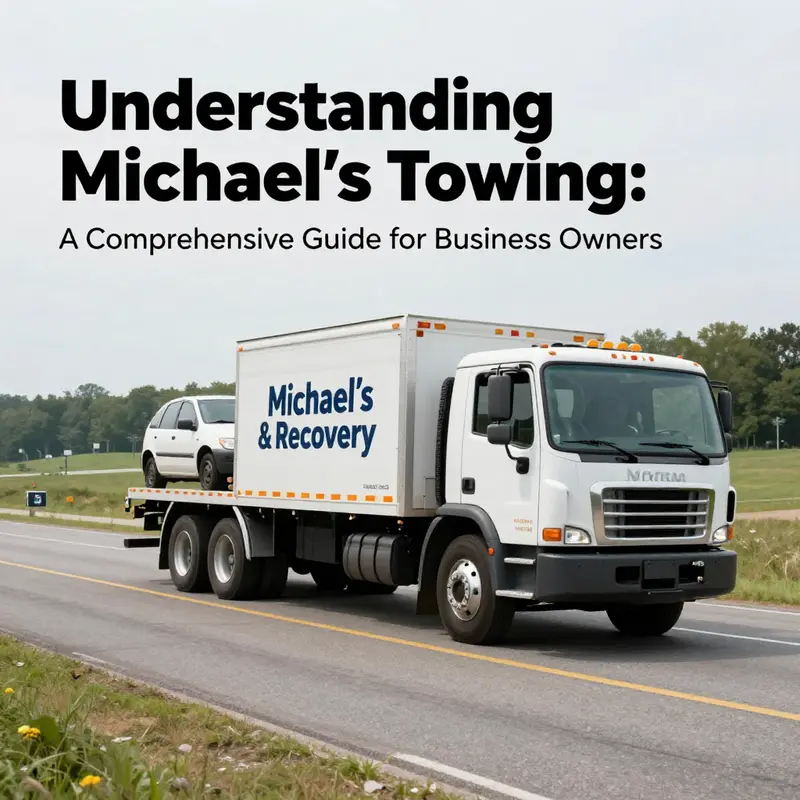
Michael’s Towing & Recovery Service in Fredericksburg operates as a tightly coordinated emergency and support system for drivers who confront the disruption of vehicle trouble. The chapter follows a single thread: what makes their service reliable in the tempo of day to day road life. From the moment a caller dials in a roadside crisis to the final handshake when a vehicle is safely rejoined with the road, the operation is built around speed, accuracy, and a careful respect for customer need. Local and long distance towing form the backbone of their core offerings. When a vehicle cannot be driven away, or when a transport assignment demands a trusted hand to move a car, motorcycle, or light truck across miles, the service steps in with trained drivers, properly equipped tow rigs, and dispatch that prioritizes urgency without sacrificing safety. Emergencies do not wait for a convenient hour, and so the team maintains a readiness that translates into shorter wait times and fewer moving parts in a chaotic moment. This is not simply about hauling a vehicle; it is about restoring momentum to a customer who feels stalled on a stretch of road or stalled in the corner of a parking lot. The language of service here is precise, not theatrical: immediate towing when needed, careful handling of vehicles, and a transparent path from call to completion. The Fredericksburg operation emphasizes a practical philosophy–address the problem quickly, then fix the underlying issue whenever possible. Local towing is paired with long-distance transport options, enabling a vehicle to be moved across counties or states when required for repairs at a preferred shop or for a delivery deadline that cannot be met by the vehicle alone. The distinction between local and long-haul requests becomes a practical guide for dispatchers who must allocate the right equipment and the right driver for each job. Roadside assistance rounds out the package, with a dependable set of quick-response capabilities designed to help customers regain mobility in the least intrusive way possible. Jump starts, tire changes, fuel delivery, and lockout services are framed not as add-ons but as essential supports that reduce the risk of further damage or delay. Each service is a thread in a larger weave that keeps drivers on the road rather than stranded on shoulders or in parking lots. The on-site dimension of the operation is equally important. Mobile units that can arrive at a customer’s location with diagnostic tools and repair capabilities shrink the downtime for commercial fleets and personal vehicles alike. When a truck could be out of service for hours if towed to a shop, on-site diagnostics and minor repairs can prevent unnecessary downtime and lost productivity. This approach reflects a broader industry shift toward flexibility and real-time problem solving, where technicians become problem solvers who extend the life of vehicles and the continuity of a customer’s day. The service values—reliability, professionalism, and prompt response times—are not abstract ideals but daily commitments enacted through disciplined dispatch, careful vehicle handling, and clear communication. Reliability means arriving within promised windows, following safety standards, and keeping customers informed at every turn. Professionalism is visible in the conduct of the crew, the neat presentation of equipment, and the respectful treatment of customers who vary in mood and circumstance. Prompt response times are achieved through efficient routing, proactive scheduling, and a culture of readiness that never sacrifices safety for speed. Availability in Fredericksburg operates with weekday hours that align with the rhythm of local life, providing a dependable option for commuters, families, and small businesses alike. The narrative of Michael’s Towing & Recovery Service is, at heart, a story of service continuity–how a driver’s misfortune becomes a manageable interruption rather than an existential crisis. In a busy region where traffic patterns shift with the seasons and weather, the ability to mobilize quickly, communicate clearly, and execute with care is the difference between a long delay and a smooth return to normalcy.
Brand Names in the Wrecking Yard: Navigating Michael’s Towing and Its Contemporaries Across State Lines
In the roadside world, a name acts like a beacon, hinting at trust, capacity, and jurisdiction. When the label Michael’s Towing appears, it may map to more than one company, each registered in a different state with its own regulator, address, and history. In Michigan, Michael’s Towing, Inc. is documented as a domestic profit corporation with the Corporation Number 800475935 and a perpetual status. The registered agent is Michael Yamin, and the official service address is 14267 Knox, Warren, MI 48089. This level of specificity matters. It means a potential customer or partner can verify who is responsible, who to contact, and where formal notices should be served. The existence of a regulated identity matters just as much as the service offered on a curbside call and highlights how a single name can conceal a network of separate legal entities that share branding but not paperwork.
Across state lines, branding collisions occur without implying a shared corporate umbrella. There are other Michigan entities with similar branding: Mike’s Towing L.L.C., a domestic limited liability company with a perpetual status and a registered agent named Michael Daubenpeck. In Georgia, Michael’s Towing & Recovery Specialist, Inc. appears as an active entity, and in Texas, Michael’s Towing LLC is listed as a separate limited liability company. Iowa shows Mike’s Towing & Repair, L.C., which is currently inactive. The pattern is telling: the towing and recovery sector draws on familiar terms—towing, recovery, repair—yet each entity attaches to a distinct legal personality, with its own filing status, corporate form, and leadership. This separation is critical for insurers, regulators, and customers who seek accountability, not merely a brand name. If you want to explore a representative local profile while considering broader branding, you can visit Mikes Towing, a page that captures how a regional operator presents itself online and signals service scope to visitors.
The industry context reinforces that naming is only the starting point. These firms all operate within the automotive towing and recovery services sector, which encompasses roadside assistance, accident relief, and vehicle relocation. The presence of multiple similarly named entities across states signals market density and the normalcy of branding echoes rather than corporate entanglement. In Michigan, the coexistence of Michael’s Towing, Inc. with another similarly named entity underscores how branding can overlap within the same state yet belong to different corporate lines with separate duties, payrolls, and insurance policies. For a consumer, this means verifying details before scheduling service. Checking corporate type, registered agent, and official addresses helps prevent miscommunication or misbilling during a stressful moment.
To navigate this terrain with confidence, rely on official registries that offer a durable ledger of who is who. For Michael’s Towing, Inc., the Michigan Secretary of State’s Entity Search serves as the primary verification resource. It enables users to confirm the entity’s legal form, status, and points of contact, and it helps distinguish Michigan brands from similarly named peers in other states, such as the Georgia and Texas variants. When a motorist seeks practical guidance, start with the company name or registration number in the relevant state archive, then cross-check service areas and licensing requirements. In practice, a careful reader will compare a public profile with its legal on-file details—the registered agent, the exact business address, and the filing history. For a quick contextual gateway to a typical regional operation, you may explore a representative page that echoes a localized service footprint: Mikes Towing.
The upshot for customers, researchers, and industry watchers is straightforward: naming matters, but governance matters more. The Michigan entity’s corporate number, agent, address, and perpetual status create a stable identity that can be verified. The other similarly named entities—though sharing a surface label—carry their own distinct corporate signatures and regulatory footprints. Recognizing these nuances helps explain why a single keyword can open doors and raise questions about reliability, pricing, and accountability in the towing and recovery network. This awareness also supports a healthier marketplace, where the focus shifts from clever branding to verifiable legitimacy and dependable service on the roadside. For official verification and more detailed records, consult the Michigan SOS Entity Search. official verification resource.
Final thoughts
Michael’s Towing is a pivotal player in the towing industry, providing essential services that support both individuals and businesses. Understanding the operations and offerings of companies like Michael’s Towing, Inc. and Michael’s Towing & Recovery Service can help business owners make informed decisions about their towing and recovery needs. By selecting dependable towing entities, they can enhance their operational resilience and customer satisfaction, ensuring that help is available when it is most needed.