
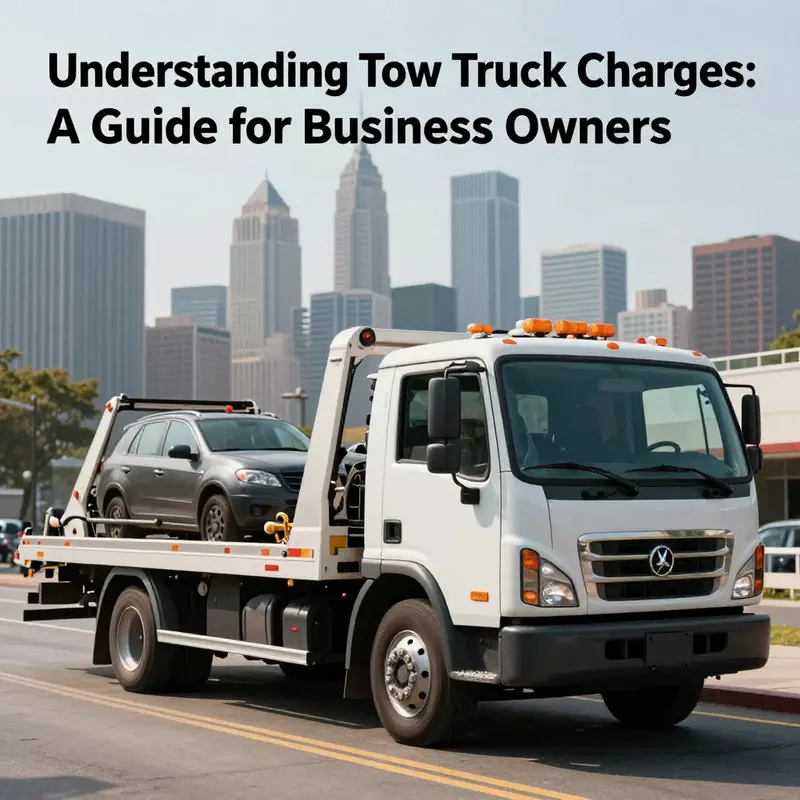
Navigating the world of towing can be daunting, especially for business owners who depend on reliable vehicle transport. Understanding how much tow trucks charge is crucial not only for budgeting but also for ensuring timely service. In this guide, we explore the critical breakdown of costs associated with towing services, the various factors that can influence these rates, and tips for obtaining accurate quotes to protect your interests. Each chapter sheds light on essential aspects of towing charges — from understanding base fees and mileage costs to recognizing how emergencies and vehicle types can impact the total. By the end, you’ll have a well-rounded view that empowers you to make informed decisions regarding towing services.
Tow Price Demystified: A Clear Guide to What Determines the Tow Truck Charge
When your vehicle stops on the side of the road, price is often the last thing you want to worry about. Yet, understanding how tow charges are built can save you surprises when the bill arrives. Towing is not a single, fixed fee; it is a small ecosystem of costs that combine to determine the final amount. The base hook-up fee covers the moment the wrecker arrives, attaches to your vehicle, and begins the process of securing the tow. After that, you’ll see the distance charge—usually a per-mile rate—that scales with how far your car must travel to reach a shop or a safe location. The surprise, if there is one, tends to show up in the extras: after-hours service, the need for specialized equipment, or the complexity of the vehicle itself. Understanding these pieces helps you read the bill with confidence rather than fear.
In practical terms, most cities see a base rate that ranges from roughly fifty to one hundred fifty dollars just to dispatch and hook up your car. Once the hook-up is complete, the per-mile rate typically falls somewhere in the two-to-five dollar range, though it can climb higher in dense urban corridors or during peak hours when demand is high. Put together, a short tow—think around five miles within a city—often lands somewhere in the neighborhood of one hundred to two hundred dollars. If the distance stretches to thirty miles, especially in an emergency or late at night, it is not unusual for the total to push past three hundred dollars. These figures act as a practical frame of reference, but the exact number hinges on a handful of variables that can swing the bill in one direction or another.
One of those variables is timing. Emergency or after-hours towing commands a premium because the service needs to be delivered outside typical business hours. The closer you are to midnight on a weekend, the more the rate can creep up. This premium is not arbitrary; it reflects the additional shifts, staffing, and resources required to respond promptly when roads are busier and conditions are more challenging. The vehicle’s position also matters. If your car is stuck in a ditch, perched on a steep incline, or otherwise difficult to access, the tow operator must deploy specialized equipment and procedures that add to the cost. In such cases the base fee might stay the same, but the additional labor, time, and equipment charges can push the total upward quite noticeably.
Vehicle type matters as well. A small sedan is cheaper to tow than a large SUV, truck, or commercial vehicle. The material difference isn’t just the weight; it’s about the equipment, crew size, and often the method of tow. For luxury cars or vehicles with damaged suspensions, a flatbed tow is commonly preferred to ensure safer transport. A flatbed can be necessary to protect wheel alignment and bodywork, but it also carries higher labor and equipment costs. The closer you look, the more you see that the price is a function of access, risk, and the resources required to deliver a safe, reliable tow.
Beyond the immediate tow, there are additional costs that can creep into the bill. Storage charges can accumulate if the vehicle is held at a facility after an incident, especially if you need time to sort out insurance or arrange pick-up. Some services include a short grace period, but others charge daily storage fees, which can become significant if a legal or administrative delay stretches out. Then there is the question of specialized equipment. If your vehicle requires a rollback, a heavy-duty tow, or other specialized devices to handle the job, the operator’s costs rise because the equipment itself is costly to operate and maintain. This is not merely a matter of moving a car from point A to point B; it is about choosing the right method that keeps your vehicle safe and minimizes further damage.
To get a realistic sense of what you’ll pay, it helps to request quotes from multiple providers. Calling three or more companies is a prudent move, as it gives you a reasonable sense of the going rate in your area and helps you spot large disparities. When you call, ask for a complete breakdown: the base rate, the per-mile charge, and any extra fees you might face, such as after-hours surcharges, storage, or equipment-related add-ons. It is equally important to ask about any potential hidden charges and to request a written estimate before work begins. If a company hesitates or cannot provide a transparent breakdown, that should raise a red flag. In this landscape, transparency is the most meaningful currency you can rely on.
Consider a couple of practical scenarios to anchor the math in real life. Suppose you’re stranded five miles from a shop in a mid-size city at night. You might expect a base fee around seventy-five dollars, with a per-mile charge near three dollars. The total would hover close to a hundred and fifty dollars before any after-hours premium or storage fees. Now imagine a longer city tow of thirty miles during business hours. The base fee could remain around the same, but the mileage charges would accumulate to roughly ninety dollars, with the total fluctuating around three hundred dollars or more once the distance and any necessary equipment or access challenges are factored in. These examples illustrate how distance, timing, and vehicle type interlock to shape the final price.
In the broader picture, the cost of operating a tow service sits on a continuum that reflects investment in equipment and staff, rather than a single, fixed price. Heavier-duty needs, such as rolling back or flatbed capacity, demand more expensive maintenance, specialized operators, and higher-capacity trucks. The market responds by adjusting rates to cover these costs while ensuring timely, safe service across a wide range of scenarios. It’s also worth noting that some providers may offer warranties or post-service support, a reminder that the value of a tow can extend beyond the moment of pickup. When negotiating price, you can ask about any post-service protections and what they cover, which may give you added peace of mind.
For anyone navigating this landscape, a good rule of thumb is to treat price as a component of risk management. Paying a bit more for a service that arrives quickly, handles your vehicle with care, and accepts a transparent payment plan can reduce the downstream risk of improper towing or hidden fees. If you’re seeking reliable local options and transparent pricing in your area, you can explore nearby options like towing services in Houston. This kind of local resource can be a useful starting point to compare quotes, confirm accepted payment methods, and verify that the provider adheres to standard safety and service practices.
As you plan ahead, remember that the most accurate pricing comes from talking directly to local providers. The numbers here serve as a framework, not a guarantee. When you call, provide clear details about your location, the vehicle type, access constraints, and the reason for the tow. A straightforward, itemized quote that lists base fees, mileage, after-hours surcharges, storage, and any equipment needs will help you avoid surprises. If a provider cannot deliver that clarity, it is sensible to move on to another option. In the end, the goal is a safe, efficient tow with a price you understand before the first hook is set.
External resource for further context on heavy-duty tow equipment and market considerations: https://www.alibaba.com/product-detail/10-tons-Rollback-Flatbed-Breakdown-Tow-Truck_1600429347759.html
When Tows Get Pricier: How Emergencies, Vehicle Type, and Distance Shape the Tow Truck Charge
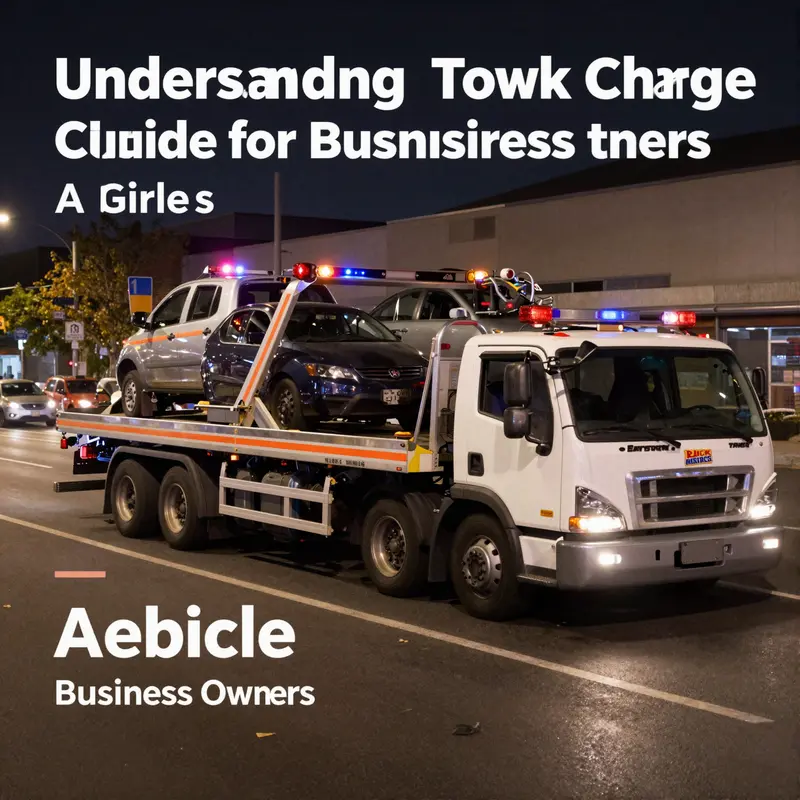
Getting a tow car is rarely planned and never cheap. When you find yourself stranded, the price tag attached to a tow becomes part of the stress you carry along with the vehicle. The numbers you see on the clock or on the screen come from a blend of base fees, distance, timing, and the particular challenges of your ride. Understanding the pricing framework helps you avoid sticker shock and makes it easier to compare options quickly.
At the core of every tow is a base hook-up fee. This is the flat charge for arriving at your location and attaching the vehicle to the tow. In most U.S. cities, this base rate typically sits in a reasonable range of roughly $50 to $150. It covers the essential labor of locating the vehicle, securing it, and getting the tow process officially started. Yet that hook-up fee is only the opening price. After that, most customers see a per-mile rate that adds the miles traveled from your location to the destination lot or repair shop. The per-mile charge commonly falls in the $2 to $5 range, though it can rise in dense urban areas or during peak hours when the demand for service is high. The math is straightforward: the farther the tow, the more you pay, and the higher the rate when you’re in a busy city center or during a late-night shift.
For a short, city-based tow of about five miles, you can expect a total that often lands between $100 and $200. For a longer haul—say thirty miles—the total can easily push past $300, especially if the service arrives during an emergency or after hours. Those numbers are not random; they reflect the realities of fuel, crew time, truck wear, and the administrative costs of operating a recovery service around the clock. The bigger picture is that distance interacts with timing and vehicle type in a way that reshapes the final price. When you’re informally estimating, it is helpful to picture the bill as three layers: the hook-up, the distance, and the situational add-ons.
Emergency or after-hours service is the single most influential multiplier you’ll encounter. The moment you call for a tow outside normal business hours—late at night, on weekends, or during holidays—an extra premium often accompanies the dispatch. This premium compensates for rapid response, standing by in less-than-ideal weather or traffic, and keeping a crew ready when most shops are closed. Emergency towing also tends to deploy specialized equipment and personnel who can work safely and efficiently in high-stress environments, such as on busy interstates or in precarious pullouts. The result is a noticeably higher price, even when the distance isn’t dramatically longer. If your vehicle has sustained damage that requires careful handling, the ride can involve additional labor and equipment checks that push the bill higher still.
Sizing up the vehicle itself is another major cost driver. A standard sedan is the baseline scenario; towing a compact car generally costs less than towing a large SUV, pickup, van, or commercial truck. The weight and dimensions demand more powerful winches, larger tow packages, and sometimes more than one technician. Then there are specialty cases: luxury or classic cars often require extra care and padding to avoid cosmetic or mechanical harm during transport. Low-clearance vehicles may require careful wheel lifts or flatbed setups to protect the underside and suspension, which adds to both time and equipment costs.
Location matters, too. Prices tend to be higher in major metropolitan regions with higher living costs and greater demand. Rural or less densely populated areas often present lower baseline rates, simply because the logistics of keeping a fleet running in smaller towns are different. Still, any given tow can be affected by local regulations, road restrictions, or unique local fees that a distant city might not impose. The net effect is that the same miles towed can cost more in one city than in another, even when the base rates are similar.
Beyond the hook-up and the mileage, there are other charges you may encounter. Special equipment like flatbeds, winching in difficult spots, or recovery services after an accident can raise the price. Storage fees may appear if the vehicle must stay in a lot overnight or longer before repairs can begin. Some companies also tack on fees for mileage to return the truck to its base location or to relocate the vehicle after maintenance. It is crucial to ask about all potential fees up front and to request a written estimate that itemizes each charge. In practice, a straightforward comparison often hinges on whether different providers include or exclude storage, after-hours dispatch, or potential stowage costs.
To navigate this landscape with confidence, it helps to approach quotes like a careful shopper rather than a resigned consumer. Start by requesting quotes from multiple providers, ensuring that each quote reflects the same scope of service. Ask explicitly about the base rate, the per-mile charge, and any extra fees tied to after-hours service, storage, or specialized equipment. Hidden charges can lurk in fine print or be introduced only after the tow is underway, so it is wise to insist on a written estimate before committing. When you compare, verify that the distance measurement in each quote matches for a fair match. Even small discrepancies in how miles are calculated can swing the final price by a meaningful amount.
In practice, you’ll often find that the most economical option is not always the one with the lowest sticker price. A quote that comes with transparent details, no surprise add-ons, and clear restoration and storage terms can save you money in the long run. For example, a sedan tow at $100 to $150 is common, but the same service for a large RV can push far beyond $300, given the extra equipment and crew required. While it’s natural to focus on the bottom line, considering the service quality, reliability, and the integrity of the final bill is equally important. A company that quotes a fair base and mile rate and then explains any potential extras is often the most trustworthy.
If you want a sense of how pricing plays out in a real market, you can explore a local service page that describes regional offerings and capabilities. For readers seeking city-specific context, you can learn more about a Houston area tow service here: tow service in Houston, TX. This kind of local resource can illustrate how geographic and operational factors shape quotes without replacing direct estimates from nearby providers. And when you expand your view beyond one city, the American Automobile Association offers a broad overview of towing rates and regulations that can help frame expectations across the country. See the AAA Towing FAQ for guidance on industry standards and consumer protections: https://www.aaa.com/automotive/towing-faq.
Tow Truck Pricing Demystified: Getting Accurate Quotes and Transparent Bills
When your vehicle breaks down or ends up stuck on the shoulder, the price of a tow can feel like a mystery wrapped in a bill you didn’t anticipate. Yet tow truck charges are rarely a single number set in stone. Most prices arise from a handful of predictable factors that, when understood, let you forecast costs more accurately and avoid sticker shock. At the core is a simple structure: a base fee for arriving and hooking up the vehicle, plus a per-mile charge for the distance the vehicle must travel. In many U.S. cities, you’ll commonly see a hook-up or base rate in the ballpark of $50 to $150. After that, the journey is charged by the mile, typically around $2 to $5 per mile. It’s a practical framework that helps explain why a short local tow can land somewhere around a hundred dollars, while a longer or more complex trip can climb well beyond that mark. The key is to recognize which parts of the bill are controllable and which are dictated by circumstance.
To imagine how the numbers stack up, consider a city tow of about five miles. A modest base fee plus mileage will push you into roughly the $100 to $200 range. If the distance stretches to thirty miles, the fare can push past $300, particularly if you’re dealing with an emergency, a late-night call, or a service that requires specialized equipment. Emergency or after-hours service often carries a premium. This reflects not just the inconvenience to the driver but the additional logistics, staffing, and risk management overhead that come with responding during off-peak times. If the tow involves a vehicle that requires delicate handling—like a luxury car, a flatbed tow to preserve suspension, or a vehicle in a difficult position—the price will climb further. And if the vehicle is larger, such as an SUV, a truck, or a commercial vehicle, the operation demands heavier equipment and potentially more crew, which pushes the cost higher still. Location matters, too. Metropolitan areas with higher operating costs tend to price higher than rural regions, so a short tow in a big city can cost more than the same distance in a smaller town.
These factors aren’t just abstract ideas; they show up in real-world tenders and invoices. The distance is rarely the only mileage metric; sometimes charges apply for round-trip travel to and from a yard or shop, or for time spent loading and securing a vehicle. Some outfits also attach a separate equipment fee for flatbed towing or for heavier recovery devices if the job calls for it. In practice, the price is the consequence of a chain of decisions—where the tow begins, where it ends, what equipment is needed, and at what hour service is rendered. When you combine all of these elements, the seemingly simple question, “How much will this tow cost?” expands into a more nuanced calculation. This is why holding out for a precise, itemized quote before any work begins matters so much.
The most effective shield against surprise charges is pricing transparency. A reliable tow company will provide a written estimate that breaks out each component: base or hook-up fee, per-mile charges, and any add-ons such as after-hours surcharges, heavy-vehicle fees, storage, or specialized equipment. It’s reasonable to ask for the exact breakdown and to request clarification on items you don’t understand. If a company hesitates or glosses over details, that should be a red flag. In practice, you should call multiple providers to compare apples to apples. Request a detailed quote from at least three companies, explicitly asking for base fees, mileage rates, and any potential fees for heavy vehicles, after-hours service, or storage. The goal is to see a side-by-side comparison you can interpret clearly rather than a single number that hides additional costs.
Another layer of due diligence is ensuring you’re dealing with properly licensed and insured operators. A legitimate tow service will typically be licensed to operate in the jurisdiction and carry insurance that covers the mechanics of towing and any potential damage during the process. Verifying credentials isn’t just about protecting yourself legally; it also helps you gauge the provider’s level of professionalism and accountability. Reviews and ratings on reputable platforms can offer insight into dispatch reliability, timeliness, and how well a company handles disputes or pricing concerns. A written estimate late in the evening can still be a binding reference if you end up disputing a bill later, so insist on a document you can hold onto. This practice complements the basic rule of thumb: do not sign off on service until you’ve read and understood every line item.
If you are navigating a roadside emergency, you may not have the luxury of shopping around for hours. Still, you can take small, practical steps that protect you from excess charges. Clarify the destination before the tow begins. Some shops add a storage fee if the vehicle remains at their lot, and storage costs can accumulate quickly if you’re waiting for insurance approval or a mechanic appointment. Ask for confirmation on whether the tow will be direct to a repair facility or if you’ll be allowed to retrieve the vehicle after the initial assessment, as this can influence the final tally. When possible, provide your exact location and any constraints about where the tow can safely operate. Clear information helps the dispatcher make efficient, cost-conscious choices about the route and equipment—sometimes shaving minutes off the job and thus reducing labor costs.
For readers seeking a practical example of how this plays out locally, consider exploring a nearby resource such as mikes-towing. This kind of local provider profile can give you a sense of how quotes are structured in practice, what kinds of add-ons are common, and how a reputable operator communicates pricing upfront. When you face the question of what you’ll pay, remember that a well-structured estimate should read like a menu: base fee, mileage, and a separate line for any extras. The more the provider demonstrates transparency, the easier it is to compare options and choose a service that aligns with both value and reliability.
As you review quotes, consider consulting a broader guide to towing costs. A detailed external resource covers the average ranges, explains why certain charges vary, and offers strategies for negotiating or mitigating costs without compromising safety or service quality. For a comprehensive perspective, you can consult this external reference: https://www.thebalance.com/how-much-does-a-tow-truck-cost-4786959. It expands on factors like regional price dispersion, the role of insurance coverage, and the realities of emergency dispatch, helping you contextualize the numbers you’re seeing on a local bill. In the end, pricing transparency isn’t just about saving money; it’s about understanding what you’re paying for and ensuring that the service you receive matches the price you’re quoted.
All of these considerations—base fees, mileage, emergency surcharges, vehicle type, equipment needs, and local market dynamics—combine to form the final bill. The path to predictability lies in action: call multiple providers, demand a written breakdown, verify licensing and insurance, read reviews, and rely on a structured quote rather than a single phone estimate. When you walk through these steps, you’ll gain a clearer view of what influences tow charges and how to shield yourself from hidden fees. The result is not merely a lower number, but a fair, transparent transaction that respects your time and your vehicle. For further reading and broader context, the linked external resource offers deeper exploration of pricing patterns and practical strategies for navigating tow costs in various markets.
Final thoughts
Understanding the intricacies of tow truck charges is essential for business owners. By dissecting costs, recognizing the factors that influence pricing, and knowing how to get accurate quotes, you can navigate towing services more effectively. Empowering yourself with knowledge not only aids in budgeting but also enhances decision-making during transportation emergencies or logistical planning. As you engage with towing services, ensure that you communicate clearly about your needs to receive the best possible service within your budget.